Author: Get Driving Test Ready

  • Iowa Permit Practice Test: Free Questions on Iowa Signs and Laws

    Iowa Permit Practice Test: Free Questions on Iowa Signs and Laws

    Photo: Paul R. Burley, CC BY-SA 4.0, via Wikimedia Commons

    The Iowa knowledge test checks Iowa traffic laws and the signs that regulate, warn and direct traffic. Iowa DOT’s own practice test has 25 questions with an 80% pass mark, so this page starts with a 25-question mock at that standard, then adds 15 questions on Iowa-specific figures taken straight from the Iowa Code. Everything here is original and unofficial; none of it is an Iowa DOT question.

    Iowa permit test basics

    • Minimum age: 14. Under 18, a parent, guardian or custodian signs a consent form.
    • Content: traffic laws, signs and a vision screening (20/40 in at least one eye without lenses means no vision restriction).
    • Iowa DOT’s practice test: 25 questions, 80% to pass. Iowa DOT sets the real test’s passing score, so ask Iowa DOT for the real question count.
    • A passing score stays valid for 180 days.
    • Teens can test at home online with a parent as proctor, from within 30 days of their 14th birthday.

    Home testing and what happens after you pass: the Iowa DOT permit test guide.

    Mock test (questions 1 to 25)

    1. A sign shaped like an octagon always means:

    • A. No passing
    • B. Stop
    • C. Yield
    • D. Railroad

    Answer: B. Only STOP signs have eight sides. Manual chapter: Traffic Signs and Rules of the Road.

    2. Signs that regulate traffic, such as ONE WAY and speed limits, are mostly:

    • A. Yellow diamonds
    • B. Orange diamonds
    • C. Blue squares
    • D. Black and white rectangles

    Answer: D. Regulatory signs tell you the law. See US road signs by shape and color.

    3. A yellow diamond showing a truck on a slope warns of:

    • A. A steep hill
    • B. No trucks allowed
    • C. A weigh station
    • D. A truck stop

    Answer: A. Shift to a lower gear and control your speed on the way down.

    4. A slow-moving vehicle emblem, an orange triangle with red edges, is common on Iowa roads on:

    • A. Farm equipment and other slow vehicles
    • B. School buses
    • C. Police cars
    • D. Ambulances

    Answer: A. The emblem marks vehicles that travel far below highway speed. Slow down early and pass only where it is legal and safe. See rural two-lane roads.

    5. The round yellow sign with an X and RR is placed:

    • A. At train stations
    • B. At the crossing itself
    • C. Ahead of a railroad crossing, as a warning
    • D. Only on abandoned lines

    Answer: C. The round sign is the advance warning; the white crossbuck stands at the crossing. See railroad crossings.

    6. A flashing yellow light means:

    • A. The road is closed
    • B. Go faster to clear the intersection
    • C. Stop and wait
    • D. Slow down and proceed with caution

    Answer: D. Flashing yellow is a caution signal. See traffic signals in the US.

    7. A solid white line along the right edge of the road marks:

    • A. The center of the road
    • B. A no-passing zone
    • C. A bike lane in every case
    • D. The edge of the travel lane

    Answer: D. Edge lines help you stay in your lane at night and in bad weather. See US pavement markings.

    8. A broken yellow center line with a solid yellow line on the far side means:

    • A. You may pass when safe; traffic on the other side may not
    • B. Both sides may pass
    • C. You must turn left
    • D. Neither side may pass

    Answer: A. The broken line on your side allows passing when it is safe.

    9. You are first to stop at a four-way stop. Another car stops after you. Who goes first?

    • A. The other car
    • B. You do
    • C. The larger vehicle
    • D. The car turning left

    Answer: B. The first vehicle to stop goes first. See four-way stops explained.

    10. You want to turn left from a two-way road. You should start from:

    • A. The shoulder
    • B. The lane closest to the center line
    • C. Any lane
    • D. The right lane

    Answer: B. Position yourself just right of the center line and yield to oncoming traffic. See left-turn yield rules.

    11. You enter a roundabout. Who has the right of way?

    • A. Traffic already in the roundabout
    • B. Whoever is going fastest
    • C. The biggest vehicle
    • D. You, because you are entering

    Answer: A. Yield on entry and go counterclockwise. See how to drive a roundabout.

    12. Iowa’s basic speed rule says you must drive no faster than will let you:

    • A. Stop within the assured clear distance ahead
    • B. Pass slower vehicles
    • C. Keep up with the fastest car
    • D. Reach your destination on time

    Answer: A. Iowa Code 321.285 requires a careful and prudent speed that lets you stop within the distance you can see is clear. See the basic speed law.

    13. An emergency vehicle with a siren and red lights is approaching. Iowa law says to:

    • A. Pull into the left lane
    • B. Speed up and stay ahead
    • C. Stop in your lane
    • D. Pull to the right edge of the highway, clear of intersections, and stop until it passes

    Answer: D. Iowa Code 321.324. See pulling over for emergency vehicles.

    14. You approach a stopped emergency vehicle with flashing lights on a four-lane highway. You must:

    • A. Keep your speed in your lane
    • B. Stop behind it
    • C. Change to a lane not next to it if safe; otherwise slow below the limit and be ready to stop
    • D. Honk as you pass

    Answer: C. Iowa Code 321.323A, which also covers tow trucks, utility, highway maintenance and similar vehicles with flashing lights. See move over laws.

    15. In Iowa, who must wear a seat belt under the main seat belt law?

    • A. Only children under 6
    • B. Only the driver
    • C. The driver and front seat passengers, and every child under 18 in any seat
    • D. No one on rural roads

    Answer: C. Iowa Code 321.445 covers the driver and front seat. Section 321.446 requires everyone under 18 to be secured by a child restraint or belt. See seat belt and child seat laws.

    16. A child under 1 year old who weighs under 20 pounds must ride in:

    • A. A rear-facing child restraint
    • B. A forward-facing booster
    • C. An adult seat belt
    • D. A parent’s lap

    Answer: A. Iowa Code 321.446. Children under 6 who are not in that group must still use a child restraint.

    17. What is the first thing to do if your rear wheels skid on ice?

    • A. Shift into park
    • B. Steer hard the other way
    • C. Ease off the gas and steer gently where you want to go
    • D. Slam the brakes

    Answer: C. Smooth, small inputs let the tires grip again. See driving in snow, fog and rain.

    18. A deer runs out in front of you on a rural road. The safest general advice is to:

    • A. Swerve hard into the oncoming lane
    • B. Speed up
    • C. Brake firmly and stay in your lane rather than swerve
    • D. Turn off your headlights

    Answer: C. Swerving often causes worse crashes than hitting the animal. See deer and animal collisions.

    19. In Iowa, what blood alcohol concentration is OWI for a driver 21 or older?

    • A. 0.02
    • B. 0.04
    • C. 0.05
    • D. 0.08

    Answer: D. 0.08 is OWI under Iowa Code 321J.2. Any amount of a controlled substance in blood or urine is also OWI. See implied consent and DUI.

    20. An Iowa driver under 21 loses their license at what alcohol concentration?

    • A. 0.02 or more
    • B. 0.04 or more
    • C. 0.05 or more
    • D. 0.08 or more

    Answer: A. Iowa Code 321J.2A applies at 0.02. See zero tolerance laws.

    21. Under Iowa’s hands-free law, which is allowed while driving?

    • A. A voice-activated or single-touch hands-free call
    • B. A video call with the phone mounted
    • C. Reading a text at a stop sign
    • D. Holding the phone to check directions

    Answer: A. Iowa Code 321.276 bans holding, viewing or manipulating a device. Video calls, streaming and reading messages are banned too. Since January 1, 2026, officers issue citations. See hands-free and texting laws.

    22. Before backing out of a driveway, you should:

    • A. Back quickly so cars do not wait
    • B. Honk and go
    • C. Rely on your mirrors only
    • D. Walk around or look behind the car, then back slowly while looking over your shoulder

    Answer: D. Small children and objects can be hidden behind the car. See backup cameras and the road test.

    23. You feel drowsy on a long drive. The best response is to:

    • A. Drive faster to get there sooner
    • B. Stop somewhere safe and rest
    • C. Open the window and keep going
    • D. Turn the radio up

    Answer: B. Fresh air and music do not fix fatigue. See drowsy driving.

    24. Fog is reducing visibility. You should use:

    • A. Hazard lights while moving at full speed
    • B. No lights
    • C. Low beam headlights
    • D. High beams

    Answer: C. High beams bounce off fog and cut what you can see.

    25. A school bus coming toward you on a two-lane road switches on its flashing amber lights. You must:

    • A. Stop immediately, wherever you are
    • B. Slow to no more than 20 mph and be ready to stop
    • C. Speed up to pass before it stops
    • D. Ignore it; amber is only for traffic behind

    Answer: B. Iowa Code 321.372 requires 20 mph or less when meeting a bus with amber lights, then a full stop once it stops with the stop arm out. See school bus stopping laws.

    Mark the mock

    Correct out of 25 Against the 80% practice standard
    23 to 25 Strong pass
    20 to 22 Pass. Review what you missed.
    Under 20 Below 80%. Reread chapter 2 of the Iowa manual, Traffic Signs and Rules of the Road.

    Extra: Iowa Code figures and GDL rules (questions 26 to 40)

    26. When a school bus is stopped with its stop arm out, how close may you stop behind it?

    • A. No closer than 50 feet
    • B. No closer than 15 feet
    • C. No closer than 5 feet
    • D. No closer than 10 feet

    Answer: B. Iowa Code 321.372 says no closer than 15 feet, and stay stopped until the arm retracts and the bus moves.

    27. On a highway with two or more lanes in each direction, a school bus stops on the other side. Must you stop?

    • A. Only if the bus has amber lights on
    • B. Yes, always
    • C. No; Iowa law does not require it for traffic going the opposite way on such a highway
    • D. Only if children are visible

    Answer: C. Iowa Code 321.372(4). Traffic behind the bus must still stop. Passing a stopped bus illegally carries a fine of at least $345 for a first offense.

    28. How close to a fire hydrant may you park under Iowa law?

    • A. 5 feet
    • B. 10 feet
    • C. 15 feet
    • D. 20 feet

    Answer: A. Iowa Code 321.358 bans parking within five feet of a hydrant. Many states use 15 feet, so this is an Iowa number to learn. See US parking rules.

    29. How far from a stop sign, flashing beacon or signal at the roadside must you park?

    • A. 5 feet
    • B. 10 feet
    • C. 20 feet
    • D. 30 feet

    Answer: B. Iowa Code 321.358 sets 10 feet on the approach to a stop sign, beacon or traffic signal.

    30. How far from the nearest rail of a railroad crossing must you park?

    • A. 15 feet
    • B. 25 feet
    • C. 50 feet
    • D. 100 feet

    Answer: C. 50 feet under Iowa Code 321.358, apart from parking parallel to the rail without a red light showing.

    31. On a road with a speed limit above 45 mph, how far before turning must you signal?

    • A. 100 feet
    • B. 200 feet
    • C. 300 feet
    • D. 500 feet

    Answer: C. Iowa Code 321.315: 300 feet above 45 mph, and 100 feet at 45 mph or less.

    32. Unless posted otherwise, the Iowa Code speed limit in a residence or school district is:

    • A. 20 mph
    • B. 25 mph
    • C. 35 mph
    • D. 45 mph

    Answer: B. 25 mph. Business districts are 20 mph and suburban districts 45 mph (Iowa Code 321.285).

    33. Iowa law requires you to dim your high beams when an oncoming vehicle is within:

    • A. 300 feet
    • B. 500 feet
    • C. 800 feet
    • D. 1,000 feet

    Answer: D. Iowa Code 321.415: within 1,000 feet of an oncoming vehicle, and within 400 feet when following one. See night driving.

    34. What is the minimum age for an Iowa instruction permit?

    • A. 14
    • B. 15
    • C. 15 and a half
    • D. 16

    Answer: A. Iowa Code 321.180B allows instruction permits from 14. See the Iowa learner driver guide.

    35. Which person may NOT supervise an Iowa permit holder under 18?

    • A. A licensed parent or guardian
    • B. A licensed person 25 or older with written parent permission
    • C. A licensed 19-year-old friend
    • D. A licensed immediate family member aged 21 or older

    Answer: C. The allowed supervisors are a licensed parent, guardian or custodian; a licensed immediate family member 21 or older; an approved driver education instructor; or a licensed person 25 or older with written parent permission.

    36. How many supervised hours must an Iowa teen log before the intermediate license?

    • A. 10, with 2 at night
    • B. 20, with 2 at night
    • C. 40, with 10 at night
    • D. 50, with 10 at night

    Answer: B. 20 hours, 2 after sunset, confirmed by a parent affidavit. Then 10 more (2 at night) before the full license. See Iowa supervised driving hours.

    37. How long must you hold an Iowa instruction permit before the intermediate license?

    • A. 6 months
    • B. 9 months
    • C. 12 months
    • D. 18 months

    Answer: C. 12 months immediately before you apply, with no crashes or violations in the last 6 months.

    38. When must an Iowa intermediate license holder have a qualified adult beside them?

    • A. 10 p.m. to 5 a.m.
    • B. 11 p.m. to 5 a.m.
    • C. 12:30 a.m. to 5 a.m.
    • D. 1 a.m. to 6 a.m.

    Answer: C. From 12:30 a.m. to 5 a.m., unless driving to or from work or a school activity with the waiver form. See Iowa intermediate license rules.

    39. During the first 6 months of an Iowa intermediate license, how many unrelated minor passengers may ride without a qualified supervisor (unless a parent waived the limit)?

    • A. 0
    • B. 1
    • C. 2
    • D. 3

    Answer: B. One unrelated minor. Siblings, stepsiblings and household members do not count. A parent can waive the limit only when the license is issued.

    40. What is Iowa’s special minor’s restricted license (the school license) for?

    • A. Driving the most direct route to school, work or farm work, within set limits
    • B. Driving only with a parent
    • C. Driving anywhere after school hours
    • D. Driving farm equipment only

    Answer: A. From 14, after 6 months on a permit, for routes to school, work and farm work. See the Iowa school license.

    Common questions

    Are these the real Iowa DOT test questions?

    No. They are original, unofficial practice. Iowa DOT’s own practice test draws from a pool that includes real test questions, so take it as well.

    How many questions are on the Iowa permit test?

    Iowa DOT’s practice test has 25. Ask Iowa DOT or the service center for the real test’s count.

    Can I take the Iowa permit test at home?

    Yes, from within 30 days of your 14th birthday until 18, on a computer with a parent as proctor. Allow 7 to 14 days for approval, and use the link within 72 hours.

    Which chapters matter most?

    Chapter 2 (Traffic Signs and Rules of the Road) and chapter 5 (Applying Your Driving Skills) of the Iowa Driver’s License Manual.

    Do I need driver’s ed?

    Under 18, yes, for the intermediate license: an approved course or parent-taught driver education. See Iowa parent-taught driver education and when you need an Iowa driving test.

    Practice for other states?

    See US permit practice tests by state.

    Sources

    • Iowa Legislature, “Iowa Code 2026”, sections 321.180B, 321.276, 321.285, 321.315, 321.323A, 321.324, 321.358, 321.372, 321.415, 321.445 and 321.446 (legis.iowa.gov)
    • Iowa Legislature, “Iowa Code 2026”, sections 321J.2 and 321J.2A (legis.iowa.gov)
    • Iowa Administrative Code, “761, chapter 604, Driver’s license examination” (legis.iowa.gov)
    • Iowa Department of Transportation, “Iowa Driver’s License Manual” (iowadot.gov)
    • Iowa Department of Transportation, “Take a practice test” (iowadot.gov)
  • Indiana Permit Practice Test: Free BMV Signs and Rules Questions

    Indiana Permit Practice Test: Free BMV Signs and Rules Questions

    Photo: Dougtone, CC BY-SA 2.0, via Wikimedia Commons

    The Indiana BMV knowledge exam is a multiple-choice test in two sections, road signs and traffic rules, and the BMV says you need at least 80% on each section to pass. This practice set is split the same way. Its 16 sign questions and 24 rules questions are our own exercise layout, not the length of the official exam, so you can score each half separately. Every question is original and unofficial, written from the Indiana Driver’s Manual topics and BMV rules; none is a BMV question.

    Indiana knowledge exam: key facts

    • Two sections, road signs and traffic rules. Score 80% or more on each. A strong rules score does not make up for a weak signs score.
    • Ask your BMV branch for the total question count on the live exam. Chapter 9 of the Driver’s Manual has short sample sets of sign and traffic questions to practice with.
    • Retake: the next business day. Arrive at least 30 minutes before the branch closes or you cannot start.
    • Age: 16 without driver education, or 15 if enrolled in a BMV-licensed driver education course.

    Documents, branches and study tips: the Indiana BMV permit test guide.

    Section 1: road signs (questions 1 to 16)

    1. What does a red octagon mean?

    • A. Yield
    • B. Stop completely
    • C. No parking
    • D. Slow, school zone

    Answer: B. The octagon shape is reserved for STOP. Manual topic: signs.

    2. A white rectangle with black lettering is usually a:

    • A. Construction sign
    • B. Guide sign for exits
    • C. Regulatory sign, such as a speed limit
    • D. Warning sign

    Answer: C. Black-on-white rectangles state laws you must obey. See US road signs by shape and color.

    3. A yellow diamond showing a curved arrow means:

    • A. The road curves ahead; slow down
    • B. One-way street
    • C. Detour
    • D. You must turn

    Answer: A. Diamond warning signs show the road shape ahead.

    4. A yellow diamond with two arrows pointing in opposite directions, one up and one down, warns of:

    • A. Merge
    • B. Divided highway
    • C. Lane ends
    • D. Two-way traffic ahead

    Answer: D. You are leaving a one-way section or divided road and oncoming traffic will share the road.

    5. A fluorescent yellow-green pentagon with figures walking means:

    • A. A pedestrian mall
    • B. A school zone or school crossing
    • C. A hiking trail
    • D. A park entrance

    Answer: B. The pentagon is the school sign shape. Expect children.

    6. A white X-shaped sign reading RAILROAD CROSSING is placed:

    • A. A mile before the crossing
    • B. At closed tracks
    • C. Only at crossings with gates
    • D. At the crossing itself

    Answer: D. The crossbuck marks the crossing; the round yellow sign gives advance warning. See railroad crossings.

    7. A yellow pennant on the left side of the road marks:

    • A. A narrow bridge
    • B. The start of a no-passing zone
    • C. A rest area
    • D. A speed trap

    Answer: B. The pennant reinforces the solid yellow line on your side.

    8. A sign shows a red circle with a slash over a left arrow. It means:

    • A. Left lane closed ahead
    • B. Left turn only
    • C. Keep left
    • D. No left turn

    Answer: D. The red slash bans the movement in the symbol.

    9. Which sign color is used for motorist services such as gas, food and hospitals?

    • A. Orange
    • B. Blue
    • C. Brown
    • D. Green

    Answer: B. Blue is for services, green for directions, brown for recreation and orange for work zones.

    10. An orange sign reading ROAD WORK AHEAD means:

    • A. Slow down and watch for workers and equipment
    • B. The road is closed
    • C. Speed limits do not apply
    • D. Use the shoulder

    Answer: A. Orange marks a work zone. Fines can be higher there. See work zone driving rules.

    11. A steady red arrow pointing left means:

    • A. Yield, then turn left
    • B. Left turns only
    • C. Do not turn left until the arrow changes
    • D. Turn left after stopping

    Answer: C. A red arrow stops movement in that direction. See traffic signals in the US.

    12. A flashing yellow arrow pointing left means:

    • A. You may turn left, but must yield to oncoming traffic and pedestrians
    • B. Turn left quickly before red
    • C. You have a protected left turn
    • D. Stop, left turns are banned

    Answer: A. It is a permissive turn: oncoming traffic still has a green light.

    13. A flashing red light at an intersection means:

    • A. Stop completely, then go when it is safe
    • B. Pedestrians only
    • C. The light is about to turn green
    • D. Slow down and proceed

    Answer: A. Treat a flashing red signal like a STOP sign.

    14. A yellow line separates:

    • A. Lanes moving the same way
    • B. Bike lanes from car lanes
    • C. Parking from traffic
    • D. Traffic moving in opposite directions

    Answer: D. Yellow center lines divide opposing traffic; white lines divide same-direction lanes. See US pavement markings.

    15. A center lane marked with solid and broken yellow lines on both edges, with left-turn arrows, is for:

    • A. Passing
    • B. Parking
    • C. Buses only
    • D. Left turns by traffic from both directions

    Answer: D. Use the two-way left-turn lane only to start or finish a left turn. See the center two-way left-turn lane.

    16. A green sign with white letters gives:

    • A. Services
    • B. A law
    • C. Directions and distances
    • D. A warning

    Answer: C. Green guide signs show routes, exits and distances.

    Score Section 1

    You need 13 of 16 for 80%. Under that, drill shapes and colors before moving on.

    Section 2: traffic rules (questions 17 to 40)

    17. Two vehicles arrive at an intersection with no signs or signals at the same time. Who yields?

    • A. The larger vehicle goes first
    • B. The driver on the right yields
    • C. The driver on the left yields to the driver on the right
    • D. The driver turning right always goes first

    Answer: C. Yield to the vehicle on your right when you arrive together. See right of way at uncontrolled intersections.

    18. At a four-way stop, the first vehicle to come to a complete stop:

    • A. Yields to everyone on the left
    • B. Waits for all others
    • C. Must turn right
    • D. Goes first

    Answer: D. First to stop, first to go. Ties go to the car on the right. See four-way stops explained.

    19. Before turning right on red where it is allowed, you must:

    • A. Honk
    • B. Stop fully and yield to pedestrians and cross traffic
    • C. Slow to 5 mph
    • D. Wait for a green arrow

    Answer: B. Right on red comes after a full stop and only when it is safe and not prohibited by a sign. See right on red.

    20. You hear a siren and see flashing lights behind you. You should:

    • A. Move to the left lane
    • B. Pull to the right edge, clear of intersections, and stop
    • C. Stop immediately where you are
    • D. Keep going at the speed limit

    Answer: B. Give emergency vehicles a clear path and wait until they pass. See pulling over for emergency vehicles.

    21. A police car is stopped on the shoulder with lights flashing. On a multi-lane road you should:

    • A. Flash your lights
    • B. Move over a lane if safe, or slow down if you cannot
    • C. Keep your speed
    • D. Stop beside it

    Answer: B. Every state has a move over law. See move over laws.

    22. A school bus ahead has stopped with red lights flashing and its stop arm out. You are behind it. You must:

    • A. Pass on the left slowly
    • B. Stop and stay stopped until the arm folds and the lights go off
    • C. Stop only if you see children
    • D. Honk and wait

    Answer: B. Traffic behind a stopped school bus always stops. Rules for oncoming traffic depend on the road layout. See school bus stopping laws.

    23. The posted limit is 55 mph, but there is thick fog. You should drive:

    • A. At the speed of the car ahead
    • B. Slower than 55 mph, at a speed safe for what you can see
    • C. With high beams on at 55 mph
    • D. At 55 mph

    Answer: B. Never drive faster than conditions allow. Use low beams in fog. See driving in snow, fog and rain.

    24. What is a good minimum following distance in normal conditions?

    • A. At least 3 seconds
    • B. 10 feet at any speed
    • C. Half a car length
    • D. 1 second

    Answer: A. Count seconds from a fixed point and add more in bad weather. See following distance.

    25. When should you switch to low beams at night?

    • A. Only in rain
    • B. Never on highways
    • C. When approaching or following another vehicle
    • D. Only in town

    Answer: C. High beams dazzle other drivers. See night driving.

    26. You plan to change lanes on a highway. The correct order is:

    • A. Signal and move at once
    • B. Signal, check mirrors, look over your shoulder at the blind spot, then move
    • C. Move, then signal
    • D. Check mirrors only

    Answer: B. Mirrors miss the blind spot. See lane changes and blind spots.

    27. Your car begins to hydroplane on a wet road. You should:

    • A. Accelerate
    • B. Ease off the gas and keep the wheel straight
    • C. Brake hard
    • D. Turn sharply

    Answer: B. Let the tires regain grip before braking or steering. See vehicle emergencies.

    28. What does Indiana call impaired driving?

    • A. OWI, operating while intoxicated
    • B. OVI
    • C. DUII
    • D. DWAI

    Answer: A. Indiana uses OWI. See implied consent and DUI.

    29. Under Indiana’s implied consent law, refusing a chemical test with no prior OWI conviction brings a license suspension of:

    • A. 30 days
    • B. 90 days
    • C. 1 year
    • D. 5 years

    Answer: C. One year, or two years if you have a prior OWI conviction.

    30. Which of these lowers your blood alcohol level?

    • A. Fresh air
    • B. Black coffee
    • C. Exercise
    • D. Only time

    Answer: D. Only time lowers it. Nothing speeds it up. See zero tolerance laws for drivers under 21.

    31. Under Indiana’s hands-free law, in force since July 1, 2020, an adult driver may:

    • A. Use a phone hands-free or by voice, but not hold it
    • B. Use a phone any way at all
    • C. Text at red lights
    • D. Hold the phone for calls

    Answer: A. Holding or using a phone while the car is moving is banned, apart from hands-free or voice use and 911 calls. Drivers under 21 face a stricter rule. See Indiana phone laws for new drivers.

    32. A 19-year-old Indiana probationary driver wants to take a call through the car’s Bluetooth. Is it allowed?

    • A. Yes, after the first 180 days
    • B. No. Under 21, the only allowed use is calling 911 in an emergency
    • C. Yes, hands-free is fine at any age
    • D. Only with a parent in the car

    Answer: B. Probationary drivers under 21 may not use any telecommunications device while driving, except to call 911.

    33. How old must you be to get an Indiana learner’s permit without driver education?

    • A. 15
    • B. 15 and a half
    • C. 16
    • D. 17

    Answer: C. 16 without driver education; 15 if enrolled in a BMV-licensed course. See the Indiana learner driver guide.

    34. How long must you hold an Indiana learner’s permit before applying for a license?

    • A. 90 days
    • B. 120 days
    • C. 180 days
    • D. 1 year

    Answer: C. 180 days. The permit is valid for 2 years.

    35. An Indiana permit holder under 18 practicing without an instructor must be supervised by:

    • A. A friend with a full license
    • B. A licensed relative aged 25 or older, or a licensed spouse aged 21 or older, in the front seat
    • C. Any licensed driver aged 18 or older
    • D. Any adult passenger

    Answer: B. The supervisor sits in the front passenger seat and must be a relative 25 or older, or your spouse 21 or older.

    36. How many supervised driving hours must every new Indiana driver log before applying for a license?

    • A. 30, with 5 at night
    • B. 40, with 8 at night
    • C. 50, with 10 at night
    • D. 60, with 10 at night

    Answer: C. 50 hours including 10 at night, even after driver education. See the Indiana 50-hour log.

    37. For the first 180 days of an Indiana probationary license, you may not drive between:

    • A. 9 p.m. and 5 a.m.
    • B. 10 p.m. and 5 a.m.
    • C. 11 p.m. and 5 a.m.
    • D. Midnight and 6 a.m.

    Answer: B. 10 p.m. to 5 a.m. After 180 days, later limits apply until 18. See Indiana probationary license rules.

    38. In the first 180 days, a probationary driver may carry passengers only when which person is in the front seat?

    • A. A licensed instructor, a licensed driver 25 or older, or a spouse 21 or older
    • B. No one; passengers are never allowed
    • C. Any passenger over 16
    • D. Any licensed driver over 18

    Answer: A. Without one of those people, no passengers, apart from family: your child, stepchild, sibling, step or half sibling, or spouse.

    39. How long do points stay active on an Indiana driving record?

    • A. 12 months
    • B. 18 months
    • C. 24 months
    • D. 36 months

    Answer: C. 24 months from the conviction date. A warning comes at 14 to 18 points and a suspension at 20. See Indiana BMV points.

    40. You fail the Indiana driving skills test. How long must you wait to retest?

    • A. 1 day
    • B. 3 days
    • C. 7 days
    • D. 30 days

    Answer: C. 7 days for the skills test. The knowledge exam can be retaken the next business day. See the Indiana road skills test.

    Score Section 2

    Section 80% line Your target
    Road signs (16) 13 correct 15 or 16
    Traffic rules (24) 20 correct 22 or more

    Pass both lines and you are close to ready. Then try the learner sample questions in Chapter 9 of the Indiana Driver’s Manual.

    Common questions

    Are these the real Indiana BMV questions?

    No. They are original, unofficial practice questions covering the same topics.

    How many questions are on the Indiana permit test?

    The BMV gives the 80% rule for each section. The 16 and 24 split on this page is our own practice layout. Ask your branch if you want the current count.

    Do I need an appointment?

    Usually not for the knowledge exam. Arrive at least 30 minutes before closing. See how to book a DMV test.

    I’m 18. Is it different?

    At 18 or older you can practice with any licensed driver 25 or over, or a licensed spouse 21 or over. See getting your first Indiana license as an adult.

    Can I retake the knowledge exam the same day?

    No. You can retake it on the next business day.

    Practice for other states?

    See US permit practice tests by state.

    Sources

    • Indiana Bureau of Motor Vehicles, “Indiana Driver’s Manual”, including Chapter 9 (in.gov/bmv)
    • Indiana Bureau of Motor Vehicles, “Learner’s Permit” (in.gov/bmv)
    • Indiana Bureau of Motor Vehicles, “Practice Knowledge Exam” (in.gov/bmv)
    • Indiana Bureau of Motor Vehicles, “Probationary Driver’s License” (in.gov/bmv)
    • State of Indiana, “BMV Frequently Asked Questions” (faqs.in.gov)
    • Indiana Department of Transportation, hands-free driving law information (in.gov/indot)
  • Idaho Permit Practice Test: 40-Question Full Mock, Free

    Idaho Permit Practice Test: 40-Question Full Mock, Free

    Photo: Brett Sayles, Pexels

    The Idaho Class D knowledge test has 40 questions taken from the Idaho Driver’s Handbook, and you pass if you miss 6 or fewer (34 correct). This mock is the same length and uses the same pass line, so you can score it like the real thing. The questions are original and unofficial: written from the July 2026 ITD handbook, not copied from the test or from the handbook’s own practice section.

    Idaho knowledge test: the essentials

    • 40 questions; miss no more than 6.
    • Fee: $5 per attempt at a county driver’s license office (as of November 2026).
    • Fail it and you wait 3 days, then pay again. A test passed inside those 3 days is invalid.
    • Offered in 12 languages; ask your county office about translators.
    • Vision screening: 20/40 in at least one eye, glasses allowed.

    Who must take it, and when teens on a Supervised Instruction Permit test: the Idaho knowledge test guide.

    Traffic control: signs, signals and markings (questions 1 to 11)

    1. What shape and color tells you a sign is a warning?

    • A. White rectangle
    • B. Yellow diamond
    • C. Red octagon
    • D. Blue square

    Answer: B. Yellow diamonds warn of hazards and changes ahead. See US road signs by shape and color. Handbook topic: traffic control devices.

    2. A round yellow sign with a large X and the letters RR means:

    • A. Rest rooms ahead
    • B. Right lane reserved
    • C. A railroad crossing is ahead
    • D. Road repairs

    Answer: C. The round sign gives advance warning of a railroad crossing. See railroad crossings.

    3. The light turns steady yellow as you approach. You have not yet entered the intersection and can stop safely. You should:

    • A. Keep going at the same speed
    • B. Speed up to beat the red
    • C. Stop
    • D. Honk and proceed

    Answer: C. The handbook says stop if you can do so safely. If you are already in the intersection, continue and clear it.

    4. A power outage has knocked out the traffic signals at an intersection. What should you do?

    • A. Drive through with hazard lights on
    • B. Go if you are on the bigger road
    • C. Treat it as a four-way stop
    • D. Wait until power returns

    Answer: C. The handbook says treat a non-working signal as a four-way stop. See four-way stops explained.

    5. A pedestrian signal ahead goes from dark to flashing yellow after someone presses the button. It warns you to:

    • A. Speed up before the pedestrian steps out
    • B. Ignore it unless it is red
    • C. Turn on your hazard lights
    • D. Slow down and prepare to stop for a pedestrian

    Answer: D. This is a pedestrian hybrid beacon. Flashing yellow means slow down; it is followed by solid yellow (prepare to stop), then solid red (stop at the line).

    6. Broken white lines between lanes mean:

    • A. Traffic is moving in opposite directions
    • B. The lane is ending
    • C. You may change lanes when it is safe
    • D. Lane changes are illegal

    Answer: C. Dashed white lines can be crossed when it is safe. See US pavement markings.

    7. You are behind a slow car on a road marked with double solid yellow lines. May you pass?

    • A. No
    • B. Yes, in daylight
    • C. Yes, if the car is below the limit
    • D. Yes, if no one is coming

    Answer: A. Double solid yellow lines mean no passing in either direction.

    8. A red circle with a slash over an arrow means:

    • A. A one-way street
    • B. The movement shown is required
    • C. A detour ahead
    • D. The movement shown is not allowed

    Answer: D. The slashed circle prohibits what the symbol shows, such as a turn or U-turn.

    9. Brown signs point you to:

    • A. Interstate exits only
    • B. Recreation areas and points of interest
    • C. Hospitals
    • D. Construction zones

    Answer: B. Brown guide signs mark parks, recreation and cultural sites.

    10. Most work zone signs are which color?

    • A. Purple
    • B. Green
    • C. Orange
    • D. Blue

    Answer: C. Orange marks temporary traffic control in work zones. See work zone driving rules.

    11. You see a white diamond painted in a lane. It usually means the lane is:

    • A. For bicycles only
    • B. Closed
    • C. Reserved for certain vehicles, such as carpools or buses
    • D. For turning only

    Answer: C. Check the signs for who may use it and when. See HOV lanes explained.

    Right of way, turns and passing (questions 12 to 20)

    12. Two cars reach a four-way stop at the same moment. Under the Idaho handbook:

    • A. The car on the left yields to the car on the right
    • B. The car on the right yields to the car on the left
    • C. The faster car goes first
    • D. Both go together

    Answer: A. First to arrive goes first; if you arrive together, the vehicle on the left yields.

    13. An emergency vehicle with flashing lights and siren approaches. You must:

    • A. Pull over to the right edge, clear of intersections, and stay stopped until it passes
    • B. Stop wherever you are
    • C. Move to the left lane
    • D. Speed up to get out of its way

    Answer: A. Pull right, clear of any intersection, and wait. See pulling over for emergency vehicles.

    14. When may you pass on the right in Idaho?

    • A. Never
    • B. When the car ahead on a two-lane road is signaling a left turn, or on a road with two or more lanes going your way
    • C. Whenever the car ahead is under the limit
    • D. Whenever there is a wide shoulder

    Answer: B. Those are the two cases the handbook allows, and never by driving off the roadway.

    15. Which of these is a place where passing is NOT allowed?

    • A. On a one-way street with two lanes
    • B. In the left lane of a four-lane highway
    • C. On a straight road with a broken yellow line and a clear view
    • D. When a vehicle ahead has stopped at a crosswalk for a pedestrian

    Answer: D. The handbook also bans passing within 100 feet of a railroad crossing, near a bridge or tunnel with a blocked view, and when a school bus is stopped to load or unload.

    16. On a two-lane road posted at 55 mph or more, how much may a car driver exceed the limit while passing a vehicle going below the limit?

    • A. 5 mph
    • B. 10 mph
    • C. 15 mph
    • D. 20 mph

    Answer: C. Up to 15 mph while passing, not in work zones and not when towing. Then return to the right lane and the posted limit. See passing on two-lane roads.

    17. In Idaho, a cyclist approaching a stop sign:

    • A. Need not stop fully, but must yield to vehicles in or near the intersection
    • B. Has the right of way over all cars
    • C. Must get off and walk
    • D. Must always stop and put a foot down

    Answer: A. Idaho law lets cyclists treat stop signs as yields. Expect cyclists to roll through when the way is clear. See sharing the road.

    18. A person crossing with a white or silver cane, or a guide dog, is most likely:

    • A. Taking part in a traffic count
    • B. Deaf
    • C. Blind or visually impaired, and you must yield
    • D. A crossing guard

    Answer: C. Stop and give them all the time they need.

    19. You are turning left at an intersection with a green light and no arrow. You must:

    • A. Wait for the light to turn yellow
    • B. Yield to oncoming traffic and pedestrians, then turn when safe
    • C. Turn first because you signaled
    • D. Turn from the right lane

    Answer: B. A plain green light gives no protection for left turns. See left-turn yield rules.

    20. You are joining a freeway from an on-ramp. The right approach is to:

    • A. Expect freeway traffic to let you in
    • B. Stop at the end of the ramp to look
    • C. Merge at 30 mph
    • D. Adjust your speed in the acceleration lane and merge into a gap

    Answer: D. Match the traffic speed and fit into a gap. In heavy traffic you may need to slow before the end of the lane. See freeway driving.

    Idaho distances, speeds and parking (questions 21 to 29)

    21. When parked parallel to a curb in Idaho, your wheels may be no farther than:

    • A. 6 inches
    • B. 12 inches
    • C. 18 inches
    • D. 24 inches

    Answer: C. 18 inches. Many states use 12, so this is an Idaho number to learn. See how to parallel park.

    22. In town, how far before a turn must you signal?

    • A. 50 feet
    • B. 100 feet
    • C. 200 feet
    • D. 500 feet

    Answer: B. 100 feet in town. On highways, signal for 5 seconds before you turn or change lanes.

    23. On an Idaho highway, how long should you signal before changing lanes?

    • A. 1 second
    • B. 2 seconds
    • C. 3 seconds
    • D. 5 seconds

    Answer: D. The handbook says 5 seconds on highways. See lane changes and blind spots.

    24. What minimum following distance does the Idaho handbook recommend?

    • A. 1 second
    • B. 2 seconds
    • C. 3 seconds
    • D. 6 seconds

    Answer: C. At least 3 seconds; more in bad weather. Many rear-end crashes come from following too closely. See following distance.

    25. When you are required to stop at a railroad crossing, you must stop:

    • A. Right at the rail
    • B. Within 100 feet, no closer than 30 feet
    • C. Only if you see a train
    • D. Within 50 feet of the nearest rail, but no closer than 15 feet

    Answer: D. Within 50 feet but not less than 15 feet from the nearest rail.

    26. Unless posted otherwise, what is the speed limit in Idaho residential, business and urban districts?

    • A. 25 mph
    • B. 30 mph
    • C. 35 mph
    • D. 45 mph

    Answer: C. 35 mph unless signs show a different limit. The basic rule still applies: drive at a speed that is reasonable and prudent. See the basic speed law.

    27. How close to a fire hydrant may you park in Idaho?

    • A. No closer than 15 feet
    • B. No closer than 10 feet
    • C. No closer than 20 feet
    • D. No closer than 30 feet

    Answer: A. 15 feet. The other figures: 20 feet from a crosswalk and 30 feet from a stop sign or signal. See US parking rules.

    28. Within how many feet of an oncoming vehicle must you dim your high beams?

    • A. 200 feet
    • B. 300 feet
    • C. 500 feet
    • D. 1,000 feet

    Answer: C. 500 feet before meeting a vehicle, and 200 feet before overtaking one. See night driving.

    29. When passing a bicyclist, a safe margin under the Idaho handbook is at least:

    • A. 2 feet
    • B. 3 feet
    • C. 4 feet
    • D. 6 feet

    Answer: B. At least 3 feet. Move into the left lane if possible.

    Alcohol, drugs and phones (questions 30 to 34)

    30. An Idaho driver under 21 is considered under the influence at a BAC of:

    • A. .02 or more
    • B. .04 or more
    • C. .05 or more
    • D. .08 or more

    Answer: A. .02 under 21, .04 in a commercial vehicle and .08 for drivers 21 and older. See zero tolerance laws.

    31. You refuse an evidentiary (BAC) test for the first time and the court upholds it. How long is your Idaho license suspended?

    • A. 30 days
    • B. 90 days
    • C. 1 year
    • D. 5 years

    Answer: C. One year with no driving privileges of any kind. A second refusal within 10 years means two years. See implied consent and DUI.

    32. Your BAC is under .08 but you have taken a drug that affects your driving. Can you still be convicted of DUI?

    • A. Only if the drug is illegal
    • B. Only if you crash
    • C. No, only alcohol counts
    • D. Yes, for driving under the influence of other intoxicating substances

    Answer: D. The handbook says you can be convicted for other intoxicating substances even below .08. See drugged driving.

    33. Since July 1, 2020, Idaho law bans hand-held phone use while driving. Does it apply while you wait at a red light?

    • A. Yes, it applies when stopped at signs or signals
    • B. No, only when moving
    • C. Only for texting
    • D. Only on interstates

    Answer: A. ITD says the hands-free law applies when stopped at signs or signals. You may use a phone when parked out of the travel lane. See hands-free and texting laws.

    34. Which is the best way to sober up before driving?

    • A. Take a cold shower
    • B. Wait; only time lowers your BAC
    • C. Eat a large meal
    • D. Drink coffee

    Answer: B. Nothing speeds up how fast your body clears alcohol. Handbook topic: alcohol and other drugs.

    Permits, GDL and licensing (questions 35 to 40)

    35. How long must an Idaho teen hold a Supervised Instruction Permit (SIP), violation-free, before licensing?

    • A. 3 months
    • B. 6 months
    • C. 9 months
    • D. 12 months

    Answer: B. At least 6 calendar months, violation-free. See Idaho GDL and SIP rules.

    36. How many supervised driving hours must be certified on an Idaho SIP?

    • A. 30, with 5 at night
    • B. 40, with 10 at night
    • C. 50, with 10 at night
    • D. 60, with 15 at night

    Answer: C. 50 hours, 10 of them at night, with a licensed driver 21 or older beside you.

    37. A licensed Idaho driver under 16 may drive without a 21+ licensed driver beside them only between:

    • A. 5 a.m. and 10 p.m.
    • B. 6 a.m. and 9 p.m.
    • C. 6 a.m. and 11 p.m.
    • D. 7 a.m. and 7 p.m.

    Answer: A. The handbook defines daylight as 5 a.m. to 10 p.m. local time.

    38. For the first 6 months after licensing, an Idaho driver under 17 may carry no more than how many passengers under 17 who are not related?

    • A. 0
    • B. 1
    • C. 2
    • D. 3

    Answer: B. One, unless the passengers are related by blood, adoption or marriage.

    39. What is the earliest age you can hold an Idaho Class D license?

    • A. 14 and a half
    • B. 15
    • C. 16
    • D. 17

    Answer: B. 15, after driver training and at least 6 months on the SIP. The driver training permit starts at 14 and a half. See the Idaho learner driver guide.

    40. You move to Idaho from another state. Within how many days of living here must you apply for an Idaho license?

    • A. 10 days
    • B. 30 days
    • C. 60 days
    • D. 90 days

    Answer: B. 30 days, whether or not your old license has expired. You also have 30 days to report an address change. See moving to Idaho.

    Your score

    Missed Result on the Idaho standard
    0 to 3 Pass, with room to spare
    4 to 6 Pass, just. Review every miss.
    7 or more Fail. Study the handbook chapters above and retake this mock in a few days.

    Then work through the 20 practice questions and answer key at the back of the Idaho handbook. ITD warns that most web practice tests are not an accurate guide, apart from its own sample questions.

    Common questions

    Are these the actual Idaho test questions?

    No. They are original, unofficial practice that tests the same handbook knowledge.

    How many questions can I miss on the Idaho permit test?

    6 out of 40.

    Can I retake the test the same day?

    No. Wait at least 3 days and pay the $5 fee again.

    When do teens take the knowledge test?

    Under 17 on a SIP, near the end of the permit period, after your test eligibility date. A test taken before that date is invalid. Next step: the Idaho skills test. Parents teaching at home: Idaho parent-led driver training.

    Is the handbook’s phone section up to date?

    No. Its cell phone section still describes the old texting-only law. Follow ITD’s hands-free rule from July 1, 2020.

    Where are other states’ practice tests?

    See US permit practice tests by state.

    Sources

    • Idaho Transportation Department, “Idaho Driver’s Handbook” (July 2026) (itd.idaho.gov)
    • Idaho Transportation Department, “Graduated Driver’s License” fact sheet ITD 3506 (itd.idaho.gov)
    • Idaho Transportation Department, “Young Drivers” (itd.idaho.gov)
    • Idaho Transportation Department, “Taking the Driver’s Test” (itd.idaho.gov)
    • Idaho Transportation Department, “Idaho drivers to go hands-free as of July 1” (apps.itd.idaho.gov)
  • Hawaii Permit Practice Test: 30-Question Mock Exam, Free

    Hawaii Permit Practice Test: 30-Question Mock Exam, Free

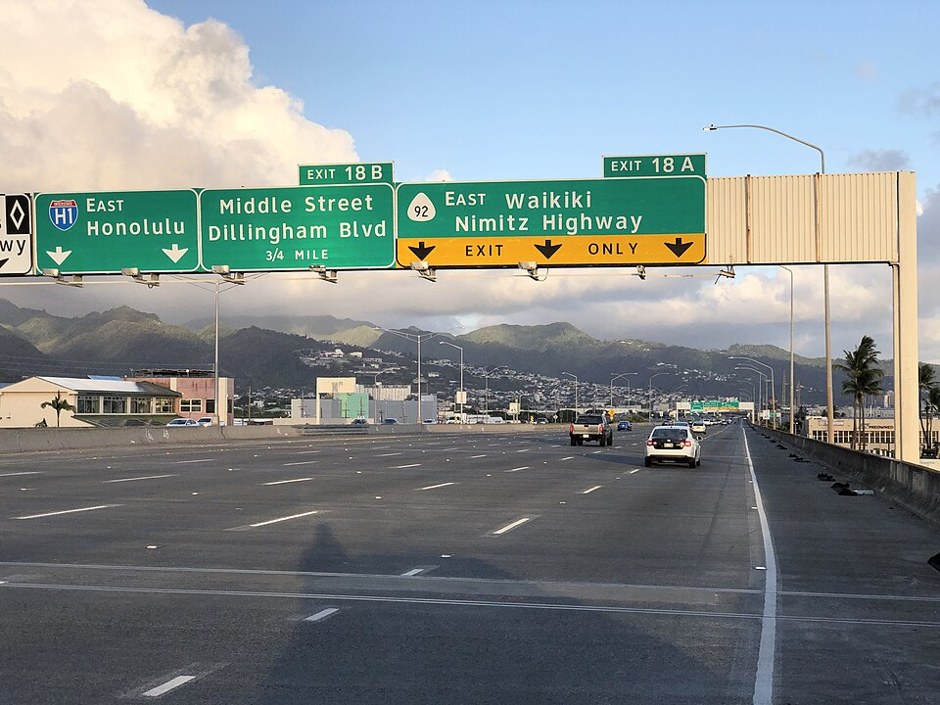
    Photo: Famartin, CC BY-SA 4.0, via Wikimedia Commons

    Honolulu’s online permit test page describes the Hawaii written test as 30 multiple-choice questions on rules of the road and traffic control devices, with a one-hour limit online. This page gives you a 30-question mock in that format, then 10 bonus questions on the Hawaii rules that trip people up. All questions are original and unofficial, written from the 2023 Hawaii Driver’s Manual, not taken from the county tests.

    Hawaii written test at a glance

    Item Detail (as of November 2026)
    Questions 30 on Honolulu’s pages; HDOT’s statewide online page says 25. Prepare for 30.
    Pass mark Ask your county office. A Maui County page says more than 6 errors is a fail, which is 24 of 30.
    Time limit online One hour
    Fail? Wait seven days after a knowledge-based fail. Each attempt costs the full fee ($12 online in Honolulu).
    Minimum age 15 and a half

    How to book, county fees and what to bring: the Hawaii written test and instruction permit guide.

    Mock exam: 30 questions

    Set a one-hour timer and no notes, as on the online test.

    1. A triangular sign pointing down tells you to:

    • A. Yield to traffic and pedestrians, stopping if needed
    • B. Watch for falling rocks
    • C. Stop every time
    • D. Merge without looking

    Answer: A. YIELD means give way; you only have to stop if traffic or pedestrians require it. Manual topic: Chapter VI, signals, signs and lane markings.

    2. Which color is used for regulatory signs such as speed limits?

    • A. Yellow with black letters
    • B. Brown with white letters
    • C. White with black letters
    • D. Green with white letters

    Answer: C. Regulatory signs (laws you must obey) are mostly black on white. Yellow warns; green guides. See US road signs by shape and color.

    3. A yellow diamond sign with a picture of a person walking means:

    • A. Watch for pedestrians crossing
    • B. Pedestrians may not cross
    • C. Hiking trail ahead
    • D. Sidewalk closed

    Answer: A. Diamond warning signs alert you to conditions ahead, here a pedestrian crossing. Manual topic: Chapter VI.

    4. An orange triangle with a red border on the back of a slow vehicle means:

    • A. A vehicle carrying explosives
    • B. A tow truck
    • C. The vehicle is designed to go 25 mph or less
    • D. A school vehicle

    Answer: C. The manual says this emblem marks vehicles built for 25 mph or less. Slow down and approach with care.

    5. When may you cross a double solid yellow center line in Hawaii?

    • A. Never, even to turn
    • B. To pass a slow car
    • C. Whenever no traffic is coming
    • D. Only to turn left into or out of an alley, private road or driveway

    Answer: D. The Hawaii manual allows crossing a double solid yellow line only to turn left into or out of an alley, private road or driveway. See US pavement markings.

    6. A steady red light with a green arrow pointing right means:

    • A. You may turn right in the arrow’s direction, yielding to pedestrians still crossing
    • B. The light is broken
    • C. You must wait for the red to change
    • D. Only buses may turn

    Answer: A. A green arrow allows the movement shown even while the main light is red. See traffic signals in the US.

    7. How far before turning, changing lanes or stopping must you signal in Hawaii?

    • A. At least 300 feet
    • B. At least 50 feet
    • C. At least 100 feet
    • D. At least 200 feet

    Answer: C. At least 100 feet, even when no one seems to be around. Manual topic: Chapter V, traffic laws.

    8. A train signal is flashing at a crossing. How close to the nearest rail may you stop?

    • A. No closer than 10 feet
    • B. No closer than 15 feet
    • C. No closer than 5 feet
    • D. No closer than 50 feet

    Answer: B. Stop at least 15 feet from the nearest rail when a signal is on, a gate is down or a train is close. See railroad crossings.

    9. When parallel parking, your curbside wheels may be no more than how far from the curb?

    • A. 6 inches
    • B. 12 inches
    • C. 18 inches
    • D. 24 inches

    Answer: B. Parking more than 12 inches from the curb is prohibited. See how to parallel park.

    10. How many people may ride in the front seat of a car in Hawaii?

    • A. No more than three
    • B. Only the driver
    • C. Any number with belts
    • D. No more than two

    Answer: A. The manual warns that more than three persons in the front seat may be a violation, because it blocks your view and control. Manual topic: Chapter V.

    11. Which of these is a place where you may NOT pass another vehicle?

    • A. On a four-lane highway in the left lane
    • B. On a straight road with a broken yellow line and clear view
    • C. Within 100 feet of an intersection or railroad crossing
    • D. When the car ahead signals right

    Answer: C. The manual bans passing within 100 feet of an intersection, railroad crossing or posted narrow bridge, viaduct or tunnel. See passing on two-lane roads.

    12. The end of a “no passing zone” sign means:

    • A. You must pass now
    • B. The speed limit rises
    • C. The road becomes one way
    • D. You can see farther ahead, not that passing is automatically safe

    Answer: D. The manual points out the end of the zone only means improved visibility. Check before you pass.

    13. Two cars arrive at an uncontrolled intersection at about the same time. Who must yield?

    • A. The driver on the right yields
    • B. The car going straight always yields
    • C. The driver on the left yields to the driver on the right
    • D. The faster car goes first

    Answer: C. With no signs or signals, yield to the vehicle on your right. See right of way at uncontrolled intersections.

    14. At a roundabout in Hawaii you should:

    • A. Yield to traffic already circulating, travel counterclockwise and signal right to exit
    • B. Stop inside the circle
    • C. Travel clockwise
    • D. Signal left when leaving

    Answer: A. Slow down, yield to pedestrians, bicyclists and circulating traffic, go counterclockwise and signal right to exit. See how to drive a roundabout.

    15. An emergency vehicle is stopped on the shoulder with lights flashing. The manual says to:

    • A. Keep your speed
    • B. Stop next to it
    • C. Use your horn
    • D. Slow down and leave an empty lane next to it if you safely can

    Answer: D. Slow down and move over a lane when it is safe. See move over laws.

    16. A school bus is stopped with alternating red lights flashing. Which drivers must stop?

    • A. No one, if the bus is on the shoulder
    • B. Drivers in the bus’s lane and all lanes next to it
    • C. Only oncoming drivers
    • D. Only drivers directly behind the bus

    Answer: B. The manual says traffic in the bus’s lane and all adjacent lanes stops, and stays stopped until the bus moves or the lights go off. On a divided highway, oncoming traffic does not have to stop. See school bus stopping laws.

    17. A pedestrian with a white cane or guide dog is about to cross. You must:

    • A. Drive around them slowly
    • B. Continue if you have a green light
    • C. Honk so they know you are there
    • D. Stop and let them cross

    Answer: D. Always stop for a blind pedestrian. Manual topic: Chapter XII, pedestrian safety.

    18. A car ahead in the next lane has stopped at a crosswalk. You should:

    • A. Honk to warn the pedestrian
    • B. Change lanes and continue
    • C. Pass it carefully
    • D. Stop too; never pass a vehicle stopped for a pedestrian

    Answer: D. The stopped car may hide a person crossing. See pedestrians and crosswalks.

    19. What is the minimum following interval the Hawaii manual says you should never go below?

    • A. 1 second
    • B. 2 seconds
    • C. 4 seconds
    • D. 6 seconds

    Answer: B. At least two seconds behind the car ahead in good conditions, more in rain or at night. See following distance.

    20. When making a right turn at an intersection with a bike lane, you should:

    • A. Check for bicyclists and not drive in the bike lane
    • B. Use the bike lane as a turn lane
    • C. Turn from the left lane
    • D. Speed up to beat cyclists

    Answer: A. The manual says not to drive in a bike lane when turning right. Look over your shoulder for riders.

    21. When passing a bicyclist, leave at least:

    • A. 1 foot
    • B. 2 feet
    • C. 3 feet
    • D. 6 feet

    Answer: C. At least 3 feet. See sharing the road.

    22. A motorcyclist is riding in your lane. The motorcyclist is entitled to:

    • A. The shoulder only
    • B. The full width of the lane
    • C. Share the lane with you
    • D. Half the lane

    Answer: B. Never squeeze alongside a motorcycle in its lane. Manual topic: Chapter XI.

    23. In heavy rain, at what speed does the Hawaii manual say partial hydroplaning can start?

    • A. 25 mph
    • B. 35 mph
    • C. 50 mph
    • D. 65 mph

    Answer: B. Partial hydroplaning can start around 35 mph. Slow down in heavy rain. See driving in snow, fog and rain.

    24. Water is flowing fast across the road ahead. The manual says:

    • A. It is safe if you can see the road
    • B. Never drive through swiftly moving water more than a foot deep
    • C. Drive through quickly to avoid stalling
    • D. Follow a larger vehicle through

    Answer: B. Moving water can float a car. Turn around.

    25. You must report a crash to police immediately if it causes injury, death, or property damage of:

    • A. $500 or more
    • B. $1,000 or more
    • C. $3,000 or more
    • D. $5,000 or more

    Answer: C. The Hawaii threshold is $3,000. Stop, help the injured, warn traffic and exchange details. See what to do after a crash.

    26. A driver aged 21 or older tests at a BAC of .08 or refuses a test in Hawaii. What happens straight away?

    • A. A warning
    • B. A $50 fine
    • C. The license is taken and a 30-day temporary permit is issued
    • D. Nothing until a court date

    Answer: C. The manual says your license is taken and you get a 30-day temporary permit. A refusal can cost the license for one, two or four years depending on your record. See implied consent and DUI.

    27. Drivers under 21 in Hawaii may not drive with a BAC of:

    • A. .02 or more
    • B. .05 or more
    • C. .08 or more
    • D. .10 or more

    Answer: A. Zero tolerance applies at .02. See zero tolerance laws.

    28. Where may an open container of alcohol be kept in a car on a public road?

    • A. In the glove box
    • B. In a cup holder if the driver is not drinking
    • C. Anywhere, if the passenger is over 21
    • D. Not in the passenger area

    Answer: D. The manual bans open containers in the passenger area.

    29. Is it legal for an adult Hawaii driver to hold a phone while stopped at a red light?

    • A. Yes, the car is not moving
    • B. No. Hand-held use is banned while driving, including when stopped at a light or stop sign
    • C. Only on Oahu
    • D. Yes, for calls only

    Answer: B. HDOT says hand-held use is illegal, even when stopped. See hands-free and texting laws.

    30. Tires must be replaced when tread depth is less than:

    • A. 1/32 inch
    • B. 1/16 inch
    • C. 1/8 inch
    • D. 1/4 inch

    Answer: B. Replace tires with less than 1/16 inch of tread. They also have to pass the annual safety inspection. See Hawaii safety inspection.

    Score your mock exam

    Correct out of 30 Result
    27 to 30 Ready for the real test
    24 to 26 A pass on Maui’s 6-error rule. Review your misses.
    Under 24 A fail on that rule. Study the chapters named in your misses.

    Bonus: Hawaii permit and teen rules (questions 31 to 40)

    31. What is the youngest age for a Hawaii instruction permit?

    • A. 15
    • B. 15 and a half
    • C. 16
    • D. 17

    Answer: B. 15 years and 6 months. See the Hawaii learner driver guide.

    32. The licensed driver supervising a Hawaii permit holder must be at least:

    • A. 18
    • B. 19
    • C. 21
    • D. 25

    Answer: C. At least 21 and licensed for that type of vehicle, in the right front seat.

    33. Between 11 p.m. and 5 a.m., who must supervise a Hawaii permit holder?

    • A. No one; permit holders cannot drive then at all
    • B. A parent or guardian
    • C. A driving instructor only
    • D. Any licensed driver 21 or older

    Answer: B. At night the supervisor must be your parent or guardian. Other times, any licensed driver 21 or older.

    34. How long must a Hawaii permit holder under 18 hold the permit before the road test?

    • A. 90 days
    • B. 120 days
    • C. 180 days
    • D. 1 year

    Answer: C. At least 180 days. See the Hawaii road test guide.

    35. May a 16-year-old with a Hawaii permit use a hands-free phone while driving?

    • A. Only for GPS
    • B. Yes, with a parent in the car
    • C. Yes, hands-free is legal for all
    • D. No. Drivers under 18 may not use hands-free devices either

    Answer: D. HDOT says no one under 18 may use a hands-free mobile electronic device while driving.

    36. On a Hawaii provisional license, how many passengers under 18 who are not household members may you carry without a licensed parent or guardian?

    • A. 0
    • B. 1
    • C. 2
    • D. 3

    Answer: B. No more than one. Household members do not count. See Hawaii provisional license rules.

    37. A provisional driver may drive from 11 p.m. to 5 a.m. without a parent in which case?

    • A. Driving to or from work, carrying a signed employer statement
    • B. Driving friends home from a party
    • C. Never
    • D. Driving to the beach

    Answer: A. Work and school-authorized activities are the two exceptions. Carry the signed statement.

    38. What must a Hawaii provisional license applicant under 18 complete besides the road test?

    • A. State-certified driver education (classroom and behind-the-wheel)
    • B. Nothing else
    • C. 100 logged hours
    • D. A first aid course

    Answer: A. You need both certificates. See the Hawaii driver’s ed requirement.

    39. What is the penalty for a first violation of a Hawaii provisional license rule?

    • A. A $25 fine only
    • B. A 3-month suspension
    • C. A 1-year revocation
    • D. A written warning

    Answer: B. A first violation brings a 3-month suspension; a second, a 6-month revocation.

    40. When does a Hawaii provisional license expire?

    • A. On your 21st birthday
    • B. On your 19th birthday
    • C. It never expires
    • D. On your 18th birthday

    Answer: B. Convert to a full license from 17, after 6 months, and before your 19th birthday.

    Common questions

    Are these the real Hawaii test questions?

    No. They are original, unofficial practice. The Hawaii Driver’s Manual appendix has 177 numbered practice questions with page references, which is the best official extra practice.

    How many questions can I miss on the Hawaii permit test?

    Ask your county office for the pass mark. Maui County says more than 6 errors fails. Aim for at least 27 of 30 here.

    Can I take the Hawaii permit test online?

    Yes, statewide since December 2024, on a desktop or laptop with a webcam. Phones and tablets are not allowed. You still visit your county office afterward.

    What languages are available?

    Online, English and Spanish, and questions can be read aloud. Honolulu also offers an oral test at Kapalama. See oral and audio permit tests.

    I’m visiting from the mainland. Do I need this test?

    Not to drive on a valid US license as a visitor. See driving in Hawaii on an out-of-state license.

    Practice tests for other states?

    See US permit practice tests by state.

    Sources

    • Hawaii Department of Transportation, “Hawaii Driver’s Manual” (2023) (hidot.hawaii.gov)
    • City and County of Honolulu Customer Services, “Online Permit Test” (honolulu.gov)
    • City and County of Honolulu Customer Services, “Graduated Driver Licensing Program (GDL)” (honolulu.gov)
    • Hawaii Department of Transportation, “Graduated Driver Licensing” brochure (hidot.hawaii.gov)
    • Hawaii Department of Transportation, distracted driving news releases, 2021 and 2024 (hidot.hawaii.gov)
  • DC Permit Practice Test: Free DC DMV Knowledge Test Questions

    DC Permit Practice Test: Free DC DMV Knowledge Test Questions

    Photo: Paula Nardini, Pexels

    The DC DMV knowledge test checks traffic laws, rules of the road, safe driving and road signs, all from the DC DMV Driver Manual (December 2023). This page gives you 36 original practice questions that cover the manual’s chapters, with the District rules that differ from neighboring Maryland and Virginia. They are unofficial practice, not DC DMV questions.

    What to know about the real DC test

    • Fee as of November 2026: $10 at a DC DMV service center, $39.95 at a Test Proctoring Center, $49.95 virtual. You pay whether you pass or fail.
    • Time limit for the GRAD (learner permit) knowledge test: 75 minutes.
    • Fail it and you wait 3 full calendar days to retest. Six fails in 12 months locks you out until 12 months after the first fail.
    • Phones, watches, notes or talking count as cheating: you fail and cannot retest for 60 days.
    • Question count and pass mark: ask DC DMV if you need them.

    Documents, permit types and fees: the DC DMV learner permit and knowledge test guide.

    Signs, signals and markings (questions 1 to 10)

    1. A red octagon with white letters means:

    • A. Stop only if traffic is coming
    • B. Slow down and yield
    • C. Do not enter
    • D. Come to a complete stop

    Answer: D. STOP signs are the only eight-sided signs. Manual topic: identifying signs by colors and shapes.

    2. A square sign showing a red circle crossed by a white horizontal bar means:

    • A. Do not enter
    • B. Road closed for repairs
    • C. Railroad crossing
    • D. Hospital

    Answer: A. DO NOT ENTER marks the wrong way onto a one-way street or ramp. Manual topic: regulatory signs.

    3. Yellow signs are used for:

    • A. Parking rules
    • B. Speed limits only
    • C. General warnings about the road ahead
    • D. Directions to destinations

    Answer: C. Yellow warns of curves, intersections, crossings and similar hazards. See US road signs by shape and color. Manual topic: signs by color.

    4. Blue signs along a highway show:

    • A. Construction
    • B. School zones
    • C. Speed limits
    • D. Motorist services such as gas, food and lodging

    Answer: D. Blue is for services. Green gives directions; brown points to recreation. Manual topic: signs by color.

    5. The traffic light is green, but a police officer signals you to stop. You must:

    • A. Go if the officer is not directly in front of you
    • B. Honk to ask the officer to move
    • C. Follow the green light
    • D. Obey the officer and stop

    Answer: D. An officer’s directions override signals and signs. The manual uses this as a sample question. Manual topic: driver license examination process.

    6. A flashing yellow signal means:

    • A. The intersection is closed
    • B. Pedestrians only
    • C. Slow down and proceed with caution
    • D. Stop and wait for green

    Answer: C. Flashing yellow is a warning. Flashing red means stop first, as at a STOP sign. See traffic signals in the US. Manual topic: signals.

    7. A broken yellow center line on your side means:

    • A. You are in a bus lane
    • B. Passing is never allowed
    • C. You may pass when it is safe
    • D. The road is one way

    Answer: C. Broken yellow lets traffic pass with care; a solid yellow line on your side does not. See US pavement markings. Manual topic: pavement markings.

    8. A diamond symbol painted in a lane usually marks:

    • A. A merge point
    • B. A school crossing
    • C. A lane reserved for certain vehicles, such as carpools or buses
    • D. A pothole

    Answer: C. The diamond marks a reserved lane, such as an HOV lane. Read the signs for who may use it and when. See HOV lanes explained.

    9. The white line painted across your lane at an intersection is where you:

    • A. Park
    • B. Speed up
    • C. Stop when the signal or sign requires it
    • D. Begin a U-turn

    Answer: C. Stop behind the stop line, not in the crosswalk. Manual topic: pavement markings.

    10. A pedestrian is walking in a marked crosswalk ahead with no signal. You must:

    • A. Stop and let them cross
    • B. Go around them
    • C. Continue if they are not in your lane yet
    • D. Honk and pass behind them

    Answer: A. Pedestrians in crosswalks have the right of way. DC streets have heavy foot traffic, so expect them everywhere. See pedestrians and crosswalks.

    DC driving and traffic rules (questions 11 to 25)

    11. Unless a sign says otherwise, what is the speed limit on a DC city street?

    • A. 15 mph
    • B. 20 mph
    • C. 25 mph
    • D. 30 mph

    Answer: B. The DC default on city streets is 20 mph. See speed limits and the basic speed law. Manual topic: traffic rules.

    12. What is the DC speed limit in alleys and school zones, unless posted?

    • A. 10 mph
    • B. 15 mph
    • C. 20 mph
    • D. 25 mph

    Answer: B. 15 mph in alleys and in school zones. Manual topic: traffic rules.

    13. Can you turn left on a red light in DC?

    • A. No, left on red is illegal in DC
    • B. Yes, at night only
    • C. Yes, from one one-way street to another
    • D. Yes, after a full stop

    Answer: A. The DC manual says left on red is not allowed. For right turns on red, obey every NO TURN ON RED sign and check DDOT’s current rule. See right on red in the US.

    14. How far before a turn must you signal in DC?

    • A. At least 100 feet
    • B. At least 300 feet
    • C. At least 200 feet
    • D. At least 50 feet

    Answer: A. 100 feet before a turn. A lane change needs at least 300 feet. Manual topic: driving rules, signaling.

    15. How far ahead must you signal before changing lanes in DC?

    • A. 50 feet
    • B. 100 feet
    • C. 200 feet
    • D. 300 feet

    Answer: D. At least 300 feet for a lane change. See lane changes and blind spots.

    16. Where are U-turns banned in DC?

    • A. Only at night
    • B. Only on highways
    • C. At intersections with traffic lights, and on a crosswalk next to one
    • D. Nowhere; they are always legal

    Answer: C. The manual bans U-turns at signalized intersections and on an adjacent crosswalk. See U-turn rules.

    17. When passing a cyclist in DC you must leave at least:

    • A. 2 feet
    • B. 3 feet
    • C. 4 feet
    • D. 6 feet

    Answer: B. At least 3 feet. The manual also says not to sound your horn as you pass. See sharing the road.

    18. Which of these is legal for a fully licensed adult DC driver?

    • A. Wearing earphones attached to a music player
    • B. Talking on a phone hands-free
    • C. Texting at a stop sign
    • D. Holding the phone to your ear at a red light

    Answer: B. All DC drivers must be hands-free. Headsets or earphones attached to an audio device are banned; phone earphones and hearing aids are allowed. See hands-free and texting laws.

    19. On a one-way DC street with more than one lane, you may pass:

    • A. Not at all
    • B. On either side, when it is safe
    • C. Only on the right
    • D. Only on the left

    Answer: B. The manual allows passing on either side on multi-lane one-way roads and highways with four or more lanes. Manual topic: driving rules, passing.

    20. You are joining an interstate from a short entrance ramp with no acceleration lane. The manual’s advice is to:

    • A. Stop and wait for traffic to clear completely
    • B. Find a gap in traffic first, then speed up
    • C. Speed up first, then look for a gap
    • D. Merge slowly and expect others to brake

    Answer: B. This is one of the manual’s sample questions. With no lane to build speed, pick the gap before you go. See freeway driving for new drivers.

    21. How close to a fire hydrant may you park in DC?

    • A. 5 feet
    • B. 10 feet
    • C. 15 feet
    • D. 20 feet

    Answer: B. Not within 10 feet of a hydrant. See US parking rules. Manual topic: parking rules.

    22. You may not park within how many feet of a driveway or alley in DC?

    • A. 5 feet
    • B. 10 feet
    • C. 15 feet
    • D. 25 feet

    Answer: A. 5 feet from a driveway or alley entrance. Manual topic: parking rules.

    23. How far in front of a stop sign or traffic signal at the roadside must you keep clear when parking?

    • A. 10 feet
    • B. 15 feet
    • C. 20 feet
    • D. 25 feet

    Answer: D. 25 feet in front of a stop sign or signal. Manual topic: parking rules.

    24. Why should nothing hang from your rearview mirror in DC?

    • A. DC regulations forbid it, and it can get your road test vehicle rejected
    • B. It drains the battery
    • C. It blocks the airbag
    • D. It is legal, just untidy

    Answer: A. Objects on the mirror block your view. See the DC road skills test guide.

    25. An emergency vehicle with lights and siren comes up behind you. You should:

    • A. Speed up to stay ahead
    • B. Pull to the right, clear of intersections, and stop until it passes
    • C. Move left
    • D. Stop in the middle of the lane

    Answer: B. Give it a clear path and stop until it has gone by. See pulling over for emergency vehicles.

    Safe driving (questions 26 to 29)

    26. Which of these is the only thing that removes alcohol from your body?

    • A. Coffee
    • B. Eating a meal
    • C. A cold shower
    • D. Time

    Answer: D. Only time removes alcohol. Nothing speeds it up. See implied consent and DUI. Manual topic: driver information, alcohol and drugs.

    27. A medicine label warns it may cause drowsiness. Before driving you should:

    • A. Drink coffee to cancel it out
    • B. Drive, because legal drugs cannot impair you
    • C. Drive only on highways
    • D. Not drive until you know how it affects you, and ask a pharmacist if unsure

    Answer: D. Legal medicines can impair driving just as alcohol can. See drugged driving.

    28. In heavy rain your car starts to hydroplane. You should:

    • A. Speed up
    • B. Steer sharply to the shoulder
    • C. Brake hard
    • D. Ease off the gas and keep the wheel straight; do not brake hard

    Answer: D. Let the car slow until the tires grip the road again. See driving in snow, fog and rain.

    29. A large truck ahead is turning right and swings wide to the left first. You should:

    • A. Pass it on the right
    • B. Honk until it straightens
    • C. Pull alongside it
    • D. Stay back and let it complete the turn

    Answer: D. Trucks need room to turn right. Never squeeze into the gap on its right. Manual topic: sharing the road.

    Permits, GRAD and points (questions 30 to 36)

    30. What hours may a DC learner permit holder drive?

    • A. 5 a.m. to 10 p.m.
    • B. 6 a.m. to 9 p.m.
    • C. 6 a.m. to 11 p.m.
    • D. Any time with a supervisor

    Answer: B. 6 a.m. to 9 p.m. every day, with no exceptions. See DC GRAD hours and restrictions.

    31. Who must sit beside a DC learner permit holder?

    • A. Any licensed driver aged 18 or older
    • B. Any adult passenger
    • C. A driving instructor only
    • D. A driver aged 21 or older with a valid full license, wearing a seat belt

    Answer: D. The supervisor must be 21 or older with a full license, in the front passenger seat and belted. The manual says no other passengers.

    32. How many certified practice hours do you need before the DC road skills test?

    • A. 30
    • B. 40
    • C. 50
    • D. 60

    Answer: B. 40 hours on the 40-hour certification form. Then 10 night hours on the provisional license. See DC 40-hour and 10-hour certifications.

    33. During the school year, until what time may a DC provisional license holder drive on a Friday or Saturday night?

    • A. 9 p.m.
    • B. 10:59 p.m.
    • C. 11:59 p.m.
    • D. 1 a.m.

    Answer: C. Sunday to Thursday the limit is 10:59 p.m.; Friday and Saturday 11:59 p.m. In July and August it is 11:59 p.m. every day.

    34. On a full license with conditions, a DC driver under 18 may carry no more than how many passengers under 21 (siblings not counted)?

    • A. 1
    • B. 2
    • C. 3
    • D. 4

    Answer: B. No more than 2 passengers under 21; siblings do not count. On the provisional license, only one licensed driver 21 or older plus siblings or parents may ride.

    35. A DC driver reaches how many points for an automatic suspension?

    • A. 6
    • B. 8
    • C. 10
    • D. 12

    Answer: C. 10 or 11 points means a 90-day suspension; 12 or more means revocation for at least 6 months. Points stay on the record for 2 years. See points systems.

    36. A DC learner permit holder with 8 or more points, or a GRAD violation, faces:

    • A. A 30-day warning period
    • B. A $50 fine only
    • C. A 90-day permit suspension
    • D. Nothing until the road test

    Answer: C. The permit is suspended for 90 days and a reinstatement fee applies. Any pointable violation also delays the provisional license.

    Common questions

    How many questions are on the DC permit test?

    Ask DC DMV for the number and the pass mark. Treat any figure you see elsewhere as unofficial, and aim to get nearly all of these practice questions right.

    Are these the real DC DMV questions?

    No. They are original and unofficial. DC DMV links to a free practice test, but says it does not contain real exam questions either.

    Can I take the DC knowledge test online?

    Yes, a proctored virtual test by appointment, for $49.95 as of November 2026. Service center testing is first come, first served.

    What languages is the DC test in?

    English plus many others, including Amharic, Arabic, Chinese (Cantonese and Mandarin), French, Korean, Russian, Spanish and Vietnamese, with more added from December 15, 2025. Audio-assisted tests are available. See permit tests in other languages.

    What vision standard do I need?

    20/40 or better in your best eye, or 20/70 or better in your best eye plus a field of at least 140 degrees. Glasses are allowed.

    I don’t have a Social Security number. Can I still take the test?

    Yes, for a Limited Purpose permit, if you have lived in DC for 6 months. See the DC Limited Purpose license, and the full guide to learning to drive in Washington DC. Other states: US permit practice tests.

    Sources

    • District of Columbia Department of Motor Vehicles, “DC DMV Driver Manual” (English, December 2023)
    • District of Columbia Department of Motor Vehicles, “Knowledge Tests” (dmv.dc.gov)
    • District of Columbia Department of Motor Vehicles, “GRAD License Program” (dmv.dc.gov)
    • District of Columbia Department of Motor Vehicles, “Vision Screening” (dmv.dc.gov)
    • District of Columbia Department of Motor Vehicles, “Driver License Fees” (dmv.dc.gov)
    • Council of the District of Columbia, “D.C. Code § 50-1401.01” (code.dccouncil.gov)
  • Delaware Permit Practice Test: Free Signs and Rules Questions

    Delaware Permit Practice Test: Free Signs and Rules Questions

    Photo: Brett A, Pexels

    The Delaware DMV knowledge exam comes in two parts: a highway sign and signal test, then a rules of the road test. This practice set follows the same split, with 12 sign questions and 28 rules questions built around the figures in the Delaware Driver Manual (July 2026). Every question is original and unofficial; none is copied from the DMV.

    Delaware knowledge test format

    Item What the DMV says
    Parts Signs and signals (shapes, colors and symbols with the words removed), then rules of the road
    Length and pass mark The Sample Written Test page says 32 questions, 26 to pass. The DMV FAQ says 30 questions, 24 to pass. Both work out at about 80%.
    Vision 20/40 or better; between 20/40 and 20/50 you may be limited to daylight driving
    Who takes it at the DMV Mainly adults 18 and older. Most teens on the GDL route take the written test with their driver education teacher.

    Aim for 26 or more correct on your own practice, so the stricter figure never catches you out. More on who tests where: the Delaware DMV knowledge test guide.

    Part 1: signs and signals (questions 1 to 12)

    On the real Part 1 the words are removed from the signs, so you must know each one from its shape, color or symbol alone. Read these with that in mind.

    1. A sign with eight sides, words removed, means:

    • A. Railroad ahead
    • B. Stop
    • C. Yield
    • D. School crossing

    Answer: B. The octagon is used only for STOP. Manual topic: Section Four, signs.

    2. A downward-pointing triangle, red and white, means:

    • A. Stop
    • B. Do not enter
    • C. No passing
    • D. Yield

    Answer: D. Yield signs are the only inverted triangles. Slow down and give way. Manual topic: signs by shape.

    3. The school sign has which shape?

    • A. Five sides (pentagon)
    • B. Rectangle
    • C. Diamond
    • D. Round

    Answer: A. The pentagon marks school zones and crossings. The manual lists stop, yield and school shapes as the ones to know. Manual topic: signs by shape.

    4. A round yellow sign with an X and two Rs warns of:

    • A. Reduced speed ahead
    • B. A crossroad
    • C. A railroad crossing ahead
    • D. Road closed

    Answer: C. The round advance warning sign is placed before a railroad crossing. See railroad crossings. Manual topic: signs.

    5. Orange diamond-shaped signs usually mean:

    • A. A hospital nearby
    • B. A school zone
    • C. A work zone ahead
    • D. A scenic route

    Answer: C. The manual says work zone warning signs are usually orange. See work zone driving rules. Manual topic: work zones.

    6. A black-on-yellow sign shows a curve arrow and “30 mph”. That speed is:

    • A. The speed for trucks only
    • B. An advisory speed for the curve
    • C. The legal speed limit
    • D. A minimum speed

    Answer: B. Black-on-yellow speed plates are advisory. Legal speed limit signs are black on white. Manual topic: signs.

    7. A symbol sign shows a U-shaped arrow with a red circle and slash. It means:

    • A. No U-turn
    • B. Dead end
    • C. U-turn lane ahead
    • D. Winding road

    Answer: A. The red circle and slash prohibit the movement shown. The manual uses no U-turn, keep right and no right turn as symbol examples. Manual topic: signs.

    8. A white rectangular sign shows an arrow curving to the right of a center island. It tells you to:

    • A. Merge right
    • B. Exit right only
    • C. Turn right at the next road
    • D. Keep right of the island or divider

    Answer: D. The keep right sign directs traffic to the right of an obstruction or median. Manual topic: regulatory signs.

    9. A green traffic light means:

    • A. Stop, then go
    • B. Proceed with caution, yielding to anyone still in the intersection
    • C. Go without looking
    • D. Turn only

    Answer: B. The manual says green means proceed with caution. Pedestrians and late cars may still be crossing. Manual topic: traffic signals.

    10. In Delaware, a flashing red light means you must:

    • A. Wait for it to turn green
    • B. Treat it like a stop sign: stop fully, then go when safe
    • C. Slow down and go through
    • D. Stop only if cross traffic is coming

    Answer: B. The manual lists a flashing red signal as a sample test topic: it works like a stop sign. Manual topic: traffic signals.

    11. A traffic signal is completely dark because of a power cut. The Delaware manual says to:

    • A. Drive through at normal speed
    • B. Sound your horn and continue
    • C. Treat it like a green light
    • D. Slow down and prepare to yield to vehicles in or approaching the intersection

    Answer: D. That is the Delaware manual’s wording for a dark signal. Go only when the way is clear. See traffic signals in the US. Manual topic: traffic signals.

    12. A solid yellow line runs on your side of the center line, with a broken yellow line on the other side. You:

    • A. May pass if the road looks clear
    • B. Must turn left
    • C. May not pass
    • D. May pass only at night

    Answer: C. A solid line on your side means no passing. A double solid line means neither side may pass. Manual topic: pavement markings.

    Part 2: rules of the road (questions 13 to 40)

    13. Unless a sign shows otherwise, what is the speed limit on a Delaware two-lane road?

    • A. 45 mph
    • B. 50 mph
    • C. 55 mph
    • D. 65 mph

    Answer: B. 50 mph on two-lane roads. The manual names this as a sample test topic. See speed limits and the basic speed law.

    14. What is the default speed limit in a Delaware school zone?

    • A. 15 mph
    • B. 20 mph
    • C. 25 mph
    • D. 30 mph

    Answer: B. School zones are 20 mph unless posted. Business and residential districts are 25 mph.

    15. On a divided highway or a road with four or more lanes, the Delaware default limit is:

    • A. 45 mph
    • B. 50 mph
    • C. 55 mph
    • D. 65 mph

    Answer: C. 55 mph, unless posted. Route 1 and I-495 are 65 mph.

    16. How close to a fire hydrant may you park in Delaware?

    • A. No closer than 20 feet
    • B. No closer than 15 feet
    • C. No closer than 30 feet
    • D. No closer than 10 feet

    Answer: B. 15 feet. The manual gives this as a sample test topic. See US parking rules.

    17. You may not park within how many feet of a stop sign, traffic signal or flashing beacon?

    • A. 15 feet
    • B. 20 feet
    • C. 30 feet
    • D. 50 feet

    Answer: C. 30 feet. The other Delaware figures: 20 feet from a crosswalk at an intersection and 50 feet from a railroad crossing.

    18. When parallel parking in Delaware, your wheels must be within how far of the curb?

    • A. 6 inches
    • B. 12 inches
    • C. 18 inches
    • D. 24 inches

    Answer: B. Within 12 inches. See how to parallel park.

    19. How far ahead must you signal before turning, stopping or changing lanes in Delaware?

    • A. 50 feet
    • B. 100 feet
    • C. 200 feet
    • D. 300 feet

    Answer: D. Delaware sets 300 feet, more than many states. Manual topic: Section Four, signaling.

    20. When passing a bicycle, you must leave at least:

    • A. 2 feet
    • B. 3 feet
    • C. 5 feet
    • D. 6 feet

    Answer: B. At least 3 feet, and change lanes on multi-lane roads when you can. See sharing the road.

    21. Which of these is NOT a time Delaware law requires headlights?

    • A. When you cannot see 1,000 feet ahead
    • B. Whenever your wipers are on
    • C. Sunny midday on a dry road with clear visibility
    • D. From sunset to sunrise

    Answer: C. Lights are required at night, when visibility drops below 1,000 feet, and whenever wipers are on.

    22. You must dim your high beams when an oncoming vehicle is within:

    • A. 200 feet
    • B. 300 feet
    • C. 500 feet
    • D. 1,000 feet

    Answer: C. 500 feet for oncoming traffic, and 200 feet when you follow another vehicle. See night driving and high beams.

    23. In fog, you should drive with:

    • A. No lights, to avoid glare
    • B. High beams
    • C. Parking lights only
    • D. Low beams

    Answer: D. High beams reflect off fog back into your eyes. Low beams are one of the DMV’s sample question topics. See driving in snow, fog and rain.

    24. What minimum following distance does the Delaware manual recommend in good conditions?

    • A. 1 second
    • B. 2 seconds
    • C. 3 seconds
    • D. 4 seconds

    Answer: C. At least 3 seconds, and 4 seconds on slippery roads and in other risky conditions. See following distance.

    25. In winter, which part of the road usually freezes first?

    • A. Uphill sections
    • B. Freshly paved roads
    • C. Roads in towns
    • D. Bridges and overpasses

    Answer: D. Bridges lose heat from above and below, so ice forms there first. Manual topic: Section Five, driving skills and safety.

    26. You park downhill next to a curb. Turn your front wheels:

    • A. Straight ahead
    • B. Away from the curb
    • C. Toward the curb
    • D. Toward the road center, then straighten

    Answer: C. Downhill, wheels toward the curb or road edge. Uphill with a curb, turn them away from the curb.

    27. You are turning left at a green light (no arrow). An oncoming car is coming straight through. Who has the right of way?

    • A. You, if you signaled
    • B. Whoever is faster
    • C. The oncoming car
    • D. You, because you were there first

    Answer: C. Left-turning drivers yield to oncoming traffic. See left-turn yield rules.

    28. Traffic is merging onto the highway from a ramp beside you. What should you do?

    • A. Sound your horn
    • B. Stop in your lane
    • C. Make room by adjusting speed or moving over if safe
    • D. Speed up to block the gap

    Answer: C. Making room for merging traffic is one of the DMV’s sample topics. See freeway driving for new drivers.

    29. When may you turn left on a red light in Delaware?

    • A. Never
    • B. Only from a one-way street onto another one-way street, after stopping
    • C. Any time the road is clear
    • D. Only at night

    Answer: B. Right on red is allowed after a full stop unless a sign or red arrow prohibits it. Left on red is allowed only from one-way into one-way. See right on red in the US.

    30. A school bus stops with red lights flashing. You are coming the other way on a two-lane road. You must:

    • A. Stop only if a child is crossing
    • B. Stop
    • C. Slow to 10 mph and pass
    • D. Continue, because only traffic behind must stop

    Answer: B. In Delaware both directions stop, unless you are on the opposite side of a road with four or more lanes. See school bus stopping laws.

    31. What happens to speeding fines in a Delaware work zone?

    • A. They are waived for first offenses
    • B. Only trucks pay more
    • C. They are doubled
    • D. They are the same as anywhere else

    Answer: C. The manual says work zone speeding fines are doubled.

    32. Your car starts to skid on a wet road. What should you do?

    • A. Ease off the gas and steer where you want the car to go
    • B. Turn the wheel hard the other way
    • C. Slam on the brakes
    • D. Accelerate out of it

    Answer: A. How to handle a skid is a named sample topic. Smooth inputs let the tires grip again. See vehicle emergencies.

    33. When must a crash in Delaware be reported to police?

    • A. Only if the other driver asks
    • B. Only if a car must be towed
    • C. If anyone is hurt or killed, or there is apparent damage of $500 or more on a public highway
    • D. Only if someone is taken to hospital

    Answer: C. The manual sets the reporting rule at any injury or death, or $500 or more in apparent property damage. See what to do after a crash.

    34. A Delaware driver under 21 breaks the law at what BAC?

    • A. 0.00%
    • B. 0.02%
    • C. 0.05%
    • D. 0.08%

    Answer: B. Zero tolerance applies at 0.02 for drivers under 21. Adults are limited to 0.08. See zero tolerance laws.

    35. When may studded tires be used in Delaware?

    • A. October 15 to April 15
    • B. Only during a snow emergency
    • C. December 1 to March 1
    • D. All year

    Answer: A. The manual allows studded tires from October 15 to April 15 only.

    36. Who may supervise a teen on a Delaware GDL Level One permit?

    • A. A licensed parent, guardian or sponsor-approved driver aged 25 or older who has held a Class D license for 5 years
    • B. Any passenger with a learner’s permit
    • C. Any licensed driver aged 18 or older
    • D. Any licensed driver aged 21 or older

    Answer: A. The GDL law sets 25 and 5 years of Class D. The “21 or older” rule is for the adult learner’s permit. See Delaware GDL rules for teens.

    37. How many supervised practice hours must a Delaware GDL driver complete in the first 6 months?

    • A. 30, with 5 at night
    • B. 40, with 10 at night
    • C. 50, with 10 at night
    • D. 60, with 15 at night

    Answer: C. 50 hours, 10 of them at night, certified by a parent or guardian. See supervised driving hours by state.

    38. From month 7 of the GDL permit, when may a Delaware teen drive alone?

    • A. 5 a.m. to 9 p.m.
    • B. 6 a.m. to 10 p.m.
    • C. 6 a.m. to 11 p.m.
    • D. Any time

    Answer: B. 6 a.m. to 10 p.m., plus direct trips to or from church, work or school activities on school property.

    39. A Delaware GDL driver wants to use GPS on a phone through a hands-free mount while driving. Is that allowed?

    • A. Yes, after month 6
    • B. No. GDL drivers may not use a cell phone or similar device at all, even hands-free
    • C. Only on highways
    • D. Yes, hands-free is legal for everyone

    Answer: B. Every Delaware driver is banned from hand-held use. GDL drivers may not use one at all while driving. Set the route before you move. See hands-free and texting laws.

    40. A Delaware GDL driver breaks a permit restriction for the first time. What is the penalty?

    • A. A warning letter only
    • B. A 1-year revocation
    • C. A $25 fine and no suspension
    • D. A 2-month suspension

    Answer: D. 2 months for a first offense, 4 months for each later one. The suspended time is added to the end of the 12 months.

    Check your score

    Correct out of 40 Where you stand
    34 to 40 Above the stricter DMV standard (26 of 32 is about 81%)
    32 to 33 Borderline. Review your misses.
    Under 32 Not yet. Reread Sections Two and Four of the manual.

    Also check yourself on Part 1 alone: if you missed more than 2 of the 12 sign questions, drill sign shapes and colors before anything else.

    Common questions

    Are these the real Delaware DMV questions?

    No. They are original, unofficial practice. The DMV’s free sample test has 10 questions, and the DMV says it does not include every question on the real exam.

    How many questions can I miss on the Delaware permit test?

    The DMV sample test page allows 6 misses (26 of 32). The FAQ also allows 6 (24 of 30). Confirm the current format at the DMV.

    Do 16-year-olds take this test at the DMV?

    Usually not. On the GDL route your driver education teacher gives the written and road tests. See Delaware driver’s ed and the Blue Certificate.

    Can I take the test in audio form?

    The manual says audio tests with headphones are available on request. Ask your DMV office about languages. See permit test accommodations.

    When can I take the road test after passing?

    For adults, no sooner than 30 days after the knowledge exam under the July 2026 manual (the DMV road test web page still says 10), within the 12-month life of the permit. See the Delaware road test guide and the full Delaware learner driver guide.

    Where are practice tests for other states?

    See US permit practice tests by state.

    Sources

    • Delaware Division of Motor Vehicles, “Delaware Driver Manual” (July 2026) (dmv.de.gov)
    • Delaware Division of Motor Vehicles, “Sample Written Test” (dmv.de.gov)
    • Delaware Division of Motor Vehicles, “Frequently Asked Questions” (dmv.de.gov)
    • Delaware Division of Motor Vehicles, “Graduated Driver License” (dmv.de.gov)
    • Delaware Code, “Title 21, Section 2710, Graduated driver licensing” (delcode.delaware.gov)
  • Connecticut Permit Practice Test: 40 Free DMV Questions

    Connecticut Permit Practice Test: 40 Free DMV Questions

    Photo: jglazer75, CC BY 2.0, via Wikimedia Commons

    The Connecticut DMV knowledge test has 25 multiple-choice questions, and you need 20 correct (80%) to pass. This page gives you 40 original practice questions: one full 25-question mock test plus a 15-question extra round on the Connecticut rules people most often get wrong. They are unofficial, written from the State of Connecticut Driver’s Manual and DMV pages, and are not the DMV’s own questions.

    The real Connecticut knowledge test

    • 25 questions; 20 right to pass, so you can miss 5.
    • Taken at a DMV office by appointment, straight after a vision test (20/40 or better, glasses allowed).
    • Since January 1, 2026, you must finish the free online Work Zone Safety Course before testing.
    • Fail it and you wait 7 days and pay the $40 testing fee again (fee as of November 2026).

    Booking, documents and fees are in the Connecticut knowledge test and learner’s permit guide.

    How to use this practice test

    1. Do questions 1 to 25 in one sitting, without the manual. Score 20 or more and you are at pass level.
    2. Check every miss against the chapter named in the explanation.
    3. Then do the extra round (26 to 40). These are the Connecticut numbers and teen rules that cost people marks.

    Mock test: questions 1 to 25

    1. What shape is a YIELD sign?

    • A. Octagon
    • B. Pentagon
    • C. Downward-pointing triangle
    • D. Diamond

    Answer: C. The yield sign is the only downward-pointing triangle. Slow down and give way to traffic and pedestrians, stopping if needed. Manual topic: know the road, sign shapes.

    2. A five-sided (pentagon) sign warns you about:

    • A. A no-passing zone
    • B. A hospital
    • C. A railroad crossing
    • D. A school zone or school crossing

    Answer: D. The manual says the pentagon marks school zones and school crossings. Manual topic: sign shapes.

    3. A pennant-shaped yellow sign on the left side of the road means:

    • A. Road narrows
    • B. No passing zone
    • C. Merge left
    • D. Lane ends

    Answer: B. The sideways pennant marks the start of a no-passing zone. See US road signs by shape and color. Manual topic: sign shapes.

    4. Brown signs with white lettering point you to:

    • A. Speed limits
    • B. Hospitals and police stations
    • C. Road work
    • D. Parks, recreation and cultural sites

    Answer: D. Brown guide signs show recreational and cultural destinations. Blue signs show services such as gas and food. Manual topic: sign colors.

    5. A steady yellow traffic light means:

    • A. The signal is broken
    • B. Yield to cross traffic, then go
    • C. The light is about to turn red; stop if you can do so safely
    • D. Speed up to clear the intersection

    Answer: C. Steady yellow warns that red is coming. Stop unless you are too close to stop safely. Manual topic: traffic signals.

    6. A green arrow pointing left means:

    • A. Left turns are banned
    • B. You must yield to oncoming traffic before turning
    • C. You may turn left; oncoming traffic should be stopped
    • D. Only buses may turn left

    Answer: C. A green arrow gives a protected turn in the direction shown. Still watch for late pedestrians. See traffic signals in the US. Manual topic: traffic signals.

    7. A double solid yellow center line means:

    • A. Only traffic on the right may pass
    • B. Passing is allowed with care
    • C. The road is one way
    • D. Neither direction may pass

    Answer: D. Double solid yellow lines bar passing from both sides. Manual topic: pavement markings.

    8. White lines on the road separate:

    • A. Bus lanes from car lanes only
    • B. Traffic moving in opposite directions
    • C. Parking spaces from bike lanes only
    • D. Lanes of traffic moving in the same direction

    Answer: D. White lines divide same-direction lanes and mark the right edge. Yellow lines separate opposite directions. See US pavement markings. Manual topic: pavement markings.

    9. Two cars arrive at a four-way stop at the same time. Which goes first?

    • A. The car going straight, always
    • B. The larger vehicle
    • C. The car on the left
    • D. The car on the right

    Answer: D. The first to arrive goes first. If you arrive together, the vehicle on the right goes first. See four-way stops explained. Manual topic: road safety, right of way.

    10. You are entering a roundabout or rotary. You must:

    • A. Stop inside the circle to let cars in
    • B. Yield to traffic already circulating
    • C. Enter to the left of the center island
    • D. Expect circulating traffic to yield to you

    Answer: B. Traffic already in the circle has the right of way. See how to drive a roundabout. Manual topic: road safety.

    11. Where is the crosswalk at an intersection with no painted lines?

    • A. There is still a crosswalk; imagine the sidewalk extending across the road
    • B. Only at the stop line
    • C. There is none, so pedestrians must wait for you
    • D. Only where a sign is posted

    Answer: A. The manual says there is a crosswalk at every intersection, even if it is not marked. Yield to pedestrians crossing there. Manual topic: driving behaviors, pedestrians.

    12. An ambulance with flashing lights and siren is coming toward you from any direction. What must you do?

    • A. Stop exactly where you are, even in an intersection
    • B. Keep going at the limit so you are not in the way
    • C. Speed up and pull into the left lane
    • D. Pull to the right edge and stop until it passes, clearing an intersection first

    Answer: D. Pull over to the right and stay stopped until it has passed, unless police or firefighters direct otherwise. If you are in an intersection, clear it first. Manual topic: driving behaviors.

    13. Under Connecticut’s Move Over law, when any vehicle is pulled over on the road you must:

    • A. Flash your high beams as you pass
    • B. Slow down below the posted limit and move over a lane when it is safe
    • C. Stop behind it
    • D. Keep your speed and lane

    Answer: B. The manual says slow down and move over one lane whenever it is safe to do so. See move over laws in the US. Manual topic: driving behaviors.

    14. A school bus is stopped with red lights flashing on an ordinary two-way road. Who must stop?

    • A. Only traffic behind the bus
    • B. No one, if no children are visible
    • C. Only traffic facing the bus
    • D. Traffic in both directions

    Answer: D. Stop in either direction. The exception in the manual is a divided road with a median or barrier, when the bus is on the other side. See school bus stopping laws. Manual topic: road safety.

    15. What following distance does the Connecticut manual tell you to keep behind a car in normal conditions?

    • A. At least three seconds
    • B. One second
    • C. One car length per 20 mph
    • D. Close enough to read its plate

    Answer: A. Use the three-second rule: count from when the car ahead passes a fixed point. Add time in bad weather. See following distance and the space cushion. Manual topic: driving behaviors.

    16. Following a large truck, the manual says you should never follow at less than:

    • A. One second
    • B. 10 feet
    • C. Three seconds
    • D. Half a car length

    Answer: C. Trucks hide the road ahead and you vanish from the driver’s mirrors if you sit too close. Manual topic: sharing the road with trucks.

    17. You may turn right on a red light in Connecticut:

    • A. After a full stop, yielding to pedestrians and traffic, unless a sign prohibits it
    • B. Never
    • C. Without stopping if the road is clear
    • D. Only with a green arrow

    Answer: A. Stop completely, yield, then turn when safe. Obey any NO TURN ON RED sign. See right on red in the US. Manual topic: road safety.

    18. Your windshield wipers are on because it is raining. Your headlights must be:

    • A. On parking lights only
    • B. Off in daylight
    • C. On
    • D. On high beam

    Answer: C. Connecticut law requires headlights whenever your wipers are on. Manual topic: road safety, lights.

    19. When should you dim your high beams for an oncoming vehicle?

    • A. Only once it has passed
    • B. Never at night
    • C. Only on highways
    • D. When you come within about a block of it

    Answer: D. The manual says dim within about a one-block distance of an oncoming vehicle, and when following another car. See night driving and high beams. Manual topic: road safety, lights.

    20. Your brakes suddenly fail. The manual’s first step is to:

    • A. Turn off the engine
    • B. Pump the brake pedal
    • C. Steer into a ditch
    • D. Shift into reverse

    Answer: B. Pump the pedal, then apply the parking brake slowly, then shift to a lower gear. See vehicle emergencies. Manual topic: vehicle emergencies.

    21. A front tire blows out. You should:

    • A. Swerve to the shoulder at once
    • B. Grip the wheel, keep straight, ease off the gas and brake lightly
    • C. Brake hard immediately
    • D. Speed up to keep control

    Answer: B. Hard braking or sharp steering can spin the car. Slow gradually, then pull off. Manual topic: vehicle emergencies.

    22. Your gas pedal sticks while driving. What should you do?

    • A. Shift to neutral, pull off when safe, then turn off the engine
    • B. Pump the gas pedal
    • C. Keep driving until it frees itself
    • D. Turn the engine off at speed and steer hard

    Answer: A. Neutral cuts power to the wheels while you keep steering. Manual topic: vehicle emergencies.

    23. What is the lowest blood alcohol content (BAC) that breaks Connecticut’s zero tolerance law for a driver under 21?

    • A. 0.00%
    • B. 0.02%
    • C. 0.05%
    • D. 0.08%

    Answer: B. Under 21, a test of .02% or more on public roads or private property means at least a 45-day suspension and an ignition interlock for at least a year. See zero tolerance laws. Manual topic: drinking and driving.

    24. In Connecticut, who must wear a seat belt?

    • A. Only passengers under 16
    • B. The driver and every passenger
    • C. Only the driver
    • D. Only front-seat riders

    Answer: B. The driver and every passenger must be belted, and the manual sets a $75 fine for each person. Children under 16 must be in proper restraints. Manual topic: before you get behind the wheel.

    25. A 17-year-old Connecticut driver wants to make a hands-free call. Is it legal?

    • A. No. Drivers under 18 may not use any phone or mobile device, even hands-free
    • B. Yes, on the highway only
    • C. Yes, if the phone is mounted
    • D. Yes, at red lights

    Answer: A. Under 18 there is a total ban, apart from emergency calls. From 18, hands-free only. See Connecticut teen driver restrictions. Manual topic: before you get behind the wheel.

    Score the mock test

    Correct (out of 25) What it means
    23 to 25 Ready. Book your test.
    20 to 22 A pass on the DMV standard. Fix your misses first.
    Under 20 A fail. Reread the manual chapters you missed and try again in a few days.

    Extra round: Connecticut numbers and teen rules (questions 26 to 40)

    26. How many questions are on the Connecticut DMV knowledge test, and how many must you get right?

    • A. 20 questions, 16 to pass
    • B. 25 questions, 20 to pass
    • C. 30 questions, 24 to pass
    • D. 50 questions, 40 to pass

    Answer: B. 25 questions, with 20 correct needed. That means you can miss 5.

    27. What must every Connecticut learner’s permit applicant complete before the knowledge test, as of 2026?

    • A. 10 hours of driving with a parent
    • B. A 30-hour classroom course
    • C. The free online Work Zone Safety Course
    • D. A road sign quiz at a driving school

    Answer: C. Since January 1, 2026, the DMV requires the Work Zone Safety Course certificate. It takes under an hour. See the Connecticut learner driver guide.

    28. How close to a fire hydrant may you park in Connecticut?

    • A. No closer than 15 feet
    • B. No closer than 10 feet
    • C. No closer than 5 feet
    • D. No closer than 25 feet

    Answer: B. The manual says do not park within 10 feet of a fire hydrant. Manual topic: road safety, parking.

    29. How far from a stop sign must you park?

    • A. At least 10 feet
    • B. At least 15 feet
    • C. At least 25 feet
    • D. At least 20 feet

    Answer: C. The manual sets 25 feet from a stop sign. See US parking rules. Manual topic: road safety, parking.

    30. When parallel parked, your wheels may be no more than how far from the curb?

    • A. 1 foot
    • B. 18 inches
    • C. 2 feet
    • D. 3 feet

    Answer: A. The manual says no more than one foot from the curb. Manual topic: road safety, parking.

    31. Until 18, a Connecticut driver may not drive between:

    • A. 10 p.m. and 5 a.m.
    • B. 11 p.m. and 5 a.m.
    • C. 12 a.m. and 6 a.m.
    • D. 1 a.m. and 5 a.m.

    Answer: B. The curfew is 11 p.m. to 5 a.m., with exceptions for employment, school, religious activities, medical necessity and Safe Ride drivers. Manual topic: obtaining a license, teen restrictions.

    32. A 16-year-old has held a Connecticut license for 3 months. Which passenger is allowed without anyone else in the car?

    • A. A 16-year-old friend
    • B. A licensed parent
    • C. Two classmates
    • D. A 15-year-old brother

    Answer: B. In the first 6 months, only a driving instructor, parents or guardians, or one person 20 or older licensed for 4+ years with no suspension. Brothers and sisters are allowed only from month 7. Manual topic: teen restrictions.

    33. In months 7 to 12 of a Connecticut teen license, which group is added to the allowed passengers?

    • A. Any friend under 18
    • B. Immediate family members
    • C. Anyone with a learner’s permit
    • D. Up to three classmates

    Answer: B. From month 7, immediate family, such as brothers and sisters, may ride as well. Friends still may not.

    34. Who may ride with a 16 or 17 year old Connecticut learner’s permit holder?

    • A. Any licensed adult and up to two friends
    • B. Anyone 18 or older
    • C. Only a parent, legal guardian or qualified trainer
    • D. Any passenger wearing a seat belt

    Answer: C. Permit holders under 18 may carry only these passengers. With a licensed driving instructor, parents or guardians may ride along. See permit rules.

    35. To be a qualified trainer for a Connecticut permit holder, a person must be at least what age, with a license held 4 years and no suspension in that time?

    • A. 18
    • B. 20
    • C. 21
    • D. 25

    Answer: B. A qualified trainer is 20 or older and has held a license for at least four years with no suspension in that period.

    36. Police stop a 17-year-old for breaking the teen curfew. What can happen on the spot?

    • A. Only a verbal warning is allowed
    • B. The license is seized for 48 hours
    • C. Nothing until a court hearing
    • D. The car is impounded for 30 days

    Answer: B. Police take the license of a 16 or 17 year old cited for breaking a restriction. A parent must go with the teen to get it back. A conviction brings a 30-day suspension and a $175 restoration fee. See Connecticut suspensions for teen drivers.

    37. Any Connecticut driver who refuses a chemical test after a DUI arrest faces a license suspension of at least:

    • A. 7 days
    • B. 45 days
    • C. 90 days
    • D. 2 years

    Answer: B. Refusal at any age means at least 45 days, then an ignition interlock for at least a year. See implied consent and DUI. Manual topic: drinking and driving.

    38. Hand-held phone use is banned for every Connecticut driver. Does that include when you are stopped at a red light?

    • A. Only for texting, not calls
    • B. Only on highways
    • C. No, stopped means not driving
    • D. Yes; use a phone only when parked safely off the road

    Answer: D. The ban covers being stopped in traffic or at a light. See hands-free and texting laws.

    39. What do drivers in a Connecticut highway work zone face if they break the rules?

    • A. Fines of up to $1,000, and doubled distracted-driving fines
    • B. A fine only if a worker is hurt
    • C. A warning only
    • D. No extra penalty

    Answer: A. The manual flags work zone fines up to $1,000. Driving over 75 mph in a highway work zone also triggers the Operator Retraining Program. See work zone driving rules.

    40. Before the Connecticut road test, every new driver must complete which course?

    • A. A first aid course
    • B. A 4-hour online quiz
    • C. A motorcycle safety class
    • D. The 8-hour Safe Driving Practices course

    Answer: D. The 8-hour Safe Driving Practices course applies to every new driver. Teens’ parents also take a 2-hour class. See the 8-hour course.

    Common questions

    Are these the real Connecticut DMV test questions?

    No. They are original, unofficial practice questions that test the same topics. The DMV publishes its own practice tests (English and Spanish), and each manual chapter ends with study questions.

    How many questions can I miss on the Connecticut permit test?

    5. You need 20 of 25 correct.

    Which languages is the Connecticut test offered in?

    Albanian, Arabic, Mandarin Chinese, English, French, Italian, Polish, Portuguese, Russian, Spanish and Vietnamese, with paper tests in more than 20 other languages on request and an audio version by headset. See permit tests in other languages.

    Should I use the audio manual?

    The DMV notes the audio version was recorded from the November 2014 edition and is not up to date. Study the written manual.

    What happens after I pass?

    You get a temporary paper permit, and the permanent one arrives by mail. Then do your training and 40 practice hours. See the Connecticut home training guide and the Connecticut road test checklist.

    Where are practice tests for other states?

    See US permit practice tests by state.

    Sources

    • Connecticut Department of Motor Vehicles, “State of Connecticut Driver’s Manual” (revised March 2023) (portal.ct.gov)
    • Connecticut Department of Motor Vehicles, “Take the knowledge and vision tests” (portal.ct.gov)
    • Connecticut Department of Motor Vehicles, “Driving restrictions for teens” (portal.ct.gov)
    • Connecticut Department of Motor Vehicles, “Teen driver’s license information” (portal.ct.gov)
    • Connecticut Department of Motor Vehicles, “Fees” (portal.ct.gov)
    • Connecticut Department of Motor Vehicles, “Operator Retraining Program” (portal.ct.gov)
  • New York Green Light Law: Standard Licenses Without an SSN

    New York Green Light Law: Standard Licenses Without an SSN

    Photo: Eliezer Muller, Pexels

    New York’s Green Light law lets you get a standard (non-REAL ID) learner permit and driver license without proving that you are lawfully present in the United States. You can prove identity with a foreign passport, a consular ID or a foreign driver license, and if you have never been issued a Social Security number you sign an affidavit instead. You then pass the same permit test, pre-licensing course and road test as everyone else. This guide covers who qualifies, the documents, the privacy protections and what the license can’t be used for.

    Key facts (New York, as of November 2026)

    • Law: the Driver’s License Access and Privacy Act, known as the Green Light law. It amended sections 201, 502 and 508 of the New York Vehicle and Traffic Law.
    • What you get: a standard, non-commercial learner permit or driver license. Enhanced and REAL ID documents still require proof of citizenship, permanent residency or temporary lawful status.
    • No lawful presence check: applicants for a standard license or permit “shall not be required to prove that they are lawfully present in the United States”.
    • No Social Security number? Sign an affidavit that you have never been issued one.
    • Same tests: vision test, 20-question permit test, 5-hour pre-licensing course and road test.
    • Card wording: looks like any other standard license and may say “Not for Federal Purposes”, as all New York standard licenses issued after October 30, 2017 do.

    Who can get a license under the Green Light law?

    Any New York resident who meets the normal age and testing rules for a standard Class D (or other non-commercial) license. The law does three things:

    1. It removes proof of lawful presence for standard non-commercial licenses and permits.
    2. It adds foreign documents to the list of accepted proofs of identity and age.
    3. It lets applicants who have never been issued a Social Security number sign an affidavit instead of giving one.

    The law also says DMV staff must not ask about the citizenship or immigration status of anyone applying for a standard license or permit.

    Commercial driver licenses (CDLs) are not covered. Neither are Enhanced or REAL ID licenses.

    Documents for a Green Light law license

    Proof of identity and age: the 6-point system

    New York uses a points system for identity. You must present proofs that add up to six points or more, and at least one of them must carry your signature. The DMV’s form ID-44, “How to Apply for a New York Learner Permit, Driver License, Non-Driver ID Card”, lists every accepted document and its point value.

    For standard licenses, the Green Light law requires the DMV to accept these foreign documents as primary proofs of identity, in addition to everything it accepted on January 1, 2019:

    Document Condition in the law
    Foreign passport Valid, unexpired and issued by your country of citizenship. Also counts as proof of age
    Consular identification document Valid, unexpired and issued by a consulate of your country of citizenship
    Foreign driver license Valid, includes your photo, and unexpired or expired for less than 24 months

    Point values for these documents are set on form ID-44, not in the law. Use the DMV’s document guide or pre-screening tool to check that your set reaches six points before you book. The full New York list is explained in New York permit documents checklist.

    Translations

    All proofs must be in English or come with a certified English translation.

    Social Security number or affidavit

    • If you have a Social Security number, you must provide it.
    • If you have never been issued one, you sign an affidavit saying so. This option exists only for standard, non-commercial licenses and permits.

    Under 18

    If you are under 21, the DMV’s Statement of Identity and/or Residence by Parent/Guardian (form MV-45) can be one of your proofs. The manual says the applicant must also provide proof of date of birth and a Social Security number when this form is used, so ask the DMV whether it works for you if you have never had an SSN.

    What tests do you take?

    Step What to expect
    Vision test At the DMV office when you apply for the permit
    Permit (written) test 20 multiple-choice questions; you need 14 right, including at least 2 of the 4 road sign questions. Offered in 20 languages at DMV offices. See New York DMV permit test and the free New York permit practice test
    Supervised practice Under the learner permit rules. See New York learner permit supervision rules
    Pre-licensing course The 5-hour course, required before you book the road test. See New York 5-hour pre-licensing course
    Road test See how the New York road test is scored

    Fees are the same as for any standard license: New York license fees and test booking.

    What a Green Light law license can’t be used for

    • Flying and federal buildings: a standard license is not REAL ID. The DMV’s manual explains that since May 7, 2025 you need a REAL ID, an Enhanced license, a US passport or other federally accepted ID to board a domestic flight or enter military bases and certain federal facilities.
    • Proof of status: the law says a standard license or permit “shall not be used as evidence of a person’s citizenship or immigration status”.
    • Commercial driving: CDLs are outside the law.
    • Other states: rules differ. Florida, for example, treats out-of-state licenses issued only to people who can’t prove lawful presence as invalid. Check before driving outside New York.

    The card itself is designed to look the same as other standard licenses. The law allows it to state “Not for Federal Purposes”, which every New York standard license issued after October 30, 2017 already carries, whatever the holder’s status. See REAL ID and your first US driver’s license.

    Privacy: who can see your DMV records?

    The Green Light law added strong limits on sharing DMV information:

    • The DMV may not disclose your records to an agency that primarily enforces immigration law (the law names US Immigration and Customs Enforcement and US Customs and Border Protection) unless it is shown a lawful court order or judicial warrant signed by a federal judge appointed under Article III of the US Constitution.
    • If such an agency asks for your information, the DMV must tell you within three days, including which agency asked.
    • Anyone who gets DMV data must certify that they will not use it for civil immigration purposes or pass it to those agencies.
    • Records showing your Social Security number, place of birth, country of origin, school, employer and similar details are not public records.
    • Application forms for standard licenses may not show which documents you used, that you are ineligible for a Social Security number, or your citizenship or immigration status.
    • The DMV keeps copies of your identity documents only for the limited time needed to check they are genuine.
    • A standard license or permit can’t be the basis for investigating, arresting or detaining you.

    Laws can be amended, and bills to change these rules are introduced from time to time. Check the current law and the DMV’s Green Light law page before you apply.

    Common questions

    Can I get a New York learner permit without a Social Security number?

    Yes, if you have never been issued one. You sign an affidavit instead, and you get a standard permit.

    Does the DMV ask about my immigration status?

    No. For standard licenses and permits, the law bars DMV staff from asking about citizenship or immigration status.

    Is my foreign driver license enough to drive in New York?

    It can count toward your 6 points of identity if it has your photo and is valid, or expired for less than 24 months. Whether you can drive on it, or must take the full tests, is a separate question. If you are new to the US, see foreign license reciprocity by state.

    Do I have to take the road test?

    Yes, if you are a first-time New York applicant. The Green Light law changes the documents, not the tests.

    Will my license look different?

    No. The law requires standard licenses to be visually identical whether or not the holder proved lawful status. All standard licenses may carry “Not for Federal Purposes”.

    Can I take the permit test in Spanish?

    Yes. New York offers the written test in 20 languages. See permit tests in Spanish and other languages.

    Which other states have similar laws?

    See driver’s licenses regardless of immigration status. The full New York route is in learning to drive in New York.

    Sources

    • New York State Senate, “S1747B, Driver’s License Access and Privacy Act (2019-2020 session)” (legislation.nysenate.gov)
    • New York State DMV, “New York State Driver’s Manual (MV-21), Chapter 1: Driver Licenses” (dmv.ny.gov)
    • New York State DMV, “Get Your Learner Permit and First Driver License” (dmv.ny.gov)
    • New York State DMV, “How to Apply for a New York Learner Permit, Driver License, Non-Driver ID Card (ID-44)” (dmv.ny.gov)
    • Florida Legislature, “Florida Statutes s. 322.033, Invalid out-of-state driver licenses” (leg.state.fl.us)
  • New Jersey Standard License Without an SSN or Lawful Status

    New Jersey Standard License Without an SSN or Lawful Status

    Photo: Tomwsulcer, CC0, via Wikimedia Commons

    In New Jersey, the standard (basic) driver license is available to all eligible residents regardless of immigration status, according to the Motor Vehicle Commission (MVC). You need 6 Points of ID, one proof of a New Jersey address, and a Social Security number, an ITIN, or a signed affidavit if you have neither. The tests and the graduated license steps are the same as for everyone else. This guide is for first-time applicants without lawful status or without a Social Security number, and for parents of teens in that position.

    Key facts (New Jersey, as of November 2026)

    • Card: a standard New Jersey license. REAL ID licenses still require proof of legal presence.
    • Documents: 6 Points of ID (at least one primary and one secondary document), 1 proof of New Jersey residential address, and an SSN, ITIN or affidavit.
    • Foreign documents accepted: including a passport from your country of citizenship, an original birth certificate from any country and an ID card issued by a consulate or national government.
    • Translations: any document not in English needs a certified translation.
    • Tests: vision test, 50-question knowledge test (40 to pass) and road test.
    • Appointments: booked only on the MVC website. Never pay a third party for one.

    Who can get a New Jersey standard license without lawful status?

    Any New Jersey resident who meets the normal licensing rules: the minimum age, the tests, and the parent or guardian consent form if you are under 18. The MVC’s first-time driver FAQ says the basic license “is available to all eligible New Jerseyans regardless of immigration status”.

    You can’t get a REAL ID or a commercial driver license (CDL) this way. CDL applicants must prove US citizenship or lawful permanent residence.

    What documents do you need?

    Every standard license applicant brings three things, plus the completed application form BA-208.

    1. 6 Points of ID

    Your documents must prove your age and identity, include at least one primary and one secondary document, and add up to at least 6 points. Each document has a set point value, shown in the MVC’s online Standard Document selector. A full walk-through is in New Jersey 6 Points of ID.

    Primary documents on the standard license list that don’t depend on US status include:

    • a foreign government-issued passport from your country of citizenship
    • an original birth certificate from any country
    • an ID card issued by a consulate or national government
    • a photo driver license issued by a country other than the US, but only together with another government-issued document
    • a photo driver license from any US state, territory or DC

    Secondary documents that many applicants without US status can use include:

    • a high school diploma or GED, college diploma or trade school degree from any country
    • an official school or college photo ID with a transcript or school records showing your date of birth, from any country
    • certified adoption records from a country other than the US
    • a driving privilege card with photo issued by any state, municipality, US territory or DC
    • a civil marriage or civil union certificate, or a divorce decree
    • a bank statement on bank letterhead, or an ATM card with your preprinted name and signature (not both)
    • a health insurance or prescription card
    • an employee ID card with a printed pay stub from a US job
    • a property tax statement, bill or receipt from a New Jersey municipality

    Rules for every ID document:

    • Originals or certified copies only, unlaminated, with any required seals. Paper or hard copy, not electronic.
    • No primary or secondary document can be expired by more than three years.
    • No more than two 1-point documents count.
    • If your name has changed, bring the legal proof (marriage or civil union certificate, divorce decree or court order).

    2. One proof of New Jersey address

    A standard license needs one proof (REAL ID needs two). It must show your name and residential address, and electronic or paper versions are accepted. Examples:

    • a bank or credit union statement, or a utility or credit card bill, issued within the past year
    • an unexpired lease or residential rental agreement
    • a pay stub issued within six months
    • a school report card, record or transcript issued within two years
    • a doctor or hospital bill, or a health or dental statement, within the past year
    • first class mail from any government agency within the past year
    • tax correspondence from the IRS or a tax office within the past year
    • under 18: a parent or guardian can certify your address on form MR-24

    3. Social Security number, ITIN or affidavit

    • If you have a Social Security number, you must give it. The MVC verifies it with the Social Security Administration.
    • If you are not eligible for an SSN but have an Individual Taxpayer Identification Number (ITIN), you can show an official IRS or New Jersey Division of Taxation document with your name and ITIN, or a New Jersey income tax refund showing it.
    • If you have neither, sign the MVC affidavit form. It must be notarized or signed in front of an MVC agency employee. False statements are punishable by law.

    The MVC warns about scams offering to get you an SSN or ITIN. An ITIN is free from the IRS and takes around 7 weeks, and you don’t need one, because the affidavit is accepted.

    Certified translations

    Any document in a language other than English needs a certified translation. The MVC accepts a translation that is:

    1. issued by a government body, such as the consulate or ministry that issued the original; or
    2. signed with a seal by a qualified translator, such as someone certified by the American Translators Association; or
    3. made by a competent translator over 18, with a signed certification giving the translator’s name and contact details, the document and applicant names, a statement of fluency in both languages, a statement that the translation is complete and accurate (including stamps and seals), and an acknowledgment that false translation is punishable.

    Which tests do you take, and in what language?

    Step New Jersey rule
    Vision test Required for all motorists
    Knowledge test 50 questions plus an organ donation survey question; 40 correct to pass; retest after 7 days if you fail. See New Jersey MVC knowledge test and the free New Jersey permit practice test
    Test languages English, American Sign Language, Albanian, Arabic, Chinese, French, Hindi, Japanese, Korean, Polish, Portuguese, Russian, Spanish and Turkish. An oral test with headphones is available if you can’t read in any language
    Interpreter If your language isn’t offered, you must first try the test in an offered language. If you fail and need an interpreter, the MVC arranges a state-approved one and you pay the fees
    Supervised driving 6 months (3 months if you are 21 or older). Under 21: at least 50 hours, 10 of them in darkness, certified on form BA-CSD
    Road test Retest after 14 days if you fail. Only the examiner rides with you. See New Jersey road test explained

    At licensing centers the MVC uses Language Link, a phone interpreting service, and you may also bring your own interpreter for office transactions.

    Adults starting from zero follow a shorter path: getting your first New Jersey license as an adult.

    What a standard New Jersey license can’t be used for

    • Federal ID: it is not a REAL ID, so it can’t be used as identification to board a domestic flight or enter secure federal facilities. Use a REAL ID or another document TSA accepts. See REAL ID and your first US driver’s license.
    • Commercial driving: CDLs require proof of citizenship or lawful permanent residence.
    • Driving in some other states: rules differ. Florida, for example, treats licenses that a state issues only to people who can’t prove lawful presence as invalid. A New Jersey standard license is issued to citizens too, but check the rules of any state you plan to drive in.

    All New Jersey licenses, standard and REAL ID, are now produced at a secure central facility using facial recognition. You leave the office with a temporary license valid for 30 days, and the card follows by mail.

    Booking safely

    • Appointments are available only through the MVC website. The MVC does not work with third parties and verifies that you booked it yourself.
    • Be wary of any non-.gov website offering to help you get a license for a fee.
    • Bring every document to every visit.

    Common questions

    Can I get a New Jersey driver license without a Social Security number?

    Yes. If you are not eligible for an SSN and don’t have an ITIN, sign the MVC affidavit, notarized or in front of an MVC employee.

    Is my foreign passport enough on its own?

    No. It is a primary document, but you also need at least one secondary document, enough documents to reach 6 points, and one proof of address.

    Can I use my license from my home country?

    As ID, yes, if you show it with another government-issued document. As a license to drive, the MVC FAQ says visitors may drive for up to one year on a foreign license with an International Driving Permit issued in their country of residence. Residents should apply for a New Jersey license. See foreign license reciprocity by state.

    Does a teen without status follow the same GDL steps?

    Yes: permit, supervised driving, road test, then a probationary license with the usual restrictions. See New Jersey probationary license rules and decals.

    Do my documents have to be in English?

    Yes, or come with a certified translation that meets one of the three MVC options above.

    Have the document rules changed recently?

    The MVC’s 6 Points of ID page has carried a notice that updated document requirements would take effect, so check the current list on the MVC site before your appointment.

    Which other states offer similar licenses?

    See driver’s licenses regardless of immigration status. The full New Jersey route: learning to drive in New Jersey.

    Sources

    • New Jersey Motor Vehicle Commission, “Frequently Asked Questions: First-Time NJ Drivers” (nj.gov/mvc)
    • New Jersey Motor Vehicle Commission, “New Jersey Driver Manual”, Chapter 1 (revised April 2026) (nj.gov/mvc)
    • New Jersey Motor Vehicle Commission, “6 Points of ID” (nj.gov/mvc)
    • New Jersey Motor Vehicle Commission, “First Driver License/ID” (nj.gov/mvc)
    • Florida Legislature, “Florida Statutes s. 322.033, Invalid out-of-state driver licenses” (leg.state.fl.us)
  • Massachusetts Work and Family Mobility Act Licenses Explained

    Massachusetts Work and Family Mobility Act Licenses Explained

    Photo: Guohua Song, Pexels

    Under the Massachusetts Work and Family Mobility Act (WFMA), residents can get a Standard Class D (car) or Class M (motorcycle) driver’s license without proving lawful presence in the United States. You prove identity with two documents, one of which must be a foreign passport or a consular ID, plus Massachusetts residency, and you pass the same permit exam and road test as everyone else. This guide is for adults and teens applying under the WFMA and for the parents and sponsors helping them.

    Key facts (Massachusetts, as of November 2026)

    • Law: Chapter 81 of the Acts of 2022, the Work and Family Mobility Act.
    • What you get: a Standard Class D or M license. It is not valid for federal purposes.
    • Not covered: REAL ID, the Mass ID card, the Liquor ID and commercial licenses keep their existing requirements, and so does voter registration.
    • Identity: two documents. One must be a valid, unexpired foreign passport or consular ID.
    • No Social Security number? A No Social Security Number Affidavit is accepted for a Standard license with certain document types.
    • Tests: vision screening, a 25-question permit exam (18 correct to pass) and a road test.

    Who can get a license under the Work and Family Mobility Act?

    Massachusetts residents who meet the normal rules for a Class D or M license: the minimum age (16 for a learner’s permit), the tests, and the Junior Operator License (JOL) rules if you are under 18. The WFMA removes the requirement to prove lawful presence for the Standard license only.

    What documents do you need for a WFMA license?

    Proof of identity and date of birth: two documents

    The RMV’s Standard license checklist and the law set out the combination. The first document must be one of:

    • a valid, unexpired foreign passport, or
    • a valid, unexpired consular identification document.

    The second document can be any one of:

    Second document Conditions
    Driver’s license from a US state or territory Valid and unexpired
    Birth certificate Original or certified copy. The RMV checklist specifies one from a foreign jurisdiction for this route
    Foreign national identification card Valid and unexpired; the RMV does not accept digital versions
    Foreign driver’s license Valid and unexpired
    Marriage certificate or divorce decree As issued

    The law lets the Registrar review documents issued by another country and reject them where there is reasonable cause.

    Rules for every document

    • Originals only. No photocopies, no laminated documents and no digital or phone versions.
    • Any identity document in a language other than English must come with a certified English translation.
    • The RMV runs electronic checks on most documents. Some need manual review, which usually takes three to five business days and occasionally up to twenty. That is not a denial.

    Proof of Massachusetts residency

    A Standard license needs one document proving your Massachusetts residency (REAL ID needs two). Choose it from the RMV’s Acceptable Identification Document list.

    The Social Security number requirement

    Every permit or license applicant must meet it in one of three ways:

    1. a Social Security number that validates electronically with the Social Security Administration;
    2. a Social Security Number Denial Notice (not more than 60 days old) with your non-US passport, visa and I-94; or
    3. a No Social Security Number Affidavit. The RMV allows this only for certain customers presenting specific document types, and only for a Standard driver’s license, not a Massachusetts ID card.

    What tests do WFMA applicants take?

    The same ones as every new Massachusetts driver. All applicants book an appointment, pay the fees, pass a vision screening, the learner’s permit exam and the road test.

    Step Massachusetts rule
    Vision screening Field vision and basic colors, at the Service Center when you apply for the permit
    Learner’s permit exam 25 questions, 18 correct to pass, 25 minutes. At a Service Center or online with a webcam. The permit costs $30 (as of November 2026) and is valid for 2 years. See Massachusetts RMV learner’s permit test and the free Massachusetts permit practice test
    Exam languages 37 languages, including Spanish, Portuguese, Haitian Creole, Cape Verdean Creole, Chinese, Vietnamese, Arabic and American Sign Language (ASL only at a Service Center). Foreign-language oral exams can be requested through RMV Interpreter Services
    Supervised practice With a licensed driver aged 21 or older. Under 18: the JOL rules and driver education apply. See Massachusetts Junior Operator License rules
    Road test You need a sponsor aged 21 or older with at least one year of driving experience on a valid US license. A person with only a foreign license can’t be your sponsor. If you fail, wait 2 weeks. See Massachusetts road test sponsor rules

    Starting as an adult? See your first Massachusetts driver’s license as an adult.

    A conflicting line on the RMV road test page

    The RMV’s road test scheduling page still says you must prove lawful presence for a REAL ID or Standard license. The WFMA guide, the Standard license checklist and the April 2026 Driver’s Manual all allow a Standard license without it. If you are told otherwise at a Service Center, ask for the WFMA requirements to be checked.

    What a WFMA license can and can’t do

    Use Standard license under the WFMA
    Driving a car (Class D) or motorcycle (Class M) in Massachusetts Yes
    Boarding a domestic flight or entering certain federal facilities No. Since May 7, 2025, travelers 18 and older need a REAL ID or another TSA-accepted ID. A Massachusetts REAL ID has a star in the top right corner; a Standard license does not
    Commercial driving (CDL) No. CDL requirements did not change
    Getting a Mass ID card with the No SSN Affidavit No. The affidavit is for Standard driver’s licenses only
    Registering to vote Voter registration requirements did not change
    Driving in other states Check first. Florida, for example, treats licenses issued only to people who can’t prove lawful presence as invalid. A Massachusetts Standard license is also issued to citizens, but confirm each state’s rules before a trip

    A Standard license is valid for five years. See REAL ID and your first US driver’s license for the federal rules.

    If your application is denied

    You may appeal within ten days of receiving a written denial from the RMV. Formal appeals go to the Board of Appeal on Motor Vehicle Liability Policies and Bonds at the Division of Insurance, with a $50 check or money order (as of November 2026).

    Common questions

    Can I get a Massachusetts license without a Social Security number?

    Yes, a Standard license, using the No Social Security Number Affidavit if you present the document types the RMV requires.

    Is a foreign passport alone enough?

    No. You need a second identity document from the list, plus proof of residency.

    My passport has expired. Can I still apply?

    The first document must be a valid, unexpired foreign passport or consular ID. Renew one of them through your country’s consulate first.

    Can my cousin with a foreign license be my road test sponsor?

    No. The sponsor must be 21 or older with at least one year of experience on a valid US license.

    Can I take the permit exam in Portuguese or Spanish?

    Yes. The exam is offered in 37 languages. See permit tests in Spanish and other languages.

    Will my license look different from a citizen’s Standard license?

    Standard licenses don’t carry the REAL ID star, whoever holds them. Ask the RMV about any other markings.

    Which other states have similar laws?

    See driver’s licenses regardless of immigration status. The full Massachusetts route: learning to drive in Massachusetts.

    Sources

    • Massachusetts Legislature, “Session Law, Acts of 2022, Chapter 81” (malegislature.gov)
    • Massachusetts RMV, “Work and Family Mobility Act (WFMA)” guide and FAQs (mass.gov)
    • Massachusetts RMV, “Standard Class D or M Driver’s License Documents Checklist” (mass.gov)
    • Massachusetts RMV, “Massachusetts Driver’s Manual” (revised April 2026) (mass.gov)
    • Massachusetts RMV, “Apply for a passenger (Class D) learner’s permit” (mass.gov)
    • Massachusetts RMV, “Schedule and take a road test” and “Class D and M Road Test Information Sheet” (mass.gov)
    • Florida Legislature, “Florida Statutes s. 322.033, Invalid out-of-state driver licenses” (leg.state.fl.us)