Author: Get Driving Test Ready

  • Ontario G2 Rules for Under 19s: Passengers and Zero Alcohol

    Ontario G2 Rules for Under 19s: Passengers and Zero Alcohol

    Photo: Raysonho, CC0, via Wikimedia Commons

    Under Ontario’s G2 rules, every G2 driver must have zero alcohol and no more passengers than working seatbelts. If you are 19 or under, there is one more rule between midnight and 5 a.m.: one passenger aged 19 or under in your first six months, then up to three until you get your full G or turn 20. This guide explains the limits, the exemptions and the penalties.

    What a G2 driver can do in Ontario

    • Drive without an accompanying driver.
    • Drive on all Ontario roads, including 400-series highways.
    • Drive at any time of day (with the passenger limit below if you are 19 or under).

    Rules for every G2 driver, any age

    Rule Detail
    Zero alcohol Blood-alcohol level must be zero.
    Zero drugs Ontario’s zero tolerance law for G1, G2, M1 and M2 drivers covers drugs, including cannabis.
    Seatbelts Each person in the vehicle must have a working seatbelt.

    G2 passenger rules for drivers 19 and under

    These apply only between midnight and 5 a.m.

    Time on your G2 Passengers aged 19 or under allowed
    First 6 months 1
    After 6 months, until you get your full G or turn 20 Up to 3

    Passengers aged 20 or over do not count toward the limit, but every passenger still needs a working seatbelt.

    Exemptions

    The passenger limit does not apply if:

    • a fully licensed driver with at least four years’ experience and a blood-alcohol level under .05% is in the front passenger seat, with no one else in the front, or
    • your passengers are immediate family: a guardian, or people related to you by blood, marriage, common-law relationship or adoption.

    Worked examples

    • You are 18, two months into your G2, driving at 12:30 a.m. with two friends aged 17 and 18. Not allowed: only one passenger aged 19 or under in the first six months.
    • Same night, but your passengers are your brother (16) and your cousin (17). Allowed: both are family, so the exemption applies.
    • You are 19, eight months into your G2, at 2 a.m. with three friends aged 18. Allowed: up to three after six months.
    • You are 19, eight months in, at 2 a.m. with four friends aged 18 in a seven-seat car. Not allowed: four is over the limit of three.
    • You are 22 on a G2, at 1 a.m. with four friends. Allowed if everyone has a working seatbelt: the passenger rule only applies to drivers 19 and under.

    Zero alcohol: G2 and every driver 21 and under

    Zero alcohol applies to every G2 driver, whatever their age. Separately, every driver aged 21 or under must have zero blood alcohol, even with a full G. For young and novice drivers who break it, Ontario.ca lists:

    Occurrence Penalty
    First 7-day immediate suspension, 8-hour education course, $250 penalty, $60 to $1,000 fine if convicted
    Second 14-day immediate suspension, 16-hour treatment program, $350 penalty, $60 to $1,000 fine if convicted
    Third 30-day immediate suspension, 16-hour treatment program, six-month ignition interlock condition, $450 penalty, $60 to $1,000 fine if convicted

    A conviction can add a further 30 or 90-day suspension or cancellation, depending on your age and licence class. A reinstatement fee is due each time. National context: impaired driving in Canada for new drivers.

    What happens if you break a G2 condition?

    A conviction for breaking any graduated licensing condition, including the passenger limit, brings escalating sanctions:

    • first offence: 30-day suspension
    • second: 90-day suspension
    • third: your novice licence is cancelled, and you restart graduated licensing with all tests and fees

    How this works alongside demerit points: Ontario demerit points for new drivers.

    Common questions

    Can a G2 driver have a beer before driving?

    No. Every G2 driver must have a blood-alcohol level of zero.

    Can I drive on the 401 with a G2?

    Yes. G2 drivers can drive on all Ontario roads. Highway practice is what you need for the G road test.

    Do the passenger limits apply during the day?

    No. Between 5 a.m. and midnight the only limit is one passenger per working seatbelt.

    When do the passenger rules stop?

    When you get your full G licence or turn 20, whichever comes first.

    Does my girlfriend or boyfriend count as family?

    Only if you are married or in a common-law relationship. Otherwise they count toward the limit if 19 or under.

    Is there a G2 curfew?

    No. Unlike a G1, a G2 driver can drive between midnight and 5 a.m. Drivers 19 and under just have the passenger limit at those hours.

    Compare these rules with other provinces in Canadian graduated licensing compared, or see the full route in learning to drive in Ontario.

    Sources

    • Government of Ontario, “Get a G driver’s licence: new drivers” (ontario.ca)
    • Government of Ontario, “The Official MTO Driver’s Handbook: Getting your driver’s licence” (ontario.ca)
    • Government of Ontario, “Impaired driving” (ontario.ca)
    • Government of Ontario, “Understanding demerit points” (ontario.ca)
  • Ontario G Road Test: Highway Driving, Declaration, What’s Dropped

    Ontario G Road Test: Highway Driving, Declaration, What’s Dropped

    Photo: Jason Zhang, CC BY-SA 3.0, via Wikimedia Commons

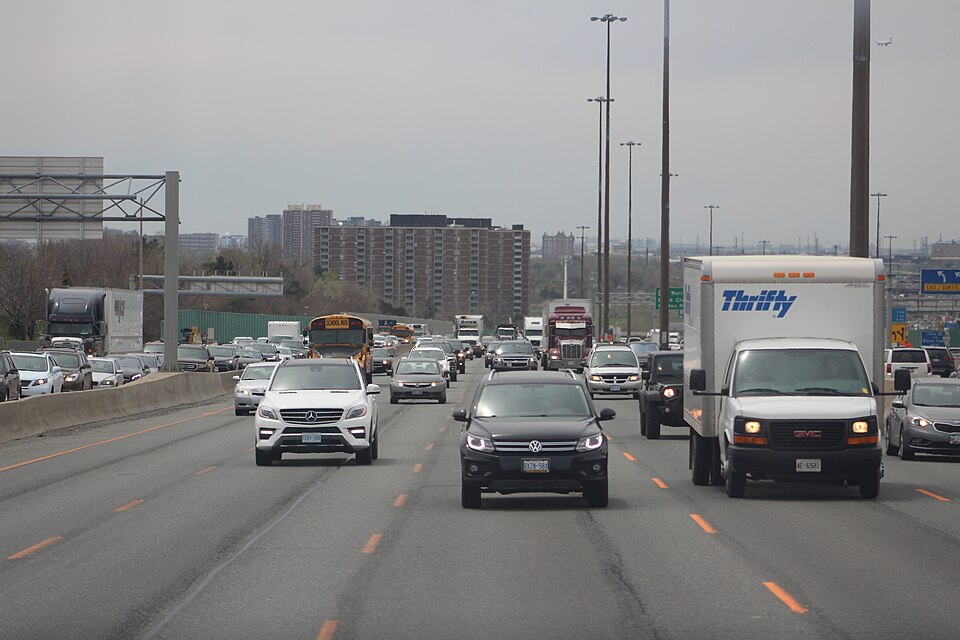
    The Ontario G road test is the G2 exit test and your last step to a full licence. It takes about 30 minutes, includes expressway driving, and you must sign a Declaration of Highway Driving Experience first. At full-time DriveTest centres it currently leaves out parallel parking, roadside stops, the three-point turn and residential driving. Here is what remains, how the declaration works and how to prepare.

    Key facts

    • Eligible after 12 months as a G2.
    • About 30 minutes, with a highway component (DriveTest).
    • You need highway experience on roads with limits of at least 80 km/h, declared on a signed form.
    • Reduced content at full-time DriveTest centres and temporary road test locations “until further notice”; part-time Travel Points still give the standard test.
    • DriveTest lists the G road test fee as $91.25; check the current amount.

    What was dropped from the G road test (and what wasn’t)

    Not currently tested at full-time centres Still tested
    Parallel parking Major roads and expressways: merging on and off, speed, space, signalling
    Roadside stops Turns and curves
    Three-point turn Lane changes
    Residential neighbourhoods Intersections
    Business areas

    Ontario says the dropped elements are already covered in the G2 road test. This was still in place as of November 2026, but it is temporary. If you book at a Travel Point, expect the full test, including the manoeuvres in the G2 road test guide.

    The Declaration of Highway Driving Experience

    Before the test you complete and sign the declaration. On it you state:

    • how many times in the three months before the test you drove on a freeway or a highway with a speed limit of at least 80 km/h
    • the average length of those trips: under 5 km, 5 to 15 km, or over 15 km

    DriveTest says you must have driven at least five times on these roads in the last three months. Freeways named in the handbook: the 400, 401, 402, 403, 404, 405, 406, 407, 409, 410, 416, 417, 420 and 427, the Queen Elizabeth Way, Don Valley Parkway, Gardiner Expressway, E.C. Row Expressway and Conestoga Parkway.

    If your experience is not enough, the examiner must declare the test out-of-order and cancel it. You lose 50% of the prepaid fee and pay it again to rebook.

    Example practice plan

    Over the 12 weeks before your test, drive the nearest freeway every other week, choosing trips over 15 km each way. Include entering and leaving at different interchanges, and drive at least once in heavier traffic. That clears the minimum with margin and covers the skills the examiner will watch.

    What the examiner checks on the expressway

    Entering

    • On the ramp, check mirrors and blind spot for a gap as soon as you can see freeway traffic.
    • Signal as soon as freeway traffic can see you.
    • Match freeway speed in the acceleration lane and merge smoothly into the centre of the nearest lane. Do not merge alongside another vehicle or into its blind spot.
    • Cancel the signal once merged.

    Driving along

    • Mirrors every 5 to 10 seconds; look 12 to 15 seconds ahead.
    • Steady speed: not over the limit, not unreasonably slow.
    • Two to three seconds behind the vehicle ahead, space on both sides, out of other vehicles’ blind spots.

    Exiting

    • Signal before the exit lane; enter it at its start.
    • Do not slow down until you are fully in the exit lane.
    • Don’t cross solid lines between exit lanes. Cancel the signal on the ramp.

    More on merging and lane choice: Ontario freeway driving for G2 drivers.

    Curves, business areas and intersections

    • Curves: slow to a safe speed before the curve and be at it by 30 metres in. Look through the curve to stay centred. No gear changes in the curve with a manual.
    • Business sections: drive in the safest through lane (usually the curb lane), watch entrances and crossings, check mirrors every 5 to 10 seconds.
    • Intersections: look left, ahead and right before entering; both hands on the wheel; do not change lanes in the intersection. Details in driving through Ontario intersections.

    G road test checklist

    1. Signed highway driving declaration, with real experience behind it.
    2. A vehicle in good working order, plated and insured, with no electronic aids in use during the test (no cruise control, lane monitoring or back camera).
    3. Money for any fees due; glasses or contacts if needed.
    4. Arrive 30 minutes early. No passengers or pets.

    If you fail, or your G2 is running out

    Full route: learning to drive in Ontario.

    Common questions

    Is parallel parking on the Ontario G test?

    Not at full-time DriveTest centres while the reduced test is in place. Part-time Travel Points still give the standard test, which includes it.

    How much highway driving do I need for the G test?

    DriveTest says at least five trips on roads with limits of 80 km/h or more, or 400-series highways, in the last three months. Longer trips show more experience on the form.

    Can I take the G test before 12 months on a G2?

    No. The G2 level lasts at least 12 months. Drivers credited with foreign experience follow the rules in New to Ontario.

    Can I use cruise control on the highway part?

    No. Electronic driving aids, including cruise control, may not be used on road tests.

    Do I still need zero alcohol after passing?

    Yes, if you are 21 or under. That zero BAC rule applies to all young drivers, whatever their licence class.

    Sources

    • Government of Ontario, “Get a G driver’s licence: new drivers” (ontario.ca)
    • Government of Ontario, “The Official MTO Driver’s Handbook: The Level Two road test” (ontario.ca)
    • Government of Ontario, “The Official MTO Driver’s Handbook: Getting your driver’s licence” (ontario.ca)
    • DriveTest, “Road Tests” and “Fees” (drivetest.ca)
  • Ontario G2 Road Test: What Examiners Check

    Ontario G2 Road Test: What Examiners Check

    Photo: Benson Kua, CC BY-SA 2.0, via Wikimedia Commons

    The Ontario G2 road test is the G1 exit test: a city drive of about 20 minutes that checks basic skills such as turns, stops, lane changes, parallel parking and a three-point turn. You can take it after 12 months on a G1, or 8 months with an approved driver education course. Here is what the examiner checks, what to bring, and what happens if you fail.

    Key facts

    • Eligible after 12 months as a G1 (8 with a government-approved BDE course).
    • About 20 minutes, a basic “city test” (DriveTest).
    • You bring the car. It must be fit, plated and insured, and an accompanying driver must come with you.
    • No passengers or pets. No instructors, friends, relatives or translators in the car.
    • Electronic aids such as automatic parking, lane monitoring, cruise control and back cameras may not be used.
    • Fail it and you must wait at least 10 days before the next attempt.

    What is on the G2 road test in Ontario?

    Ontario.ca lists the basic skills tested:

    • turning left and right
    • stopping
    • parallel parking
    • one-way streets
    • lane changes
    • three-point turns
    • driving in residential neighbourhoods
    • traffic lights, stop signs and yield signs

    The handbook adds that road tests cover passing (including bicycles), controlled and uncontrolled intersections, reversing, and foreseeing hazards.

    What the examiner looks for in each task

    The handbook breaks every road-test task into checks. Its road-test chapter is written for the G test, but the manoeuvres below are the ones the G2 test covers, and the checks are the same.

    Turns at intersections

    • Mirrors and blind spot before slowing; move to the far left or right lane early.
    • Signal before slowing, unless a driveway or side road between you and the turn would make it misleading.
    • Keep two to three seconds behind the vehicle ahead.
    • Waiting to turn left: wheels straight.
    • Both hands on the wheel through the turn. Finish in the matching lane without crossing lane markings or curbs.
    • Move off within four to five seconds once it is safe.

    Stops

    • A complete stop with no rolling. Stop at the stop line; no line, at the crosswalk; no crosswalk, at the edge of the sidewalk; no sidewalk, at the edge of the intersection.
    • If you stop past the line, do not back up.
    • Behind another vehicle, leave enough room to pull around it.

    Roadside stop

    • Check it is legal to stop there. A 150-metre gap in both directions gives enough space.
    • Stop parallel to the curb, no more than about 30 centimetres away.
    • Signal off, hazard lights on, park and set the parking brake.
    • To move off: hazards off, left signal on, mirrors and left blind spot.

    Parallel park

    • Stop beside the vehicle in front of the space, at least 60 centimetres from it.
    • Check all around, mirrors and both blind spots before reversing.
    • Do not hit the curb or touch another vehicle. Fit within the markings.
    • Pulling out: signal, mirrors and blind spot.

    Three-point turn

    • Stop no more than 30 centimetres from the curb, somewhere you will not block an entrance.
    • Left signal; mirrors and blind spot; check both ways each time you stop.
    • Use the whole road and reverse only once. Do not reverse over the edge or into the curb.

    Lane changes

    • Mirrors, then signal, then a final blind-spot check before moving.
    • Smooth move into the centre of the new lane; cancel the signal.

    The handbook says you have not checked traffic properly if another road user with the right-of-way has to take action to avoid you. Treat that as the standard for every observation.

    G2 road test checklist

    1. A vehicle in good working order, plated and insured. DriveTest lists out-of-order reasons such as a broken brake light, turn signal, headlight or horn, a flat or defective tire, a missing mirror and a cracked windshield.
    2. Your accompanying driver, who has to drive you to the centre and home if you fail.
    3. Money for any fees due.
    4. Glasses or contacts if you need them.
    5. Arrive at least 30 minutes early.

    If the examiner declares the test out-of-order, you lose 50% of your road-test fee and must pay it back before rebooking.

    On the day

    • The examiner tells you how long you have and explains the test. Ask your questions before you start, because they cannot coach you during it.
    • You will never be asked to do anything illegal.
    • At the end you get a full report of your skills and any mistakes.

    If you fail the G2 road test

    • Wait at least 10 days, then rebook. DriveTest lists a G2 retest fee of $53.75; check the current amount.
    • Use the examiner’s report to target practice.
    • If your G1 has expired, you start over and pay the test fees again.

    Booking, cancelling and rebooking are covered in booking, rescheduling and failing a DriveTest road test. Back to the Ontario licence guide.

    After you pass

    You get a G2 and can drive alone on any Ontario road. Read the G2 rules, then start building highway experience for the G road test using Ontario freeway driving for G2 drivers. Parking practice: parking in Ontario.

    Common questions

    Is the G2 road test the same as the G1 road test?

    Yes. Ontario calls it both the G2 road test and the G1 exit test. Passing it gets you a G2.

    Can I use my backup camera on the G2 test?

    No. Back cameras, parking assist, lane monitoring and cruise control may not be used. You must show mirror and shoulder checks.

    Can my driving instructor sit in the back?

    No. Only you and the examiner are allowed in the car.

    Can I use a driving school car?

    Yes, or your own, a borrowed or a rented car, as long as it meets the requirements. DriveTest does not supply cars.

    Is there a highway section on the G2 test?

    No. Expressway driving is part of the G road test, not the G2.

    Can I drive home alone after passing?

    Once your G2 is issued you can drive without an accompanying driver. If you fail, you still need one.

    Sources

    • Government of Ontario, “Get a G driver’s licence: new drivers” (ontario.ca)
    • Government of Ontario, “The Official MTO Driver’s Handbook: Getting your driver’s licence” (ontario.ca)
    • Government of Ontario, “The Official MTO Driver’s Handbook: The Level Two road test” (ontario.ca)
    • DriveTest, “Road Tests”, “Road Test Vehicle Requirements” and “Fees” (drivetest.ca)
  • Ontario G1 Rules: Supervising Driver, Highways, Night Driving

    Ontario G1 Rules: Supervising Driver, Highways, Night Driving

    Photo: Dillan Payne, CC BY-SA 4.0, via Wikimedia Commons

    Under Ontario’s G1 rules you must drive with a qualified accompanying driver, keep your blood alcohol at zero, stay off the roads between midnight and 5 a.m., and keep off 400-series highways and listed high-speed expressways unless your passenger is a driving instructor. This guide sets out each rule, who can supervise you, and what happens if you break one.

    The G1 rules in one table

    Rule What it means
    Zero alcohol Your blood-alcohol level must be zero. Ontario’s zero tolerance law also covers drugs, including cannabis.
    Accompanying driver A fully licensed driver must sit in the front passenger seat. They must be the only other person in the front.
    No night driving No driving between midnight and 5 a.m.
    Highway ban No 400-series highways with a posted limit over 80 km/h, and no listed high-speed expressways, unless the accompanying driver is a driving instructor.
    Seatbelts Every person in the vehicle must have a working seatbelt.

    Who can supervise a G1 driver in Ontario?

    Your accompanying driver must:

    • hold a valid Class G licence or higher
    • have at least four years of driving experience. Time spent on a valid (not suspended) G2 counts.
    • have a blood-alcohol level under .05% (under 50 mg of alcohol in 100 mL of blood) while you drive
    • sit in the front passenger seat as the only other person in the front

    Their licence can carry demerit points, but it cannot be suspended.

    Scenario: can your sister supervise you?

    Your sister, 20, got her G2 three years ago and her full G this year. Her valid G2 time counts, but that only gives her three years of experience. She needs four, so she cannot supervise you for another year. When she qualifies, her blood alcohol must be under .05% whenever she supervises you, and zero whenever she drives herself, because she is 21 or under.

    Can a G1 drive on the 401 or QEW?

    Not with a regular accompanying driver. The handbook bans:

    • 400-series highways with a posted speed limit over 80 km/h (for example the 401)
    • the Queen Elizabeth Way, Don Valley Parkway and Gardiner Expressway in the Greater Toronto Area
    • the E.C. Row Expressway in Windsor
    • the Conestoga Parkway in Kitchener-Waterloo
    • all of Highway 407 (the 407 ETR toll route) and Highway 407 East, whatever the posted limit

    The exception: if your accompanying driver is a driving instructor certified in Ontario, you can drive on any road. Beginner driver education courses use this to give G1 drivers supervised highway practice.

    Can a G1 drive at night?

    Yes until midnight, then not again until 5 a.m. Plan evening practice so you are parked before midnight. Dusk and night driving before midnight is worth practising, since you will be allowed to drive at any hour once you hold a G2.

    How many passengers can a G1 driver carry?

    Only as many as there are working seatbelts, and only the accompanying driver can sit in the front. There is no separate age limit on back-seat passengers for G1.

    What happens if you break a G1 rule?

    • Breaking any graduated licensing condition: conviction leads to escalating sanctions: a 30-day suspension for a first offence, 90 days for a second, and cancellation of your novice licence for a third. With cancellation you start again, retake every test and lose any BDE time discount.
    • Alcohol or drugs as a G1: a 7-day immediate licence suspension, an 8-hour education course and a $250 penalty for a first time, plus a $60 to $1,000 fine if convicted. Penalties rise for repeat occurrences. See impaired driving in Canada for new drivers.
    • Distracted driving as a G1: no demerit points, but a 30-day suspension for a first conviction, plus the fine. See distracted, careless and stunt driving.

    How points and sanctions interact is in Ontario demerit points for new drivers.

    How long do you stay on a G1?

    Usually 12 months. Pass a government-approved beginner driver education course and you can take the G2 road test after 8 months. See whether BDE is worth it. When you go for the G2 road test, your accompanying driver must come with you to the test centre.

    Common questions

    Can I drive alone with a G1?

    No. A qualified accompanying driver must be in the front passenger seat every time.

    Can my accompanying driver have had a drink?

    Their blood alcohol must be under .05% while they supervise you. Police can breath-test an accompanying driver, and if the reading is at or above that level they can direct you not to drive on with that person. The safest approach is no drinking at all.

    Can a G1 drive on Highway 7 or other 80 km/h roads?

    The handbook ban covers 400-series highways posted over 80 km/h and the named expressways. Other highways are not on the list, but check the posted signs and road type before you set off.

    Can I have friends in the back seat on a G1?

    Yes, as long as each one has a working seatbelt and your accompanying driver is the only person in the front.

    Does a G1 have to display a sign on the car?

    Check with DriveTest or the Ministry of Transportation whether a sign is needed on your car.

    Sources

    • Government of Ontario, O. Reg. 340/94 (Drivers’ Licences), s. 5, and Highway Traffic Act, s. 48.2 (e-Laws, ontario.ca)
    • Government of Ontario, “The Official MTO Driver’s Handbook: Getting your driver’s licence” (ontario.ca)
    • Government of Ontario, “Get a G driver’s licence: new drivers” (ontario.ca)
    • Government of Ontario, “Understanding demerit points” (ontario.ca)
    • Government of Ontario, “Impaired driving” (ontario.ca)
    • Government of Ontario, “Distracted driving” (ontario.ca)
  • Ontario G1 Knowledge Test: Format, Pass Mark, What to Bring

    Ontario G1 Knowledge Test: Format, Pass Mark, What to Bring

    Photo: Gogerr, CC BY-SA 4.0, via Wikimedia Commons

    The Ontario G1 knowledge test is a multiple-choice test on traffic signs and the rules of the road, taken at a DriveTest centre with no appointment. DriveTest says you need a total score of at least 80% to pass, and the test is not timed. This guide covers what to bring, what the questions cover, how to study, and what happens if you fail.

    Key facts

    • Minimum age: 16. You also take a vision test.
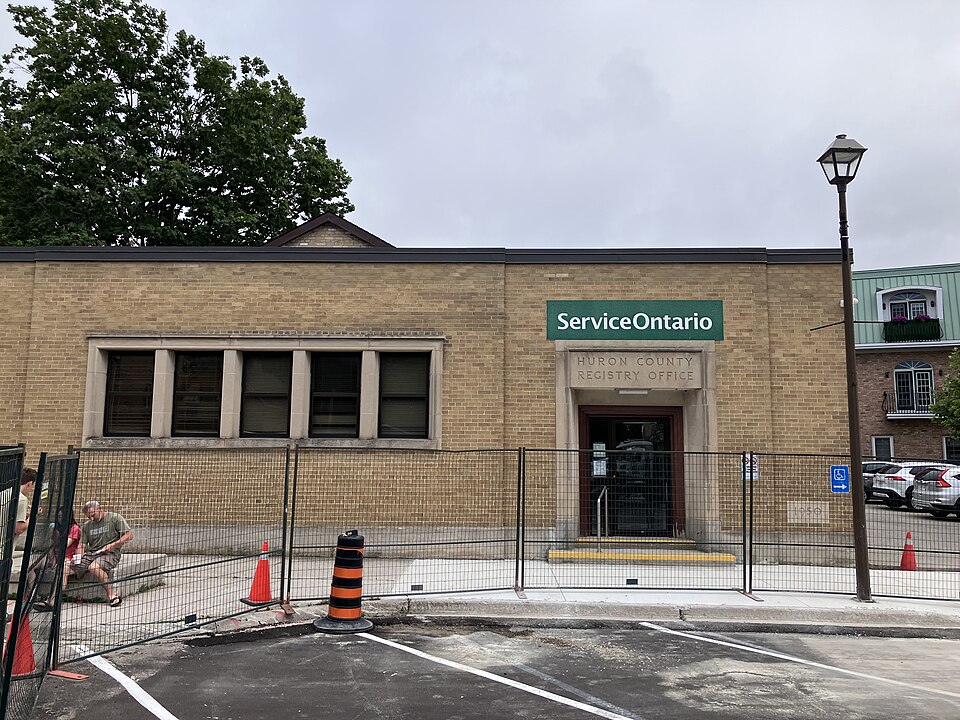
    • Walk in at any DriveTest centre. The ServiceOntario Bay and College office in Toronto is by appointment.
    • Multiple choice, in two or three sections (for example signs, and rules of the road).
    • Pass mark: 80% total, according to DriveTest.
    • Not timed: you can take until the office closes. DriveTest says most people take 20 to 30 minutes.
    • Fee: included in the $159.75 G1 package listed by DriveTest; a retest is $16.00. Check current fees on DriveTest.

    What to bring to the G1 test

    • Original ID showing your legal name and full date of birth: for example a passport, Canadian Citizenship Card with photo, Permanent Resident Card, or study or work permit. The handbook checklist says to bring two pieces of identification, so bring a second document if you have one.
    • Payment: cash, debit or credit card.
    • Glasses or contact lenses if you need them to drive. The vision test is done at the same visit.

    Expired documents and photocopies are not accepted.

    How many questions are on the G1 test, and what is the pass mark?

    DriveTest describes the test as two or three sections, such as one on signs and one on rules of the road, with a pass mark of at least 80% overall. Check the question count with DriveTest.

    All questions follow the handbook’s sample format: a question with four possible answers. DriveTest offers the test on paper at all locations and on computer at some, in many languages.

    What the G1 test asks about

    The handbook’s “Could you pass?” list says the written test may cover:

    Topic Where to study
    Traffic signs and lights Ontario signs and pavement markings
    Rules of the road, passing, sharing the road Handbook chapter 2; sharing Ontario roads
    Intersections and right-of-way driving through Ontario intersections
    Getting on and off a freeway Ontario freeway driving
    Streetcars and school buses school bus stopping rules
    Emergency vehicles slow down, move over
    Demerit points and suspensions Ontario demerit points
    Seatbelts, headlights, speed limits, collision reporting Handbook chapters 2 and 4

    A study plan that works

    1. Signs first. Learn shapes and colours before individual signs. It is the most rule-bound section and the easiest to score highly on.
    2. Read chapters 1, 2 and 4 of the handbook (licensing, safe driving, keeping your licence). Note every number: distances, demerit points, BAC limits.
    3. Do the handbook’s “Test yourself” page. It has eight sample questions with an answer key.
    4. Test yourself on numbers using the practice questions below.
    5. Revisit what you got wrong the day before.

    Practice questions based on the Ontario handbook

    1. How much driving experience must a G1 driver’s accompanying driver have? Answer: at least four years, with a full G (or higher) licence.
    2. With no stop line, where do you stop at a red light? Answer: at the crosswalk, marked or not; if no crosswalk, at the edge of the sidewalk; if no sidewalk, at the edge of the intersection.
    3. How many demerit points lead to a 60-day suspension for a G1 or G2 driver? Answer: 9 or more.
    4. What does a flashing red light mean? Answer: come to a complete stop and go only when it is safe.
    5. Traffic lights are blank in a power cut. What do you do? Answer: treat the intersection as an all-way stop.
    6. What do yellow pavement lines separate? Answer: traffic travelling in opposite directions. White lines separate traffic going the same way.
    7. What blood-alcohol level must a G1 driver have? Answer: zero.
    8. How close may you follow a fire vehicle responding to an alarm? Answer: it is illegal to follow within 150 metres.

    If you fail the G1 knowledge test

    • You can try again. DriveTest lists a $16.00 knowledge test retest fee; check the current amount.
    • DriveTest says that if you retry within one year, you only redo the sections you did not pass.
    • Ask which sections let you down and go back to those handbook chapters.

    After you pass

    You leave with a G1 licence and can start practising under the Ontario G1 rules. Your first road test is the G2 road test, 12 months later (8 with a BDE course). See the full route in learning to drive in Ontario.

    Common questions

    Is the G1 test hard?

    It tests recall of the handbook, so it is hard only if you skip the reading. The 80% pass mark leaves little room for guessing.

    Can I take the G1 test online?

    No. The ontario.ca licensing page sends you to a DriveTest centre or the ServiceOntario Bay and College location.

    Can I take the G1 test in another language?

    Yes. DriveTest offers G1 knowledge tests in many languages, with more on computer than on paper. Check the list on DriveTest before you go. If you bring an interpreter, you can book an appointment for a verbal test given by DriveTest staff; arrange it at a centre in advance rather than expecting a friend to translate on the day.

    Can I have the questions read aloud?

    Yes, on the computer test. Each kiosk has an audio function that lets you hear, skip or repeat questions. Tell the staff before you go into the test room.

    Is the G1 test timed?

    No. DriveTest says you can take as long as you need until the office closes.

    Do I need to book?

    No, DriveTest centres take walk-ins for knowledge tests. Arrive well before closing so you have time for the vision test and the knowledge test.

    Can I drive home after passing?

    Only with a qualified accompanying driver in the front seat, because G1 rules apply the moment you are licensed.

    Sources

    • Government of Ontario, “Get a G driver’s licence: new drivers” (ontario.ca)
    • Government of Ontario, “The Official MTO Driver’s Handbook: Getting your driver’s licence” (ontario.ca)
    • Government of Ontario, “The Official MTO Driver’s Handbook: Test yourself, sample knowledge test questions” (ontario.ca)
    • Government of Ontario, “The Official MTO Driver’s Handbook: Keeping your driver’s licence”, “Traffic lights”, “Pavement markings” and “Dealing with particular situations” (ontario.ca)
    • DriveTest, “Knowledge Tests”, “Translators & Languages” and “Fees” (drivetest.ca)
  • How to Get a G Licence in Ontario: G1, G2 and G Guide

    How to Get a G Licence in Ontario: G1, G2 and G Guide

    Photo: Adam Moss, CC BY-SA 2.0, via Wikimedia Commons

    To get a full G licence in Ontario you pass a vision and knowledge test to get a G1, hold it for 12 months (8 with an approved driver education course), pass the G2 road test, hold a G2 for 12 months, then pass the G road test. Most people take about 20 months, and you have five years to finish. This guide covers every step, the fees, what to bring and where each detailed Ontario guide fits.

    Key facts

    • Minimum age to apply: 16. You must be an Ontario resident, not a visitor.
    • Two learning levels (G1 and G2) and two road tests (G2 test, then G test).
    • G1 lasts 12 months, or 8 months if you pass a government-approved beginner driver education (BDE) course.
    • G2 lasts at least 12 months.
    • Five-year limit to complete graduated licensing, or you start again.
    • Testing is run at DriveTest centres. Knowledge tests need no appointment.

    How to get a G licence in Ontario: step by step

    1. Study the Official MTO Driver’s Handbook. It is free online. A printed copy costs $14.95 plus tax at DriveTest centres (cash only) and many retail stores.
    2. Apply and take the vision and knowledge tests at any DriveTest centre (no appointment) or the ServiceOntario Bay and College location in downtown Toronto (appointment only). See the Ontario G1 knowledge test guide.
    3. Drive as a G1 with a qualified accompanying driver, under the G1 rules (no driving midnight to 5 a.m., no 400-series highways, zero alcohol).
    4. Pass the G2 road test (the G1 exit test) after 12 months, or 8 with BDE. It is a city test of basic skills. See the G2 road test guide.
    5. Drive as a G2 for at least 12 months. You can drive alone on all roads, but zero alcohol still applies, and drivers 19 and under have late-night passenger limits.
    6. Pass the G road test (the G2 exit test), which includes expressway driving and a signed Declaration of Highway Driving Experience. See the G road test guide.

    Ontario graduated licensing at a glance

    Stage Minimum time Main rules To move up
    G1 12 months (8 with BDE) Accompanying driver with 4+ years on a full licence; zero alcohol; no midnight to 5 a.m.; no 400-series highways or listed expressways unless with a driving instructor G2 road test
    G2 12 months Zero alcohol; one passenger per working seatbelt; extra midnight to 5 a.m. passenger limits if 19 or under G road test
    G None Zero alcohol until you turn 22 (the rule covers drivers 21 and under) Full licence

    What does a G licence cost in Ontario?

    You pay when you apply. The handbook says this fee covers the knowledge test, your first road test and a five-year licence. The second road test and any retests cost extra, and you must prepay a road test to book it.

    Item Fee listed by DriveTest
    G1 package (knowledge test, G2 road test, five-year licence) $159.75
    G road test $91.25
    G2 road test retest $53.75
    Knowledge test retest $16.00

    These are DriveTest’s listed fees (effective July 12, 2019), still shown as of November 2026. Fees are set by the Government of Ontario, so check the current figure on DriveTest before you go. If you cancel a road test with less than 48 hours’ notice or miss it, you lose the prepaid fee. Details are in booking, rescheduling and failing a DriveTest road test.

    What to bring when you apply

    • Original, valid ID showing your legal name and full date of birth. Photocopies and expired documents are refused. Accepted documents include a Canadian or foreign passport, a Canadian Citizenship Card with photo, a Permanent Resident Card, or immigration documents such as a study or work permit (IMM 1442).
    • Payment: cash, debit or credit card.
    • Glasses or contact lenses if you need them to drive.

    You will also answer health questions. Since May 11, 2026, applicants for a class G or M licence must declare that Ontario is their primary place of residence and that their presence in Canada is legal.

    The five-year limit and requalification

    You have five years from entering graduated licensing to get your full G. If your G1 or G2 is about to expire before you finish, you can “requalify”: pass a test and pay the five-year licensing fee to keep the same class. Ontario.ca gives two examples:

    • G2 about to expire: pass the G2 road test (the G1 exit test) again to get five more years as a G2.
    • G1 already expired: you start over and pay the test fees again.

    The ministry mails a notice to G1 and G2 drivers before expiry explaining the options.

    Moving to Ontario with a licence

    New residents can drive on a valid licence from elsewhere for 60 days. Ontario exchanges licences with every Canadian province and territory and with countries including the United States, Great Britain, Ireland, Australia, Japan and the Republic of Korea. Since July 1, 2026, drivers from countries without an agreement can claim up to 12 months of foreign experience. The full rules are in New to Ontario, and the Canada-wide picture is in exchanging a foreign or out of province licence.

    Choosing a driving school

    Only a government-approved BDE course cuts G1 to 8 months. Check the school is on the ministry’s approved list and not on its revoked list. The handbook also warns:

    • The ministry and DriveTest do not charge fees to book road tests.
    • Avoid anyone promising a licence without testing, guaranteeing a pass, or charging more than the posted fees.
    • Use only ontario.ca and drivetest.ca for road test information.
    • Do not share your licence details or post photos of your licence online.

    Whether the course is worth the money is covered in Is the Ontario BDE course worth it?

    Keeping your licence once you have it

    As a G1 or G2 driver you can be suspended at 9 demerit points, and serious offences trigger escalating suspensions with no points needed. Read Ontario demerit points for new drivers and distracted, careless and stunt driving penalties.

    Other duties that come with a licence:

    • Tell the ministry within six days if you change your name or address. You get a new licence at no charge.
    • Never lend your licence, let anyone else use it, use an altered or fake licence, or hold more than one Ontario licence.
    • Renewal forms come by mail. An expired licence can be renewed within one year without tests. If it has been expired, suspended or cancelled for more than three years, you reapply and go through graduated licensing again.
    • From age 80, drivers renew every two years, with a vision test and a short screening at a ServiceOntario appointment.

    Every Ontario learner guide

    Common questions

    How long does it take to get a G licence in Ontario?

    At least 20 months with a BDE course (8 months G1 plus 12 months G2), or 24 months without one. Ontario.ca says most people take about 20 months.

    Can I get my G1 at 15?

    No. You must be at least 16 to apply.

    Do I need an appointment for the G1 test?

    Not at DriveTest centres. The ServiceOntario Bay and College location in Toronto is appointment only.

    Can I skip G2 if I am older?

    No. Every new driver goes through both levels and both road tests, whatever their age. The only shortcuts are a BDE course and credited experience from another jurisdiction.

    What happens if my G1 expires before I take the road test?

    You have to start the process again and pay the test fees again.

    Sources

    • Government of Ontario, “Get a G driver’s licence: new drivers” (ontario.ca)
    • Government of Ontario, “The Official MTO Driver’s Handbook: Getting your driver’s licence” (ontario.ca)
    • Government of Ontario, “The Official MTO Driver’s Handbook: Keeping your driver’s licence” (ontario.ca)
    • Government of Ontario, “Government-approved driving schools” (ontario.ca)
    • DriveTest, “Fees” (drivetest.ca)
  • Driving the Alaska Highway and Yukon Winter Roads as a New Driver

    Driving the Alaska Highway and Yukon Winter Roads as a New Driver

    Photo: Susan Drury, CC BY 2.0, via Wikimedia Commons

    The Alaska Highway and other Yukon highways are long, often far from services, and rough in places from permafrost damage. In winter they are snow-covered and dark for much of the day, and caribou, bison and moose use them year-round. If you are a new Yukon driver, or a parent planning a first long trip with one, start here. It covers checking conditions, following distances, permafrost and wildlife hotspots, and what to carry.

    Key facts (Yukon, as of November 2026)

    • Check road conditions with 511 Yukon: 511yukon.ca, the 511 Yukon app, or phone 511.
    • In winter, the Government of Yukon advises increasing your following distance from 3 to 4 seconds to 8 to 10 seconds.
    • Permafrost causes dips and waves on the Alaska Highway, especially between Haines Junction and Beaver Creek.
    • Caribou are often seen along the highway from December to April on some stretches.
    • Don’t use cruise control in winter driving conditions.

    Before you go: check 511 Yukon

    Road reports, closures and wildfire impacts are posted on 511 Yukon. You can also set up notifications for your route. Check it the night before and again before you leave. Conditions change fast, and in summer, wildfire activity can affect highway access.

    New drivers: learners must be off the road by midnight and always have a co-driver. Novices need a co-driver from midnight to 5 a.m. Plan long trips in daylight, inside those hours. See Yukon novice driver rules.

    Following distance and stopping on Yukon winter roads

    Conditions Following distance (Government of Yukon guidance)
    Dry summer roads 3 to 4 seconds
    Highways or poor weather (Yukon Driver’s Basic Handbook) 4 seconds or more
    Winter conditions 8 to 10 seconds
    • Allow about twice the time to stop in winter. On ice, the handbook warns braking distance can be 10 times normal.
    • All-wheel drive and four-wheel drive help you get moving, but they do not help you stop on snow and ice.
    • Winter tires marked with the mountain snowflake symbol improve traction and stopping.
    • Expect longer stopping distances on gravel, too. Leave more space and slow down for loose surfaces.

    Permafrost and rough highway sections

    Thawing permafrost causes waves, dips and heaves that can make the road feel like a roller coaster. The Government of Yukon highlights the Alaska Highway from Haines Junction to Beaver Creek, near the Alaska border. On the Shakwak corridor section it also reports cracks, bumps and potholes.

    • Watch for warning signs and slow down before the dip, not in it.
    • Keep both hands on the wheel. A heave at speed can unsettle the vehicle.
    • Give oncoming trucks space. Their loads move over heaves too.

    Wildlife hotspots

    Yukon winters make animals hard to see, especially at dawn, dusk and night. The Yukon Wildlife Viewing Guide flags these stretches of the Alaska Highway corridor:

    • Little Rancheria caribou: often seen along the highway from December to April.
    • Carcross caribou near Judas Creek: often on the highway in winter. Slow down through this section.
    • Bison near Muncho Lake (on the British Columbia section): groups may cross at any time and are very hard to see at night.
    • Horseranch caribou: identified as a high collision area.

    For what to do when an animal is on the road, and after a collision, see moose, deer and caribou: avoiding wildlife collisions in Canada.

    What to carry: a Yukon winter emergency kit

    The Government of Yukon says every vehicle should carry a winter driving emergency kit. Its list includes:

    • shovel
    • traction aids such as sand and tire chains
    • spare tire and tire tools
    • warning lights
    • warm clothing
    • food and water
    • first-aid kit
    • survival blankets

    On the Dempster Highway, a gravel road with long winters from October to April, flat tires are common. Carry a spare.

    A first long-trip checklist for new drivers

    1. Check 511 Yukon and the weather.
    2. Tell someone your route and arrival time.
    3. Fill up whenever you can. Distances between services can be long.
    4. Do your pre-trip check: lights, tires, wipers, washer fluid, clear windows.
    5. Pack the emergency kit and charge your phone (for emergencies only while driving).
    6. Drive in daylight, within your GDL hours, with cruise control off in winter conditions.
    7. Take breaks before you feel tired, and swap drivers if your co-driver is fully licensed.

    Common questions

    Is the Alaska Highway open in winter?

    Winter conditions and closures change quickly. Check 511 Yukon for the current status of your route before every trip.

    Do I need winter tires in Yukon?

    The Government of Yukon recommends winter tires with the mountain snowflake symbol for better traction and stopping. You must use winter tires or chains wherever a regulatory sign says so.

    Can a learner drive the Alaska Highway?

    Yes, with a qualified co-driver and only between 5 a.m. and midnight. Highway practice also counts toward your 50 hours.

    Can I use cruise control on Yukon highways?

    Not in winter driving conditions. It doesn’t adjust for road conditions.

    When are wildlife collisions most likely?

    At dawn, dusk and night, when animals are hardest to see. In winter, caribou are often along certain stretches.

    Back to the full guide: learning to drive in Yukon. For winter skills across Canada, see winter driving in Canada for new drivers. Related: Yukon road test.

    Sources

    • Government of Yukon, “Winter driving road-safety awareness” (yukon.ca)
    • Government of Yukon, “Driving on permafrost-affected roads” (yukon.ca)
    • Government of Yukon, “Restoring the Shakwak corridor” (yukon.ca)
    • Government of Yukon, “Yukon Wildlife Viewing Guide” (yukon.ca)
    • Government of Yukon, “The Dempster Highway Travelogue” (yukon.ca)
    • Government of Yukon, “Yukon Driver’s Basic Handbook: Cars and light trucks” (yukon.ca)
    • Government of Yukon, “Get a driver’s licence” (yukon.ca)
    • Government of Yukon, 511 Yukon road conditions (511yukon.ca)
  • Yukon Novice Driver Rules: Co-Driver, 50-Hour Log, Zero Tolerance

    Yukon Novice Driver Rules: Co-Driver, 50-Hour Log, Zero Tolerance

    Photo: Richard Martin, CC BY 2.0, via Wikimedia Commons

    Yukon novice drivers can drive alone, except between midnight and 5 a.m., when a co-driver must be with them. The other novice rules: zero alcohol and drugs, no hand-held or hands-free devices, and no towing. You stay in the novice stage for at least 18 months before you can apply for a full licence. This guide explains each rule, who counts as a co-driver, and how the 50-hour log fits in.

    Key facts (Yukon, as of November 2026)

    • You reach the novice stage by passing the Yukon road test.
    • Co-driver required midnight to 5 a.m. A midnight work exemption may apply.
    • Co-driver: valid full-privilege licence, held for at least 2 years.
    • Zero tolerance for alcohol and drugs, for you and your co-driver.
    • No hand-held or hands-free electronic devices. No towing.
    • Minimum 18 months in a row (540 days) before applying for a full licence. Breaking a condition resets the clock.

    The co-driver rule for Yukon novice drivers

    As a learner, you needed a co-driver every time. As a novice, you only need one between midnight and 5 a.m. The co-driver must:

    • hold a valid full-privilege licence
    • have held it for at least the 2 years immediately before co-driving
    • be free of alcohol and drugs. Zero tolerance applies to your co-driver as well as you.

    Another Government of Yukon document on co-drivers says two suspension-free years on a full Class 5. Choose someone who meets that higher bar.

    Midnight work exemption

    If you work shifts that start or end after midnight, the co-driver rule may not apply once you have been approved for a midnight work exemption. Ask Motor Vehicles how to apply. Don’t drive after midnight alone until the approval is in place.

    Zero tolerance

    Novice drivers in Yukon must have no alcohol or drugs in their system when driving, and neither may their co-driver. This is stricter than the limits for fully licensed adults. For how penalties for new drivers work across Canada, see impaired driving penalties in Canada for new drivers.

    No devices, not even hands-free

    Novices may not use any hand-held or hands-free electronic device while driving. Only full-licence holders may use a device set up and used hands-free. For any driver, hand-held use is allowed only when the vehicle is legally and safely parked, out of the way of traffic.

    In practice: set your music and navigation before you leave, put your phone where you can’t reach it, and pull over safely if you must take a call.

    No towing

    Novice drivers may not tow a trailer. That includes boat trailers, utility trailers and campers, so plan summer trips around it.

    Passengers

    As a novice you may not carry more passengers than the vehicle has seatbelts, and nobody may ride in the box of a truck. You may only drive a passenger vehicle up to 4,000 kg gross weight with 9 seats or fewer, including yours, and only vehicles your licence covers. Learners have a tighter passenger limit: 2 including the co-driver, plus immediate family.

    The 50-hour log: where it fits

    The 50 hours belong to the learner stage. You need them before you can book the road test that makes you a novice. They are recorded on the Government of Yukon’s “GDL Driver record and declaration” form, which your parent, guardian or co-driver signs. Keep a copy. Practice doesn’t need to stop at novice: keep logging new conditions, such as your first winter highway drive or your first night on gravel.

    What resets your novice time

    The 18 months must run in a row. Your GDL clock goes back to zero, and you restart the stage, if you drive against your conditions, use a device, reach 7 demerit points or break the zero-tolerance rule. Your record is closely watched: a ticket can also bring a warning letter, and serious offences can mean a suspension of two months to a year or more. Once you finish, apply for your full licence at any Motor Vehicles office. See Yukon impaired driving and demerit points.

    Learner vs novice in Yukon

    Rule Learner Novice
    Co-driver Always Midnight to 5 a.m.
    Driving hours 5 a.m. to midnight Any time
    Devices None None
    Towing No No
    Alcohol and drugs Zero Zero
    Minimum time 6 months 18 months

    Common questions

    How long is the novice stage in Yukon?

    At least 18 months in a row (540 days) without breaking your conditions before you can apply for a full licence. The earliest age for a full Class 5 is 17.5.

    Can a Yukon novice driver drive at night?

    Yes, until midnight alone. Between midnight and 5 a.m. you need a qualified co-driver, unless you have an approved midnight work exemption.

    Can I use Apple CarPlay or Android Auto as a novice?

    No. Novices may not use hands-free devices either.

    Can I tow my friend’s trailer?

    No. Towing is not allowed in the novice stage.

    Can my 19-year-old friend be my co-driver after midnight?

    Only if they have held a full-privilege licence for at least 2 years, and have no alcohol or drugs in their system.

    Does my novice time count if I move to another province?

    Each province and territory has its own rules on credit for time served. See graduated licence rules by province, then check with the new jurisdiction.

    Back to the full guide: learning to drive in Yukon. Related: Yukon road test, Yukon learner licence rules and driving the Alaska Highway and Yukon winter roads.

    Sources

    • Government of Yukon, “Get a driver’s licence” (yukon.ca)
    • Government of Yukon, “Learn about distracted driving” (yukon.ca)
    • Government of Yukon, “GDL Driver record and declaration” (yukon.ca)
    • Government of Yukon, “Getting you ready for your road test: Tuning up for drivers” (yukon.ca)
  • Yukon Road Test: Booking, Manoeuvres and Tuning Up for Drivers

    Yukon Road Test: Booking, Manoeuvres and Tuning Up for Drivers

    Photo: James Badger, CC BY 2.0, via Wikimedia Commons

    The Yukon road test is the Class 5 driving test that moves you from the learner to the novice stage. You can book it once you are 16, have held a learner’s licence continuously for the past 6 months, have logged 50 hours of driving and have had your log book inspected. It costs $20, paid when you book. The Government of Yukon tells learners to prepare with its Tuning Up for Drivers workbook. This guide covers booking, the manoeuvres tested, and how to use the workbook well.

    Key facts (Yukon, as of November 2026)

    • Eligibility: age 16+, 6 months with a learner’s licence, 50 hours of driving.
    • Fee: $20, paid at booking (cash, cheque, debit or credit in person; credit card by phone).
    • Book: visit or phone your nearest Motor Vehicles office (Whitehorse 867-667-5315), or schedule, reschedule or cancel online.
    • You supply the vehicle: safe, with valid insurance and registration.
    • The test takes about 30 minutes. Only you and the examiner ride along: no passengers or pets.

    How to book the Yukon road test

    1. Check your GDL log shows at least 50 hours, signed by your parent, guardian or co-driver.
    2. Drop off your log book at a Motor Vehicles office for inspection. The handbook says you can only book after that. Then book at or with your nearest office, or use the online scheduling service.
    3. Pay the $20 fee when you book.
    4. On the day, bring your licence, your glasses or contacts if you need them, your co-driver (you need one to drive there) and a clean, test-ready vehicle with its registration and insurance.

    Vehicle check: don’t lose your test before it starts

    The handbook lists defects that can get a road test cancelled. Check these before test day:

    • all lights: headlights, brake lights, signals, hazards
    • horn, wipers and washers
    • windshield free of cracks that block your view, and all windows clear of frost or snow
    • mirrors in place and adjustable
    • tires in good condition and properly inflated
    • seat belts working in every seat, and head restraints adjusted to suit you
    • driver and passenger doors that open and close properly
    • heater and defroster working, so you can keep the windows clear
    • foot brake and parking brake working properly
    • exhaust in good condition, no missing bumpers, licence plate properly displayed
    • loose items secured
    • current registration and insurance documents in the vehicle

    Manoeuvres on the Yukon road test

    The Government of Yukon lists these among the skills tested:

    Manoeuvre What to show
    Parking on a hill Wheels turned correctly for uphill or downhill, with or without a curb. Parking brake set.
    Starting on a hill No rollback. Signal, mirror and shoulder check before pulling out.
    Angle parking Enter slowly, end centred in the space.
    Parallel parking Controlled speed, constant all-round checks, finish close to and parallel with the curb.
    Stall parking, forward and backing 360-degree check before backing. Look over your shoulder, not only at mirrors or a camera.
    Pulling over to the side of the road Mirror, signal, shoulder check, smooth stop close to the edge.

    The handbook says the test may also include stopping safely, yielding the right-of-way, going straight and turning at intersections, backing up, entering and merging into traffic, a simulated highway pass, changing lanes, and two- and three-point turns. The examiner marks your see-think-do skills: observation, hazard perception, speed control, space margins, steering and communication. First they check that you know the controls, that your seatbelt, seat, mirrors and head restraint are set, and that the vehicle is safe, registered and insured.

    Using Tuning Up for Drivers to prepare

    Tuning Up for Drivers is a Government of Yukon workbook for learners and co-drivers. It is not the examiner’s score sheet, but it teaches the habits the test looks for. Work through it with your co-driver over your 50 hours.

    Habits the workbook drills

    • Daily pre-trip check. Walk around the vehicle checking windows, mirrors, lights and tires. Adjust your seat, seat belt, head restraint and mirrors before every drive.
    • Shoulder checks. Glance at least 45 degrees over your shoulder toward where you are moving. Do it before turning, changing lanes and pulling away from the curb.
    • Pulling away in order. Mirror, signal, shoulder check, then go.
    • Scanning. Look left, centre and right at intersections, and check mirrors regularly.
    • Backing up. Do a full 360-degree check before and while reversing.

    A simple practice plan

    1. Hours 1 to 10: pre-trip routine, starting, stopping and steering in an empty lot.
    2. Hours 10 to 25: residential streets, intersections, shoulder checks on every turn.
    3. Hours 25 to 40: busier roads, lane changes, highway merging, gravel.
    4. Hours 40 to 50: every parking manoeuvre in the table above, then mock tests where your co-driver stays silent and only gives directions.

    Common mistakes to avoid

    • Skipping the shoulder check when pulling away from the curb or out of a parking spot
    • Rolling stops at stop signs and red lights, or stopping in the wrong position
    • Speeding through school and playground zones, which the handbook names as a common reason for failing
    • Skipping the right shoulder check for cyclists and pedestrians before a right turn
    • Not pulling over to the right and stopping for an emergency vehicle
    • Rolling back on the hill start
    • Relying on mirrors or a camera when backing
    • Driving at the limit when snow, gravel or visibility call for less

    Common questions

    How much is the Yukon road test?

    $20, paid when you book. Each retest is a new booking and fee.

    Can I take the road test before I am 16?

    No. You must be 16, have held your learner’s licence for 6 months, and have 50 hours logged.

    Can I use a rental or a borrowed car?

    The Government of Yukon requires a safe vehicle with valid insurance and registration. Check that any borrowed or rental vehicle meets that and that you are covered to drive it.

    Can someone ride along on the test?

    No. Only you and the examiner are allowed in the vehicle, with no pets or passengers.

    Where can I take the road test outside Whitehorse?

    Contact your nearest Motor Vehicles office to ask about test dates in your community.

    What happens after I pass?

    You move to the novice stage for at least 18 months. See Yukon novice drivers.

    Back to the full guide: learning to drive in Yukon. Related: Yukon learner licence rules and Yukon winter roads.

    Sources

    • Government of Yukon, “Book a road test” (yukon.ca)
    • Government of Yukon, “Get a driver’s licence” (yukon.ca)
    • Government of Yukon, “Getting you ready for your road test: Tuning up for drivers” (yukon.ca)
    • Government of Yukon, “Tuning Up for Drivers Handbook” (yukon.ca)
    • Government of Yukon, “GDL Driver record and declaration” (yukon.ca)
  • Yukon Learner’s Test and Learner Licence Rules: Fee, ID, Curfew

    Yukon Learner’s Test and Learner Licence Rules: Fee, ID, Curfew

    Photo: TravelingOtter, CC BY-SA 2.0, via Wikimedia Commons

    Yukon’s learner’s test is a written knowledge test, taken at a Motor Vehicles office, based on the Yukon Driver’s Basic Handbook. It costs $20, and you can retake it as early as the next day if you fail. Pass it and the vision test at 15 or older, and you get a learner’s licence with strict conditions. This page covers what to bring, how to prepare, and every Yukon learner rule.

    Key facts (Yukon, as of November 2026)

    • Minimum age: 15.
    • Fee: $20 per attempt. Multiple choice, pass mark 80%.
    • Study guide: Yukon Driver’s Basic Handbook (cars and light trucks). It prepares you for the sign and knowledge tests.
    • Learners drive only between 5 a.m. and midnight, always with a qualified co-driver.
    • No more than 2 passengers including the co-driver, unless the others are immediate family.

    What to bring to the Yukon written test

    • Government-issued ID showing your photo, signature, date of birth and full legal name
    • Two documents proving Yukon residency
    • A legal guardian to sign your application, with their own proof of identity and residency, if you are under 18
    • Glasses or contacts if you wear them, for the vision test
    • Fees for the test ($20) and the Class 7 licence. Ask Motor Vehicles for the current licence fee

    What the test covers and how to prepare

    The Government of Yukon says the handbook prepares you for the sign and knowledge tests. It was prepared from material in British Columbia’s Learn to Drive Smart guide. The handbook describes a multiple-choice test on road signs, rules of the road and safe driving practices, with a pass mark of 80 per cent. Ask at the Motor Vehicles office how many questions to expect.

    1. Signs first. Learn regulatory, warning and guide signs by shape and colour as well as wording. Disregarding a regulatory sign is an offence under Yukon’s Motor Vehicles Act.
    2. Rules of the road. Right of way, intersections, speed, passing, school buses, emergency vehicles and parking.
    3. GDL rules. The handbook says Chapters 9 and 10 (licensing, GDL and penalties) are not on the test, but you must follow your learner conditions, listed below, from your first drive.
    4. Impaired and distracted driving. Know the zero-tolerance rules and the device ban.

    If you fail, you can return as early as the next day. Spend that time on the sections you found hard rather than rereading everything.

    Yukon learner licence rules

    Rule What it means
    Co-driver at all times Your co-driver must have held a valid full-privilege licence for at least the 2 years immediately before teaching you, and must be with you whenever you drive. Hours logged with someone who does not qualify do not count.
    Driving hours 5 a.m. to midnight only.
    Passengers Maximum 2 including your co-driver. More are allowed if they are immediate family: parents, grandparents, your spouse, brothers, sisters or your children.
    Seat belts Everyone in the vehicle must wear one.
    Alcohol and drugs Zero tolerance for you and your co-driver.
    Electronic devices No hand-held or hands-free devices while driving.
    “L” sign Display an “L” sign that drivers behind you can see. Motor Vehicles offices give free replacements.
    Towing Not allowed.
    Vehicle limit Up to 4,000 kg gross weight and 7 seats, including you, and only vehicles your licence covers.
    Breaking a rule You must restart the learner stage.
    Minimum time 6 months before you can take the road test (and you must be 16).

    Worked example: who can ride along?

    You are 15, driving to practice with your aunt as co-driver. Your friend can come, because that makes 2 including your co-driver. A second friend cannot. Your two younger brothers could also ride, because they are immediate family.

    Logging your 50 hours

    Use the Government of Yukon’s “GDL Driver record and declaration” form. For each drive, record the date, how long you drove, and the co-driver’s name and licence. Your parent, guardian or co-driver signs a declaration that you reached the required hours. You need 50 hours before you can book the road test. Mix in night driving before midnight, gravel, highway and winter conditions, not just quiet streets.

    Common questions

    How much is the Yukon learner’s test?

    $20, and another $20 for each retest.

    How many questions are on the Yukon written test?

    The pass mark is 80 per cent. Ask your Motor Vehicles office how many questions to expect.

    Can I drive at 5 a.m. as a learner?

    Yes. Learners may drive from 5 a.m. to midnight, with a co-driver.

    Can my 18-year-old sibling be my co-driver?

    Only if they have held a full-privilege licence for at least 2 years. Yukon’s earliest full licence age is 17.5, so an 18-year-old licensed in Yukon will not qualify.

    Can I use Bluetooth or a phone mount as a learner?

    No. Learners may not use any hand-held or hands-free electronic device while driving.

    What if I fail the vision test?

    You’ll need further testing from an optometrist or ophthalmologist before your licence can be issued.

    Back to the full guide: learning to drive in Yukon. Next steps: Yukon road test and Yukon novice drivers. Alcohol rules across Canada: impaired driving penalties for new drivers.

    Sources

    • Government of Yukon, “Get a driver’s licence” (yukon.ca)
    • Government of Yukon, “Yukon driver’s basic handbook” (yukon.ca)
    • Government of Yukon, “GDL Driver record and declaration” (yukon.ca)
    • Government of Yukon, “Learn about distracted driving” (yukon.ca)