Author: Get Driving Test Ready

  • How to Get a Driver’s Licence in Saskatchewan: SGI GDL Guide

    How to Get a Driver’s Licence in Saskatchewan: SGI GDL Guide

    Photo: Jd.101, CC BY-SA 4.0, via Wikimedia Commons

    To get a driver’s licence in Saskatchewan you move through SGI’s three-stage Graduated Driver Licensing (GDL) program: at least 9 months as a Class 7 Learner, 6 months as a Class 5 Novice 1, and 12 incident-free months as a Novice 2. That is a minimum of 27 months before you hold an experienced Class 5 licence. This guide covers every step, from the written test to graduation, for new drivers and their parents.

    Key facts

    • Minimum age: 16 for a Class 7 learner licence, or 15 if you are in a high school driver education program.
    • Stages: Learner (Class 7) 9 months, Novice 1 (Class 5) 6 months, Novice 2 (Class 5) 12 months.
    • Driver education is mandatory before you can upgrade from Class 7.
    • Zero alcohol and drugs for every GDL stage, and no cellphone use at all, not even hands-free.
    • Under 18? You need a parent or guardian signature (the Signature/Guarantor Form). Once given, consent cannot be withdrawn.

    Steps to a Saskatchewan driver’s licence

    1. Pass the Class 7 written tests (Basic and Sign) and a vision test, then buy your licence at a motor licence issuer. You get a temporary paper licence until the card arrives by mail. An SGI photo ID card is not a driver’s licence. See the SGI written test guide.
    2. Practise for at least nine months with a supervising driver beside you. SGI recommends logging at least 36 hours over that time in its Practice Log, available from your instructor or SGI. Learner driver signs and the supervisor booklet are free from SGI. Learner rules are in the GDL rules guide.
    3. Complete mandatory driver education with an SGI-certified instructor: either the high school program or a 6 hour in-class plus 6 hour in-car course. See SGI mandatory driver education.
    4. Pass the Class 5 road test, then upgrade your licence to Class 5 at a motor licence issuer before driving alone. See the SGI road test guide.
    5. Drive as Novice 1 for six months.
    6. Drive as Novice 2 for 12 months with no incidents: no at-fault collision, no traffic conviction, no suspension.
    7. Graduate to an experienced Class 5 licence.

    Saskatchewan GDL stages at a glance

    Stage Minimum time How you get in Main extra restrictions
    Learner (Class 7) 9 months Pass written tests; age 16 (15 in high school program) Supervising driver in the front passenger seat at all hours; midnight to 5 a.m. passengers (other than the supervisor) must be immediate family
    Novice 1 (Class 5) 6 months Pass the Class 5 road test; age 16 Only one passenger who is not immediate family
    Novice 2 (Class 5) 12 months incident-free Complete Novice 1 Passengers limited to seatbelts

    Rules for all three stages: passengers limited to the number of seatbelts, zero BAC and zero drugs, no hand-held or hands-free cellphone, no right-hand drive vehicles, you cannot act as a supervising driver, and you cannot get a commercial licence or school bus endorsement.

    The clock does not count interruptions

    Time with a suspended, refused or non-renewed licence does not count toward any stage. In Novice 2, an at-fault collision or traffic conviction restarts the 12 months from the loss date or conviction date.

    Who can supervise a Saskatchewan learner?

    Your supervising driver must:

    • hold the equivalent of a Class 5 or higher licence from a Canadian or U.S. jurisdiction
    • have held a valid licence for at least 365 days in the past three years, and not be a novice driver
    • sit in the seat nearest you and the controls, and be able to take over at any time

    Saskatchewan’s licence classes

    Class What it covers Minimum age
    1 Semi-trailer units and trucks towing more than 4,600 kg 18, not a novice
    2 Buses seating more than 24 passengers 18, not a novice
    3 Trucks with more than two axles 18, not a novice
    4 Buses up to 24 passengers, ambulances and some vehicles for hire 18, not a novice
    5 Cars, vans, two-axle trucks, motorhomes with three axles, towing up to 4,600 kg 16
    7 Class 5 vehicles as a learner only 16 (15 in high school program)

    Class 1 to 4 need extra knowledge tests, a medical report and a road test in that class of vehicle. A Class 7 learner cannot get a motorcycle endorsement or drive a three-wheeled vehicle. Class 5 does not cover air brakes or motorcycles without the right endorsement. A van carrying more than 12 passengers needs a driver aged 18 or older who is not a novice. Driving a taxi, limousine or ride-share vehicle on Class 5 needs an experienced driver with at least two years since GDL and a satisfactory record.

    What to bring when you apply

    • First Saskatchewan licence: proof of identity, proof of residency and proof of your entitlement to be in Canada, on documents from a government authority. SGI lists the approved documents at sgi.sk.ca/identity-and-residency-verification.
    • Proof of full name and date of birth: birth certificate, passport or immigration documents.
    • A signature document, such as a Saskatchewan Health card, passport or Canadian driver’s licence.
    • If you are 15 to 18: the completed Signature/Guarantor Form, available from SGI Driver Development, motor licence issuers and SGI-certified instructors.
    • Name change documents, if your name has changed.
    • Originals only. Photocopies are not accepted.

    Carrying and using your licence

    • Show your licence when a peace officer asks. If you don’t have it with you, the officer may give you up to 48 hours to produce it.
    • Obey any restriction printed on it. Code A, for example, means you must wear your prescribed glasses or contact lenses. Others you may meet on a Class 5: B no night driving, C or D driving only within 40 or 80 km of your address, E driving only outside city limits (in a city as a learner), F two outside rear-view mirrors, T no passengers for hire. Endorsements add permissions: A air brakes, M motorcycle, S school bus, 6 motorcycle as a learner. All driving authority is subject to medical approval.
    • Use only your own licence or photo ID. Altering one, or using or lending ID for fraud, can mean a licence suspension of at least three months, a fine of at least $125 and a possible Criminal Code fraud conviction.

    Keeping your licence valid

    • Moved or changed your name? Tell SGI within 15 days, in writing, at a motor licence issuer, or online through MySGI for address and contact details. A change of name or date of birth needs a supporting legal document.
    • Report any medical condition that may affect your driving when you apply or renew, on a supplementary medical application from any licence issuer. Not reporting it could cost you your insurance coverage.
    • You must take a driver’s examination if you have never been licensed, have not held a Saskatchewan licence or that class or endorsement in the past five years, want to change class or add an endorsement, or are a new resident whose licence is not recognized here. See exchanging a foreign or out of province licence.
    • Visitors and temporary foreign workers keep the privileges of their home licence, except Class 1 semis, and cannot apply for a Saskatchewan licence. A non-resident may drive here indefinitely while their licence stays valid.

    Booking tests in Saskatchewan

    Book Class 5 road tests and all written appointments online with MySGI, or call or visit a motor licence issuer. Written tests are offered without an appointment in Regina and Saskatoon from 8 a.m. to 4 p.m., Monday to Saturday. Missing an appointment without cancelling means you pay for the rescheduled one. Driver examination offices open 8 a.m. to 5 p.m., Monday to Friday, and on Saturday in Regina and Saskatoon. SGI’s fee schedule from 1 January 2017 set a written examination at $25, a Class 5 road test at $55 and a licence class change at $15. Fees can change, so confirm the current amounts with SGI before you go.

    What to study

    The written test and road test both come from the Saskatchewan Driver’s Handbook. These guides cover the parts learners find hardest:

    Canada-wide topics that apply in Saskatchewan too: winter driving, wildlife collisions, school bus stops, slowing for emergency vehicles and impaired driving law. To compare provinces, see learning to drive in Canada and Canadian graduated licensing compared. Moving from elsewhere? Read exchanging a foreign or out of province licence.

    Common questions

    How long does it take to get a full licence in Saskatchewan?

    At least 27 months: 9 as a learner, 6 as Novice 1 and 12 incident-free months as Novice 2. Suspensions and incidents add time.

    Can I get my learner’s at 15 in Saskatchewan?

    Yes, but only if you are in (or on the waiting list for) a certified high school driver education program. Otherwise the minimum age is 16.

    Do adults have to go through GDL in Saskatchewan?

    Yes. SGI says GDL applies to new drivers regardless of age.

    Can I drive alone after passing the road test?

    Only after you upgrade your Class 7 to a Class 5 at a motor licence issuer. Road test results are valid for 12 months.

    I am a student from another province. Do I need a Saskatchewan licence?

    Full-time students at approved institutions, and their immediate families, can keep using their home licence while studying here. New residents can drive on their current licence and plates for 90 days.

    When does a Saskatchewan licence expire?

    On the last day of your birth month, or the last day of the month your immigration documents expire.

    Sources

    • SGI, “Saskatchewan Driver’s Handbook: A guide to safe driving 2026-27” (sgi.sk.ca)
    • SGI, “Graduated Driver Licensing program” (sgi.sk.ca)
    • SGI, “Graduated Driver’s Licencing program” restrictions chart (sgi.sk.ca)
    • SGI, “Your test” (sgi.sk.ca)
    • SGI, “A guide to supervising new drivers: The co-pilot’s manual” (sgi.sk.ca)
    • SGI, “Auto Fund Administrative Fee Changes” backgrounder, December 2016 (sgi.sk.ca)
  • Driving in Montreal as a new driver: bike lanes, one-way streets and photo radar

    Driving in Montreal as a new driver: bike lanes, one-way streets and photo radar

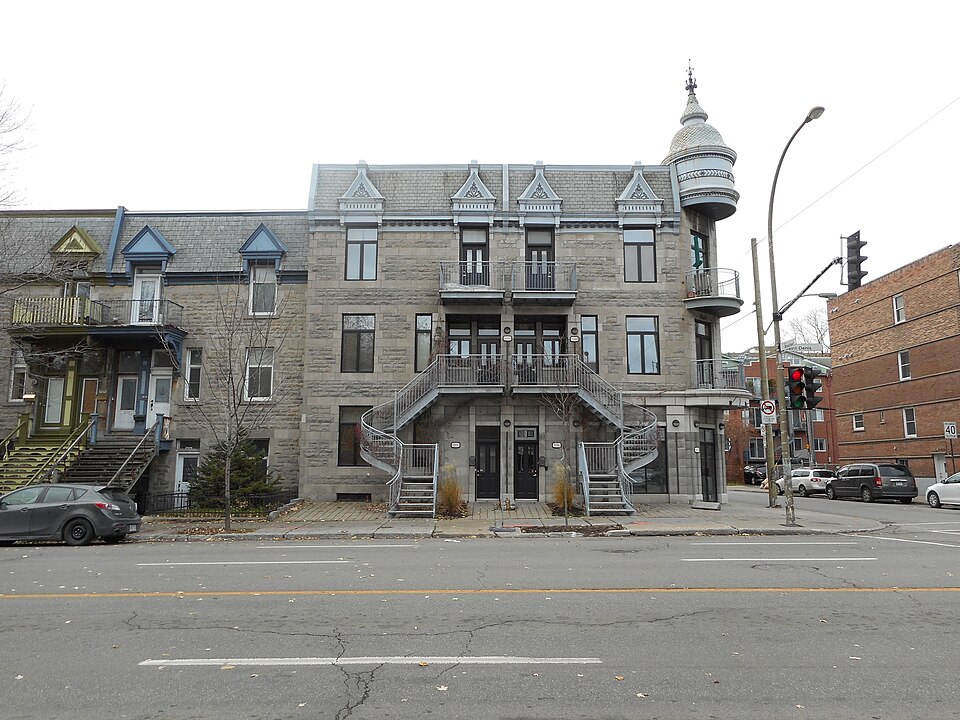
    Photo: Jeangagnon, CC BY-SA 3.0, via Wikimedia Commons

    Montreal is where many Quebec learners first meet heavy cycling traffic, one-way grids, shared streets and photo radar, and it has its own right-on-red ban. This page sets out the Quebec rules that matter most when you drive in Montreal on a learner’s or probationary licence. Start with the Quebec learner driver guide if you are new to the licensing steps.

    The five Montreal rules to know first

    1. No right turn on red anywhere on the island of Montreal.
    2. Pass cyclists with at least 1 metre of space at 50 km/h or less, 1.5 metres above 50 km/h.
    3. Check for cyclists before opening your door.
    4. On a bicycle route the limit is 30 km/h; on a shared street, 20 km/h with pedestrians having priority.
    5. Photo radar tickets go to the vehicle owner, with no demerit points.

    Right on red: not on the island

    Elsewhere in Quebec you may turn right on red after a full stop unless a sign prohibits it. On the island of Montreal it is prohibited everywhere, with signs only at entry points such as bridges and tunnels. Wait for green. Full details: right turn on red in Quebec.

    Driving next to bike lanes in Montreal

    Quebec recognizes several types of bikeway. Knowing which one you are next to tells you where cyclists will be.

    Bikeway What it looks like What it means for you
    Bike lane Lane along the road with no physical barrier, usually on the right; sometimes bollards One-way. Cyclists are right beside you, so check your mirror and blind spot before turning right.
    Contraflow bike lane On a one-way street, a bike lane running the opposite way, marked by a diamond sign on a red background Expect cyclists coming toward you on a one-way street.
    Bike path Separated from traffic, reserved for cyclists Where it crosses a road, cyclists do not have the right of way and must obey the signs.
    Bicycle route A street signed as a bicycle route Maximum 30 km/h for vehicles. Cyclists may ride anywhere in the lane, two abreast.
    Designated roadway Shared lane, no dedicated space Normal traffic rules apply.

    Passing a cyclist in Montreal

    • Slow down, and stay behind if a vehicle is coming toward you or is in the next lane.
    • Keep at least 1 metre in zones of 50 km/h or less, and 1.5 metres in zones over 50 km/h.
    • The minimum gap does not apply if the cyclist is behind a raised barrier, such as a curb-protected bikeway.
    • You may cross a solid line to give a cyclist room, only when it is safe. Crossing a solid line in other cases can mean 3 demerit points and a fine of $200 to $300.
    • On a bicycle route, you may pass within 1 metre if you slow down and have enough space to do it safely.

    Opening your door

    After parking on a Montreal street, check your mirror and look over your shoulder for oncoming cyclists before opening your door. The SAAQ notes that the Highway Safety Code requires this check.

    Shared streets (rues partagées)

    A shared street is signed with a pedestrian-priority sign, sometimes with a “Rue partagée” tab under it. On it:

    • Maximum 20 km/h.
    • Pedestrians may use the whole roadway, walk in any direction and cross anywhere at any time.
    • You must give way to pedestrians and cyclists on or crossing the street.
    • The 1 metre passing gap does not apply if there is enough room to pass safely.

    One-way streets in Montreal

    • A prohibited direction sign stops you entering a one-way street the wrong way. Signs are in French: see Quebec road signs in French.
    • With several lanes, use the leftmost lane to turn left and the right lane to turn right.
    • Watch for contraflow bike lanes: cyclists may legally ride against one-way traffic where a sign allows it.
    • Even on a green light, stop before the intersection if you do not have room to cross it completely.

    Photo radar and red-light cameras in Montreal

    Quebec uses three kinds of device: stationary photo radar at the roadside, mobile units on vans, trailers or tripods, and red-light cameras at signalled intersections (which can also catch speeding). The Government of Quebec publishes device locations by region, including Montreal, and signals devices in advance.

    • The device photographs the vehicle and plate; a peace officer reviews every image before a ticket is issued.
    • The statement of offence comes by mail, never by email. Ignore any email asking you to pay a photo radar fine.
    • No demerit points are added, because the driver is not identified. The vehicle owner is responsible.
    • You have 30 days from receiving the statement to plead guilty or not guilty.

    A ticket from a police officer is different. Running a red light carries 3 demerit points, and a learner or probationary driver loses the licence at 4 points. See Quebec probationary licence rules.

    Winter in the city

    From 1 December to 15 March, Quebec-registered vehicles need winter tires. See Quebec winter tire law and, for snow and ice technique, winter driving in Canada for new drivers.

    Common questions

    Is it hard to learn to drive in Montreal?

    It is busier than most of Quebec: more cyclists, pedestrians and one-way streets. Practise first on quieter streets with your accompanying rider, then build up to downtown. See Quebec learner’s licence rules.

    Can I turn right on red in Montreal?

    No, not anywhere on the island.

    Can I stop in a bike lane in Montreal?

    Follow the posted signs, and always check the lane for cyclists before turning right across it or pulling in to the curb.

    Do photo radar tickets in Quebec give demerit points?

    No. They are sent to the vehicle owner with a fine only.

    Where are the photo radars in Montreal?

    The Government of Quebec lists photo radar locations by region on quebec.ca, and devices are signalled in advance.

    What is the speed limit on a Montreal bicycle route?

    30 km/h for vehicles. On a shared street it is 20 km/h.

    Sources

    • Government of Quebec, “Turning right at a red light” (quebec.ca)
    • Government of Quebec, “Rules for passing on roads” (quebec.ca)
    • Government of Quebec, “Rules for using a bikeway” (quebec.ca)
    • Government of Quebec, “Bicycle route rules” (quebec.ca)
    • Government of Quebec, “Driving on a shared street” (quebec.ca)
    • Government of Quebec, “Manoeuvre at intersections” (quebec.ca)
    • Government of Quebec, “Traffic rules for cyclists” (quebec.ca)
    • Government of Quebec, “Regulatory signs” (quebec.ca)
    • Government of Quebec, “About photo radars” (quebec.ca)
    • Government of Quebec, “Offences detected by photo radar devices” (quebec.ca)
    • SAAQ, “Let’s all share the road… safely” (saaq.gouv.qc.ca)
    • SAAQ, “Demerit Points: Driver’s Licence” (saaq.gouv.qc.ca)
  • Exchanging a foreign licence in Quebec: SAAQ agreements and tests

    Exchanging a foreign licence in Quebec: SAAQ agreements and tests

    Photo: Elias Touil, CC BY-SA 3.0, via Wikimedia Commons

    If you move to Quebec with a licence from another country, you can drive on it for 6 consecutive months, then you need a Quebec licence. Whether you can simply exchange it, or must take the SAAQ tests, depends on where it was issued. This page covers newcomers from outside Canada; for licences from other provinces and a Canada-wide comparison, see exchanging a foreign or out-of-province licence in Canada.

    Key facts

    • Driving on a valid foreign licence: up to 6 consecutive months after you settle in Quebec (passenger vehicle, motorcycle, moped or scooter).
    • Agreement countries: exchange for a Class 5 licence without the proficiency tests.
    • Non-agreement countries: pass the SAAQ tests within the 6 months, and you need at least 1 year of experience to use this route.
    • Fail the road test and your foreign licence stops being valid in Quebec; you get a learner’s licence instead.

    Which countries have a licence exchange agreement with Quebec?

    The SAAQ lists these jurisdictions for exchanging to a Class 5 (passenger vehicle) licence without proficiency tests:

    Region Jurisdictions
    Europe Austria, Belgium, France, Germany, Great Britain, Isle of Man, Netherlands, Northern Ireland, Switzerland
    Asia Japan, Republic of Korea, Taiwan
    North America United States (Class 5 and Class 6D moped or scooter)

    For agreement countries, the SAAQ says you must apply within 12 months of settling. The list changes over time, so confirm your country on the SAAQ’s “Canadian or Foreign Driver’s Licence” page before your appointment.

    What a few agreements say

    • Republic of Korea: a Korean Class 2 licence exchanges for Quebec Class 5 with no proficiency or eye test. You get a regular licence if you are 25 or older or have 24 months of valid driving history; otherwise a probationary one.
    • Switzerland: category B exchanges within 12 months of settling, without a proficiency exam or eye test.
    • Northern Ireland: category B exchanges within 12 months of settling, without proficiency, knowledge or eye tests.

    Exchanging a licence from a country without an agreement

    1. Check you qualify. For a passenger vehicle, you must have held a passenger vehicle licence for at least 1 year before settling in Quebec.
    2. Book with the SAAQ early. You must pass the tests within your 6 months.
    3. Take the knowledge test. Depending on your situation, you may sit it at the service centre the same day as your appointment, or need a second appointment. See the SAAQ knowledge test guide and taking the SAAQ tests in English.
    4. Take the road test. Same test as Quebec learners: see the SAAQ road test guide.
    5. Get your licence. The SAAQ issues a probationary or regular licence depending on the years of experience it recognizes.

    What happens if you fail the SAAQ road test?

    • You can no longer drive in Quebec on your foreign licence.
    • You get a learner’s licence with conditions, including driving with an accompanying rider who holds a valid Quebec Class 5 licence and has at least 2 years of experience. See Quebec learner’s licence rules.
    • You must wait at least 28 days and book a new appointment to retake the road test.

    Probationary or regular licence?

    If the SAAQ does not recognize enough experience, you start on a probationary licence: a 4 demerit point limit and zero alcohol. If your licence does not show how long you have held it, ask the SAAQ what proof of experience it accepts before your appointment.

    Checklist for your SAAQ appointment

    • Your valid foreign licence (the original)
    • The other documents the SAAQ lists for your situation (check its newcomer pages when you book)
    • Proof of driving experience, if your licence does not show it
    • Payment for the fees (check the current figures with the SAAQ)

    Common questions

    How long can I drive in Quebec with a foreign licence?

    Up to 6 consecutive months after settling, if the licence is valid.

    Can I exchange a UK licence in Quebec?

    Great Britain, Northern Ireland and the Isle of Man are on the SAAQ agreement list, so a Class 5 exchange is possible without proficiency tests, within 12 months of settling.

    Can I exchange a US licence in Quebec?

    Yes, for Class 5 and Class 6D, without the proficiency tests.

    My country has no agreement. Do I start from zero?

    No, if you have at least 1 year of experience: you take the knowledge and road tests instead of the full learner process.

    What if I fail the road test?

    Your foreign licence stops being valid in Quebec, you get a learner’s licence, and you wait at least 28 days to retry.

    I have a work permit. Can I exchange my licence?

    The Government of Quebec says holders of a work permit of 12 months or more are eligible for the licence exchange process.

    Is there still a grace period extension?

    No. A 2023 SAAQ extension covered only people who settled before late August 2023 and ended on 30 November 2023.

    Sources

    • SAAQ, “Canadian or Foreign Driver’s Licence” (saaq.gouv.qc.ca)
    • SAAQ, “Obtaining a Driver’s Licence” (tourists and newcomers) (saaq.gouv.qc.ca)
    • SAAQ, “Your driver’s licence was issued in a jurisdiction that is not covered by an agreement” (saaq.gouv.qc.ca)
    • SAAQ, “Grace period for driving with a licence issued outside Québec” (saaq.gouv.qc.ca)
    • Government of Quebec, “After obtaining your authorizations to work temporarily in Québec” (quebec.ca)
    • Regulations under the Highway Safety Code giving effect to licence exchange agreements with the Republic of Korea, Switzerland and Northern Ireland (legisquebec.gouv.qc.ca)
  • Right turn on red in Quebec and the Montreal exception

    Right turn on red in Quebec and the Montreal exception

    Photo: Ivanhercaz, CC BY-SA 4.0, via Wikimedia Commons

    In Quebec you may turn right on a red light after a full stop, except on the island of Montreal and anywhere a sign prohibits it. This page is for learners and new drivers in Quebec who want the exact rule, the signs to watch for and what happens if you get it wrong. It is part of the Quebec learner driver guide.

    Key facts

    • Allowed across Quebec by default, after stopping completely.
    • Prohibited everywhere on the island of Montreal.
    • Prohibited at any intersection with a “no right turn on red” sign, sometimes only at certain hours.
    • Pedestrians and cyclists keep priority. A right on red is a privilege, not a right of way.

    Can you turn right on a red light in Quebec?

    Yes, outside the island of Montreal, unless a sign says otherwise. The Highway Safety Code allows the turn by default and lets the Minister of Transport designate municipal territories where it is banned. A regulation under the Code lists the municipalities on the island of Montreal where it is prohibited.

    How to turn right on red in Quebec, step by step

    1. Stop completely before the stop line or, if there is none, before the crosswalk.
    2. Look for a sign prohibiting the turn, including a small tab underneath that limits it to certain hours.
    3. Yield to vehicles and other road users already in or about to enter the intersection.
    4. Check that no pedestrian or cyclist is crossing or approaching from your right.
    5. Turn only when the way is clear.

    A rolling turn without a full stop is treated the same as running a red light. Cyclists follow the same right-on-red rules as drivers.

    The Montreal exception

    On the island of Montreal, you may not turn right on a red light anywhere, signed or not. The no-right-on-red sign with the tab “Île de Montréal” is posted at entry points to the island, such as bridges, tunnels and the airport. You will not see a sign at every intersection, so the rule applies from the moment you cross onto the island.

    Laval, Longueuil and the South Shore are not on the island of Montreal. There, the provincial default applies: right on red is allowed unless a sign prohibits it.

    Where else is right on red banned in Quebec?

    Outside Montreal, a road authority posts a no-right-on-red sign at intersections where the turn is unsafe. According to the Government of Quebec, reasons include:

    • poor visibility
    • narrow lanes that push trucks and buses into opposing lanes
    • an unusually shaped intersection
    • a protected pedestrian phase with a pedestrian light
    • many pedestrians or cyclists crossing
    • a nearby railway crossing
    • conflicts with visually impaired pedestrians

    The turn is also prohibited at an intersection where more than three crashes caused by right turns happened in the previous 12 months. The sign shows a right-curving arrow crossed by a red bar over a red light. See Quebec road signs in French for other signs you will meet.

    What if you get it wrong?

    Failing to obey a red light carries 3 demerit points in Quebec. On a learner’s or probationary licence, where the limit is 4 points, one red-light offence takes you most of the way to losing your licence. Check the current fine with the SAAQ.

    On your SAAQ road test, not stopping fully before a right on red, or turning where it is prohibited, is the kind of error that can cost you the test.

    Scenario: Longueuil to downtown Montreal

    You stop at a red light in Longueuil with no sign: you may turn right after a full stop and checking for pedestrians. You then cross the Jacques Cartier Bridge onto the island. At the next red light downtown you must wait for green, even though no sign is posted there.

    Common questions

    Is right on red legal in Montreal?

    No. It is prohibited everywhere on the island of Montreal.

    Is right on red allowed in Laval?

    Laval is not on the island of Montreal, so the provincial rule applies: allowed after a full stop unless a sign prohibits it.

    Do I have to stop before turning right on red in Quebec?

    Yes, a full stop before the stop line or crosswalk, every time.

    Can I turn left on red in Quebec?

    The Quebec right-on-red rule covers right turns only. Wait for green to turn left.

    Do pedestrians have priority when I turn right on red?

    Yes. Pedestrians have priority whenever a pedestrian light lets them cross, and on a green light where there is no pedestrian light.

    Does a red-light camera ticket give demerit points?

    No. A photo radar ticket goes to the vehicle owner with no demerit points, because the camera cannot identify the driver. See driving in Montreal as a new driver.

    Sources

    • Government of Quebec, “Turning right at a red light” (quebec.ca)
    • Government of Quebec, “Manoeuvre at intersections” (quebec.ca)
    • Government of Quebec, “Offences detected by photo radar devices” (quebec.ca)
    • SAAQ, “Turning Right at a Red Light: What the Law Says” (saaq.gouv.qc.ca)
    • SAAQ, “Demerit Points: Driver’s Licence” (saaq.gouv.qc.ca)
    • Highway Safety Code, CQLR c. C-24.2, section 359.1, and Regulation to designate the territory of municipalities as an area where making a right turn on a red light is prohibited, C-24.2, r. 9.1 (legisquebec.gouv.qc.ca)
  • Quebec road signs in French: Arrêt, Lentement and more

    Quebec road signs in French: Arrêt, Lentement and more

    Photo: Jeangagnon, CC BY-SA 3.0, via Wikimedia Commons

    Quebec road signs use French wording and pictograms, so a few French words matter for the SAAQ knowledge test and for daily driving. The red octagon says “Arrêt” (stop), the yield sign is a red-bordered triangle with no words, and orange signs mean roadwork. This guide translates the French words you will see and explains the colour system, based on the Government of Quebec’s sign pages. It is part of the Quebec learner driver guide.

    French words on Quebec road signs, translated

    French on the sign English Where you see it
    Arrêt Stop Red octagonal stop sign. Also on flag persons’ hand-held signs in roadwork zones (which may say “Arrêt” or “Stop”)
    Préparez-vous à arrêter Prepare to stop Yellow warning signs with amber beacons before traffic lights, railway crossings, queues or oversized truck entrances
    Lentement Slowly / slow Orange diamond on the back of a flag person’s sign in a roadwork zone
    Fin End Tab under a school zone sign, marking where the zone ends
    Excepté dépassement Except when passing On the uphill passing lane sign: keep to the far right lane unless overtaking on the left
    Exempt Exempt Railway crossing sign telling vehicles that normally must stop (such as buses) that they need not stop

    Is the Quebec yield sign in French?

    No. The yield sign is a red triangle with a white triangle inside and no wording. It means you must give the right of way to vehicles on the priority road. A variant tells you to yield to oncoming traffic where there is not room for two-way traffic, for example at roadwork.

    Stop signs and all-way stops

    The “Arrêt” sign means you must stop at the intersection. When drivers from every direction must stop, a tab under each “Arrêt” sign shows the layout of the intersection. Where there is no “Arrêt” sign or traffic light, drivers and cyclists must stop for a pedestrian who enters a pedestrian crosswalk.

    What the colours mean

    Colour Type Examples
    White, black or red Regulatory: obligations and prohibitions Arrêt, yield, prohibited direction, crosswalk, parking
    Yellow Warning: obstacle or danger ahead Steep grade, lane ends, curves, Préparez-vous à arrêter
    Yellow-green School zones Pentagon with schoolchildren; “Fin” tab at the end
    Orange Roadwork Temporary speed limit, flag person ahead, detour, road closed
    Blue, brown, yellow, red or green Guide: destinations, services, information Hospital, ferry, freeway names

    School zone signs

    • A yellow-green sign warns that you are approaching a school zone or crossing; a pentagon-shaped one marks the start of the zone.
    • The speed limit in a school zone may not exceed 50 km/h during the school year.
    • Speeding fines double in a school zone during the school year: 7 a.m. to 5 p.m., Monday to Friday, September to June.

    Roadwork zone signs

    • Orange signs show distances to work, temporary speed limits, flag persons, closed lanes and detours.
    • Speeding fines are doubled in roadwork zones.
    • Obey the flag person: a raised hand with “Arrêt”/“Stop” sign (or an orange flag with a yellow X) means stop; the “Lentement” side, or a flag waved up and down, means slow down.
    • A sign may warn that the work zone is monitored by mobile photo radar.

    Warning signs worth knowing for the test

    • Steep grade: shows a truck and a percentage. The higher the percentage, the steeper the hill.
    • Chevron alignment: marks a sharp curve, generally where you need to slow by at least 35 km/h (5 km/h on freeways).
    • Hazard markers: the oblique lines point to the side you should pass the obstacle on.
    • Lane ends versus roadway narrows: the first means fewer lanes, so change lanes; the second means a narrower road with the same number of lanes.

    Parking signs

    Quebec parking signs show where parking is banned or allowed, reserved spaces for people with disabilities (permit required) and electric vehicle charging spaces. A “no parking in winter” sign works with orange lights: when the lights are on, parking is banned. Tab signs underneath add details such as towing or permit exemptions. When parking, stay within 30 cm of the curb and face the direction of traffic.

    How to study Quebec signs

    • The SAAQ knowledge test has a whole section on road signs and traffic signals. See the SAAQ knowledge test guide.
    • The Government of Quebec offers free road sign posters (in French) and a full directory of Quebec traffic control devices, the Répertoire des dispositifs de signalisation routière du Québec.
    • Testing in English? See taking the SAAQ tests in English.

    Common questions

    What does “Arrêt” mean on a Quebec sign?

    Stop. It is the French word on Quebec’s red octagonal stop sign.

    Are Quebec stop signs ever in English?

    The standard Quebec stop sign reads “Arrêt”. Flag persons’ hand-held signs may read “Arrêt” or “Stop”.

    What does “Préparez-vous à arrêter” mean?

    Prepare to stop. When its amber beacons flash, the lights or crossing ahead are about to stop traffic.

    What does a yellow-green sign mean?

    A school zone. Slow down; speeding fines double during the school year.

    Why are some signs orange?

    They mark roadwork. Temporary speed limits on orange signs are enforceable, and speeding fines double.

    Sources

    • Government of Quebec, “Regulatory signs” (quebec.ca)
    • Government of Quebec, “Warning signs” (quebec.ca)
    • Government of Quebec, “Guide signs” (quebec.ca)
    • Government of Quebec, “School zone signs and signals” (quebec.ca)
    • Government of Quebec, “Signs and signals in a roadwork zone” (quebec.ca)
    • Government of Quebec, “Rules for parking a vehicle on the road” (quebec.ca)
    • SAAQ, “Quick Reference Guide: Obtaining a passenger vehicle driver’s licence (Class 5)” (saaq.gouv.qc.ca)
  • Zero alcohol in Quebec until 22: rules and penalties

    Zero alcohol in Quebec until 22: rules and penalties

    Photo: Gabriel Picard, CC BY-SA 4.0, via Wikimedia Commons

    In Quebec, you must have no alcohol at all in your body when you drive if you are under 22, or if you hold a learner’s or probationary licence at any age. Break the rule and you face an immediate 90-day licence suspension, 4 demerit points and a fine of $300 to $600. This page explains who the rule covers, the penalties, and how drugs are treated. For the national picture, see impaired driving in Canada for new drivers.

    Who must follow Quebec’s zero alcohol rule?

    Driver Zero alcohol applies? Until when
    Learner’s licence holder, any age Yes As long as you hold the learner’s licence
    Probationary licence holder, any age Yes The full 24-month probationary period
    Regular licence holder under 22 Yes Your 22nd birthday
    Regular licence holder 22 or older No zero alcohol rule, but impaired driving laws apply Not applicable

    So a driver who gets a regular licence at 19 still has zero alcohol until 22, and someone who starts learning at 30 has zero alcohol through the learner and probationary stages.

    Penalties for breaking the zero alcohol rule in Quebec

    • Immediate 90-day licence suspension at the roadside.
    • Fine of $300 to $600.
    • 4 demerit points if convicted.

    For learner and probationary licence holders, 4 points is the limit, so a conviction also revokes the licence for at least 3 more months after the suspension. See Quebec probationary licence rules and Quebec learner’s licence rules.

    Scenario

    A 20-year-old with a probationary licence has one beer at dinner and drives home. Police detect alcohol. The licence is suspended on the spot for 90 days and a fine of $300 to $600 follows. On conviction, 4 demerit points are added, which revokes the licence for at least another 3 months. That is roughly six months off the road for one drink.

    Drugs and cannabis

    Quebec’s Highway Safety Code also deals with drugs:

    • A police officer can immediately suspend your licence for 90 days if an evaluating officer finds you impaired by cannabis, another drug, or drugs combined with alcohol.
    • Refusing or failing to do physical coordination tests or give a saliva sample when ordered also brings an immediate 90-day suspension.
    • Consuming cannabis or other drugs in a road vehicle is prohibited.
    • The Code contains a “zero drug tolerance” rule (no detectable cannabis or other drug in saliva) that comes into force once police detection equipment is approved for use in Quebec. Check its current status with the SAAQ.

    Impaired driving is also a Criminal Code offence everywhere in Canada, with separate and heavier penalties.

    What the driving course teaches

    Module 10 of the Quebec driving course, Alcohol and Drugs, sits in Phase 3 (semi-guided driving). It covers how alcohol and drugs affect driving and the penalties above. See Quebec’s mandatory driving course.

    Common questions

    Is it zero alcohol until 21 or 22 in Quebec?

    Until 22. The SAAQ says the rule applies to drivers under 22.

    Does the rule apply if I am 25 and on a probationary licence?

    Yes. All learner and probationary licence holders must have zero alcohol, whatever their age.

    Can I drive the morning after drinking?

    Only if no alcohol remains in your body.

    Do the zero alcohol rules apply to off-road vehicles?

    The Government of Quebec says the zero alcohol rule for young drivers also applies to off-road vehicle drivers.

    Is the 90-day suspension the same as a criminal charge?

    No. The 90-day suspension is an administrative penalty under the Highway Safety Code. Criminal Code impaired driving charges are separate.

    Sources

    • SAAQ, “Drinking and Driving: Impairment and Consequences” (saaq.gouv.qc.ca)
    • SAAQ, “First Driver’s Licence” (saaq.gouv.qc.ca)
    • SAAQ, “Demerit Points: Driver’s Licence” (saaq.gouv.qc.ca)
    • SAAQ, “Phase 3, Semi-Guided Driving: Module 10 Alcohol and Drugs” (saaq.gouv.qc.ca)
    • Government of Quebec, “Amendments to the Highway Safety Code in relation to the legalization of cannabis” (quebec.ca)
    • Government of Quebec, “Rules for off-road vehicles” (quebec.ca)
    • Government of Quebec, “Alcohol” (quebec.ca)
  • Quebec winter tire law: dates, fines and the pictogram rule

    Quebec winter tire law: dates, fines and the pictogram rule

    Photo: Wilfredor, CC0, via Wikimedia Commons

    In Quebec, winter tires are compulsory from 1 December to 15 March on every motor vehicle registered in the province, rental cars included. A tire counts only if it carries the mountain-and-snowflake pictogram or is studded, and drivers who do not comply face a fine of $200 to $300. This page covers the dates, exceptions, tread depth and studded tire rules, and is part of the Quebec learner driver guide. For winter driving technique across Canada, see winter driving in Canada for new drivers.

    Key facts

    • Compulsory period: 1 December to 15 March.
    • Applies to all motor vehicles registered in Quebec, including rentals.
    • Fine: $200 to $300.
    • Valid winter tire: pictogram (mountain with snowflake) or studded.
    • Studded tires allowed 15 October to 1 May on passenger vehicles.

    When do you need winter tires in Quebec?

    From 1 December to 15 March. The Government of Quebec recommends waiting until a few weeks after 15 March before switching back to all-season or summer tires, because spring conditions vary.

    What counts as a winter tire in Quebec?

    To comply, a tire designed for winter driving must carry the winter pictogram (a mountain with a snowflake) or be studded. Reshaped or remodelled tires for passenger vehicles must also have the pictogram or be studded. A tire marked only “M+S” (mud and snow) without the pictogram does not meet the rule.

    Who is exempt?

    The requirement does not apply to:

    • vehicles registered outside Quebec
    • trailers, heavy vehicles, utility vehicles and farm machinery
    • spare tires
    • motorcycles used as emergency vehicles
    • motor homes used permanently as homes
    • a newly bought vehicle for 7 days from purchase from a dealer (keep the bill of sale)
    • a leased vehicle in the 7 days before a lease of a year or more ends (keep the lease)
    • vehicles with a dealer plate (X plate), or with a temporary registration certificate (transit) for its validity, up to 7 days

    The SAAQ can also issue a free 7-day winter tire exemption certificate, through SAAQclic or at a service centre, for certain situations. The SAAQ limits how many certificates one vehicle can get each winter.

    Studded tires: dates

    Studded tires are allowed from 15 October to 1 May on passenger vehicles, taxis and commercial vehicles with a total loaded mass of 3,000 kg or less. Outside those dates they are not permitted.

    How much tread do winter tires need?

    Measure Depth
    Minimum groove depth 1.6 mm
    Recommended in winter At least 4.8 mm

    The quarter test: put a quarter in a groove with the caribou’s nose pointing down. If you can see the caribou’s snout, the tire will not grip well in deep snow. Check several grooves in different places.

    Why it matters for learners

    • Your road test car, if registered in Quebec, must have winter tires between 1 December and 15 March. See the SAAQ road test guide.
    • Winter tires in good condition can cut braking distance by 25%, according to the Government of Quebec, but they are no guarantee: slow down and leave more space.
    • Plan winter practice drives with your accompanying rider once winter tires are on: see Quebec learner’s licence rules.
    • Pack a winter kit: shovel, scraper, snow brush, traction mats, a blanket, flashlight, booster cables, water and food are on the Quebec government’s list.

    Should you keep winter tires on in summer?

    No. The Government of Quebec says winter tires wear faster in warm weather, raising the risk of a blowout, clear water less well (so more aquaplaning), and can take longer to stop than all-season tires on wet pavement.

    Common questions

    What is the winter tire deadline in Quebec?

    1 December. They must stay on until at least 15 March.

    What is the fine for no winter tires in Quebec?

    $200 to $300, plus costs.

    I am visiting from Ontario. Do I need winter tires?

    The rule does not apply to vehicles registered outside Quebec. Winter tires are still strongly advised.

    Do rental cars in Quebec have winter tires?

    Rental vehicles registered in Quebec must have them from 1 December to 15 March.

    Are all-season tires legal in Quebec in winter?

    Not during 1 December to 15 March unless they carry the mountain-and-snowflake pictogram.

    Sources

    • Government of Quebec, “Requirements for winter tires” (quebec.ca)
    • Government of Quebec, “Preparing your vehicle for winter driving” (quebec.ca)
    • SAAQ, “Winter Preparation” (saaq.gouv.qc.ca)
    • SAAQ, “Online Service: Obtaining a Winter Tire Exemption Certificate” (saaq.gouv.qc.ca)
  • Quebec probationary licence: 4 demerit points and zero alcohol

    Quebec probationary licence: 4 demerit points and zero alcohol

    Photo: Gabriel Picard, CC BY-SA 4.0, via Wikimedia Commons

    A Quebec probationary licence lasts 24 months after you pass the SAAQ road test. You lose it for at least 3 months if you reach 4 demerit points, you must keep zero alcohol in your body, and if you are 19 or younger there are passenger limits between midnight and 5 a.m. in your first 12 months. This page explains each rule and what losing the licence means. It is part of the Quebec learner driver guide.

    Key facts

    • Length: 24 months.
    • Demerit limit: 4 points means losing the licence for at least 3 months.
    • Zero alcohol for the whole probationary period, at any age.
    • Night passenger limits for drivers 19 or younger in their first 12 months.
    • You cannot be an accompanying rider for a learner.

    How many demerit points can a probationary driver have in Quebec?

    You must keep fewer than 4 demerit points. Reach 4 and the SAAQ revokes your licence for at least 3 months, on top of any fines. The SAAQ tells you in writing when your licence is revoked.

    Worked example

    A probationary driver collects 4 points from a single conviction (for example, the zero alcohol offence below). That one conviction reaches the limit: the licence is revoked for at least 3 months. Speeding offences also carry points, and higher speeds carry more, so two smaller tickets can add up to 4 just as fast. Check the SAAQ’s demerit table for the points attached to each offence.

    Zero alcohol on a probationary licence

    Zero alcohol applies for as long as you hold a probationary licence, whatever your age. Drive with any alcohol in your body and you face:

    • an immediate 90-day licence suspension
    • a fine of $300 to $600
    • 4 demerit points on conviction, which revokes the licence for at least 3 more months

    Full details: zero alcohol in Quebec until 22.

    Passenger limits between midnight and 5 a.m.

    If you are 19 or younger and have held your probationary licence for less than 12 months, these limits apply between midnight and 5 a.m.:

    Time on probationary licence Passengers aged 19 or younger allowed
    First 6 months 1
    After 6 months, up to 12 months 3
    • Immediate family members do not count toward the limit. The SAAQ lists your spouse (married, civil union or de facto), your children and your spouse’s children, your brothers and sisters, and any other child of your father or mother or of either one’s spouse.
    • The limit does not apply if a driver with at least 2 years of experience sits in the front passenger seat.
    • Breaking the rule carries a fine of $200 to $300 and, in the SAAQ’s demerit table, 4 demerit points. That alone reaches the probationary limit.

    Other rules for probationary drivers

    • No supervising: you cannot be an accompanying rider for a learner, and probationary time does not count toward the 2 years a rider needs.
    • Winter tires: compulsory from 1 December to 15 March on Quebec-registered vehicles. See Quebec winter tire law.
    • Montreal: right turn on red has its own rule on the island. See right turn on red in Quebec.

    What happens after 24 months?

    Once the probationary period ends, you move to a regular Class 5 licence, with the higher demerit threshold that applies to experienced drivers. If you are still under 22, the zero alcohol rule continues until your 22nd birthday.

    Common questions

    How long is a probationary licence in Quebec?

    24 months.

    What happens if I get 4 demerit points?

    Your licence is revoked for at least 3 months, and you must follow the SAAQ’s process to get it back.

    Can I drive friends home after midnight?

    If you are 19 or younger and in your first 12 months, only within the limits above (1 passenger aged 19 or younger in the first 6 months, then 3), unless an experienced driver sits in the front.

    Can I have one drink if I am over 22 on a probationary licence?

    No. Zero alcohol applies to all probationary licence holders, whatever their age.

    Can I supervise my younger sibling?

    No. A probationary licence holder cannot be an accompanying rider.

    Sources

    • SAAQ, “Obtaining a Passenger Vehicle Driver’s Licence (Class 5)” (saaq.gouv.qc.ca)
    • SAAQ, “Demerit Points: Driver’s Licence” (saaq.gouv.qc.ca)
    • SAAQ, “Demerit Points: Penalties” (saaq.gouv.qc.ca)
    • SAAQ, “First Driver’s Licence” (saaq.gouv.qc.ca)
    • SAAQ, “Drinking and Driving: Impairment and Consequences” (saaq.gouv.qc.ca)
    • SAAQ, “Accompanying Rider’s Guide: passenger vehicle” (saaq.gouv.qc.ca)
    • SAAQ, “Quick Reference Guide: Obtaining a passenger vehicle driver’s licence (Class 5)” (saaq.gouv.qc.ca)
  • Quebec learner’s licence rules: rider, curfew and demerits

    Quebec learner’s licence rules: rider, curfew and demerits

    Photo: Gabriel Picard, CC BY-SA 4.0, via Wikimedia Commons

    On a Quebec Class 5 learner’s licence you may drive only with an accompanying rider who has held a valid passenger vehicle licence for at least 2 years, never between midnight and 5 a.m., and with zero alcohol. Reaching 4 demerit points costs you the licence for at least 3 months. This page is for learners and the parents or friends who ride with them. For the full path, see learning to drive in Quebec.

    Quebec learner’s licence rules: summary

    Rule What it means
    Accompanying rider Always required. Must have held a valid passenger vehicle licence for at least 2 years.
    Night curfew No driving between midnight and 5 a.m.
    Alcohol Zero alcohol, whatever your age.
    Demerit points At 4 points, the learner’s licence is revoked for at least 3 months.
    Minimum period At least 10 months before the SAAQ knowledge test and 12 months before the road test.

    Who can be your accompanying rider?

    Your rider must have held a valid licence to drive a passenger vehicle for at least 2 years and be able to give you help and advice. Two points catch people out:

    • A probationary licence holder cannot be your rider. A sibling who passed their road test last year does not qualify.
    • Time on a probationary licence does not count toward the rider’s 2 years, according to the SAAQ’s rider guidance.

    The SAAQ’s Accompanying Rider’s Guide gives riders practical tips on what to practise at each stage of the course.

    Why you cannot drive between midnight and 5 a.m.

    The curfew applies to every Class 5 learner, whatever their age and even with a qualified rider beside them. Plan practice drives so you are home before midnight, and do not start before 5 a.m.

    Zero alcohol for learners

    As a learner you must have no alcohol in your body when you drive, whatever your age. The penalty is an immediate 90-day licence suspension, 4 demerit points and a fine of $300 to $600. Because 4 points is the learner limit, a conviction also means revocation for at least 3 more months. More on this: zero alcohol in Quebec until 22.

    Demerit points on a learner’s licence

    Learners and probationary drivers have a far lower demerit limit than experienced drivers. At 4 points, the SAAQ revokes your learner’s licence and you cannot get a new one for at least 3 months. A single offence can be enough, so ride as if you were already on test. See Quebec probationary licence rules for how the same 4-point limit carries over once you pass.

    Practice checklist for learner and rider

    • Match practice to your course phase: basic manoeuvres first, then complex traffic.
    • Practise in winter conditions before your road test if you can, with winter tires fitted from 1 December to 15 March.
    • Learn the French road sign wording: Quebec road signs in French.
    • Keep your learner’s licence with you on every drive.

    Common questions

    Can my parent with a licence from another country be my rider?

    The rider must hold a valid licence to drive a passenger vehicle for at least 2 years. If their licence is from outside Quebec, check with the SAAQ that it counts.

    Can I carry passengers as a learner?

    Check with the SAAQ before you carry other passengers. The learner conditions confirmed here are the accompanying rider, no driving between midnight and 5 a.m., and zero alcohol.

    Does the curfew apply if I am over 18?

    Yes. It applies to all Class 5 learner’s licence holders.

    What happens if I get 4 demerit points?

    Your learner’s licence is revoked and you cannot get a new one for at least 3 months.

    Sources

    • SAAQ, “Obtaining a Passenger Vehicle Driver’s Licence (Class 5)” (saaq.gouv.qc.ca)
    • SAAQ, “Quick Reference Guide: Obtaining a passenger vehicle driver’s licence (Class 5)” (saaq.gouv.qc.ca)
    • SAAQ, “Accompanying Rider’s Guide: passenger vehicle” (saaq.gouv.qc.ca)
    • SAAQ, “First Driver’s Licence” (saaq.gouv.qc.ca)
    • SAAQ, “Drinking and Driving: Impairment and Consequences” (saaq.gouv.qc.ca)
    • SAAQ, “Demerit Points: Driver’s Licence” (saaq.gouv.qc.ca)
  • Taking the SAAQ tests in English or another language

    Taking the SAAQ tests in English or another language

    Photo: Gabriel Picard, CC BY-SA 4.0, via Wikimedia Commons

    Yes, you can take the SAAQ tests in English. The Quebec knowledge test is offered in French or English, with audio in both languages, and new Quebec residents can ask for Modern Standard Arabic, Spanish or Mandarin. On the road test, an examiner will use hand signals if you lack French or English. This page sets out what is confirmed and what to ask the SAAQ before you book. For the full licence path, see learning to drive in Quebec.

    SAAQ test languages at a glance

    Test Language options How to get them
    SAAQ knowledge test French or English Standard
    Knowledge test audio French or English audio tracks On the test computer
    Knowledge test, new residents Modern Standard Arabic, Spanish or Mandarin Ask at the service centre counter on the day of your test
    Road test Instructions in French or English; hand signals if you lack French or English skills The examiner uses hand signals as needed

    Taking the knowledge test in English

    Ask for English when you book or at the counter. You can also use the English audio track, which reads the questions aloud through the test computer. This helps if you read slowly or English is your second language. The test still uses Quebec road signs, many of which carry French words such as “Arrêt” and “Préparez-vous à arrêter”. Learn them from the Quebec road signs in French guide.

    Arabic, Spanish or Mandarin for newcomers

    If you are a new resident of Quebec, you can ask for the knowledge test in Modern Standard Arabic, Spanish or Mandarin. Make the request at the service centre counter on the day of your test. If you are exchanging a licence from abroad, see exchanging a foreign licence in Quebec first, because you may not need the full learner process.

    The road test if you speak neither French nor English

    The SAAQ says that if you lack French or English skills, the examiner will use hand signals to give you instructions. Practise with your instructor or accompanying rider using hand signals for “turn left”, “turn right”, “go straight” and “pull over” so they feel natural. Scoring is the same as for any candidate: see the SAAQ road test guide.

    What to confirm with the SAAQ before booking

    Ask the SAAQ about these points when you book:

    • whether an interpreter may sit in on either test
    • whether a specific vehicle (such as a dual-control car) is required if you test in a language other than French or English
    • whether your eligibility for services in English has changed under the SAAQ’s language policy, which follows the Charter of the French Language

    Common questions

    Is the SAAQ knowledge test available in English?

    Yes, in French or English, with audio in both.

    Can I take the test in Punjabi, Hindi or another language?

    The SAAQ lists only French and English, plus Modern Standard Arabic, Spanish or Mandarin for new residents. Ask the SAAQ about any other language.

    Is the road test given in English?

    The examiner can give instructions in English, and uses hand signals if you lack French or English skills.

    Are Quebec road signs in English?

    No. Signs use pictograms and French wording, so learn the French terms whatever language you test in.

    Is the driving course available in English?

    That depends on the school. See Quebec’s mandatory driving course for what to ask.

    Sources

    • SAAQ, “Newcomers: Preparing for the tests” (saaq.gouv.qc.ca)
    • SAAQ, “Quick Reference Guide: Obtaining a passenger vehicle driver’s licence (Class 5)” (saaq.gouv.qc.ca)
    • SAAQ, “The SAAQ’s Language Policy” (saaq.gouv.qc.ca)
    • Government of Quebec, “Warning signs” (quebec.ca)
    • Government of Quebec, “Regulatory signs” (quebec.ca)