Category: Great Britain

  • Theory Test Case Study Questions: How the GB Video Works

    Theory Test Case Study Questions: How the GB Video Works

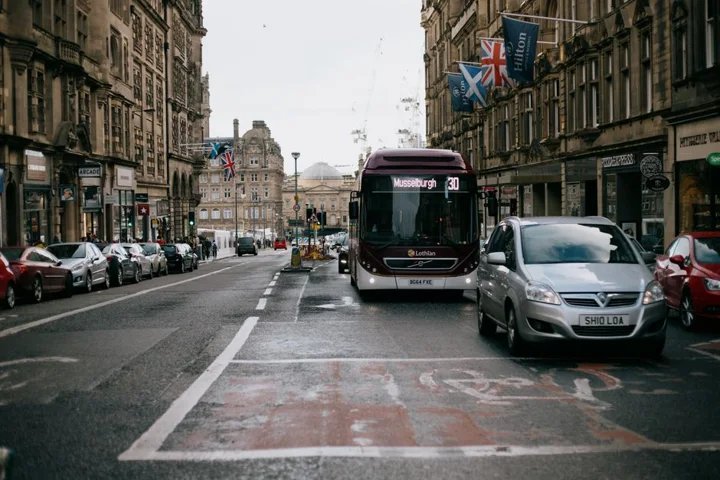
    Photo: RDNE Stock project / Pexels. Illustrative photograph.

    The case study in the car theory test in Great Britain is now a video case study: 3 of the 50 multiple choice questions are based on a short video of a normal driving situation, such as driving through a town centre or on a country road. The video has no sound and you can replay it as many times as you like. This explainer covers how it works, how it is marked, and a method for answering.

    Key facts

    • Questions: 3 video case study questions, part of the 50 multiple choice questions.
    • Time: 57 minutes for all 50 questions, case study included.
    • Video: a normal driving situation, no sound, replay as often as you like.
    • Pass mark: 43 out of 50 for the multiple choice part. The case study questions count towards that total.
    • Both parts: you must pass the multiple choice and the hazard perception parts in the same test.

    How the video case study works

    1. You watch a short video clip of an everyday drive.
    2. You then answer 3 questions about it.
    3. You can replay the clip as many times as you like.
    4. As with the other questions, you can flag a question and come back to it, and change any answer before you finish.

    The questions use the same multiple choice format as the rest of the test. For the full test structure, see the car theory test in numbers.

    Case study vs hazard perception

    Video case study Hazard perception
    Part of the test Multiple choice Separate second part
    What you do Answer 3 questions about one video Click when you see developing hazards
    Replays As many as you like None
    Timing matters? No, beyond the overall 57 minutes Yes, earlier responses score more

    How hazard clips are scored: hazard perception scoring explained.

    How to answer case study questions

    1. Watch once without the questions in mind. Note the road type, speed limit signs, weather, and other road users.
    2. Read all 3 questions. Then replay the clip looking for exactly what each asks.
    3. Answer from the Highway Code, not habit. Questions test rules and safe practice in the situation shown.
    4. Use the replay. There is no penalty for watching again, so check any detail you are unsure of.
    5. Flag and move on if you are stuck, and come back once you have finished the rest.

    What the video might test

    Because the clips show normal driving, expect questions drawn from the same 14 DVSA topics as the rest of the test: for example, speed limits on the road shown, how to deal with pedestrians or cyclists in the clip, or what a sign means. Revise by topic from the theory test guide, especially rules of the road, hazard awareness and vulnerable road users.

    Common questions

    How many case study questions are in the theory test?

    Three, based on one short video. They are part of the 50 multiple choice questions.

    Is the case study still written text?

    No. For cars, gov.uk now describes it as a video case study.

    Does the video have sound?

    No.

    Can I watch the video more than once?

    Yes, as many times as you like.

    Do I have to pass the case study separately?

    No. The 3 questions count towards the 43 out of 50 pass mark for the multiple choice part.

    Is there a break before hazard perception?

    You can take a break of up to 3 minutes before the hazard perception part starts.

    Booking, fees and ID: booking your theory test. Practise questions: practice. Back to the main guide: Learning to Drive in Great Britain.

    Sources

    • GOV.UK, “Theory test: cars: Multiple-choice questions” (gov.uk)
    • GOV.UK, “Theory test: cars: Pass mark and test result” (gov.uk)
  • First Aid on the Road: Highway Code Annex 7 and DR ABC (GB)

    First Aid on the Road: Highway Code Annex 7 and DR ABC (GB)

    Photo: Ian Probets / Pexels. Illustrative photograph.

    Annex 7 of the Highway Code for Great Britain sets out what to do at the scene of a collision until the emergency services arrive: deal with danger, get help, help those involved, and give emergency care using DR ABC. It is written for people with no first aid training and says it is no substitute for proper training. This page sets out the Annex in order for theory test revision, with the emergency priorities from current Resuscitation Council UK guidance. It is not first aid training. In a real emergency, call 999 and follow the call handler’s instructions.

    The Annex 7 sequence at a glance

    1. Deal with danger
    2. Get help
    3. Help those involved
    4. Provide emergency care (DR ABC)
    5. Be prepared

    Before you start: arriving at the scene (Rules 281 to 283)

    • Slow down in good time when you see an incident or flashing lights ahead, and be ready to change lane or stop. You MUST follow any directions from police or traffic officers (Rule 281).
    • If you stop to help, stop in a place of relative safety and use your hazard warning lights to warn other traffic (Rule 283).
    • If helping would put you in moving traffic, make the 999 call from a safe place instead. Never cross live motorway lanes to reach someone.
    • Move uninjured people away from the vehicles and traffic to somewhere safe (Rule 283). High-visibility clothing helps, but it does not make a dangerous spot safe.
    • If several people are there, ask one named person to call 999 and confirm they have done it, so nobody assumes someone else has.
    • If you are only driving past, keep your attention on the road. Do not slow down to look at a crash on the other side, and keep space for emergency vehicles.

    1. Deal with danger

    • Further collisions and fire are the main dangers. Watch for spilled oil and broken glass too.
    • Switch off engines and, if possible, warn other traffic.
    • Switch on your hazard warning lights if you have a vehicle.
    • Stop anyone from smoking.
    • Wear gloves from your first aid kit if you have one.

    2. Get help

    • Ask bystanders to help if it is safe.
    • Get someone to call 999 or 112 as soon as possible.
    • Give the exact location, including the direction of travel (for example northbound), and how many vehicles are involved.
    • Describe the casualties: for example difficulty breathing, heavy bleeding, trapped, or not responding.

    Rule 283 also lists an emergency telephone or a vehicle SOS button as alternatives to a mobile phone for calling 999.

    3. Help those involved

    • DO NOT move casualties still in vehicles unless further danger is threatened.
    • DO NOT remove a motorcyclist’s helmet unless it is essential.
    • DO NOT give them anything to eat or drink.
    • DO keep casualties warm, dry and as comfortable as you can.
    • DO give reassurance, and do not leave them alone or let them wander into traffic.

    4. Provide emergency care: DR ABC

    For the theory test, DR ABC stands for Danger, Response, Airway, Breathing and Circulation. It is a memory aid for your priorities at the scene, not a full first aid procedure.

    Step What it means at the scene
    Danger Make sure you are not in danger before you approach.
    Response Speak to the casualty and check whether they respond. If they do not, call 999 or 112 straight away, on speaker if you can.
    Airway Someone who does not respond needs an open airway to breathe. The call handler can talk you through this.
    Breathing Check whether they are breathing normally while the call connects. Gasping, slow laboured breaths or panting in someone who does not respond are not normal breathing.
    Circulation If the casualty responds and is breathing, check for bleeding and protect yourself from contact with blood.

    If someone is not breathing normally

    • Call 999 or 112 straight away. If the person is unresponsive and not breathing normally, start CPR immediately and follow the call handler’s instructions. If you are not sure whether the breathing is normal, the call handler can help; if in doubt, start CPR.
    • Ask someone to bring a defibrillator (AED) if there is one nearby. Anyone can use one: switch it on and follow its spoken prompts.
    • If you are not sure whether their breathing is normal, treat it as not normal and tell the call handler.
    • Someone who does not respond but is breathing normally still needs emergency help and close watching until it arrives, especially after a collision.

    To learn CPR itself, take a first aid course (see Be prepared below).

    Bleeding

    • Look for anything embedded in the wound, such as glass. Do not remove it; build up padding around it and do not press on it.
    • If nothing is embedded, apply firm pressure over the wound, then secure a pad with a bandage or cloth. Use the cleanest material available.

    Burns

    • Put out any flames, taking care for your own safety.
    • Cool the burn with plenty of clean, cool water for at least 20 minutes.
    • Cover with cling film if available.
    • Do not try to remove anything sticking to the burn.

    5. Be prepared

    • Always carry a first aid kit.
    • Learn first aid from a qualified organisation. Annex 7 names St John Ambulance, St Andrew’s First Aid and the British Red Cross.

    Common questions

    What does DR ABC stand for?

    Danger, Response, Airway, Breathing, Circulation (Annex 7).

    Should I move someone injured in a crash?

    Annex 7 says do not move casualties still in vehicles unless further danger is threatened.

    Should I take off a motorcyclist’s helmet?

    Not unless it is essential (Annex 7).

    Can I give a casualty water?

    No. Annex 7 says do not give them anything to eat or drink.

    How long should I cool a burn?

    At least 20 minutes with plenty of clean, cool water.

    Is first aid in the theory test?

    Yes. It is part of the incidents, accidents and emergencies topic.

    Your legal duties after a collision (stopping, giving details, reporting): after a car accident in the UK. If you break down: what to do if your car breaks down. Back to the main guide: Learning to Drive in Great Britain.

    Sources

    • Department for Transport, “The Highway Code: Annex 7. First aid on the road” (gov.uk)
    • Department for Transport, “The Highway Code: Breakdowns and incidents (275 to 287)” (gov.uk)
    • Resuscitation Council UK, “2025 Adult Basic Life Support Guidelines” (resus.org.uk)
    • Resuscitation Council UK, “2025 Paediatric Life Support Guidelines” (resus.org.uk)
  • Parking at Night and EV Charging Cables: Rules 248 to 252 (GB)

    Parking at Night and EV Charging Cables: Rules 248 to 252 (GB)

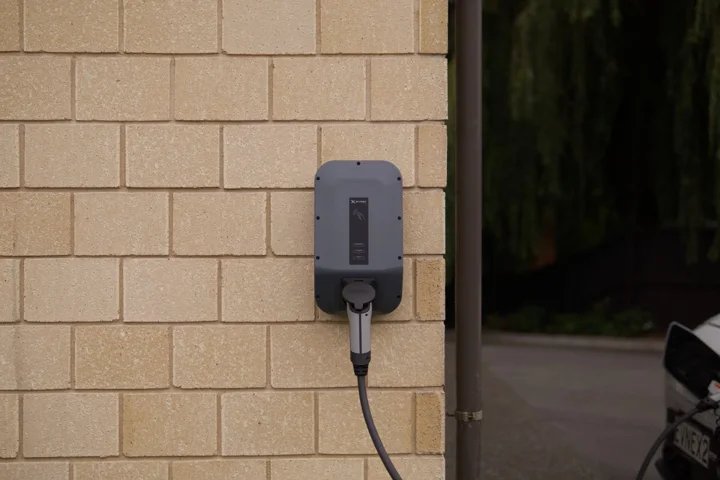
    Photo: Ed Harvey / Pexels. Illustrative photograph.

    Parking at night in Great Britain has two key rules: you MUST NOT park facing against the traffic flow unless you are in a recognised parking space (Highway Code Rule 248), and you MUST show parking lights on any road or lay-by with a limit over 30 mph (Rule 249). This explainer covers when you can park without lights, parking in fog and on hills, charging an electric car at the kerb, and who enforces parking.

    Key facts

    • Rule 248: at night, do not park facing against the traffic flow unless in a recognised parking space.
    • Rule 249: parking lights are a MUST where the limit is over 30 mph (48 km/h).
    • Rule 250: cars can park without lights on roads of 30 mph or less if at least 10 metres from a junction, close to the kerb and facing in the direction of the traffic flow, or in a recognised parking place or lay-by.
    • Rule 239: at a kerbside charge point, avoid trailing cables that could trip pedestrians.

    Do I need parking lights at night?

    Where you park Car (and goods vehicle up to 2,500 kg laden)
    Road or lay-by with a limit over 30 mph Parking lights MUST be on
    Road with a limit of 30 mph or less, at least 10 metres from a junction, close to the kerb, facing the direction of traffic No lights needed
    Recognised parking place or lay-by on a 30 mph or lower road No lights needed
    On a 30 mph road but facing the wrong way, or within 10 metres of a junction Not covered by the exemption: move the car

    The exemption also covers invalid carriages, motorcycles and pedal cycles. Other vehicles and trailers, and any vehicle with a projecting load, MUST NOT be left on a road at night without lights (Rule 250).

    Why facing the right way matters

    Your rear reflectors face oncoming traffic only when you park in the direction of flow. Parked the wrong way at night, approaching drivers see your headlamps instead, and you have to cross the traffic to leave.

    Parking in fog (Rule 251)

    Parking on the road in fog is especially dangerous. If you cannot avoid it, leave your parking lights or sidelights on.

    Parking on hills (Rule 252)

    • Park close to the kerb and apply the handbrake firmly.
    • Facing uphill: select a forward gear and turn the steering away from the kerb.
    • Facing downhill: select reverse and turn the steering towards the kerb.
    • Automatic: select “park”.

    Charging an electric car at the kerb (Rule 239)

    1. Park close to the charge point.
    2. Route the cable so it does not trail across the pavement and trip pedestrians.
    3. Display a warning sign if you can.
    4. When you finish, return cables and connectors neatly so they are not a hazard.

    These are advice in Rule 239, not MUST rules.

    Every time you leave the car (Rule 239)

    • You MUST switch off the engine, headlights and fog lights.
    • You MUST apply the handbrake before leaving the vehicle.
    • You MUST make sure you will not hit anyone when you open the door. Check for cyclists and other traffic.
    • Passengers, especially children, should get out on the kerb side.
    • Lock the car and keep valuables out of sight.

    Where you must never park: parking rules in the Highway Code.

    Who enforces parking? (decriminalised parking)

    In many areas, local councils rather than the police enforce parking rules under Decriminalised Parking Enforcement. If you want to challenge a council penalty, appeals go to the Traffic Penalty Tribunal outside London, or London Tribunals inside London. Yellow lines, red routes and loading rules: parking restrictions decoded.

    Common questions

    Is it illegal to park facing the wrong way at night in the UK?

    Yes, on a road at night, unless you are in a recognised parking space (Rule 248).

    Can I park facing the wrong way during the day?

    Rule 248 applies at night. Rule 239 still advises not to park facing against the traffic flow at any time.

    Do I need lights when parked on a 40 mph road at night?

    Yes. Over 30 mph, parking lights MUST be on (Rule 249).

    Can I run a charging cable across the pavement?

    Rule 239 says avoid trailing cables that create a trip hazard. Park as close to the charge point as you can.

    Which way do I turn my wheels parking downhill?

    Towards the kerb, with reverse selected (Rule 252).

    Does parking come up on the driving test?

    You may be asked to park at the side of the road, in a bay or on the right. See driving test manoeuvres.

    Related: using your car lights and driving at night. Back to the main guide: Learning to Drive in Great Britain.

    Sources

    • Department for Transport, “The Highway Code: Waiting and parking (238 to 252)” (gov.uk)
  • Vehicle Markings: Hazard Plates and School Bus Signs (GB)

    Vehicle Markings: Hazard Plates and School Bus Signs (GB)

    Photo: Tudor Smith / Pexels. Illustrative photograph.

    The vehicle markings in the Highway Code for Great Britain tell you about the vehicle ahead: red and yellow rear markings mean a heavy or long vehicle, projection markers mean an overhanging load, orange hazard plates mean dangerous goods, and a “School bus” sign means children may be getting on or off. This explainer covers each one and what it means for how you drive.

    Quick reference

    Marking Where you see it What it tells you
    Large goods vehicle rear markings Motor vehicles over 7,500 kg maximum gross weight; trailers over 3,500 kg A heavy vehicle: allow more room and more stopping distance
    Vertical rear markings Commercial vehicles or combinations over 13 metres long (optional from 11 to 13 metres); builders’ skips in the road A long vehicle, or a skip you need to steer round
    Projection markers (side and end) A load or equipment, such as a crane jib, overhanging the front or rear by more than 2 metres Something sticks out beyond the vehicle body
    Hazard warning plates and panels Road tankers, tank containers, and vehicles carrying certain dangerous goods in packages Dangerous goods on board
    “School bus” sign Front or rear window of a bus or coach Children may be boarding or getting off

    Rear markings on lorries and long vehicles

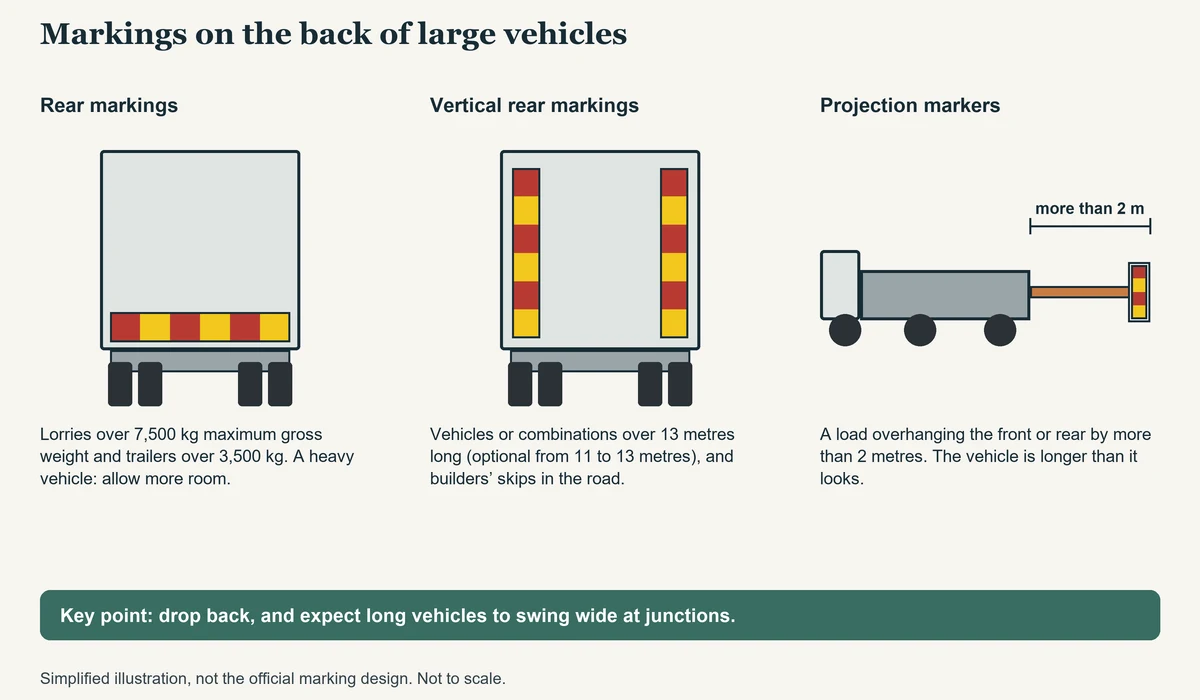
    The Highway Code shows the large goods vehicle rear markings in three positions: left, central and right. They are for lorries over 7,500 kg maximum gross weight and trailers over 3,500 kg. Vertical versions are used on vehicles or combinations over 13 metres long, can be used on those between 11 and 13 metres, and are also used on builders’ skips placed in the road.

    Three simplified vehicle views: the rear of a lorry with a striped rear marking board, the rear of a long vehicle with two vertical striped markings, and a side view of a vehicle with a load overhanging the back by more than 2 metres and a projection marker at its end.
    Rear markings, vertical markings for long vehicles and projection markers. Simplified illustration, not the official marking design.

    What to do: drop back so you can see past, expect wide swings at junctions and roundabouts, and do not overtake on the left as a long vehicle turns. Detail: driving near lorries, buses and large vehicles.

    Projection markers

    A side marker and an end marker are required when a load or equipment overhangs the front or rear by more than 2 metres. If you see them, the vehicle is effectively longer than it looks. Leave extra room when following, and take care when it turns, because the overhang can sweep across the pavement or the next lane.

    Hazard warning plates: dangerous goods

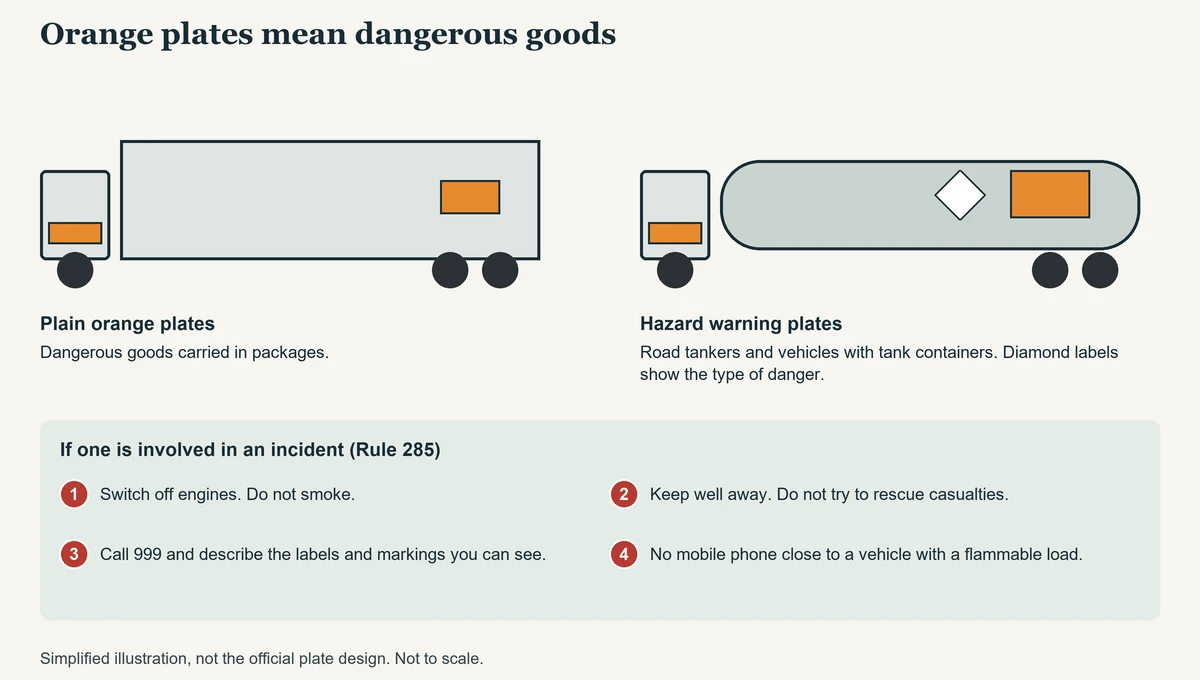
    Rule 284 says vehicles carrying dangerous goods in packages are marked with plain orange reflective plates, and road tankers and vehicles carrying tank containers have hazard warning plates. The Highway Code shows panels with diamond symbols for these risks:

    Side views of a box lorry with plain orange plates and a tanker with an orange hazard warning plate and a diamond label, above four numbered actions to take if one is involved in an incident.
    Orange plates show dangerous goods; keep well away if one is in an incident. Simplified illustration, not the official plate design.
    • flammable liquid
    • toxic substance
    • oxidising substance
    • non-flammable compressed gas
    • radioactive substance
    • spontaneously combustible substance
    • corrosive substance

    You do not need to decode the information on a panel. If you report an incident, describe the labels and markings you can see.

    If a dangerous goods vehicle is involved in an incident (Rule 285)

    1. Switch off engines. Do not smoke.
    2. Keep well away from the vehicle. Do not try to rescue casualties, as you could become one.
    3. Call the emergency services and give as much information as you can about the labels and markings on the vehicle.
    4. Do not use a mobile phone close to a vehicle carrying flammable loads.

    Your wider duties at a collision: after a car accident in the UK.

    School bus signs (Rule 209)

    The “School bus” sign is shown in the front or rear window of a bus or coach. When you pass a stopped bus showing it, drive carefully and slowly, because children may be getting on or off. More on driving near schools: road users requiring extra care.

    Common questions

    What do the orange plates on lorries mean?

    Dangerous goods. Plain orange reflective plates mean dangerous goods in packages; road tankers and tank containers carry hazard warning plates (Rule 284).

    What should I tell 999 about a tanker crash?

    As much as you can about the labels and markings on the vehicle (Rule 285), plus the location and direction of travel.

    What do red and yellow stripes on the back of a lorry mean?

    They are large goods vehicle rear markings, used on vehicles over 7,500 kg and trailers over 3,500 kg.

    Do I have to stop for a school bus in the UK?

    No law requires you to stop, unlike some other countries. Rule 209 says drive carefully and slowly past a stationary bus showing a “School bus” sign.

    Is this in the theory test?

    Yes, under other types of vehicle and incidents, accidents and emergencies.

    Back to the main guide: Learning to Drive in Great Britain.

    Sources

    • Department for Transport, “The Highway Code: Vehicle markings” (gov.uk)
    • Department for Transport, “The Highway Code: Breakdowns and incidents (275 to 287)” (gov.uk)
    • Department for Transport, “The Highway Code: Road users requiring extra care (204 to 225)” (gov.uk)
  • Mini Roundabout Rules: Mini, Double and Spiral Roundabouts (GB)

    Mini Roundabout Rules: Mini, Double and Spiral Roundabouts (GB)

    Photo: Ollie Craig / Pexels. Illustrative photograph.

    At a mini roundabout in Great Britain, give way to traffic from the right and drive round the white central marking: Highway Code Rule 188 says all vehicles MUST pass round it, except large vehicles that physically cannot. Avoid U-turns at mini roundabouts. This explainer covers mini, double mini and multiple roundabouts, and how to read lane markings on spiral-style roundabouts. For normal roundabouts, see Rules 184 to 190 step by step.

    Key facts

    • Rule 188: approach a mini roundabout like a normal one. You MUST pass round the central markings unless your vehicle is too large.
    • U-turns: avoid them at mini roundabouts, and watch for others doing them (Rule 188).
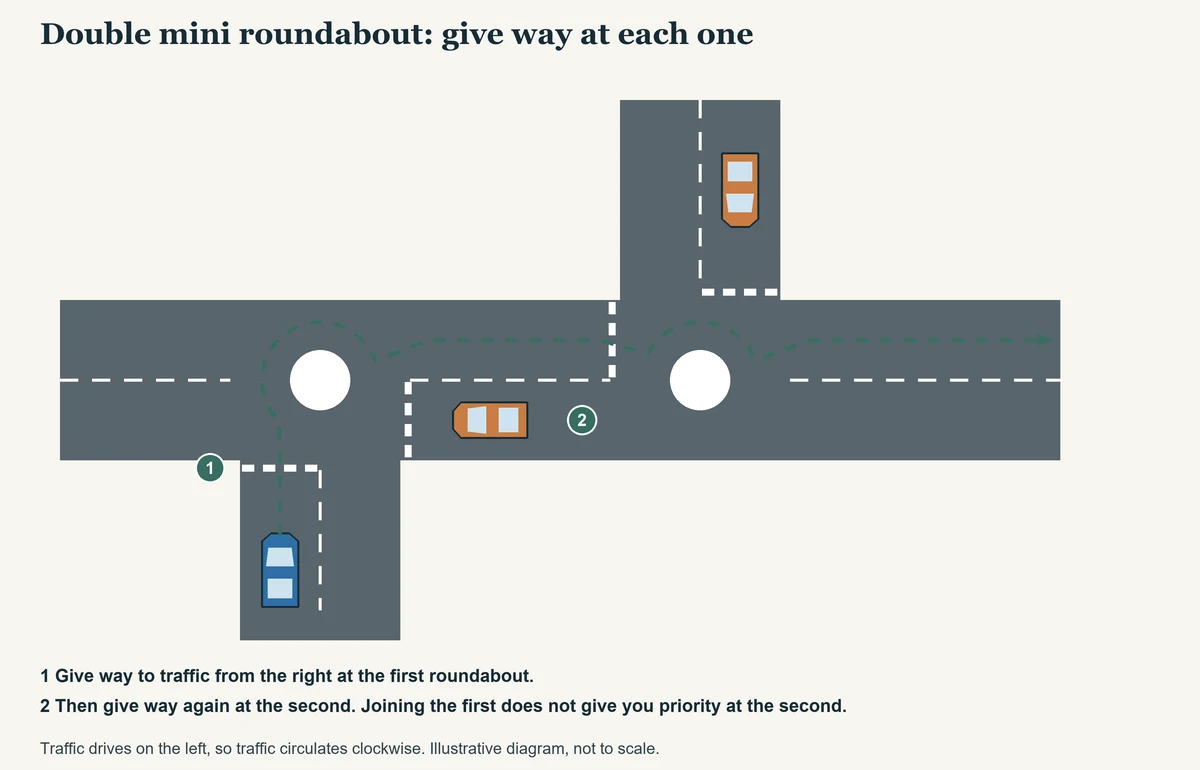
    • Rule 189: at a double mini roundabout, treat each one separately and give way to traffic from the right.
    • Rule 190: some complex junctions have a series of mini roundabouts. Treat each one separately.
    • Where you find them: Know Your Traffic Signs says mini roundabouts are normally on roads with a 30 mph limit or less.

    How to drive a mini roundabout

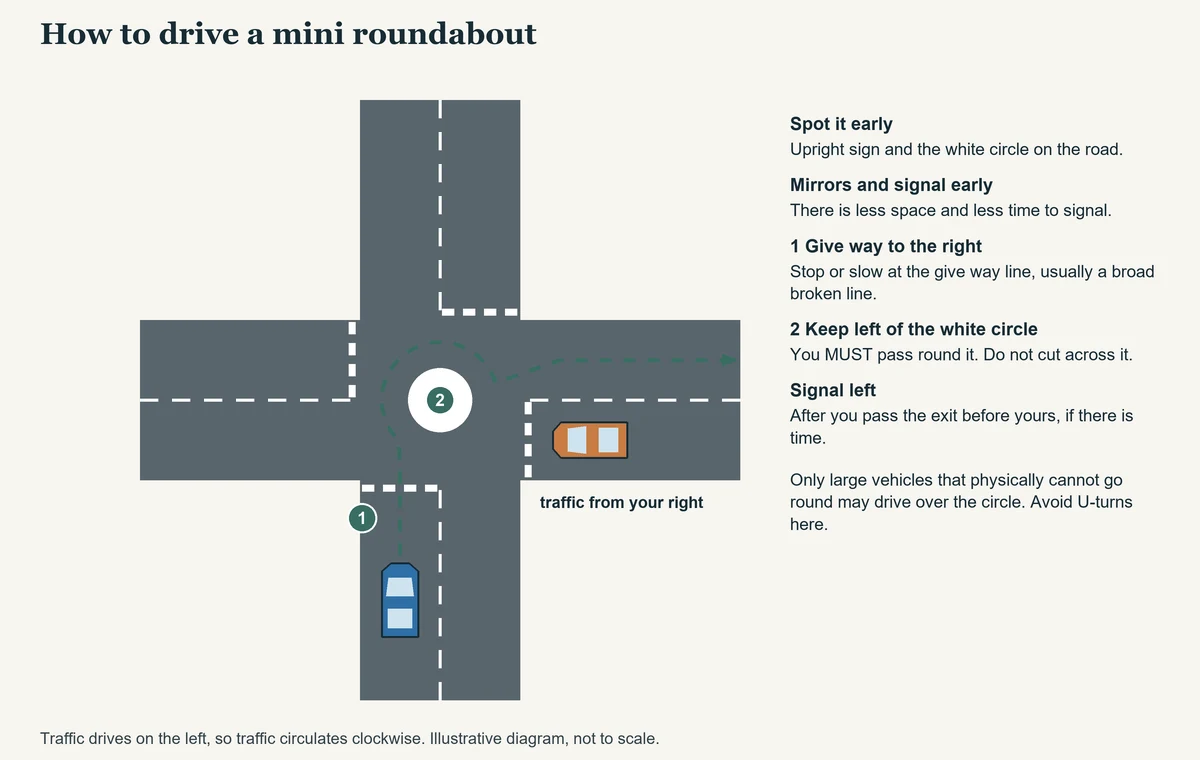
    1. Spot it early. Look for the upright mini roundabout sign and the white circle on the road.
    2. Mirrors and signal early. Rule 188 warns there is less space to manoeuvre and less time to signal.
    3. Stop or slow at the give way line. At a mini roundabout this is usually a broad broken line, though a double line with an upright give way sign may be used.
    4. Give way to traffic from the right.
    5. Keep left of the white circle. Do not cut across it.
    6. Signal left after you pass the exit before yours, if there is time.
    Top view of a mini roundabout: a car approaching from the bottom gives way to a car coming from the right, then turns right by going round the left side of the white central circle.
    Give way to the right and keep left of the white circle at a mini roundabout. Illustrative diagram, not to scale.

    What about lorries and buses?

    Large vehicles that physically cannot go round the central marking may drive over it. Expect them to use most of the junction, and wait rather than squeezing past.

    Double mini roundabouts

    Two mini roundabouts close together. Rule 189 says treat each one separately and give way to traffic from your right at each.

    Top view of two mini roundabouts close together, with a car giving way to traffic from the right at the first one and then giving way again at the second.
    At a double mini roundabout, treat each one separately (Rule 189). Illustrative diagram, not to scale.

    Scenario: turning right at a double mini

    You want the far right exit. At the first roundabout you give way to the right, go round, and then stop again at the second give way line if traffic is coming from its right. Do not assume that once you have joined the first roundabout you have priority at the second.

    Multiple and “magic” roundabouts

    Rule 190 covers junctions with a series of mini roundabouts at each intersection. The Highway Code does not use any special name for these. The rule is simple: treat each mini roundabout separately and follow the normal rules at each one. Take them slowly, look right at every give way line, and watch for vehicles crossing in front of you.

    Spiral roundabouts and lane markings

    The Highway Code has no rule that uses the word “spiral”. On large roundabouts, Know Your Traffic Signs says some roundabouts have lane markings to guide drivers to the right exit, and are often controlled by traffic signals. The rules that apply are:

    • Rule 184: use signs, signals and lane markings to get into the correct lane before you reach the roundabout.
    • Rule 186: pick your lane for your exit on approach. If there are more than three entry lanes, use the most appropriate one.
    • Follow your lane. Where solid or broken lines carry your lane round towards an exit, stay in it unless the markings let you change.
    • Segregated left-turn lanes: some roundabouts have a separate left lane where you do not give way to traffic on the roundabout. If chevrons between it and the roundabout are bounded by solid lines, do not cross them except in an emergency, so choose your lane early.

    Line meanings: road markings guide and lane discipline on multi-lane roads.

    Mini roundabouts on the driving test

    Mini roundabouts are common on residential roads. Faults to avoid: not giving way to the right, cutting over the white circle, and signalling late or wrongly. See the top reasons people fail and mirror, signal, manoeuvre.

    Common questions

    Can you do a U-turn at a mini roundabout?

    Rule 188 says you should avoid making U-turns at mini roundabouts. It is advice, not a ban, but it is the safe choice.

    Can you drive over a mini roundabout?

    Only if your vehicle is too large to go round. Everyone else MUST go round the central markings.

    Who has priority at a mini roundabout?

    Traffic from your right, the same as a normal roundabout, unless signs or markings say otherwise.

    Do you signal at a mini roundabout?

    Yes, use the normal roundabout signals, but there is less time, so signal early and clearly.

    What if two cars arrive at a mini roundabout at once?

    Each gives way to traffic from its right. If it is unclear who should go, wait and make eye contact rather than forcing it.

    Related: road junctions and driving near lorries and buses. Back to the main guide: Learning to Drive in Great Britain.

    Sources

    • Department for Transport, “The Highway Code: Using the road (159 to 203)” (gov.uk)
    • Department for Transport, “Know Your Traffic Signs”, 2023 edition, road markings section (gov.uk)
  • Tailgating and Road Rage: Highway Code Rules 144 to 147 (GB)

    Tailgating and Road Rage: Highway Code Rules 144 to 147 (GB)

    Photo: Sinitta Leunen / Pexels. Illustrative photograph.

    Tailgating in Great Britain means driving so close you could not stop if the vehicle ahead braked suddenly, and the Highway Code calls it dangerous and intimidating. Under Rule 144 you MUST NOT drive dangerously, without due care and attention, or without reasonable consideration for others. This guide covers what Rules 144 to 147 mean in practice, what to do when someone tailgates or provokes you, and how queues and slow traffic fit in.

    Key facts

    • Rule 144: careless, inconsiderate and dangerous driving are all offences (Road Traffic Act 1988, sections 2 and 3).
    • Rule 126: leave at least a two-second gap on fast roads; double it in the wet.
    • Rule 147: do not get drawn into someone else’s bad driving. If you are agitated, pull over and calm down.
    • Penalty: a careless driving fixed penalty was set at £100 and 3 points from 16 August 2013, with tailgating named as an example. In court, careless driving (CD10) carries 3 to 9 points and dangerous driving (DD40) 3 to 11. Check current amounts on gov.uk.

    What counts as careless, inconsiderate or dangerous? (Rule 144)

    Offence (endorsement code) Penalty points How long it stays on your record
    Driving without due care and attention (CD10) 3 to 9 4 years from the offence
    Driving without reasonable consideration for other road users (CD20) 3 to 9 4 years from the offence
    Dangerous driving (DD40) 3 to 11 4 years from conviction

    Tailgating is given as an example of careless driving in the gov.uk announcement of the 2013 fixed penalties.

    As a new driver, 6 points within two years of passing means you lose your licence: see the New Drivers Act. All codes: driving penalties and endorsement codes.

    Rule 145 adds that you MUST NOT drive on or over a pavement, footpath or bridleway except to get lawful access to a property or in an emergency.

    Someone is tailgating you: what to do

    1. Do not speed up to get away, and do not brake-test them.
    2. Gradually increase the gap to the vehicle in front, so you can brake gently if you need to.
    3. Keep to the speed limit and signal early.
    4. When safe, let them pass, for example by moving back to the left lane on a dual carriageway.
    5. If you feel stressed, find a safe place to stop (Rule 147).

    The gap you need and why: stopping distances and the two-second rule.

    Road rage and driving under pressure (Rules 146 and 147)

    The Highway Code has no separate “road rage” rule. Rule 147 covers it:

    • Be patient. Other drivers, especially learners and older drivers, make mistakes.
    • Do not react to someone else’s bad behaviour.
    • Do not drive up close to someone who pulled out in front of you to intimidate them.
    • You MUST NOT throw anything out of a vehicle.

    Rule 146 says adapt to the road and conditions and do not treat the speed limit as a target. Be ready for the road to be blocked beyond a blind bend, for vehicles emerging at junctions, and for unmarked junctions in side roads and country lanes where nobody has priority. Be prepared to stop at road works, crossings and traffic lights, and try to predict what pedestrians and cyclists will do: a child looking the other way may step out without seeing you.

    Pressure as a learner

    A queue behind your L plates does not change the rules. Drive at a speed that is safe for you and the road, and let faster traffic pass when you can safely pull in. Rule 217 asks other drivers to be particularly patient with learner and young drivers. See road users requiring extra care.

    Queues and slow-moving traffic

    • Rule 151: leave enough space to stop and to move round the vehicle in front if needed. Do not change lanes to the left to overtake, and do not block side road entrances.
    • Rule 114: in a stationary queue, apply the parking brake and, once the traffic behind has stopped, release the footbrake so your brake lights do not dazzle the driver behind.

    Box junctions and keeping side roads clear: road junctions explained.

    Common questions

    Is tailgating illegal in the UK?

    There is no separate tailgating offence, but it is enforced as careless or dangerous driving. The gov.uk announcement of the 2013 fixed penalties names tailgating as an example of careless driving.

    How much is the fine for tailgating?

    The careless driving fixed penalty was set at £100 and 3 points in 2013. If it goes to court, penalties are higher. Check the current figure on gov.uk.

    How close is too close?

    Less than a two-second gap on a fast dry road. Rule 126 says that gap should be at least doubled on wet roads.

    Should I brake-test a tailgater?

    No. Braking suddenly to warn someone could itself be careless or dangerous driving. Increase your gap instead.

    Can I flash my headlights at a slow driver?

    No. Rule 110 says only flash headlights to let others know you are there, never to intimidate or send another message. See signalling correctly.

    What does the theory test ask about this?

    These scenarios appear in the attitude and safety margins topics.

    Back to the main guide: Learning to Drive in Great Britain.

    Sources

    • Department for Transport, “The Highway Code: General rules, techniques and advice for all drivers and riders (103 to 158)” (gov.uk)
    • GOV.UK, “Penalty points (endorsements): Endorsement codes and penalty points” (gov.uk)
    • Department for Transport and Home Office, “New penalties for careless driving come into force” (gov.uk)
  • Traffic Calming in GB: Speed Humps, 20 mph Zones and Quiet Lanes

    Traffic Calming in GB: Speed Humps, 20 mph Zones and Quiet Lanes

    Photo: Mariusz / Pexels. Illustrative photograph.

    Traffic calming measures in Great Britain are physical features such as road humps, speed cushions and road narrowings, built to slow drivers down. Highway Code Rule 153 says slow down, keep a reduced speed through the whole stretch, give way where signs tell you to, and do not overtake. This guide also covers 20 mph zones, Home Zones, Quiet Lanes and single-track country roads.

    Key facts

    • Rule 153: keep to a reduced speed along the whole traffic-calmed stretch, not just at each hump. Do not overtake there.
    • 20 mph zone: the entry sign warns of a 20 mph limit and traffic-calming features that may not be signed individually.
    • Home Zones and Quiet Lanes (Rule 218): people may be using the whole street. Drive slowly and be ready to stop.
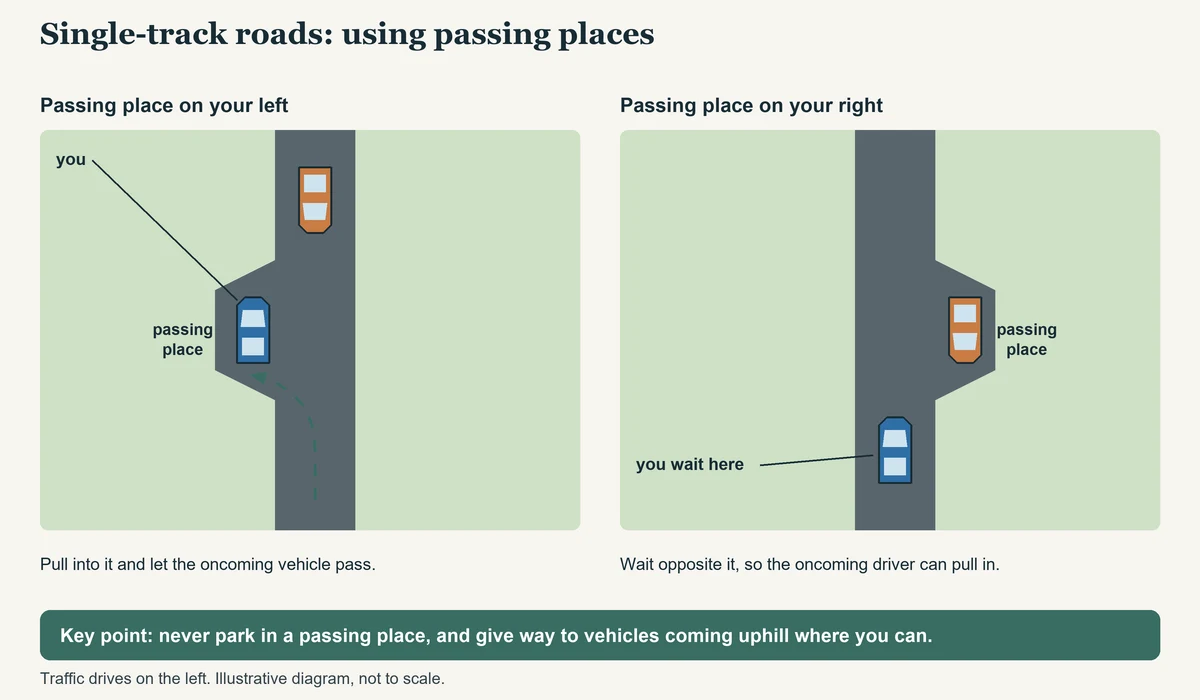
    • Passing places (Rules 155 and 156): pull in on your left or wait opposite one on your right. Never park in one.

    Types of traffic calming and how to drive them

    Feature What it looks like How to drive it
    Road hump Flat or round top across the road, sometimes a whole junction. Usually white triangle and edge markings Slow down before it and keep the reduced speed to the next one
    Speed cushion Hump covering only part of a lane so buses and large emergency vehicles can straddle it Slow down as for a full hump
    Flat-top hump with crossing Zebra, parallel or signal-controlled crossing on top of a hump Expect pedestrians; crossing rules apply
    Road narrowing (build-out) Kerb build-outs on one or both sides, opposite or staggered Obey priority signs. If none, keep a steady low speed and be ready to give way
    Chicane Staggered narrowings that make you weave Slow, steady speed; give way where signed
    Rumble strips Raised strips or areas across the road, often rural A warning of a hazard ahead (usually a bend or junction): slow down
    Village gateway Speed limit signs on yellow backing boards with the village name Slow down and keep to the limit all the way through
    Four road views from above: a full-width road hump with triangle markings, speed cushions that a bus can straddle, kerb build-outs narrowing the road, and a chicane with a car weaving through.
    Common traffic calming features and how to drive through them. Illustrative diagram, not to scale.

    At an unprioritised narrowing, Know Your Traffic Signs says do not accelerate on the approach, keep a steady low speed, and let any cyclists go ahead of you.

    Sign shapes and meanings: warning signs and road markings.

    20 mph zones vs 20 mph limits

    A 20 mph zone entry sign tells you two things: the limit is 20 mph, and there are traffic-calming features ahead that may not be signed one by one. Know Your Traffic Signs says to keep a steady low speed and avoid repeated speeding up and slowing down. Rule 152 notes that a 20 mph limit may apply in residential streets. More on limits: UK speed limits.

    Home Zones, Quiet Lanes and shared space

    • Home Zones: residential streets designed for people as well as traffic. Children may be playing anywhere in the road. Signs mark the entrance and end.
    • Quiet Lanes: some minor rural roads in England and Wales, signed for shared use by walkers, cyclists, horse riders and motor vehicles.
    • Shared space: streets where drivers, cyclists and pedestrians share the same space.

    For all three the advice is the same: drive slowly and carefully, and be prepared to stop to give people extra time to make room for you to pass safely (Rule 218 and Know Your Traffic Signs).

    Residential streets and country roads (Rules 152 to 156)

    In town (Rule 152)

    Drive slowly and carefully. Watch for vehicles pulling out, car doors opening, children and cyclists.

    Two views of a single-track road: with a passing place on your left you pull into it; with a passing place on your right you wait opposite it while the oncoming car pulls in.
    How to use passing places on single-track roads (Rules 155 and 156). Illustrative diagram, not to scale.

    Country roads (Rule 154)

    Slow down for bends and junctions. Expect pedestrians, horse riders, cyclists, farm vehicles and mud on the road.

    Single-track roads (Rules 155 and 156)

    1. Look well ahead for oncoming vehicles.
    2. Pull into a passing place on your left, or wait opposite one on your right.
    3. Give way to vehicles coming uphill where you can.
    4. Be ready to reverse to a passing place if needed.
    5. If a driver behind wants to overtake, use a passing place in the same way to let them by.
    6. Slow down when passing pedestrians, cyclists and horse riders.
    7. Do not park in passing places.

    More: learning to drive on rural roads.

    Common questions

    Can I overtake in a traffic-calmed area?

    Rule 153 says you should not.

    What speed should I go over speed humps?

    The Highway Code gives no figure. Slow down before each hump and keep a reduced speed through the whole area.

    Who has priority at a road narrowing?

    Whoever the signs give priority to. If there are no signs, be ready to give way and let cyclists through first.

    Is a Home Zone the same as a 20 mph zone?

    No. A Home Zone has its own entry and end signs and means people may use the whole street. A 20 mph zone sets a speed limit and warns of traffic calming.

    Can I park in a passing place on a single-track road?

    No. Rule 156 says do not park in passing places.

    Related: road users requiring extra care and pedestrian crossings. Back to the main guide: Learning to Drive in Great Britain.

    Sources

    • Department for Transport, “The Highway Code: General rules, techniques and advice for all drivers and riders (103 to 158)” (gov.uk)
    • Department for Transport, “The Highway Code: Road users requiring extra care (204 to 225)” (gov.uk)
    • Department for Transport, “Know Your Traffic Signs”, 2023 edition, traffic calming section (gov.uk)
  • Before You Drive Checklist: Highway Code Rules 89 to 98 (GB)

    Before You Drive Checklist: Highway Code Rules 89 to 98 (GB)

    Photo: Tima Miroshnichenko / Pexels. Illustrative photograph.

    Before you drive in Great Britain, Highway Code Rules 89 to 98 say your car must be legal and roadworthy, you must hold a valid licence and insurance, and your clothing and footwear must not stop you using the controls properly. This checklist turns those rules into a two-minute routine for learners and new drivers, with the legal “MUST” items marked.

    Key facts

    • Rule 89: your vehicle and any trailer MUST comply with the full construction, use and lighting requirements.
    • Rule 97: you MUST have a valid licence and insurance for the vehicle, and the vehicle MUST be legal and roadworthy.
    • Footwear: Rule 97 says “clothing and footwear do not prevent you using the controls in the correct manner”. There is no law naming flip-flops or bare feet; the test is whether you can use the pedals properly.
    • Eyesight: you MUST be able to read a number plate from 20 metres in good daylight, with glasses or lenses if you need them (Rule 92).
    • Clean lights and windows: Annex 6 says lights, indicators, reflectors and number plates MUST be kept clean and clear, and windscreens and windows MUST be kept clean and free from obstructions to vision.

    The pre-drive checklist (Rule 97)

    Paperwork and legality

    • Valid licence for the vehicle (a provisional licence plus a qualified supervisor if you are learning).
    • Insurance that covers you for this car. More on the documents: MOT, tax, insurance and the V5C.
    • Vehicle legal and roadworthy.

    Walk round the car

    • Lights, indicators, reflectors and number plates clean and working.
    • Windscreen, windows and mirrors clean and clear. In snow or ice, Rule 229 says you MUST clear all windows so you can see and MUST make sure lights are clean and number plates legible.
    • Tyres look properly inflated and undamaged. Tread depth and weekly checks: basic car maintenance for new drivers.

    In the driving seat

    1. Seat adjusted so you can press the pedals fully and reach the controls.
    2. Head restraint adjusted to reduce the risk of neck and spine injury in a collision.
    3. Mirrors set for “comfort, full control and maximum vision” (Rule 97). Set them after the seat, because moving the seat changes what they show.
    4. Nothing loose in the footwell that could roll under the pedals, and no heavy items free to fly round the cabin.
    5. Seat belt on. Who must wear one: seat belt and child seat law.
    6. You know where every control is, especially in an unfamiliar car: demister, wipers, lights, hazard warning lights and parking brake. Try the demister and check the glass actually clears.
    7. Enough fuel or charge for the journey, and a route planned with time for breaks.

    Rule 97 also recommends carrying a mobile phone with emergency contacts and high-visibility clothing, but you MUST NOT use a hand-held phone while driving.

    Are you fit to drive? (Rules 90 to 96)

    Rule What it says
    90 You MUST tell the DVLA about any health condition likely to affect your driving
    91 Do not start a journey tired. Avoid long drives between midnight and 6am. Take a break of at least 15 minutes every two hours
    92 20 metre number plate rule (20.5 metres for old-style plates)
    93 Slow down, or stop if necessary, if dazzled by bright sunlight
    94 Do not wear tinted glasses or visors at night or in poor visibility if they restrict your vision
    95 and 96 You MUST NOT drive over the drink limit or under the influence of drugs or certain medicines

    Detail: fitness to drive and the DVLA, the 20 metre eyesight rule and drink and drug limits.

    Carrying a load or towing (Rule 98)

    • You MUST NOT overload the vehicle or tow more than your licence allows.
    • Any load MUST be secure and MUST NOT stick out dangerously.
    • Rule 98 also says to adjust your headlights when the car is heavily loaded so they do not dazzle others.

    Towing rules for car licence holders: towing a trailer or caravan.

    Scenario: borrowing a friend’s car

    You have passed and want to drive a friend’s hatchback. Before you start: check your insurance actually covers you on that car, move the seat and mirrors (theirs will be wrong for you), find the lights, wipers and hazard switch, and check the fuel. If you are wearing heavy boots that catch the pedals, change them.

    Common questions

    Is it illegal to drive in flip-flops or barefoot in the UK?

    No specific law bans them. Rule 97 says clothing and footwear must not prevent you using the controls correctly. If your footwear makes you slip off or catch a pedal, it fails that test, and poor control can lead to a careless driving charge.

    Is it illegal to drive with a dirty number plate or lights?

    Annex 6 says lights, indicators, reflectors and number plates MUST be kept clean and clear. Clear them before you set off.

    Do I have to clear snow off the car roof?

    Rule 229 says remove snow that could fall into the path of other road users. Clearing all windows, lights and number plates is a MUST.

    How often should I take a break on a long drive?

    At least 15 minutes every two hours (Rule 91).

    Does the examiner check any of this on the test?

    You are asked one “tell me” and one “show me” vehicle safety question. See the show me, tell me questions.

    Which theory test topic covers this?

    Mainly safety and your vehicle.

    Back to the main guide: Learning to Drive in Great Britain.

    Sources

    • Department for Transport, “The Highway Code: Rules for drivers and motorcyclists (89 to 102)” (gov.uk)
    • Department for Transport, “The Highway Code: Annex 6. Vehicle maintenance, safety and security” (gov.uk)
    • Department for Transport, “The Highway Code: Driving in adverse weather conditions (226 to 237)” (gov.uk)
  • Sharing the Road With Motorcycles: Rules 83 to 88 and 211

    Sharing the Road With Motorcycles: Rules 83 to 88 and 211

    Photo: Dan Wright / Pexels. Illustrative photograph.

    Motorcyclists are easy to miss, especially at junctions, where the Highway Code warns they “could be approaching faster than you think”. Rules 211 to 213 tell drivers in Great Britain to look for them before emerging, give them at least as much room as a car when overtaking, and expect sudden changes of direction. Rules 83 to 88 and Annex 2 explain how riders are trained and equipped, which helps you predict what they will do.

    Key rules for drivers

    • Rule 211: always look for motorcyclists before you emerge from a junction. Watch for riders on your inside when turning right across slow or stopped traffic.
    • Rule 212: give motorcyclists at least as much room as a car when overtaking, and more in bad weather, high winds and at night.
    • Rule 212: a rider looking over their shoulder may be about to pull out, turn or change direction. Give them time and space.
    • Rule 213: riders may swerve suddenly to avoid potholes, drain covers, or wet, oily or icy patches. Give plenty of room.

    Why drivers miss motorcycles at junctions

    Rule 86 notes that drivers may not see a motorcyclist, or may misjudge their distance or speed, especially at junctions. A narrow bike is easily hidden by a windscreen pillar, a parked van or a hedge.

    How to check properly before emerging

    1. Slow early so you have time to look.
    2. Look right, left and right again, moving your head to see round the pillars.
    3. Look twice at any gap. A bike may be inside it.
    4. If a vehicle is coming, assume a motorcycle could be overtaking it.
    5. Only emerge when you are sure the road is clear.

    More junction technique: road junctions and turning right.

    Filtering, queues and blind spots

    Rule 88 tells riders they may filter through slow traffic, taking care and keeping speed low. So in a queue:

    • check mirrors and blind spots before changing lanes or pulling out of a queue
    • expect a rider passing on either side in slow traffic
    • when turning right across stopped traffic, watch for a rider coming up the outside of the queue
    • if an oncoming driver stops and leaves you a gap to turn through, remember they cannot see a rider filtering along the inside of their queue. Edge forward only until you can see, and wait if you cannot

    Lane changes done properly: mirror, signal, manoeuvre.

    What riders must do (Rules 83 to 88)

    Rule Rider requirement Why it helps you predict them
    83 Riders and passengers must wear a helmet that meets the regulations (Sikhs wearing a turban are exempt) Head checks are a clue: a rider turning their head may be about to move
    84 Eye protectors are advised and MUST meet the regulations; ear protection, strong boots, gloves and protective clothing are also advised A rider with ear protection and a visor may not hear your horn or see you as well as you think
    85 One pillion passenger at most, astride, feet on footrests. Provisional licence holders must not carry a passenger An L plate rider will not have a pillion passenger
    86 Make yourself visible; dipped headlights can help, even in daylight A headlight in your mirror may be a bike, not a car
    87 Reflective clothing or strips in the dark At night you may see only reflective strips and a single light
    88 Check behind and to the sides before manoeuvring; filter with care Expect riders between lanes in slow traffic

    Learner riders and L plates (Annex 2)

    • CBT first: a provisional motorcycle licence holder must complete Compulsory Basic Training before riding on the road.
    • After CBT: they can ride a motorcycle up to 125 cc and 11 kW on L plates (D plates in Wales) for up to two years.
    • No passengers or trailers until they pass their test.
    • No motorways: provisional motorcycle licence holders are listed in Rule 253 as not allowed on motorways.
    • Mopeds: riders can be 16, on a provisional moped licence with CBT.
    Category What it covers Minimum age
    AM Mopeds, top design speed 45 km/h (28 mph) 16
    A1 Up to 125 cc and 11 kW 17
    A2 Up to 35 kW 19
    A Any motorcycle 21 (progressive access) or 24 (direct access)

    An L plate rider is inexperienced and may be riding unaccompanied after CBT. Give them extra room and patience.

    Common questions

    How much room should I give a motorcyclist when overtaking?

    At least as much as you would give a car, and more in bad weather, high winds and at night (Rule 212).

    Can motorcyclists filter through traffic?

    The Highway Code tells riders to take care and keep speed low when filtering in slow traffic (Rule 88), so expect it.

    Can a learner motorcyclist carry a passenger?

    No. Not until they pass their test.

    Can learner motorcyclists use the motorway?

    No. Rule 253 bars holders of provisional motorcycle licences from motorways.

    Why do motorcyclists move around in the lane?

    To avoid potholes, drain covers and slippery patches (Rule 213), and to be seen. Leave room for sudden changes of direction.

    Is this in the theory test?

    Yes, mainly in vulnerable road users. See the vulnerable road users topic.

    Related: Highway Code rules for cyclists, road users requiring extra care and UK licence categories. Back to the main guide: Learning to Drive in Great Britain.

    Sources

    • Department for Transport, “The Highway Code: Rules for motorcyclists (83 to 88)” (gov.uk)
    • Department for Transport, “The Highway Code: Road users requiring extra care (204 to 225)” (gov.uk)
    • Department for Transport, “The Highway Code: Motorways (253 to 274)” (gov.uk)
    • Department for Transport, “The Highway Code: Annex 2. Motorcycle licence requirements” (gov.uk)
  • Animals on the Road: Highway Code Rules 47 to 58 and 214

    Animals on the Road: Highway Code Rules 47 to 58 and 214

    Photo: Eclipse Chasers / Pexels. Illustrative photograph.

    When you meet animals on the road in Great Britain, the Highway Code tells you to drive slowly, give plenty of room, be ready to stop, and never use the horn or rev the engine. If a herd blocks the road, stop and switch off your engine until it has passed. If you hit a dog, horse, cow, sheep, pig, goat, ass or mule, you have legal duties to stop and report. This explainer covers Rules 47 to 58, Rule 214 and Rule 286.

    Key rules for drivers

    • Rule 214: drive slowly past animals, give them plenty of room and be ready to stop. Do not sound your horn, rev your engine or accelerate hard once past.
    • Rule 214, livestock: if animals block the road, stop and switch off your engine until they have left it.
    • Rule 215, horses: 10 mph maximum and at least 2 metres when passing. Full detail: passing horses safely.
    • Rule 286: after a collision that injures an animal, you must stop, give details to anyone with reasonable grounds to ask, and report to the police within 24 hours if you did not.

    Herded animals: cattle and sheep (Rules 58 and 214)

    Rule 58 asks people herding animals to keep them under control, send someone ahead to warn traffic at bends and hill crests, and avoid moving them after dark. If a herd is moved at night, the people with it should wear reflective clothing and carry lights, white at the front of the herd and red at the back. Expect them on rural roads, often near farm gates and with little warning.

    1. Slow right down as soon as you see animals or a warning sign.
    2. If the herd fills the road, stop and switch off the engine.
    3. Wait for the herd to pass or for the person in charge to signal you on.
    4. Move off gently. No horn, no revving, no fast acceleration.
    5. Watch for stragglers.

    Rule 214 also asks you to keep your speed down on bends and narrow country roads, to take extra care with animals being led, driven or ridden along the road, and to watch for animals wandering on unfenced roads, such as moorland and common land.

    More on country driving: learning to drive on rural roads.

    Dogs and other animals (Rules 56 and 57)

    • Rule 56: owners should never let a dog onto the road on its own, and should keep it on a short lead on pavements and paths shared with cyclists or horse riders. As a driver, a loose dog near the road is a hazard: slow down and be ready to stop.
    • Rule 57: in your own car, restrain animals so they cannot distract you or be hurt if you brake suddenly. Options are a seat belt harness, pet carrier, dog cage or dog guard.

    Horse riders and horse-drawn vehicles (Rules 47 to 55)

    These rules are written for riders and carriage drivers, but they tell you what to expect:

    Rule What it says What it means for you
    48 Horse-drawn vehicles need two red rear reflectors, and lights at night They are slow and may be hard to see at dusk
    50 and 51 Riders should wear light or fluorescent clothing by day and reflective clothing at night Look out for hi-vis on country lanes
    53 Riders keep left and ride in single file on narrow or busy roads and bends Expect single file on bends; do not pass until safe
    55 Riders should avoid roundabouts, but if they use one, they keep left and signal right across exits A horse may stay left on a roundabout while going right

    What to do if you hit an animal

    Rule 286 says that if you are involved in a collision causing damage or injury to any other person, vehicle, animal or property, you must:

    1. Stop, in a place of relative safety if possible.
    2. Give your name and address, the vehicle owner’s name and address, and the registration number to anyone with reasonable grounds to ask.
    3. If you did not give those details at the time, report it to the police as soon as reasonably practicable, and within 24 hours at the latest.

    Which animals count?

    For this duty, section 170 of the Road Traffic Act 1988 defines “animal” as a horse, cattle, ass, mule, sheep, pig, goat or dog. Deer and cats are not on the list, though a collision with them can still damage other vehicles or property, which brings the duty back in. Full detail on your duties: after a car accident in the UK.

    Scenario: a sheep runs out on a dark lane

    You hit a sheep and it is injured. Nobody is around. Stop safely and report it to the police within 24 hours because you could not give your details to anyone at the scene.

    Common questions

    Do you have to report hitting a dog?

    Yes. A dog is on the section 170 list. Stop, and if you cannot give your details to the owner or someone else with good reason to ask, report it to the police within 24 hours.

    Do you have to report hitting a cat?

    Cats are not on the list for this duty. You must still stop and report if the collision damaged another vehicle or property, or injured a person.

    What should I do if cows are on the road?

    Slow down, stop if they block the road, switch off your engine and wait until they have cleared it.

    Can I use my horn to move animals?

    No. Rule 214 says never to scare animals with your horn or engine.

    How should I carry my dog in the car?

    Restrained, so it cannot distract you or be hurt in sudden braking: a harness, carrier, cage or dog guard (Rule 57).

    Does this come up in the theory test?

    Yes, under vulnerable road users and other topics. See the vulnerable road users topic.

    Related: road users requiring extra care and the warning signs guide (including animal signs). Back to the main guide: Learning to Drive in Great Britain.

    Sources

    • Department for Transport, “The Highway Code: Rules about animals (47 to 58)” (gov.uk)
    • Department for Transport, “The Highway Code: Road users requiring extra care (204 to 225)” (gov.uk)
    • Department for Transport, “The Highway Code: Breakdowns and incidents (275 to 287)” (gov.uk)
    • legislation.gov.uk, “Road Traffic Act 1988, Section 170” (legislation.gov.uk)