Author: Get Driving Test Ready

  • BC winter tires: check the route, dates and tire markings

    BC winter tires: check the route, dates and tire markings

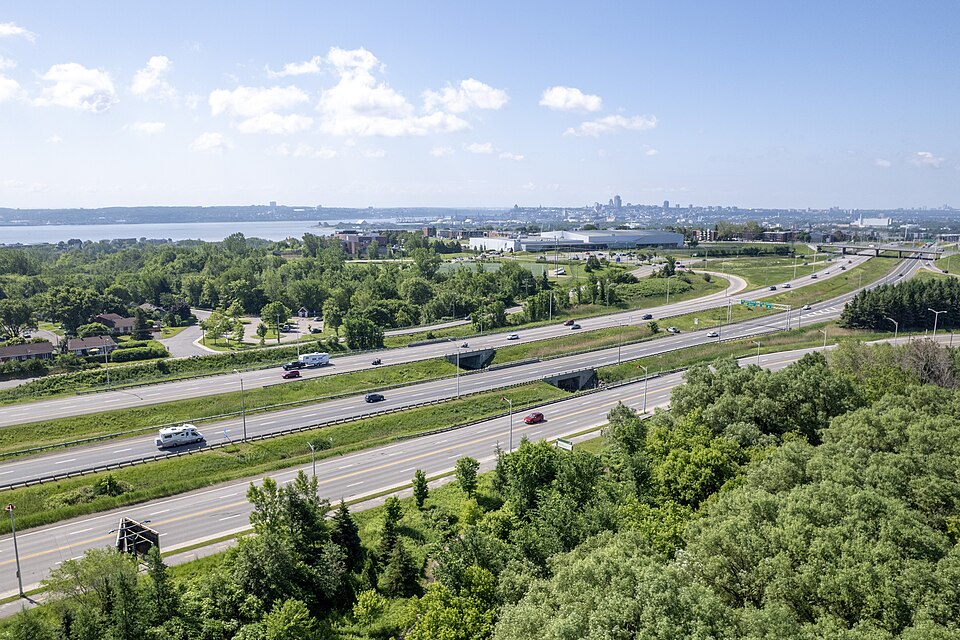
    Photo: Janusz Sobolewski, CC BY 2.0, via Wikimedia Commons

    In British Columbia, winter tires or chains are required on most signed highways from 1 October to 30 April. Some routes end on 31 March. This guide is for BC learners, new N drivers and their supervisors planning a winter drive. It covers which roads the rule applies to, what counts as a legal winter tire, and how to decide whether a learner should make the trip at all.

    Key facts

    • Dates: 1 October to 30 April on most designated routes. Select highways outside mountain passes and high-snowfall areas end on 31 March.
    • A legal winter tire has at least 3.5 mm of tread and either the M+S marking or the three-peaked mountain and snowflake symbol.
    • You need at least two matching winter tires on the primary drive axle, even on a 4×4. Four matched tires are recommended.
    • Chains on summer tires do not count as legal winter tires on signed BC highways.
    • Drivers who do not comply can be turned away and fined.

    Which BC roads need winter tires?

    The rule applies on routes marked with regulatory winter tire signs, posted on highways throughout the province. The Government of BC publishes route maps for the South Coast, Northern, Southern Interior and Southern Interior Border regions.

    • Coastal exemption: many Lower Mainland and southeastern Vancouver Island roads are exempt. Some routes, such as the Malahat, still require winter tires.
    • Local roads: municipalities and private roads, such as ski hill access roads, can set their own rules.
    • Restrictions at any time: the province can restrict travel in any month if road conditions call for it.
    • Exempt does not mean safe: on an exempt road you are still responsible for equipping your vehicle for the conditions.

    What counts as a legal winter tire in BC?

    Check Legal minimum Better choice
    Marking on the sidewall M+S (mud and snow) Three-peaked mountain and snowflake symbol
    Tread depth At least 3.5 mm More tread grips better
    How many Two matching tires on the primary drive axle Four tires evenly matched in tread type and depth
    All-wheel or four-wheel drive No exemption: the same rules apply Four winter tires

    Chains and studded tires

    • Passenger vehicles may use chains or other traction devices tested for winter performance. Carry chains for extreme conditions.
    • Chains on summer tires are not a substitute for legal winter tires on signed highways.
    • Studded tires may only be used on BC highways from 1 October to 30 April. Studs should not stick out more than 2 mm from the tread. If you put studded tires on the front, you must also put them on the back.

    Five-minute tire check before a winter lesson

    1. Find the marking on each tire: M+S or the mountain and snowflake symbol.
    2. Measure the tread with a gauge. At least 3.5 mm on every winter tire.
    3. Check the drive axle. Do you know whether the car is front-wheel, rear-wheel or all-wheel drive? The owner’s manual says. If you are unsure, ask a tire shop.
    4. Confirm the pair on the drive axle matches. Better, check that all four match.
    5. Look up the route: is it signed, and what are today’s conditions? Check before you leave, not at the sign.

    ICBC’s handbook adds a wider winter check: a healthy battery, an exhaust system with no leaks (carbon monoxide builds up in a closed car), winter-grade oil and fluids, four snow tires rather than two, and a practice run at fitting chains before you need them. In extreme conditions it may be safer to park than to carry on.

    Should a learner drive that route today?

    Legal tires make the trip legal. They do not make it suitable for a new driver. Example: the family car is fine for a local lesson, but tomorrow’s plan crosses a mountain pass.

    • Check the tires as above and confirm the route dates.
    • Check the forecast and road conditions on the morning of the drive.
    • Agree in advance where the supervisor will take over. Remember that a BC supervisor must be 22 or older.
    • If conditions are beyond the learner, move the lesson. Choosing not to drive is a skill too.

    On snow, leave extra following distance and use gentle steering, braking and acceleration. For skids, deep water and breakdowns, see emergency strategies for BC drivers.

    Common questions

    When do I need winter tires in BC?

    From 1 October to 30 April on most signed routes. Some routes end on 31 March.

    Are all-season tires legal in BC winter?

    Only if they carry the M+S marking (or the mountain and snowflake symbol) and have at least 3.5 mm of tread.

    Do I need winter tires in Vancouver?

    Many Lower Mainland roads are exempt, but routes such as the Malahat are not. Check the signs and the province’s maps for your route.

    Is my AWD car exempt?

    No. The two-matching-tires rule applies to 4×4 and all-wheel-drive vehicles too.

    Can I just carry chains?

    Not with summer tires. Chains supplement winter tires in extreme conditions. They do not replace them on signed highways.

    What is the fine?

    The Government of BC says non-compliant drivers may be turned away and fined. Check the current fine with the Government of BC.

    Related: learning to drive in BC, BC learner licence rules, winter driving in Canada for new drivers, Quebec’s winter tire law.

    Sources

    • Government of British Columbia, “Winter tire and chain-up routes” (gov.bc.ca)
    • Government of British Columbia, “About winter tires” (gov.bc.ca)
    • ICBC, “Learn to Drive Smart, Chapter 9: your licence” (icbc.com)
  • Nova Scotia road signs study guide for the learner’s test

    Nova Scotia road signs study guide for the learner’s test

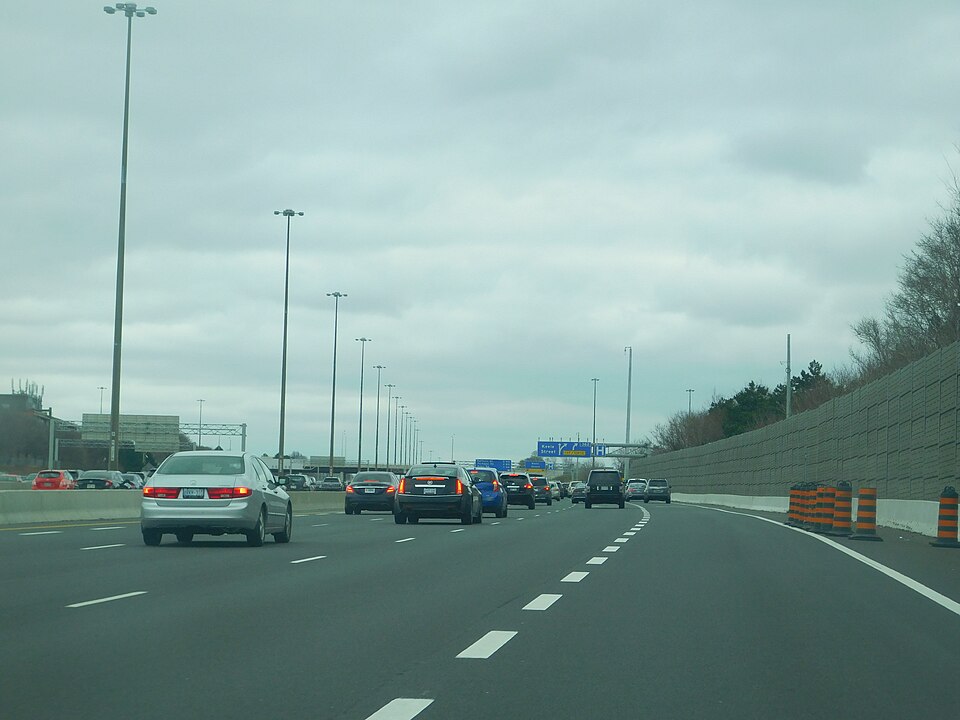
    Photo: Eric Van Lochem, CC BY-SA 4.0, via Wikimedia Commons

    Part 2 of the Nova Scotia learner’s test is 20 multiple-choice questions on Nova Scotia highway signs, and you need at least 16 correct. This study guide covers what that part tests, organized the way Chapter 3 of the Nova Scotia Driver’s Handbook groups it: sign shapes and colours, regulatory, warning, guide and work zone signs, railway crossings, signals and pavement markings. Learn the groups first, then the individual signs.

    Key facts

    • The signs part has 20 questions. You need 16 correct, and the rules part is marked separately.
    • Fail one part and you retake only that part (both, if you failed both), buying a new $15.03 receipt (as of November 2026).
    • Chapter 3, “Signs, Pavement Markings, and Work Zones”, is the chapter to study.
    • The handbook was printed before the Traffic Safety Act took effect on 19 October 2026. Several road rules changed then, so check them alongside this chapter. See what the Traffic Safety Act changed.

    Sign shapes and colours: learn these first

    Shape or colour Meaning in Nova Scotia
    Octagon, red with white STOP Stop sign. The octagon is used for nothing else
    Triangle, red and white Yield
    Five-sided, fluorescent yellow-green with two children School zone (the standard design across Nova Scotia since 1 June 2001)
    Rectangle or square, white with black or red Most regulatory signs: the law you must obey
    Diamond, black on yellow Most warning signs: conditions ahead
    Rectangle, green with white letters Guidance: routes, directions and distances
    Orange with black letters Work zone signs
    Green circle Permission (for example, passing permitted)
    Red circle with a slash Not permitted (for example, do not pass)
    White X-shaped crossbuck with a red border Railway crossing

    The handbook ends Chapter 3 with a “The Shape of a Sign Says What It Means” quiz. Do it until you get every shape right without the colours.

    Regulatory signs on the Nova Scotia test

    You must obey these unless a peace officer directs otherwise.

    • Stop: stop completely at the stop line or the nearest crosswalk line. With no lines, stop far enough back for a pedestrian to cross (an unmarked crosswalk).
    • Yield: slow down and give way to traffic in or close to the intersection, stopping if necessary.
    • School zone: when children are present, the limit is 30 km/h where the approach limit is 50 km/h, or 50 km/h where the approach limit is higher, at any time of day.
    • Turn and lane control: no left turn, no U-turn, no turns, through or right turn only, lane arrows, and the two-way left-turn lane sign.
    • Others the handbook shows: no litter, no right turn on red, one-way, do not enter, do not pass, passing permitted, no stopping, no parking either side of the sign, keep right of the island, maximum speed, truck route, accessible parking.

    Crosswalk and playground signs

    • Pedestrian crosswalk and school crosswalk signs mark where people cross.
    • A playground sign means slow down and watch for children.

    Warning signs

    Most are yellow diamonds. The handbook’s examples include:

    • stop sign ahead, traffic signal lights ahead, truck entering, fire truck entrance
    • slippery when wet, bump or rough road, steep decline (you may need a lower gear)
    • right curve with an advisory speed, sharp turn (checkerboard), chevrons on sharp curves
    • road narrows, narrow structure, low clearance, right lane ends, merge
    • divided highway ahead, divided highway ends, two-way traffic, bridge opening, hidden intersection
    • hazard markers: if the black stripes slope right, pass on the right; if they slope left, pass on the left
    • change in maximum speed ahead

    Merge tip from the handbook: drivers in both lanes share responsibility for a smooth merge. Be ready to yield.

    Guide signs and 100-series highways

    Green guide signs give route numbers, directions and distances. A sign such as Highway 102 marks a provincial 100-series highway: a controlled-access highway, entered only at interchanges. On these highways:

    • Use the acceleration lane to match speed, then merge. Yield to through traffic.
    • Keep right, and use the left lanes for passing.
    • Signal your exit early and slow down in the deceleration lane, not on the highway.

    Work zone signs

    Type What it tells you
    General signs Unusual conditions ahead. They stay up until the road is back to normal
    Signs with arrows (advance temporary condition) Time to prepare: for example, construction 1.5 km ahead, right lane ending, tar sprayed ahead
    Specific signs A particular hazard, such as uneven lanes, a rough surface or a narrowing lane
    Human activity signs (a person symbol) Only used when people are working there. Traffic control persons may use stop/slow paddles
    Flashing light unit, two arrow heads Lane closed or obstruction. You may pass on either side
    Flashing light unit, one arrow Pass only on the side the arrow shows
    Flashing light unit, straight bar (caution mode) A hazard. It does not tell you it is safe to pass

    A “Do Not Pass” sign in a work zone is regulatory, and ignoring it is a ticketable offence. Merge as soon as it is safe rather than at the last moment. The biggest causes of work zone collisions are vehicles at different speeds and inattention, so slow gradually, leave extra space and put your phone away. Blasting signs may tell you to turn off radio transmitters. Defacing or removing a sign is an offence.

    Railway crossing signs

    • A yellow and black advance warning sign shows the angle of the tracks ahead.
    • The crossbuck is at the crossing itself. A smaller sign below it gives the number of tracks.
    • Flashing red lights at a crossing mean stop, as for any flashing red signal. Never go through lowered gates. When you must stop, stop no closer than 5 metres from the nearest rail. Do not start across unless there is room for your car on the far side (Using the Road Regulations, section 19).
    • Already on the tracks when the lights start? Keep moving. The gates will not trap you.
    • After a train passes, check for a second train before you go.
    • Be ready to stop behind school buses, vehicles carrying passengers for hire and vehicles with hazardous material placards.
    • Stalled on the tracks? Get everyone out and well away, post lookouts both ways, and only with no train in sight try to push or restart the car.

    Traffic signals and pavement markings

    Signals

    • Amber: stop if you can do so safely.
    • Flashing red: treat it as a stop sign.
    • Flashing amber: slow down and proceed with caution.
    • Flashing green: you may turn left, go straight or turn right.
    • Green arrow: turn the way it points. Amber arrow: stop unless you are too close to stop safely.
    • Red X over a lane: never drive in that lane.
    • Signals not working: treat the intersection as a multi-way stop.
    • Right on red: allowed after stopping, unless a sign forbids it.
    • Left on red: allowed only from a one-way street onto another one-way street.

    Lines

    • Yellow lines separate opposite directions. White lines separate traffic going the same way.
    • A broken yellow line on your side means you may pass with care. A double solid yellow line means no passing either way.
    • A solid yellow left-edge line on a divided highway: if you see the reverse, you are going the wrong way.
    • A single solid yellow centre line allows passing either way only when traffic, sight distance and conditions are ideal.
    • Climbing lanes: keep right unless passing. Do not pass once you reach the solid line at the end of the lane. Use your flashers under 70 km/h where a sign says so.
    • A two-way left-turn lane is shared by both directions, only for turning left. Never pass in it or drive far along it. Signal, shoulder check, move in close to your turn, stop and yield.
    • White solid lines mark the right edge. The line rules do not apply when entering or leaving the highway away from an intersection, finishing a legal pass, or when the lines cannot be seen.
    • Continuity lines are the wider lines at entry and exit ramps.

    A strategy for scoring 16 out of 20

    1. Day 1: shapes and colours only, until you can name every one from its outline.
    2. Day 2: regulatory and crosswalk signs, plus the school zone speed rule.
    3. Day 3: warning signs. Group them as intersections, road surface, road shape and lanes.
    4. Day 4: work zone signs, flashing light units and railway crossings.
    5. Day 5: signals and lines, then the handbook’s shape quiz.

    On the test, read every option before you answer. Questions often offer two meanings that sound almost right. You can miss four at most, so treat the signs part as a separate exam.

    Common questions

    How many sign questions are on the Nova Scotia learner’s test?

    20, and you need at least 16 correct.

    If I pass signs but fail rules, do I redo signs?

    No. The current Class 7 knowledge test page says you retake only the part you failed. Older pages still say the entire test, so follow the current instructions when you book.

    What colour are construction signs in Nova Scotia?

    Orange with black lettering.

    What is the school zone speed limit in Nova Scotia?

    When children are present: 30 km/h where the normal limit is 50, or 50 km/h where it is higher.

    Is the handbook current?

    It is the official study book, but it was printed before the Traffic Safety Act changed some rules on 19 October 2026. Read the Traffic Safety Act changes as well.

    Related: learning to drive in Nova Scotia, Nova Scotia learner’s test, Nova Scotia rules of the road, railway crossings in Canada.

    Sources

    • Service Nova Scotia, “Nova Scotia Driver’s Handbook”, Chapter 2 “Rules of the Road” and Chapter 3 “Signs, Pavement Markings, and Work Zones” (novascotia.ca)
    • Service Nova Scotia, “Learner’s (Beginner’s) Licence” (novascotia.ca)
    • Government of Nova Scotia, “Changes to traffic safety legislation” (novascotia.ca)
  • Quebec Highway Safety Code: roundabouts, cyclists and school buses

    Quebec Highway Safety Code: roundabouts, cyclists and school buses

    Photo: Gabriel Picard, CC BY-SA 4.0, via Wikimedia Commons

    This guide is for Quebec learners and their accompanying riders. It covers the Highway Safety Code rules the SAAQ knowledge test and road test check most: roundabouts, pedestrians, cyclists, school buses, emergency vehicles and speed limits. Every rule below is from the Government of Quebec’s traffic rules pages. Remember the learner’s limit: in Quebec, 4 demerit points costs you your learner’s or probationary licence.

    Key facts

    • Pass cyclists with at least 1 metre in zones of 50 km/h or less, and 1.5 metres in zones over 50 km/h.
    • Stop at least 5 metres from a school bus with flashing red lights. Stopping is not required if a median separates you from the bus.
    • Default limits: 50 km/h in cities, towns and villages, 70 km/h on gravel roads, and 100 km/h maximum and 60 km/h minimum on highways (autoroutes).
    • Failing to slow down and move over for a stopped emergency vehicle or tow truck: $200 to $300 and 4 demerit points.

    Right of way at intersections

    • Stop sign: stop, then yield to vehicles already in, or about to enter, the intersection, and to pedestrians and cyclists entering it.
    • All-way stop: yield to any vehicle that reached the intersection before you.
    • Left turn on green: yield to oncoming traffic.
    • Any turn: yield to pedestrians and cyclists crossing the road you are turning into.
    • Lanes: with several lanes, turn right from the right lane and left from the left lane.
    • Do not block the box: even on a green light, stop before the intersection if you cannot clear it completely.
    • Right on red: allowed after a full stop, unless a sign prohibits it, but never on the island of Montreal. See right turn on red in Quebec.

    How to drive through a Quebec roundabout

    1. Slow down as you approach. Choose your lane for your exit before you enter, and stay in it.
    2. Give way to pedestrians who have started crossing, or clearly want to cross, the branch you are entering.
    3. Yield to the users already in the circle. In heavy traffic you may need to stop before entering.
    4. Drive counterclockwise. Never stop inside the circle.
    5. Signal right to show you are exiting.
    6. Missed your exit? Go around again if the design allows it.

    Pedestrians may not cross the roadway inside a roundabout or walk on the centre island.

    Pedestrians and crosswalks

    • Where a crosswalk is not controlled by an Arrêt (stop) sign or a light, you must stop to let a pedestrian entering it cross.
    • Always yield to pedestrians crossing, or signalling that they intend to cross, whether or not the crosswalk has flashing lights.
    • On a shared street (rue partagée), the limit is 20 km/h and pedestrians and cyclists have priority.

    How much space to give a cyclist in Quebec

    Speed limit where you are Minimum gap when passing
    50 km/h or less 1 metre
    Over 50 km/h 1.5 metres
    Cyclist behind a raised barrier (for example, a curb-protected bike path) No minimum gap required
    Bicycle route (30 km/h maximum) You may pass within 1 metre after slowing down
    • Slow down before passing, and stay behind if traffic is coming toward you or is in the next lane.
    • The same gaps apply to pedestrians and e-scooter riders.
    • You may cross a solid line (single or double) to give room to a cyclist, a pedestrian, a slow-moving vehicle or farm machinery. Crossing it in other cases can mean 3 demerit points and a $200 to $300 fine.
    • Before opening your door after parking, check your mirror and look over your shoulder for cyclists.

    School buses in Quebec

    • When a school bus has its alternating flashing red lights on and its stop sign out, stop at least 5 metres from the bus.
    • On a two-way road, you may pass or meet the bus only after the lights go off, the stop sign folds away, and you have checked it is safe.
    • If a median strip or other raised barrier separates you from the bus, you do not have to stop.
    • Near an intersection, obey the signs and priority rules, and do not cut into the bus’s safety zone after turning.

    For other provinces’ rules, see school bus stopping rules across Canada.

    Emergency vehicles and the move-over law

    An emergency vehicle is coming with lights or siren

    Yield: slow down, move as far right as you can, and stop if needed.

    A vehicle is stopped with lights flashing

    This covers police, ambulance, fire, Contrôle routier Québec, wildlife protection, tow and surveillance vehicles with flashing, rotating or yellow arrow lights.

    Where the stopped vehicle is What you do
    On the shoulder Slow down. Change lanes if it is safe. If you cannot, keep as far from it as possible in your own lane
    In your lane Slow down, stop if needed to let oncoming traffic pass, then go around when it is safe
    In the next lane Slow down and keep as far from it as possible in your own lane

    Penalty: a fine of $200 to $300 and 4 demerit points. On a learner’s or probationary licence, 4 points means losing the licence. See Quebec probationary licence rules.

    Speed limits in Quebec

    Road Limit where no sign is posted
    Cities, towns and villages 50 km/h maximum
    Gravel roads 70 km/h maximum
    Highways (autoroutes) 100 km/h maximum, 60 km/h minimum

    Speeding fines are doubled:

    • in a school zone between 7 a.m. and 5 p.m., Monday to Friday, September to June
    • past an orange speed sign in a roadwork zone
    • at 40 km/h or more over a limit of 60 km/h or less, 50 km/h or more over a limit above 60 and up to 90 km/h, and 60 km/h or more over a 100 km/h limit

    Passing rules for Quebec learners

    • Pass only on the left or in the oncoming lane, and only where the line on your side is broken.
    • Signal before you pass and return to your lane promptly. The speed limit still applies while you pass.
    • Pass on the right only when the vehicle ahead is turning left (without using the shoulder), heading for a left exit lane, or clearing or maintaining the left lane on a road with two or more lanes your way.
    • Never speed up while someone is passing you.
    • Do not pass a group in a sports or other special event escorted by vehicles, unless a free lane goes your way on a road with two or more lanes each way (slow down as you pass), or a peace officer lets you on a road with one lane each way.

    Roads with a two-way centre lane

    Quebec is testing a road layout, under a pilot project in effect since 3 July 2024, with one shared centre lane for vehicles going both ways and a multifunctional lane on each side for pedestrians and cyclists.

    • Drive in the centre lane. Stay there when you are alone on the road.
    • When you meet another vehicle, both drivers slow down, move into the right-hand multifunctional lane to pass each other, then return to the centre.
    • Yield to pedestrians and cyclists in the side lanes. If you cannot move over safely, stop in the centre lane until it is safe.
    • Keep at least 1 metre from pedestrians and cyclists when you pass them.
    • Do not stop on these roads except when necessary and safe, for example where there is parking or a wide enough shoulder.

    Stopping and parking in Quebec

    You may stop on a public road only when you really must, for example after a breakdown. On roads with a limit of 70 km/h or more, stopping is banned unless it is necessary or a sign allows it. Never stop where you would hide a sign, block traffic or road work, or block access to a property.

    • No stopping on a sidewalk or median, within 3 metres of a fire hydrant, in an intersection, crosswalk or bicycle crossing, or in a traffic circle.
    • No stopping on a bridge, viaduct or tunnel, on an autoroute or its ramps, in a reserved lane (bus or bicycle), in a loading or transit zone, or in front of a sidewalk ramp for people with disabilities.
    • Park in the direction of traffic, no more than 30 cm from the curb, and leave room for others to manoeuvre. On a slope, set the parking brake and turn the front wheels toward the curb.
    • Watch for winter no-parking signs, often with orange lights that show when the ban is on, and for tabs warning that vehicles may be towed.

    Large wildlife

    Moose and deer collisions peak at dawn and dusk, in June and July, and in October and November. Slow down where signs or flashing yellow lights warn of wildlife, and scan both sides of the road. If a collision cannot be avoided, do not swerve: brake and slow down gradually, tap the brakes to warn drivers behind, and sound the horn. Report a dangerous wildlife situation by calling 511. More: moose, deer and caribou on Canadian roads.

    Common questions

    How far do I stop from a school bus in Quebec?

    At least 5 metres, while its red lights flash and its stop sign is out.

    Who goes first in a Quebec roundabout?

    Traffic already in the circle. You yield on the way in.

    What is the speed limit in Quebec if there is no sign?

    50 km/h in built-up areas, 70 km/h on gravel, and 100 km/h on autoroutes.

    Can I cross a solid line to pass a cyclist?

    Yes, when it is safe. That is one of the listed exceptions.

    Do I have to stop for a school bus on the other side of a divided road?

    No, if a median or raised barrier separates you from the bus.

    How many demerit points can a Quebec learner have?

    Fewer than 4. At 4 points, a learner’s or probationary licence is lost. See Quebec learner’s licence rules.

    Related: learning to drive in Quebec, SAAQ knowledge test, driving in Montreal as a new driver, Quebec road signs in French.

    Sources

    • Government of Quebec, “Roadways with a two-way centre lane” (quebec.ca)
    • Government of Quebec, “Stopping a vehicle on a public road”, “Parking a vehicle” and “Driving in the presence of large wildlife” (quebec.ca)
    • Government of Quebec, “Manoeuvre at intersections” (quebec.ca)
    • Government of Quebec, “Traffic circle and roundabout” (quebec.ca)
    • Government of Quebec, “Rules for passing on roads” (quebec.ca)
    • Government of Quebec, “Traffic rules when school buses are present” (quebec.ca)
    • Government of Quebec, “Move-Over Law” (quebec.ca)
    • Government of Quebec, “Traffic rules for emergency vehicles” (quebec.ca)
    • Government of Quebec, “Speed limits” (quebec.ca)
    • Government of Quebec, “Driving on a shared street” and “Bicycle route rules” (quebec.ca)
    • Government of Quebec, “Traffic rules for pedestrians” (quebec.ca)
    • Société de l’assurance automobile du Québec, “Obtaining a licence: passenger vehicle” (saaq.gouv.qc.ca)
  • International students driving in Canada: your first year

    International students driving in Canada: your first year

    Photo: Derek Hatfield, CC BY 2.0, via Wikimedia Commons

    Can international students drive in Canada? Usually yes, on a valid licence from home, for a limited time or for as long as you study. The rules are provincial, so they change at each border. This guide sets out how long a home licence and International Driving Permit (IDP) last in each province, when you have to switch, and how to start a learner’s licence if you have never driven.

    Key facts

    • Several provinces let full-time students keep driving on their home licence while they study, including BC (with a student exemption), Alberta, Saskatchewan and Quebec.
    • Ontario lets visitors drive on a valid home licence for up to 3 months. After that, a visitor from another country needs an IDP from home, which cannot be obtained once you are in Canada.
    • If you settle as a resident, you must exchange your licence within the deadline: 60 days in Ontario, 90 in BC, Alberta and Saskatchewan.
    • Whatever licence you use, the car must be insured for you to drive it.

    How long can you drive on a foreign licence? Province by province

    Province or territory Visitors Full-time students New residents must exchange within
    Ontario Up to 3 months on a valid home licence. Over 3 months, carry an IDP from your home country as well No separate student rule published; the visitor rules apply 60 days
    British Columbia Up to 6 months as a tourist Can keep driving on your licence with a valid student exemption (full-time at a designated BC institution) 90 days
    Alberta Up to one year. Carry an IDP if your licence is not in English Can keep your home licence while studying at an accredited Alberta institution or in a co-op program 90 days
    Saskatchewan Same privileges as at home, except Class 1 Full-time students at approved institutions (and their immediate family) do not have to exchange 90 days
    Quebec Check with SAAQ SAAQ material says students and trainees can drive on a valid licence of the right class during their studies, and should be able to prove student status if asked. Confirm with SAAQ Up to six consecutive months of driving on a valid licence
    Prince Edward Island Check with Access PEI Check with Access PEI Up to 120 days
    Northwest Territories Check with Driver and Vehicle Services Students at NWT institutions are exempt from the rule that Canadians staying over 90 days must switch 30 days
    Other provinces and territories Ask the licensing office Ask the licensing office Ask the licensing office before you arrive

    As of November 2026. Your licence must be valid and of the right class for the vehicle. A licence that is not in English or French may need a translation or IDP.

    When do you have to switch to a provincial licence?

    • Your status changes to resident. For example, you get permanent residence, finish your studies and stay to work, or stop studying full time. The new-resident deadline then applies.
    • Your home licence expires. Renew it at home, or apply for a provincial licence.
    • You want a licence for ID or for insurance reasons. Many students choose to exchange anyway. You surrender your home licence when you do. You cannot hold two.

    Whether you exchange without tests depends on your country. Ontario, BC, Alberta, Saskatchewan and Quebec each keep a list of countries they have agreements with. If yours is not on the list, you take the knowledge and road tests, and you may get credit for past experience. Since 1 July 2026, Ontario lets applicants from countries without an agreement claim up to 12 months of foreign driving experience. Details: exchanging a foreign or out-of-province licence.

    Never driven? Getting a learner’s licence as a student

    You enter graduated licensing like anyone else: pass a knowledge and vision test, then drive under learner rules. Immigration documents are usually accepted as ID:

    • Ontario: a study or work permit is listed as acceptable ID for the G1 test.
    • British Columbia: most Government of Canada immigration documents count as primary ID, but you also need secondary ID.
    • Saskatchewan: your licence can be set to expire when your immigration documents do.
    • Everywhere: bring originals, not copies, and check the current ID list before you go.

    Minimum learner stages still apply, so a one-year program may not be long enough to reach the road test. Plan with your province’s timeline in learning to drive in Canada.

    Insurance and renting a car as a newcomer

    • Driving someone else’s car: the owner’s insurer must know you drive it. Insurers rate each driver separately, and some may treat foreign experience differently. Ask before you drive.
    • Bringing a car to BC: students with a vehicle registered and insured in another Canadian province or the US apply for ICBC’s student exemption within 30 days of arriving. The fee is $30, and you need an enrolment letter and proof of insurance.
    • Buying a car: you register and insure it in your province. In BC, Saskatchewan and Manitoba, basic insurance comes from the public insurer. See car insurance for new drivers in Canada.
    • Renting: rental companies set their own minimum age and licence rules. Check the terms before you book, and carry your IDP if your province expects one.

    Common questions

    Do I need an International Driving Permit in Canada?

    It depends where you are. Ontario requires one for visitors from another country staying over 3 months. Alberta recommends one if your licence is not in English. Get it in your home country before you leave.

    Can I drive in Canada on my home licence for my whole degree?

    In BC (with a student exemption), Alberta, Saskatchewan and, per SAAQ material, Quebec, generally yes, while you remain a full-time student. In Ontario, the visitor rules apply. Check with your province.

    Can I get a G1 in Ontario on a study permit?

    Yes. A study permit is on Ontario’s accepted ID list for the knowledge test, and then the normal G1 rules apply.

    Will my driving experience from home count?

    Sometimes. Countries with an exchange agreement can skip tests, and Ontario now credits up to 12 months for other countries. Bring proof of experience, such as a driving record from home.

    Can I drive in the US on my Canadian learner’s licence?

    See driving in the US on a Canadian learner or novice licence.

    What if I move to another province mid-degree?

    Check the student rules in the new province. Your licence stage may be treated differently there: see driving in another province on a learner or novice licence.

    Related: new to Ontario, moving to BC, exchanging a foreign licence in Quebec.

    Sources

    • Government of Ontario, “Drive in Ontario: visitors”, updated 14 May 2021 (ontario.ca)
    • Government of Ontario, “Exchange a foreign driver’s licence” and “Official MTO Driver’s Handbook: getting your driver’s licence” (ontario.ca)
    • ICBC, “Moving from outside Canada” (icbc.com)
    • ICBC, “Moving to B.C.” (icbc.com)
    • ICBC, “Insurance for students, military personnel and tourists” (icbc.com)
    • Government of Alberta, “Exchange non-Alberta licences” (alberta.ca)
    • SGI, “Saskatchewan Driver’s Handbook: driver’s licence” (sgi.sk.ca)
    • Société de l’assurance automobile du Québec, “Canadian or foreign student or trainee” and “Valid driver’s licence” (saaq.gouv.qc.ca)
    • Government of Prince Edward Island, “Driver’s Handbook”, February 2022 (princeedwardisland.ca)
    • Government of the Northwest Territories, “NWT Driver’s Manual” (inf.gov.nt.ca)
  • Supervising a learner driver in Canada: a guide for parents

    Supervising a learner driver in Canada: a guide for parents

    Photo: Bull-Doser, public domain, via Wikimedia Commons

    This guide is for parents and other adults who sit beside a learner driver in Canada. It covers who is allowed to supervise in each province and territory, how much practice to log, and a staged plan from an empty parking lot to night and highway driving. The rules on the supervisor bind you as well as the learner, so check your own licence and alcohol limit first.

    Key facts

    • Every jurisdiction requires a fully licensed supervisor beside the learner. Most require 2 to 4 years’ driving experience.
    • Some provinces set an alcohol limit for the supervisor too: under .05 in Ontario, Manitoba and PEI, and zero in Yukon, the NWT and Newfoundland and Labrador.
    • Yukon requires 50 logged practice hours. ICBC suggests at least 60 hours in BC, and SGI recommends at least 36 in Saskatchewan.
    • People still in graduated licensing cannot supervise in Alberta, Nova Scotia, Saskatchewan or the NWT.

    Who can supervise a learner? Requirements by province

    Jurisdiction Supervisor must have Supervisor alcohol limit
    Ontario (G1) Full G or higher, at least 4 years’ experience, the only other person in the front seat Under .05
    Quebec A licence held for at least 2 years Check with SAAQ
    British Columbia (L) Age 22 or older, a Class 1 to 5 licence, no zero-alcohol restriction No separate limit is set in the GLP rules; the supervisor’s own licence must not carry a 0 BAC/BDC restriction (Learn to Drive Smart 2026, ch. 9)
    Alberta (Class 7) 18 or older, full Class 5 (not GDL), in the front passenger seat Check with a registry agent; the supervisor must be fully licensed (non-GDL)
    Saskatchewan Valid Class 5 from a Canadian or US jurisdiction held at least 12 months in the last three years, not in GDL, in the front seat and able to take over Check with SGI
    Manitoba (5L) Class 5F held at least 3 years, in the front seat Under .05 and must pass a drug screen
    Nova Scotia A regular licence (not graduated), in the front seat Check with Service Nova Scotia
    New Brunswick (Level 1) Class 5 or higher with 3 years’ experience, in the front seat Check with Service New Brunswick
    Newfoundland and Labrador At least 4 years’ Class 5 experience, in the front seat 0% BAC
    Prince Edward Island (Stage 1) A valid licence held at least 4 years, in the front seat Under .05
    Yukon A full-privilege licence for the 2 years immediately before. Practice hours with an unqualified co-driver do not count Zero alcohol and drugs
    Northwest Territories At least 24 months on a full Class 5 Zero
    Nunavut Check with a Motor Vehicles office Check with Motor Vehicles

    As of November 2026. Where a cell says “check”, confirm the supervisor’s limit with the licensing office. Criminal Code limits apply to anyone in control of a vehicle, so the safest rule is to have no alcohol at all before you supervise. See Canadian graduated licensing compared for the learner’s own curfew and passenger rules.

    How many practice hours should a learner log?

    Jurisdiction Hours Status
    Yukon At least 50 Required before the road test
    British Columbia At least 60 Recommended by ICBC
    Saskatchewan At least 36 (one hour a week over the 9-month learner stage) Recommended by SGI. Hand the log to the examiner at the road test
    Everywhere else Check with your licensing office Log anyway: it shows you what is missing

    For each session, log the date, the time of day, the road type, the weather and the skills practised. SGI suggests reviewing the log to spot gaps such as night, rain or ice.

    A staged practice plan, from parking lot to highway

    1. Stage 1: empty parking lot, daylight. Seat, mirrors and belt, starting and smooth stopping, steering, backing up, and signals. SGI’s co-pilot manual says to start here. It also says an automatic car is easier until the rules and basic control are learned.
    2. Stage 2: quiet residential streets. Right and left turns, stop signs, scanning intersections, speed control, and parking at the curb.
    3. Stage 3: busier town roads. Traffic lights, lane changes with shoulder checks, one-way streets, pedestrians and cyclists, and parallel parking.
    4. Stage 4: rural roads and higher speeds. Following distance, passing judgment, gravel shoulders and wildlife. In Ontario, G1 drivers cannot use 400-series highways or high-speed expressways unless the supervisor is a driving instructor.
    5. Stage 5: harder conditions. Rain, dusk and night (within your learner curfew), then the first snow on a quiet road. SGI says to add bad weather gradually as skills improve.
    6. Stage 6: test-style drives. Plan a route like the road test and stay silent apart from giving directions. Afterwards, go over the faults together.

    If the learner is in driver education, ask the instructor what has been taught so far. Teach the same methods. PEI and SGI both warn that teaching differently confuses the learner.

    Giving instructions without the stress

    • Agree the plan before you start: where you will go, for how long, and the word you will use for “pull over now”.
    • Keep it to the two of you, with phones and radio off.
    • Give directions early and briefly: “At the next lights, turn left.” New drivers need more time than you to prepare.
    • Sit ready to act. SGI suggests sitting where you could grab the wheel, pull the parking brake gradually, shift to neutral or brake.
    • Praise more than you criticize, and end each session on something that went well.
    • Model what you teach. Wear your belt, keep to the limit and never drive impaired. PEI notes that GDL drivers can be suspended for seatbelt tickets, and can be charged for an unbelted passenger.

    When to stop a session

    • Either of you is stressed, angry or tired. SGI says learning stops under high stress and carrying on is dangerous.
    • Traffic ahead is beyond the learner’s skill. Pull over and swap or wait.
    • Weather worsens beyond what you planned for.
    • The learner would break a GDL condition, such as the curfew.

    Common questions

    Can a G2 or N driver supervise a learner?

    No. Ontario needs a full G, BC needs age 22 and no zero-alcohol restriction, and Alberta, Saskatchewan, Nova Scotia and the NWT exclude anyone in GDL.

    Can I supervise with a licence from another country?

    Saskatchewan accepts a Canadian or US Class 5. Other provinces generally expect a valid licence recognized there. Check with the licensing office if your licence is foreign.

    Do I have to stay sober as a supervisor?

    In Ontario, Manitoba and PEI your BAC must be under .05. In Yukon, the NWT and Newfoundland and Labrador it must be zero. Zero is the safe choice everywhere.

    Is a driving school better than practising with a parent?

    They do different jobs. Lessons teach correct technique, while supervised practice builds hours. PEI’s guide says formal lessons do not replace behind-the-wheel practice.

    Can the supervisor sit in the back?

    No. Every province that sets the rule requires the supervisor in the front passenger seat.

    Can a parent refuse consent for a learner’s licence?

    Yes. Applicants under 18 need parental consent. PEI’s guide says parents can withhold it, or withdraw it at any time until 18.

    Related: learning to drive in Canada, Ontario G1 rules, BC learner licence rules, Yukon novice drivers and the 50-hour log, winter driving in Canada.

    Sources

    • Government of Ontario, “Get a G driver’s licence: new drivers” (ontario.ca)
    • ICBC, “Learn to Drive Smart, Chapter 9: your licence” (icbc.com)
    • Government of Alberta, “Class 7 learner’s licence” (alberta.ca)
    • SGI, “A guide to supervising new drivers: The co-pilot’s manual 2026-27” (sgi.sk.ca)
    • Manitoba Public Insurance, “Driver’s Handbook: Graduated Driver Licensing” (apps.mpi.mb.ca)
    • Service Nova Scotia, “Learner’s (Beginner’s) Licence” (novascotia.ca)
    • Government of New Brunswick, “Graduated licences” (gnb.ca)
    • Government of Newfoundland and Labrador, “Graduated Driver Licensing Program” (gov.nl.ca)
    • Government of Prince Edward Island, Highway Safety Division, “Co-pilot: A Guide for Parents and Guardians of New Drivers”, January 2023 (princeedwardisland.ca)
    • Government of Yukon, “Get a driver’s licence” (yukon.ca)
    • Government of the Northwest Territories, “NWT Driver’s Manual” (inf.gov.nt.ca)
    • Société de l’assurance automobile du Québec, “Accompanying rider guide” (saaq.gouv.qc.ca)
    • Government of Nunavut, “Apply for a driver’s licence” (gov.nu.ca)
  • Learner’s test questions and pass marks compared across Canada

    Learner’s test questions and pass marks compared across Canada

    Photo: Adam Moss, CC BY-SA 2.0, via Wikimedia Commons

    How many questions are on the learner’s test in Canada? It depends on the province. British Columbia asks 50 questions, Alberta 30, and Nova Scotia and the Northwest Territories 20 rules plus 20 signs. For several provinces, check the question count with the licensing office. This table compares every province and territory on question count, pass mark, retest rules and languages, using official pages only.

    Key facts

    • Pass marks published by governments range from 80% (Ontario, Nova Scotia, NWT, Nunavut, Yukon, BC) to 85% (Newfoundland and Labrador).
    • Several jurisdictions mark the signs and rules sections separately. In Nova Scotia and the NWT, a high score on one part cannot make up for a low score on the other. Nunavut also marks its parts separately.
    • BC and Newfoundland and Labrador let you take the test online. New Brunswick offers an online option too.
    • For Manitoba, Saskatchewan, Quebec, New Brunswick and PEI, check the question count and pass mark with the licensing office when you book.

    Knowledge test format by province and territory

    Jurisdiction Questions Pass mark Retest rule Online?
    Ontario (G1) Check with DriveTest; two or three sections (signs, rules) 80% overall Within a year you redo only failed sections No, at a DriveTest centre
    British Columbia 50 40 correct $15 per test; check retest timing with ICBC Yes, with webcam, or at an office
    Alberta (Class 7) 30 25 correct Once per day, fee each attempt No, at a registry agent
    Quebec (SAAQ) Check with SAAQ; three sections Check with SAAQ Wait at least 28 days No, at an SAAQ service centre
    Manitoba Check with MPI; 30-minute limit Check with MPI 7 days in GDL No
    Saskatchewan Check with SGI; Basic part and Sign part Check with SGI Once per day; rewrite only the failed part; passes valid one year No
    Nova Scotia 20 rules + 20 signs 16 on each part Fail one part and you retake only that part (online, straight away; in person, next day) No
    New Brunswick Check with Service New Brunswick; rules and sign recognition Check with Service New Brunswick Wait 1 day, then 1 week; after a third fail, in person only Yes, or in person
    Newfoundland and Labrador Check with Motor Registration 85% Check with Motor Registration Yes, in English, through MyGovNL
    Prince Edward Island Check with Access PEI; rules and sign recognition Check with Access PEI Wait at least 7 days, no extra fee No
    Yukon Check with Yukon Driver Services 80% As early as the next day ($20 each) No
    Northwest Territories 20 rules + 20 signs, 30 minutes 16 on each part Book and pay for a new test No
    Nunavut At least 20, including sign identification 80% Rewrite only the part you failed No

    As of November 2026. Formats change, so confirm when you book.

    Which languages can you take the test in?

    Jurisdiction Languages and support
    Ontario Many languages; paper at all DriveTest centres, computer at some
    British Columbia 12: English, French, Arabic, Cantonese, Croatian, Farsi, Mandarin, Punjabi, Russian, Spanish, Ukrainian, Vietnamese
    Alberta Class 7 in 25 languages, including Cree, Somali, Oromo, Amharic, Tagalog and Punjabi. Audio and oral tests are available. A translator is possible after three attempts, or straight away if your language is not offered
    Quebec French or English, with audio. New residents can ask for Modern Standard Arabic, Spanish or Mandarin
    Manitoba English, French and 28 other languages, with audio
    Nova Scotia Oral tests by special appointment
    Newfoundland and Labrador Online in English. French and Ukrainian at Motor Registration offices. Interpreters only with Registrar approval
    PEI Oral test available if you cannot read the written test
    Other jurisdictions Ask the licensing office when you book

    What every knowledge test in Canada covers

    • Signs and signals: shapes, colours, regulatory, warning, school, construction and guide signs, and traffic lights.
    • Rules of the road: right of way, speed limits, passing, parking distances, school buses, emergency vehicles, railway crossings.
    • Your licence: GDL conditions, demerit points or rating scales, and zero alcohol.
    • Safe driving: following distance, winter conditions, impairment and distraction.

    The questions come from your province’s own handbook, so study that book, not another province’s. Where you cannot confirm the count, know the whole handbook rather than aiming for a minimum score.

    How to use separate-part marking to your advantage

    1. In Nova Scotia and the NWT, practise signs and rules as two separate tests. A weak signs score fails you even with perfect rules answers.
    2. In Saskatchewan, a fail on one part only means rewriting that part, so do not panic after a bad section.
    3. In Ontario, a pass needs 80% overall. If you fail, retry within a year and you only redo the sections you failed.
    4. Learn the numbers each handbook loves: default speed limits, school bus stopping distances, parking distances and your GDL limits.

    Common questions

    How many questions are on the G1 test?

    Check the question count with DriveTest. It says the test has two or three sections and needs 80% overall. See the Ontario G1 knowledge test.

    Which province has the hardest learner’s test?

    Newfoundland and Labrador has the highest published pass mark at 85%. BC’s 50 questions make it the longest published test.

    Can I take my learner’s test online at home?

    In BC, yes, on a webcam-monitored computer. Newfoundland and Labrador and New Brunswick also offer online tests. Everywhere else you test in person.

    Can I take the test in my first language?

    Often. Alberta offers 25 languages and Manitoba 30. Quebec’s choice is narrower. Check the table above.

    Do I also need a vision test?

    Yes. Every jurisdiction screens your vision when you apply for a learner’s licence.

    If I move provinces, do I retake the knowledge test?

    Usually not for a full licence, which exchanges. Learner’s licences are treated differently. See exchanging an out-of-province licence.

    Related: learning to drive in Canada, ICBC knowledge test, Alberta Class 7 knowledge test, Nova Scotia learner’s test, cost of a licence in Canada.

    Sources

    • Government of Ontario, “Get a G driver’s licence: new drivers” (ontario.ca)
    • DriveTest, “G1 knowledge test” (drivetest.ca)
    • ICBC, “Preparing for your driver licensing tests”, form MV2022 (icbc.com)
    • ICBC, “Take the online knowledge test” (icbc.com)
    • Government of Alberta, “Driver’s knowledge test” (alberta.ca)
    • Société de l’assurance automobile du Québec, “Preparing for the tests” (saaq.gouv.qc.ca)
    • Manitoba Public Insurance, “What you need to know about driver testing” and “Class Licence System” (mpi.mb.ca)
    • SGI, “Saskatchewan Driver’s Handbook 2026-27” (sgi.sk.ca)
    • Service Nova Scotia, “Learner’s (Beginner’s) Licence” (novascotia.ca)
    • Service New Brunswick, “Knowledge test” (snb.ca)
    • Government of Newfoundland and Labrador, Motor Registration Division, “Licence application process” (gov.nl.ca)
    • Government of Prince Edward Island, “Driver’s Handbook”, February 2022 (princeedwardisland.ca)
    • Government of Yukon, “Get a driver’s licence” (yukon.ca)
    • Government of the Northwest Territories, “NWT Driver’s Manual” (inf.gov.nt.ca)
    • Government of Nunavut, “Driver’s Licence Regulations” and “Nunavut Driver’s Manual” (gov.nu.ca)
  • How much does a driver’s licence cost in Canada? Fees by province

    How much does a driver’s licence cost in Canada? Fees by province

    Photo: Raysonho, CC0, via Wikimedia Commons

    This guide answers how much it costs to get a driver’s licence in Canada, province by province. Government fees for the tests and licence are usually a few hundred dollars or less in total. The big costs are lessons, any mandatory course, and the insurance you pay once you drive. The fees below are official figures, so check each one with the licensing office before you pay.

    Key facts

    • Knowledge test fees range from $12 (Manitoba) to $47 (Northwest Territories), as of November 2026.
    • Most provinces charge again for every retest, and most charge a fee if you miss a road test without notice.
    • Driver education is mandatory only in Quebec and Saskatchewan. Elsewhere it is optional, but it can shorten your learner stage.
    • Insurance is the largest ongoing cost. See car insurance for new drivers in Canada.

    Driver’s licence fees by province and territory

    Jurisdiction Knowledge test Learner licence Road test(s) Notes
    Ontario Part of the $159.75 G1 package. Retest $16.00 Part of the G1 package (which also covers the G2 road test and a 5-year licence) G2 retest $53.75; G road test $91.25 DriveTest figures dated 2019. Cancel a road test 48 hours ahead or you lose the fee
    British Columbia $15 (online or in office) $10 (Class 7L photo licence) Listed on ICBC’s fees page $25 fee if you miss a road test without 48 hours’ notice or a valid reason
    Alberta Paid at a registry agent for each attempt Registry fee Paid at a registry agent Registry agents set their own charges. Ask for the total when you book
    Quebec See SAAQ rates See SAAQ rates $32.00 (2024 SAAQ table) The probationary licence is listed at $58.10 for 24 months. SAAQ fees are indexed each year
    Manitoba $12 $20 a year plus a base driver premium of up to $45 $35 (Class 5) MPI class licence chart, October 2026
    Saskatchewan $25 written (SGI 2017 schedule; check the current fee with SGI) Check with SGI $55 road test (SGI 2017 schedule; check the current fee with SGI) Each failed road test is paid for again
    Nova Scotia $15.03 $25.10 $52.54 Handbook $9.75. First Class 5N licence $66.95
    New Brunswick $25 plus HST first attempt; $15 a rewrite Check with Service New Brunswick $25 plus HST per attempt Service New Brunswick
    Newfoundland and Labrador Check with Motor Registration $60 (Class 5I) $78 (Class 5) Fees policy dated 21 December 2023. Pay at least 24 hours before the road test
    Prince Edward Island Check with Access PEI Check with Access PEI Check with Access PEI No extra fee to rewrite the knowledge test after 7 days
    Yukon $20 per attempt Check with Motor Vehicles $20 Retest the knowledge test as early as the next day
    Northwest Territories $47 (Class 7, signs test included). Confirm the fee with Driver and Vehicle Services, as a second, lower fee schedule is also shown Check with Driver and Vehicle Services $47 (Class 5) Book and pay in advance
    Nunavut $30 (Class 5, 6 or 7 exam) Licence: $70 for 5 years Check with Motor Vehicles Driver’s Licence Regulations, Schedule E

    All figures are as of November 2026 unless a date is shown.

    Driving course costs: mandatory vs optional

    Province Course Required? What it does
    Quebec Road Safety Education Program at a recognized school (24 hours of theory, 15 in-car sessions) Yes Needed before your learner’s licence and the road test. Schools set their own prices
    Saskatchewan High school program (30 h in class, 6 h in car) or SGI-certified instructor (6 h plus 6 h) Yes, before the Class 5 road test Proof is checked at the road test
    Ontario Approved beginner driver education (BDE) No Can cut the G1 wait from 12 to 8 months. Any insurance discount is up to the insurer
    British Columbia ICBC-approved GLP course No Taken as a learner, it can cut the N stage from 24 to 18 months for under-25s with a clean record
    Alberta Licensed Class 5 driver training (at least 15 h class, 10 h in car for learners) No May lower insurance rates and shorten the probationary stage
    Nova Scotia Class 5 driver education (25 h theory, 10 h driving) No Cuts the learner wait from 12 to 9 months

    Course prices are set by schools, not governments, and they vary widely. Get a written breakdown before you sign up. In Alberta, a school must give you its rates, hours and refund policy in writing on request: see Alberta driving lessons: the full price and refund policy.

    Retest and missed-appointment fees

    • Ontario: no refund if you cancel a road test less than 48 hours before it.
    • British Columbia: $25 if you miss a road test without 48 hours’ notice or a valid reason.
    • Manitoba: after three failed road tests you need 5 hours of professional lessons, which you pay the school for.
    • Everywhere: a failed test is paid for again. Turning up with a car that fails the vehicle check usually costs you the test as well. Check the road test car checklist.

    Budget example: a Nova Scotia learner

    A worked example using official Nova Scotia fees (as of November 2026), with one failed road test:

    Item Cost
    Knowledge test receipt $15.03
    Learner’s licence $25.10
    Road test receipt, first attempt $52.54
    Road test receipt, second attempt $52.54
    First Class 5N licence $66.95
    Government fees total $212.16

    Add your own lesson quotes, the cost of driver education if you choose it, and insurance. Passing first time saves the second road test fee and weeks of waiting.

    Common questions

    What is the cheapest province to get a licence in?

    You get your licence where you live, so this is not really a choice. Government fees are a small part of the total. Lessons and insurance cost far more.

    Is driving school required in Canada?

    Only in Quebec and Saskatchewan. Elsewhere it is optional, but it can shorten your learner stage in several provinces.

    Do I pay again if I fail?

    Yes, in every province. Some also make you wait before retesting.

    Why are Ontario fees not on ontario.ca?

    Ontario points to DriveTest’s fee list. Check it before you go.

    Does the licence fee include insurance?

    Only in Manitoba, where the licence charge includes a driver premium that changes with your Driver Safety Rating. Vehicle insurance is separate everywhere.

    Related: learning to drive in Canada, knowledge tests compared across Canada, Quebec’s mandatory driving course, SGI mandatory driver education.

    Sources

    • Government of Ontario, “Get a G driver’s licence: new drivers” (ontario.ca)
    • DriveTest, “Fees” (drivetest.ca)
    • ICBC, “Preparing for your driver licensing tests: Passenger vehicles Class 5 and 7”, form MV2022 (icbc.com)
    • Government of Alberta, “Driver’s knowledge test” (alberta.ca)
    • Government of Alberta, “Class 5 driver training” (alberta.ca)
    • Société de l’assurance automobile du Québec, “Rates” (saaq.gouv.qc.ca)
    • Manitoba Public Insurance, “Class Licence System” (apps.mpi.mb.ca)
    • SGI, “Saskatchewan Driver’s Handbook 2026-27” and “Auto Fund Administrative Fee Changes”, December 2016 (sgi.sk.ca)
    • Service Nova Scotia, “Learner’s (Beginner’s) Licence” (novascotia.ca)
    • Service Nova Scotia, “Newly Licensed Driver” (novascotia.ca)
    • Service New Brunswick, “Graduated licences” (gnb.ca)
    • Government of Newfoundland and Labrador, Motor Registration Division, “Fees policy”, 21 December 2023 (gov.nl.ca)
    • Government of Prince Edward Island, “Instruction permit” (princeedwardisland.ca)
    • Government of Yukon, “Get a driver’s licence” (yukon.ca)
    • Government of the Northwest Territories, Driver and Vehicle Services (gov.nt.ca)
    • Government of Nunavut, “Driver’s Licence Regulations, Schedule E” (gov.nu.ca)
  • Car insurance for new drivers in Canada: public vs private plans

    Car insurance for new drivers in Canada: public vs private plans

    Photo: Wiki.cullin, CC0, via Wikimedia Commons

    This guide is for new Canadian drivers and the parents who insure them. It covers who sells car insurance in each province, whether a learner has to be on the policy, and why your driving record changes the price. It also lists the legal ways to keep premiums down. Four provinces run a public insurer. Everywhere else, you buy insurance from private companies.

    Key facts

    • Public auto insurers: ICBC in British Columbia, SGI in Saskatchewan and MPI in Manitoba. Quebec’s SAAQ covers bodily injury only.
    • In BC, learners on your policy do not change your Basic premium. A separate learner premium applies instead.
    • Insurers price each driver by experience and record, so list every regular driver truthfully.
    • Tickets cost twice for new drivers: once in GDL penalties, then again in higher premiums or driver charges.

    Which provinces have public car insurance?

    Province Who provides compulsory cover What the public plan covers
    British Columbia ICBC (Autoplan, sold through brokers) Basic insurance through ICBC. Optional cover is also available
    Saskatchewan SGI (plate insurance, bought with your registration) Damage to your vehicle from a collision or events such as hail, fire or theft (deductible applies), $200,000 liability, and injury cover (No Fault or Tort, your choice)
    Manitoba MPI (Basic Autopac) Physical damage, third-party liability, and the no-fault Personal Injury Protection Plan
    Quebec SAAQ for injuries; private insurers for property damage The SAAQ covers bodily injury whatever the fault. Owners must buy at least $50,000 of civil liability cover from a private insurer
    Ontario, Alberta, Atlantic provinces, territories Private insurers, through agents or brokers Set by your policy and provincial law. Ontario’s handbook says every registered vehicle must be insured

    In the public provinces you can buy extra cover. In Saskatchewan, extension cover can raise liability above the $200,000 minimum, cover rentals and lower your deductible. Manitoba says its Extension products are optional and can be bought from any insurance provider in the province.

    Does a learner driver need to be on the insurance?

    Usually, yes. Insurers want to know everyone who regularly drives the car.

    • British Columbia: ICBC asks you to list learner drivers. Learners have no driver factor, so they do not affect your Basic premium. One learner premium covers every learner who uses the car, and the amount depends on where you live. A crash caused by a learner does not go on the learner’s driving record. Driving experience only starts to build once they get their N.
    • Everywhere else: how learners are rated depends on the insurer, and some may not charge until the road test is passed. Tell your insurer as soon as a household member gets a learner’s licence. Ask in writing whether they are covered and what it costs.

    What if a regular driver is not listed?

    ICBC requires you to list all regular drivers, including household members. That means anyone who drove the vehicle on 12 or more days in the past 12 months. If an unlisted regular driver causes a crash, the owner can be charged a one-time Unlisted Driver Accident Premium. In 2020, ICBC capped the Basic portion at $5,000, and the Optional portion has its own cap. Check the current figure with an Autoplan broker. ICBC says the charge exists so that customers do not choose to leave higher-risk drivers off their policy.

    Fronting: why you should never do it

    Fronting means insuring a car in a parent’s name as the main driver when the teen really drives it most. It can look like a cheap way to insure a new driver, but it gives the insurer false information about who drives the car. If that comes out after a claim, the policyholder pays the consequences. The legal way to save is to list the new driver correctly and use the discounts below.

    How tickets and the GDL record raise the cost

    Province System What it means for a new driver
    British Columbia Penalty points, Driver Penalty Point premium, Driver Risk Premium 4 or more points in a 12-month period brings a premium bill. The bill is separate from Autoplan, so you pay it even without a car. Serious convictions (excessive speeding, two device tickets, Criminal Code driving offences) can trigger the Driver Risk Premium
    Manitoba Driver Safety Rating (DSR) New drivers start at base. Each clean year moves you up the scale and lowers your premiums. A phone conviction moves you down 5 levels
    Saskatchewan Safe Driver Recognition (SDR) Your rating changes your vehicle insurance discount. Below zero you pay $50 a point, up to $1,000 per incident
    Private-insurer provinces Insurer rating Insurers look at your driving record and experience. Each ticket and at-fault claim usually raises your premium at renewal

    The insurance cost is on top of your GDL penalties, which are listed in Canadian graduated licensing compared.

    Legal ways for new drivers to lower premiums

    1. Take approved driver training. Alberta says completing licensed Class 5 driver training may qualify you for lower insurance rates. Ontario leaves any discount for its beginner course to the insurer. Get quotes with and without the course before you pay for it.
    2. Keep a clean record. In BC, Manitoba and Saskatchewan, a clean record builds directly into discounts.
    3. Drive less if you can. ICBC offers a discount if the vehicle is driven under 15,000 km a year.
    4. Choose the vehicle carefully. ICBC says a vehicle’s make, model, repair costs and safety or anti-theft features affect optional premiums.
    5. Raise the deductible. A higher deductible lowers the premium. Only do it if you could afford to pay that amount after a crash.
    6. Ask about every discount in writing. In the private provinces, insurers set their own discounts. Telematics (usage-based) programs are offered by some insurers, so ask before you buy.

    Common questions

    Do I need my own policy as a learner?

    Usually not. Learners normally drive a car someone else has insured and are listed on that policy. In BC, the owner adds a learner premium.

    Will my parents’ premium go up when I pass my road test?

    Often, yes, because you become a rated driver with little experience. In BC, experience starts to count from the N licence.

    Can I drive a friend’s car as a learner?

    Only if your learner conditions are met and the car is properly insured for you to drive. Ask the owner to check with their insurer before you drive it.

    Is car insurance cheaper in public-insurance provinces?

    Rates are set differently, so no simple comparison is possible. Get a quote for your own vehicle and driver.

    Does a learner’s crash go on their record in BC?

    No. ICBC says crashes caused by learners do not go on the learner’s driving record. The policyholder’s premiums can still be affected.

    I am a new driver. What is the single biggest saving?

    A clean record. One conviction can wipe out years of discounts in Manitoba’s and Saskatchewan’s systems.

    Related: learning to drive in Canada, cost of getting a licence in Canada, BC penalty points and Driver Risk Premium, Manitoba Driver Safety Rating, SGI Safe Driver Recognition.

    Sources

    • ICBC, “Listing a Learner on your policy” (icbc.com)
    • ICBC, “What determines insurance costs?” (icbc.com)
    • ICBC, “Drivers, experience and crash history” (icbc.com)
    • ICBC, “Customers urged to list drivers on their insurance policy”, 9 July 2020 (icbc.com)
    • SGI, “Saskatchewan Driver’s Handbook: vehicle registration” (sgi.sk.ca)
    • SGI, “Saskatchewan Driver’s Handbook 2026-27” (sgi.sk.ca)
    • Manitoba Public Insurance, “Guide to Autopac” (mpi.mb.ca)
    • Manitoba Public Insurance, “Driver’s Handbook” (apps.mpi.mb.ca)
    • Société de l’assurance automobile du Québec, “Québec’s Public Automobile Insurance Plan in Brief” (saaq.gouv.qc.ca)
    • Société de l’assurance automobile du Québec, “Liability Insurance for property damage” (saaq.gouv.qc.ca)
    • Government of Ontario, “Official MTO Driver’s Handbook: vehicle insurance and registration” (ontario.ca)
    • Government of Alberta, “Class 5 driver training” (alberta.ca)
  • Beach and 4WD Driving in Australia: Rules for New Drivers

    Beach and 4WD Driving in Australia: Rules for New Drivers

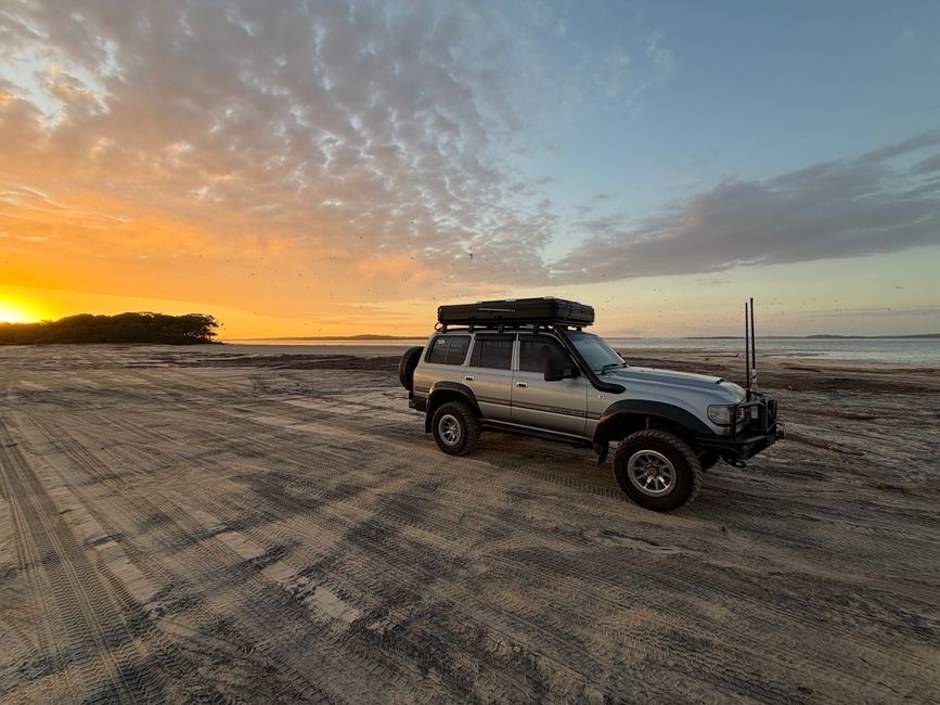
    Photo: Hunty Hunt, Pexels

    Driving on the beach in Australia is not off the rule book. Queensland Parks and Wildlife Service (QPWS) says all Queensland road rules apply even on beaches, and WA’s parks department says WA’s road and traffic laws apply, with licensed drivers and roadworthy vehicles. Many popular beaches also need a vehicle access permit before you drive on the sand. This guide is for learners, new P platers and their supervisors planning a first beach or four-wheel-drive trip. It covers permits, licence rules, tides, tyre pressures and getting unbogged.

    Key facts

    • Queensland: “All Queensland road rules apply, even on beaches” (QPWS). Police patrol anywhere.
    • WA: road and traffic laws apply in parks. Drivers must be licensed and vehicles roadworthy (Department of Biodiversity, Conservation and Attractions).
    • In Queensland, you need a vehicle access permit before driving on Bribie Island, K’gari (Fraser Island), Mulgumpin (Moreton Island), Cooloola and Minjerribah (North Stradbroke Island) recreation areas. Driving in without one can mean a $518 fine, a figure that rises each 1 July.
    • Travel at low tide, or within 2 hours either side, and drive on the firmer sand between the waterline and the high tide mark.
    • Lower tyre pressures only within the manufacturer’s specifications, and reinflate before you return to normal roads.
    • Councils can ban beach driving outright. Always check the local rules for the beach you plan to use.

    Do road rules and licence conditions apply on the beach?

    Jurisdiction What the official guidance says
    Queensland QPWS: all Queensland road rules apply, even on beaches, and police patrol anytime, anywhere. Park vehicles must be fully road registered. Recreational use of conditionally registered vehicles is not permitted in recreation areas.
    WA DBCA: WA’s road and traffic laws apply. All vehicles and drivers must be licensed and vehicles roadworthy. Designated off-road vehicle areas are the only places you can drive without a driver’s licence or road registration.
    Other states The road rules apply on roads and “road-related areas”, which Tasmania’s handbook defines to include any area open to the public for driving. Check with the state transport department, the park authority and the local council before driving on a beach.

    What this means on L or P plates

    Do not assume your L or P conditions are relaxed on beaches or park tracks. If you think an exemption applies, check with your licensing agency first. Plan the trip as if all your normal conditions apply:

    Confirm with TMR or your state’s transport department before taking a learner onto sand.

    Queensland vehicle access permits

    1. Buy the permit before you enter. For Bribie Island, K’gari and Cooloola, book through the Queensland National Parks Booking Service or call 13 QGOV (13 74 68). Mulgumpin and Minjerribah have their own camping and permit websites.
    2. Buy it in your own name as the driver of the registered vehicle. Permits are not transferable. A permit attached to a second-hand four-wheel drive you just bought does not cover you.
    3. Hiring a vehicle? Get a permit in your name with the hire vehicle’s registration number for the dates you will be there.
    4. Carry proof. At Bribie, K’gari and Cooloola, number plate cameras check permits, so you don’t need to display one, but you must be able to show a copy (a digital copy on your phone is fine) if an officer asks. At Minjerribah and Mulgumpin, the permit must be displayed on the vehicle.
    5. Changes and refunds: make them more than 2 calendar days before the permit start date for an automatic refund.

    A combined K’gari and Cooloola permit is available with a 20 per cent discount. Check current fees on the QPWS booking service.

    Other places

    Elsewhere in Queensland, QPWS says to contact local councils or QPWS offices to find out about restrictions and permits before driving on beaches. In WA, DBCA says to seek permits where needed, stay on designated roads and tracks, and check park alerts. Councils set their own beach rules, and some ban vehicles on beaches entirely.

    Before you go: preparation checklist

    • Experience: QPWS suggests novices first drive with an experienced four-wheel driver. For a learner, that means a supervisor who has driven on sand before.
    • Vehicle: mechanically sound, registered, and a genuine four-wheel drive. QPWS says to make sure your vehicle is in 4WD on sand.
    • Know your car. The NT handbook warns that four-wheel drives handle differently from standard cars, with a higher centre of gravity and more effect from wind. Learn how to engage 4WD and use features such as locking front hubs before the trip.
    • Kit: tyre pressure gauge, air pump, shovel, traction aids, first-aid kit, enough water, food, fuel and spares.
    • Load: pack light and stow heavy gear low. Top-heavy vehicles tip over more easily.
    • Plan: check tide times, park alerts and fire bans, and carry paper maps in case GPS fails.
    • Tell someone where you are going and when you expect to return. In remote beach areas, travel with at least one other vehicle.
    • Communications: for remote trips QPWS recommends a satellite phone or UHF radio and a personal locator beacon.

    How to drive on sand

    Tides

    • Drive at low tide, or within 2 hours either side of it.
    • Stay on the harder sand between the waterline and the high tide mark.
    • Watch for washouts. QPWS rangers single them out as a beach hazard that changes with the conditions.

    Tyre pressures

    • Lowering tyre pressure helps traction on soft sand. Stay within the manufacturer’s specifications.
    • With lower pressures, avoid sharp turns, sudden braking, high speeds and rough surfaces. QPWS warns tyres have come off rims and serious crashes have happened.
    • Reinflate as soon as you reach harder sand, and before you drive on normal roads.

    On the beach

    • Use only designated beach access tracks. Keep off sand dunes and vegetation.
    • Give way to walkers, cyclists and horse riders.
    • Drive slowly near people and animals. They may not hear you over the surf and wind.
    • Park well away from traffic areas and at an angle to the water, so other drivers can see you have stopped.
    • Keep away from nesting seabirds.
    • Don’t drive tired.

    Turtle season in Queensland

    On beaches where marine turtles nest, from November to April, QPWS asks drivers to drive slowly, avoid nests, keep to the wet sand below the high tide mark, and avoid beach driving at night and bright lights between 6pm and 6am. Fines may apply for disturbing turtles or nests.

    If you get bogged

    • Carry the gear and know how to use it. QPWS says to carry a shovel or traction aids in case you get bogged, and to learn how to use them before you need them.
    • Try traction aids first. QPWS suggests that, if it is safe, you free the vehicle with traction aids rather than tow ropes or snatch straps.
    • Check your tyre pressures. Lower pressures help traction on soft sand, within the manufacturer’s range.
    • Snatch straps and tow ropes should only be used by trained operators with safety-rated equipment.
    • Don’t count on a ranger tow. QPWS rangers can’t help with towing or snatch strap recoveries because of the safety risks, though they may suggest local towing services.
    • In an emergency, call 000. This is why you plan around the tide and travel with another vehicle in remote areas.

    If you break down somewhere remote, QPWS advises staying with your vehicle. More: outback and remote driving in Australia.

    Inland tracks and four-wheel driving

    • Stay on designated roads and tracks. In WA parks, DBCA says never drive where there is no existing access, and vehicles aren’t allowed on walking or cycling tracks.
    • Closed means closed. Never drive past locked gates or closure signs.
    • If it’s flooded, forget it. Don’t drive through floodwater or fast-flowing creeks, and stay out of parks during and after heavy rain. See driving in rain, fog, smoke and floods.
    • Unsealed roads. The NT handbook recommends engaging 4WD on unsealed roads, slowing for corrugations and curves, and notes some gravel roads need 4WD in the wet season, especially at creek crossings and floodways.
    • Clean your vehicle in WA’s south-west, to avoid spreading Phytophthora dieback in mud and soil.

    WA-specific advice: country driving in WA. Wildlife: kangaroos and wildlife on Australian roads.

    Common questions

    Can a learner drive on the beach in Queensland?

    No official page checked bans it, but QPWS says all Queensland road rules apply on beaches, so your learner conditions still apply: a supervisor, L plates, zero alcohol and your speed cap. Check with TMR before you go.

    Do I need a permit to drive on K’gari (Fraser Island)?

    Yes. A vehicle access permit is required before you drive in the K’gari recreation area. Buy it in your name, for the vehicle you are driving, before you arrive.

    Can I drive on any beach in WA?

    No. Councils and park authorities decide where vehicles can go, and some councils ban beach driving. DBCA says you must stay on designated roads and tracks and get permits where needed.

    Can I drive on the beach without a licence if it isn’t a road?

    Not in WA: DBCA says road and traffic laws apply and drivers must be licensed. Designated off-road vehicle areas are the only exception. In Queensland, all road rules apply on beaches.

    What tyre pressure should I use on sand?

    Follow your vehicle manufacturer’s specifications for sand. QPWS does not give a single figure. Carry a gauge and pump, and reinflate before returning to the road.

    Is a two-wheel-drive car OK on sand?

    QPWS advice is written for four-wheel drives: it says to make sure your vehicle is in 4WD on sand, and that sand driving can be difficult and dangerous. Check with QPWS or the council before taking any other vehicle onto a beach.

    National overview: the Australian Road Rules explained. Towing a camper to the coast: towing a trailer or caravan on L or P plates.

    Sources

    • Department of the Environment, Tourism, Science and Innovation (Queensland Parks and Wildlife Service), “Vehicle access permits” (parks.qld.gov.au)
    • Department of the Environment, Tourism, Science and Innovation, “Four-wheel drive with care” and “Driving on sand” (parks.qld.gov.au)
    • Department of the Environment, Tourism, Science and Innovation, “Four-wheel driving” (parks.qld.gov.au)
    • Department of Biodiversity, Conservation and Attractions WA, “Four-wheel driving” (exploreparks.dbca.wa.gov.au)
    • Department of Transport and Major Infrastructure WA, “Drive Safe: A handbook for Western Australian road users”, 3.7 Crossing Water on Roadways (transport.wa.gov.au)
    • Northern Territory Government, “Road Users’ Handbook”, Four-wheel drive vehicles and unsealed roads (nt.gov.au)
    • Department of State Growth Tasmania, “Tasmanian Road Rules” handbook, What is a road or road-related area? (transport.tas.gov.au)
  • Australian Driving Terms Explained: A Learner Glossary

    Australian Driving Terms Explained: A Learner Glossary

    Photo: Philip Mallis, CC BY-SA 4.0, via Wikimedia Commons

    Australian licensing and road rule terms change from state to state: the learner test is the DKT in NSW, PrepL in Queensland and the CTT in WA, and the practical test can be a Q-Safe test, a PDA or a VORT. This glossary explains the abbreviations and road terms a learner meets, with the official spelling and the state that uses each one. Use it alongside your own state’s handbook, because the same word can mean slightly different things in different states.

    The same step, different names: a state-by-state table

    Jurisdiction Learner test Hazard test Practical test First licence stage
    NSW Driver Knowledge Test (DKT) Hazard Perception Test (HPT) Driving Test Learner licence, then P1 and P2 provisional
    Victoria Learner Permit Test Hazard Perception Test Drive test Learner permit, then P1 and P2 probationary
    Queensland PrepL (or the written road rules test) Hazard perception test Q-Safe practical driving test Learner licence, then P1 and P2 provisional
    WA Computerised Theory Test (CTT) Hazard Perception Test (HPT) Practical Driving Assessment (PDA) Learner’s permit, then a 2-year provisional licence
    SA myLs online course or the in-office theory test Hazard Perception Test VORT or CBT&A Learner’s permit, then P1 and P2 provisional
    Tasmania Driver knowledge test (Plates Plus course) Hazard Perception Test P1 driving assessment Learner licence (L1, L2), then P1 and P2
    ACT Pre-Learner Licence Course and road rules knowledge test Hazard Perception Test CBT&A or the one-off driving assessment Learner driver licence, then provisional
    NT Driver Knowledge Test (DKT) None Practical driving test with an authorised examiner Learner licence, then provisional

    Full comparisons: learner knowledge tests compared, hazard perception tests compared and practical driving tests compared.

    Licensing terms A to Z

    BAC

    Blood alcohol concentration: the amount of alcohol in your blood, the figure police measure. Learners and P platers must have zero BAC. See zero alcohol for learners and P platers.

    CBT&A

    Competency Based Training and Assessment. In SA and the ACT, an accredited instructor teaches and assesses you in stages instead of one final test. SA’s handbook offers it as one of two routes to your Ps, alongside the VORT. See VORT or CBT&A and CBT&A or the one-off assessment in the ACT.

    CTT

    Computerised Theory Test, WA’s learner’s permit test. See the WA Computerised Theory Test.

    Demerit points

    Points recorded against your licence for traffic offences. Learners and P platers have much lower limits than full licence holders. See demerit limits for L and P platers compared.

    DKT

    Driver Knowledge Test. The learner test in NSW, and the name the NT also uses for its theory test. See the NSW Driver Knowledge Test and the NT driver knowledge test.

    Double demerits

    Extra demerit points for some offences during holiday periods, used by some states only. See double demerit points in Australia.

    DriveSafe NT

    The NT program offering learner help, including free lessons and subsidies. See DriveSafe NT.

    GDL or Graduated Licensing Scheme

    The staged system of learner, provisional and full licences, with rules relaxing as you gain experience. SA’s handbook calls it the “Graduated Licensing Scheme”. Victoria’s handbook uses “Graduated Licensing System”.

    HPT

    Hazard Perception Test: a computer test of how well you spot and respond to traffic hazards. Every state and territory except the NT has one.

    Keys4Life

    A WA school road safety program. Completing it within the last 2 years means you don’t take or pay for the CTT.

    L plates, Ls

    The learner licence or permit, and the yellow “L” plates you display while learning. “Getting your Ls” means passing the learner test.

    Learn&Log

    WA’s free digital learner log book, in the ServiceWA app. See WA learner rules and the 50 hour logbook.

    Logbook

    The record of supervised driving hours most states require before the practical test. The hours and the format, paper or app, vary by state.

    myLs

    SA’s online learner course and test, done through your mySAGOV account. See myLs or the in-office theory test.

    Open licence, full licence, unrestricted licence

    The licence after your provisional period. Queensland calls it an open licence. Most other states say full licence.

    P plates, Ps, P1 and P2

    Your provisional (or, in Victoria, probationary) licence and its plates. Most states split it into two stages, P1 then P2. WA has one 2-year provisional licence: red P plates for the first 6 months, then green for 18 months. See P plate rules compared.

    PDA

    Practical Driving Assessment, WA’s driving test. See the WA Practical Driving Assessment.

    Plates Plus

    Tasmania’s learner pathway and course. See the Tasmanian driver knowledge test and Plates Plus.

    PrepL

    Queensland’s online learner course and road rules assessment. See PrepL and the Queensland written road rules test.

    Probationary licence

    Victoria’s word for a provisional licence. The stages are still P1 and P2.

    Q-Safe

    Queensland’s practical driving test. See the Q-Safe practical driving test.

    QSD

    Qualified Supervising Driver, an SA term. For example, SA P1 drivers under 25 must not carry more than one passenger aged 16 to 20 (not counting immediate family) unless a Qualified Supervising Driver is with them. See SA P1 rules.

    RBT

    Random breath testing, roadside alcohol tests by police. Drug tests are also done at the roadside: see drug driving in Australia.

    Safer Drivers Course

    A NSW course that can count towards learner logbook hours. See the NSW learner log book.

    Supervisor, supervising driver

    The fully licensed driver who sits beside a learner. Each state sets who can supervise. See supervising in NSW, Queensland and WA.

    U class

    SA’s licence class for ultra high powered vehicles. See high powered vehicles and the U class licence.

    VORT

    Vehicle On Road Test, SA’s one-off practical driving test, the alternative to CBT&A.

    Road and rule terms A to Z

    Clearway

    A road where you must not stop during the hours on the sign, except in an emergency. In NSW a broken kerb line marks a clearway. See parking rules in Australia.

    Floodway

    A section of road that water can flow across. WA’s handbook calls floodways and river crossings dangerous places and tells inexperienced drivers to use another route if there is one. See driving in rain, fog, smoke and floods.

    Give way

    Slow down and stop if needed so you don’t cause another road user to change speed or direction. SA’s handbook stresses that nobody has an absolute right of way. See giving way in Australia.

    Hook turn

    A right turn made from the left side of the intersection, required where there are traffic lights and a Hook Turn sign, found at some intersections in central and South Melbourne. You move forward on the far left of the intersection and turn when the lights for the road you are entering go green. See how to do a hook turn in Melbourne.

    Keep left

    Drive in the left lane unless you are overtaking or turning right. Victoria’s handbook says that on roads with a limit over 80 km/h you must keep out of the right lane unless you are overtaking or one of the exceptions applies.

    Road-related area

    Places that aren’t roads but still fall under the road rules. Tasmania’s handbook lists road-dividing strips, footpaths and nature strips next to a road, areas open to the public for bicycles or animals, and any other area open to the public for driving, riding or parking, such as a car park.

    Road train and B-double

    Long heavy vehicles with several trailers, common in the NT and WA. A Multi Combination (MC) licence is needed to drive them. See sharing the road with trucks, buses and road trains.

    Safety zone

    A Victorian term for the area around certain tram stops. See driving with trams in Victoria.

    School zone

    A lower speed limit near schools at set times. Times and limits differ between states. See school zones in every state.

    Shared zone

    A street shared by pedestrians, bicycles and other vehicles. In NSW the limit is 10 km/h and you must give way to any pedestrian in the zone, stopping if necessary.

    Slip lane

    A separate left-turn lane at an intersection, usually divided from the other lanes by a traffic island. See turning and indicating rules in Australia.

    Transit lane (T2, T3)

    A lane reserved during set hours for vehicles carrying a minimum number of people, shown on the sign. See NSW transit lanes, bus lanes and T-ways.

    Wombat crossing

    A pedestrian crossing on a raised section of road. SA’s handbook says these usually come with a 40 km/h speed limit. See pedestrian, school and wombat crossings.

    Zip merge

    When two lines of traffic merge into one with no lane lines marked, you give way to a vehicle on your left or right if any part of it is ahead of yours, so cars merge alternately. SA’s handbook says it doesn’t apply where lane lines are marked and one lane ends, such as at the end of an overtaking lane or entering a freeway. In that case, the driver in the ending lane gives way. See overtaking, merging and changing lanes.

    Car ownership terms

    CTP and green slip

    Compulsory Third Party insurance, which covers injury to people in road crashes. Every registered car must have it. In NSW you buy it separately, as a “green slip”. See car insurance for learners and P platers.

    Rego

    Short for registration: the yearly fee that lets a car be driven on the road. See registration, CTP and roadworthy checks in each state.

    Pink slip and roadworthy

    A vehicle safety inspection. In NSW it is commonly called a pink slip. Other states have their own roadworthy or inspection rules. See NSW car registration and pink slips.

    E-tag

    The windscreen tag that pays tolls electronically. See toll roads for new drivers.

    Common questions

    What is the difference between a learner licence and a learner permit?

    Only the name. NSW, Queensland, Tasmania and the NT say learner licence. Victoria says learner permit. WA and SA say learner’s permit. The ACT says learner driver licence.

    Is a probationary licence the same as a provisional licence?

    Yes, in practice. Victoria uses “probationary”. The other states use “provisional”.

    What does DKT stand for?

    Driver Knowledge Test, the NSW learner test. The NT uses the same name for its theory test.

    What is CBT&A?

    Competency Based Training and Assessment: an instructor-led route to your Ps in SA and the ACT, instead of a single driving test.

    Is the hook turn used outside Melbourne?

    Hook Turn signs are found at some intersections in central Melbourne and South Melbourne. You must hook turn wherever there are traffic lights and a Hook Turn sign.

    Which states have no hazard perception test?

    The NT has no HPT. Every other state and territory has one.

    More: the Australian Road Rules explained, Australian road signs explained and learner licence rules compared.

    Sources

    • Government of South Australia, “The Driver’s Handbook” (MR200, February 2026), including Care, Courtesy, Common Sense, Zip merge, Wombat crossings and the Graduated Licensing Scheme (mylicence.sa.gov.au)
    • Northern Territory Government, “Road Users’ Handbook”, Licence classes (nt.gov.au)
    • Transport for NSW, “Road User Handbook”, Road lanes, lines and markings (nsw.gov.au)
    • Department of Transport and Planning Victoria, “Road to Solo Driving” handbook (vicroads.vic.gov.au)
    • Department of State Growth Tasmania, “Tasmanian Road Rules” handbook, What is a road or road-related area? (transport.tas.gov.au)
    • Department of Transport and Major Infrastructure WA, “Take the Computerised Theory Test (CTT)”, “Get your provisional licence” and “Keys4Life program” (transport.wa.gov.au)