Author: Get Driving Test Ready

  • Kentucky Bioptic Driving Program: Requirements and Restrictions

    Kentucky Bioptic Driving Program: Requirements and Restrictions

    Photo: Charles Delano, USACE Louisville District, CC BY 2.0, via Wikimedia Commons

    Kentucky licenses bioptic drivers under KRS 186.578 and 186.579, with a Bioptic Driving Program run through the state’s Office of Vocational Rehabilitation. Your license examination includes a driving test over a route designed for bioptic use, and new bioptic drivers take both a daytime and a nighttime exam. Your license then requires the bioptic device and outside mirrors on both sides, and may be limited to daytime driving. Check the exact acuity you need through the telescope with the Kentucky Transportation Cabinet.

    Kentucky bioptic rules at a glance

    Topic Kentucky rule Source
    Driving test Driving skills tested over a route designed to test competency with a bioptic telescopic device Official (2022 Acts ch. 116)
    Day and night exams New bioptic drivers take daytime and nighttime examinations, which may be on the same day Official (2022 Acts ch. 116)
    License conditions Bioptic device required; vehicle must have left and right outside mirrors Official (KRS 186.579)
    Daytime restriction Added on a vision specialist’s recommendation, or if you fail the nighttime exam Official (KRS 186.579)
    Removing the daytime restriction A vision specialist’s recommendation plus an evaluation by the Office of Vocational Rehabilitation’s bioptic driving program Official (KRS 186.579)
    Acuity through the telescope 20/60 or better Official (Office of Vocational Rehabilitation)
    Carrier acuity and field 20/200 or better in the better eye with ordinary lenses; 120-degree horizontal field Official (Office of Vocational Rehabilitation)
    Time before the daytime restriction can be lifted 36 months without at-fault crashes is reported Check with the state

    A 2026 act (Senate Bill 116, 2026 Acts chapter 94) revised KRS 186.579. It restricts bioptic licensees to driving with the device and exempts them from certain vision-testing provisions. Ask the Transportation Cabinet how the current text applies to you.

    How the Kentucky route works

    1. Vision screening and eye exam. Kentucky applicants need 20/40 to go straight on to the written test. Below that, you are referred for an eye exam. The general rule is that 20/60 or better makes you eligible to test, with a lens restriction if lenses are prescribed.
    2. Low vision specialist. If a bioptic is prescribed, your vision specialist’s report and recommendation shape your restrictions.
    3. Bioptic Driving Program. Contact the Office of Vocational Rehabilitation about training and evaluation.
    4. Permit and tests. Your road test uses a route designed for bioptic driving, by day and by night.
    5. Your license. It requires the bioptic and two outside mirrors, and may be daytime only.

    The usual Kentucky teen steps also apply: see learning to drive in Kentucky.

    Can I drive at night with a bioptic in Kentucky?

    Possibly from the start. Because new bioptic drivers take a nighttime exam, you are restricted to daytime driving only if you fail it or your vision specialist recommends the restriction. To remove a daytime restriction later, you need your specialist’s recommendation and an evaluation by the vocational rehabilitation bioptic program.

    Where to check the details

    • Kentucky Transportation Cabinet driver licensing, for the current vision standard and forms
    • The Office of Vocational Rehabilitation, for the Bioptic Driving Program
    • Your low vision specialist, for questions about your own eyes

    Compare Kentucky with other states in bioptic driving laws by state and the Southern vision rules. Neighbors: Ohio, Indiana, Illinois, Tennessee and Virginia.

    All medical and disability topics: the US guide to driving with a medical condition or disability.

    Want to practise the eyesight check? Our sister site Driving Eyesight Test has a free US letter chart on drivingeyesighttest.com. It is a practice screen, not an eye test.

    Sources

    • Kentucky Office of Vocational Rehabilitation, “Bioptic Driving Program” (kcc.ky.gov)
    • Kentucky General Assembly, “2022 Regular Session Acts Chapter 116” (apps.legislature.ky.gov)
    • Kentucky General Assembly, “KRS 186.579 Restricted operator’s license” (apps.legislature.ky.gov)
    • Kentucky General Assembly, “2026 Regular Session Acts Chapter 94 (SB 116)” (apps.legislature.ky.gov)
    • Kentucky Transportation Cabinet, “Kentucky Driver Manual” (drive.ky.gov)
  • Your Car for the Irish Driving Test: NCT, Tax, Insurance

    Your Car for the Irish Driving Test: NCT, Tax, Insurance

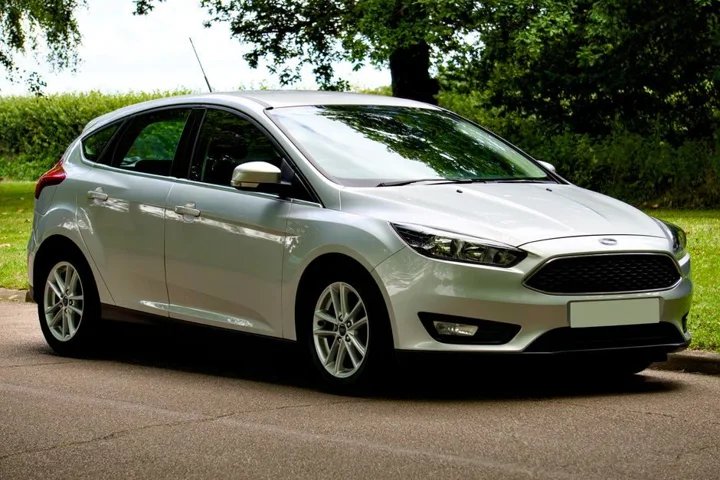
    Photo: Mike Bird / Pexels. Illustrative photograph.

    In Ireland you bring your own car to the driving test, and if it is not right on the day, the test does not go ahead and you lose your €85 fee. This checklist covers everything the RSA requires of a category B test car as of November 2026. That includes the insurance certificate rule in force since 9 March 2026.

    Key facts

    • Since 9 March 2026 you must show a valid certificate of motor insurance proving you are insured to drive the test car. Digital versions are accepted.
    • The car must display valid motor tax and insurance discs, plus an NCT disc where the car needs one.
    • L plates go on the front and rear.
    • Dashcams and any audio or video recording equipment must be removed, or switched off and not recording.
    • A space saver spare fitted to the car is not accepted.
    • A dashboard warning light showing a fault, before or during the test, may mean the test is not conducted or not completed. Get faults fixed before test day.

    Does the car meet the category B standard?

    The RSA sets minimum standards so you are tested in a vehicle that represents the whole licence category. For category B, the Rules of the Road describes it as a four-wheeled car or light van that:

    • has a maximum authorised mass of no more than 3,500 kg
    • carries no more than 8 passengers
    • can reach at least 100 km/h

    The RSA’s leaflet “Representative vehicles for your driving test” has the full detail. Check it if you are unsure whether your car qualifies.

    Automatic cars: if you pass in an automatic, your licence is restricted to automatics (code 78 on the licence). The tester will record it and tell you before the test ends.

    Paperwork and discs checklist

    Item Requirement
    Learner permit Your current Irish learner permit for category B
    Insurance certificate Valid certificate showing you are insured to drive this car. If your name is not on it, also bring an email or letter on headed paper from the insurer confirming cover
    Insurance disc Valid displayed disc. The RSA tester procedures also accept an insurer-issued electronic disc printed in colour, in the required format, under the interim arrangements from 9 March 2026
    Motor tax disc Valid and displayed
    NCT disc Valid, if the car is old enough to need an NCT
    Roadworthiness statement At the centre you read and sign a statement that the car is roadworthy and the insurance is in place and adequate

    For more on keeping a car legal, see tax, insurance and the NCT and learner driver insurance in Ireland.

    A home-printed insurance disc must be in colour and meet the prescribed format, including a legible registration number (or fleet wording) and the white or green band. A certificate on a phone does not replace the displayed disc. The RSA’s tester procedures set out this interim acceptance; some public preparation pages still use the older “original disc” wording.

    L plates: the exact rule

    Front and rear, a rectangular plate showing a red letter L at least 15 cm high on a white background. See the six month rule and L plates.

    Condition of the car

    • Tyres: tread above the legal minimum of 1.6 mm, with no bulges, cuts or severe uneven wear. No space saver spare fitted.
    • Lights: all working. Both rear brake lights must work or the test will not go ahead.
    • Front passenger seat: securely mounted and adjustable, with a working seat belt and a head restraint to the manufacturer’s specification.
    • Handbrake: in good working order.
    • Wipers and washers: working, with washer fluid in the reservoir.
    • Doors: in working order.
    • Dashboard: no warning lights showing a malfunction.
    • Recording devices: dashcam removed, or switched off and not recording.

    Use vehicle safety checks in Ireland the week before.

    The day before: 10 minute check

    1. Walk round with the lights, indicators and hazards on. Get someone to press the brake pedal.
    2. Check tyre tread and pressures.
    3. Top up the washer fluid.
    4. Check the tax, insurance and NCT discs are in date and on the windscreen.
    5. Pack the insurance certificate, plus the insurer’s letter if needed, and your learner permit. Even if you have a digital certificate, bring a printed copy as a precaution.
    6. Fit the L plates front and rear.
    7. Take down the dashcam.
    8. Arrange a qualified accompanying driver for the journey to the centre. See accompanying a learner driver.

    Common questions

    Can I use my parent’s car for the test?

    Yes, if you are insured to drive it. If your name is not on the certificate, bring the certificate plus an email or headed letter from the insurer confirming you are covered.

    Can I use my driving instructor’s car?

    Yes, if it meets the same rules and you are insured to drive it on the test. Check this with your ADI.

    Is a digital insurance certificate accepted?

    Yes. The RSA’s current insurance help page accepts an original or copy of the certificate, including a digital version. If you are not named on it, bring the insurer’s email or headed letter confirming your cover as well. You can cover other people’s personal details while keeping the evidence of your own cover readable. A windscreen disc is still required and is a separate document. Keep a printed certificate backup if practical, so a flat battery or inaccessible file does not cause difficulty.

    My car broke down before the test. Can I use another one?

    Only if you are insured to drive the replacement. Get its insurance certificate, plus an insurer’s letter if you are not named, and check its discs, L plates and condition. Documents for your usual car do not carry over.

    Can I do the test in an electric or automatic car?

    Yes. Your full licence will be restricted to automatics (code 78).

    What happens if a warning light comes on during the test?

    The RSA says a warning light showing a malfunction or defect may mean the test is not completed, and the tester decides. Don’t gamble on it: have any fault fixed before your test, or use another car. If the test is stopped, get the repair done before you rebook.

    Do I lose my fee if my car fails the checks?

    Yes. A test cancelled because the car is not roadworthy, is missing the correct discs or L plates, or is not suitable means losing the fee.

    Related: the Irish driving test explained, pre-test checks, booking the test. Back to learning to drive in Ireland.

    Sources

    • Road Safety Authority, “Prepare your car, light van and trailer for the driving test” (rsa.ie)
    • Road Safety Authority, “Checklist for your practical driving test” (rsa.ie)
    • Road Safety Authority, “New insurance rules for driving tests” (rsa.ie)
    • Road Safety Authority, “Driving test terms and conditions”, insurance certificate wording as indexed (rsa.ie)
    • RTÉ News, report on driving tests and insurance evidence, 26 March 2026 (rte.ie)
    • Road Safety Authority, “Representative vehicles for your driving test” (rsa.ie)
    • Road Safety Authority, “Standard procedures and requirements for conducting driving tests 2025” (rsa.ie)
    • Road Safety Authority, “Rules of the Road”, Section 3 and Appendix 5 (Revision 5, hosted on garda.ie)
    • RSA tester procedures, 20 February 2026, printed pages 8, 9 and 13 (rsa.ie)
  • Breaking Down on an Irish Motorway: Step by Step Checklist

    Breaking Down on an Irish Motorway: Step by Step Checklist

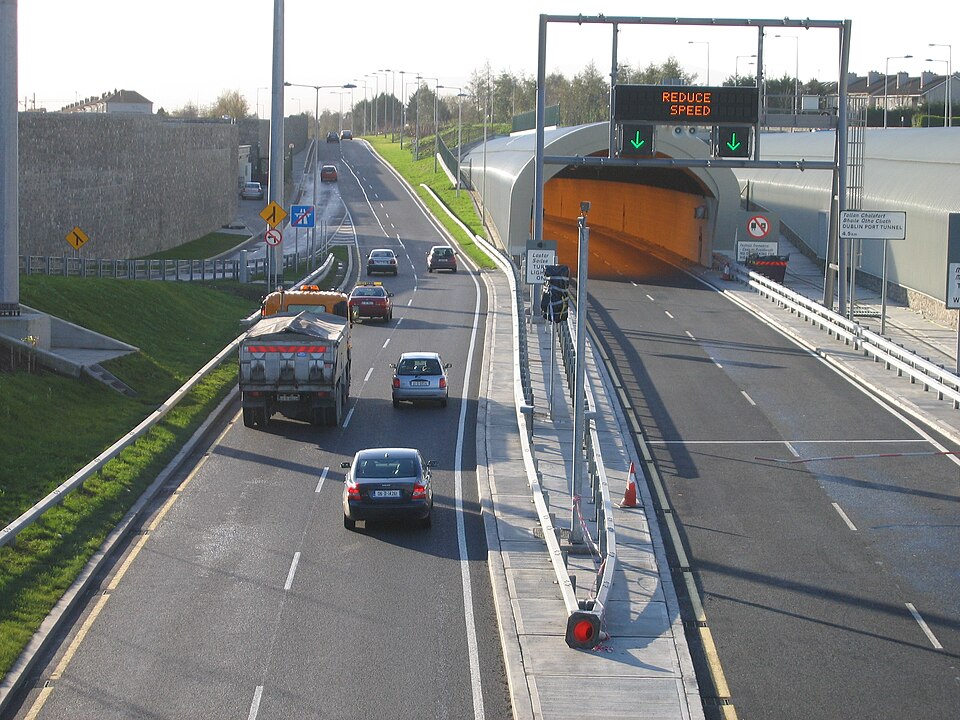
    Photo: Sarah777, Public domain, via Wikimedia Commons

    If you break down on an Irish motorway, get onto the hard shoulder as far left as you can, get everyone out through the left-hand doors, wait behind the crash barrier and call the Gardaí. Don’t put out a warning triangle. This checklist follows the Rules of the Road step by step and covers tunnels, ordinary roads and what to keep in the car. Learners can’t drive on motorways, so it is aimed at newly qualified drivers and at learners who want to know the drill before they pass.

    Key facts

    • You may stop on a motorway only if you break down, a Garda signals you to, there is an emergency, at roadworks or at a toll plaza.
    • The law requires you to move the vehicle off the carriageway to the left if you possibly can, and to notify the Gardaí from the nearest phone as soon as possible.
    • Never place a warning triangle on a motorway. The RSA says it is too dangerous.
    • Carry at least two high-visibility vests.
    • Stopping or parking on a motorway without a valid reason: €40 fixed charge.

    Motorway breakdown checklist

    1. Get off the live lanes

    • Look for a marked parking area or lay-by if the car is still moving.
    • Otherwise pull onto the hard shoulder and park as far left as you can, with no part of the car on the carriageway.
    • Switch on your hazard warning lights. If you can’t reach the hard shoulder, hazards are your main way to warn other drivers.

    2. Get everyone out, on the left

    • Put on a high-visibility vest before you get out.
    • Leave by the left-hand doors, and make sure passengers do the same.
    • Leave animals in the car. In an emergency, keep them under control on the verge.
    • Don’t walk on the motorway. Keep everyone, especially children, away from the lanes and the hard shoulder.

    3. Wait in a safe place

    • Wait on the embankment side, well behind the crash barrier.
    • If you can’t get out safely, stay in the car with your seat belt on and hazards flashing.

    4. Call for help

    • Use the roadside emergency phone if you can. It tells the Gardaí your exact location automatically.
    • On a mobile, you will need to give your location. Use the marker signs described below.
    • Accept help from a Garda or from road authority staff. The law says you must not leave the vehicle on the motorway longer than necessary.

    5. Don’t

    • Don’t put a warning triangle on the motorway.
    • Don’t try to repair the car on the hard shoulder.
    • Don’t try to remove debris from the road. Report it instead.

    6. Rejoining

    Build up speed on the hard shoulder before merging into traffic, and watch for other vehicles stopped on the hard shoulder ahead.

    How to tell the Gardaí where you are

    Many motorways and dual carriageways have two kinds of location marker:

    Marker Where What it shows
    Location Reference Indicator (LRI) Upright sign on a pole Road number, direction of travel (N, S, E or W) and kilometres from the start of the road
    Location Reference Marking (LRM) Painted on the hard shoulder Route and direction, distance from the start of the route, and the direction to the nearest emergency phone

    The Rules of the Road example: an LRM reading M7 heading west at 72.5 km tells the Gardaí exactly where to send help.

    If you break down in a tunnel

    • Switch off the engine and switch on hazard lights.
    • Listen to the tunnel radio station for instructions.
    • Go to an emergency station and use the emergency phone to tell the tunnel operator.
    • Check the electronic signs for information.

    If there is smoke or fire in your own vehicle, switch off, get out at once, use the emergency phone and leave by the nearest exit. More in motorways and tunnels in Ireland.

    Breaking down on other roads

    Off the motorway the same principles apply: get off the road if you can, hazards on, vest on, passengers out on the safe side. The Rules of the Road says you can use a reflective warning triangle on other roads, placed far enough back to give approaching traffic enough warning, and not where it would be unsafe to place it. Near a bend, make sure traffic from both directions gets a warning. Heavy goods vehicles and buses must carry a triangle.

    If your car stalls on a railway level crossing, follow the separate steps in railway level crossings, low bridges and tunnels.

    What to keep in the car

    The Rules of the Road suggests:

    • at least two high-visibility vests (it says to carry two for motorway driving)
    • a torch
    • a first aid kit
    • a warning triangle (required for HGVs and buses)

    Before a long motorway journey, check tyre pressures, oil, coolant and fuel. See vehicle safety checks in Ireland.

    Common questions

    Can I use the hard shoulder to make a phone call?

    No. You may stop on a motorway only for a breakdown, an emergency, roadworks, a toll plaza or a Garda signal. Leave at the next exit or use a service area.

    Should I put a warning triangle behind my car on the motorway?

    No. The RSA says not to place any warning device on a motorway because it is too dangerous.

    Who do I call if I break down on a motorway?

    The Gardaí, using the roadside emergency phone where possible. In an emergency, dial 999 or 112.

    Should I stay in the car or get out?

    Get out by the left-hand doors and wait behind the barrier if you can do so safely. If you can’t, stay in with your seat belt on and hazards flashing.

    Is there a fine for stopping on the motorway?

    Stopping or parking on a motorway without a lawful reason carries a €40 fixed charge as of November 2026. A genuine breakdown or accident is an exception.

    What if I realise I am driving the wrong way?

    The Rules of the Road says to pull onto the hard shoulder immediately, stop, and dial 999 or 112. Don’t try to turn the car. Wait for help in a safe place.

    Related: what to do at the scene of a crash and after you pass in Ireland. Back to learning to drive in Ireland.

    Sources

    • Road Safety Authority, “Rules of the Road”, Section 4 Vehicle safety, Section 11 Motorways and tunnels (Stopping and parking, What to do if your vehicle breaks down, Tunnels) and Section 14 Correct behaviour at the scene of an accident (Revision 5, hosted on garda.ie)
    • Irish Statute Book, “S.I. No. 182/1997, Road Traffic (Traffic and Parking) Regulations 1997”, article 33 (irishstatutebook.ie)
    • Irish Statute Book, “S.I. No. 227/2024, Road Traffic Act 2010 (Part 3) (Fixed Charge Offences) Regulations 2024”, Schedule 8 (irishstatutebook.ie)
  • Motorways and Tunnels in Ireland: Rules for New Drivers

    Motorways and Tunnels in Ireland: Rules for New Drivers

    Photo: Sarah777 at en.wikipedia, Public domain, via Wikimedia Commons

    Learner permit holders cannot drive on Irish motorways: only people with a full licence for the vehicle category may use them. So your first motorway drive usually comes after you pass the test, often with N plates. This guide covers the 120 km/h limit, joining and leaving, lane use, stopping and the rules for road tunnels, so that first drive is not a surprise.

    Key facts

    • Motorway limit: 120 km/h unless signs show lower, or your vehicle has a lower limit (80 km/h when towing).
    • Banned from motorways: learner drivers, cyclists, pedestrians, animals, vehicles of 50cc or less, vehicles that cannot do at least 50 km/h, invalid carriages and vehicles without inflated tyres.
    • No turning, reversing, U-turns, or picking up and setting down passengers.
    • Stop only for a breakdown, an emergency, roadworks, a toll plaza, or if a Garda signals you.
    • In a tunnel the recommended minimum gap for a car is 50 metres.

    Can learner drivers drive on a motorway in Ireland?

    No. The “Motorway ahead” sign lists who must not enter, and that includes anyone who does not hold a full driving licence for the category of vehicle they are driving. Dual carriageways that are not motorways are not covered by this ban, so learners can practise higher speeds and lane changes there. Novice drivers on N plates may use motorways. See N plates in Ireland.

    Motorway signs to know

    Sign Meaning
    Motorway ahead A motorway entrance is ahead. The road users shown on the sign must not enter.
    Entry to motorway You are now on a motorway and motorway rules apply.
    Countdown markers (3, 2, 1 bars) 300 m, 200 m and 100 m to the next exit.
    Motorway ends 1 km / 500 m ahead Distance to the end of the motorway.
    Lane gain An extra lane is joining the motorway.

    See Irish road signs explained.

    How to join a motorway

    1. Use the slip road and acceleration lane to build up speed.
    2. Signal right early.
    3. Check mirrors and blind spot for a gap in the left lane.
    4. Give way to traffic already on the motorway. Do not drive on the hatched markings.
    5. Match the speed of traffic in the left lane and merge.
    6. Stay in the left lane until you have settled to the speed before thinking about overtaking.

    Lane discipline

    Lane Use it for
    Lane 1 (left, next to the hard shoulder) Normal driving. Keep left unless overtaking.
    Lane 2 on a 2-lane motorway Overtaking only, then move back. Also to make room for merging traffic.
    Lane 2 on a 3-lane motorway You may stay here while slower traffic is in Lane 1.
    Lane 3 on a 3-lane motorway Only when Lanes 1 and 2 are moving in queues and you need to overtake or make room for merging traffic.
    • Overtake on the right. Passing on the left is allowed only in slow-moving queues where your lane is moving faster.
    • Signal before every lane change. Moving from Lane 3 to Lane 1 is two separate signals and two manoeuvres.
    • Goods vehicles over 3,500 kg, anything towing a trailer or caravan, and buses designed for standing passengers must not use the outside lane except to pass an obstruction.
    • Keep at least a two-second gap. Use hazard lights briefly to warn traffic behind if the queue ahead slows sharply.

    Leaving the motorway

    1. Plan ahead using the 2 km and 1 km exit signs, and get into Lane 1 early.
    2. Signal left by the countdown markers.
    3. Keep your speed until you are in the deceleration lane, then slow down. Use your speedometer to check you are within the lower limit.
    4. Watch for lower limits and sharp bends on slip roads.
    5. Missed your exit? Carry on to the next one. Never cross the ghost island or reverse on the hard shoulder.

    Stopping, breaks and breakdowns

    You may only stop on a motorway if you break down, there is an emergency, there are roadworks, you are at a toll plaza, or a Garda signals you. The hard shoulder is for emergencies only. Plan rest stops at service areas and lay-bys. Before a long trip, check tyre pressures, oil, coolant and fuel.

    If you break down, get onto the hard shoulder, leave by the left-hand doors, and wait behind the crash barrier. Do not put a warning triangle on a motorway. Full steps are in breaking down on an Irish motorway.

    If you ever find yourself driving against the traffic, pull onto the hard shoulder, stop, and call 999 or 112. Do not try to turn.

    Tolls

    Slow down and keep a safe gap approaching a toll plaza. Barrier tolls take cash, card or electronic tags depending on the lane. The M50 uses barrier-free eFlow tolling, so there is no booth: check the payment rules before you use it.

    Rules for road tunnels in Ireland

    Before you enter

    • Check you have enough fuel.
    • Take off sunglasses and switch on dipped headlights.
    • Tune to the radio frequency shown at the entrance for safety messages.
    • Keep at least 50 metres from the vehicle in front (100 metres for vehicles other than cars and motorcycles).

    In the tunnel

    • Keep in lane. Do not overtake, turn or reverse.
    • Do not stop except in an emergency.
    • Obey the speed limit, including variable limits shown on electronic signs.

    If traffic stops or something goes wrong

    Situation What to do
    Told to stop Keep a safe gap, hazard lights on, engine off, listen to the radio and watch the signs.
    Breakdown or crash Engine off, hazard lights on, use the emergency station phone to tell the tunnel operator.
    Fire in your vehicle Switch on your hazard lights and drive out of the tunnel if you can. If you cannot, pull over, switch off the engine, leave the vehicle at once and use the nearest emergency exit. Call for help from a safety panel.
    Fire in another vehicle If it is behind you, drive out. If it is ahead, engine off, leave the car and walk to the nearest emergency exit.

    More on tunnel and bridge signs in level crossings, low bridges and road tunnels.

    Motorway penalties

    Offence Points on payment Points on conviction Fixed charge
    Speeding 3 5 €160
    Driving against the flow of traffic 2 4 €80
    Driving on a part that is not the carriageway, such as the hard shoulder 1 3 €80
    Restricted vehicle in the outside lane 1 3 €80
    Stopping or parking on a motorway None listed None listed €40

    Fixed charges as of November 2026. Novice drivers are banned at 7 points. See penalty points in Ireland.

    Common questions

    Can I drive on the motorway with N plates?

    Yes. The ban covers drivers without a full licence for the category. Once you have a full licence you can use motorways.

    Can my instructor take me on the motorway as a learner?

    No. The ban is about the licence you hold, not who sits beside you.

    Can I drive home on the motorway straight after passing my test?

    No. Passing gives you a certificate of competency, not a full licence. Keep to all the learner permit rules, including no motorways and a qualified accompanying driver, until you hold your full licence. See after you pass in Ireland.

    Is there a minimum speed on Irish motorways?

    Vehicles that cannot reach 50 km/h are banned, and you must not drive in a way that interferes with other motorway traffic. Keep up with the flow within the limit.

    Can I use my phone to call for help on the hard shoulder?

    Yes, once stopped and safely out of the car. Roadside emergency phones tell the Gardaí your exact location. If you use a mobile, the location markers on posts and on the hard shoulder show the road, direction and distance.

    What is the speed limit when towing on a motorway?

    80 km/h for any vehicle towing a trailer, caravan or horsebox, and you must stay out of the outside lane.

    Related: speed limits in Ireland, after you pass in Ireland, the two second rule and stopping distances, overtaking rules in Ireland. Back to learning to drive in Ireland.

    Sources

    • Road Safety Authority, “Rules of the Road”, Section 8 Speed limits and Section 11 Motorways and tunnels (Revision 5, hosted on garda.ie)
    • Law Reform Commission, “Road Traffic Act 2002”, First Schedule, revised (revisedacts.lawreform.ie)
    • Irish Statute Book, “S.I. No. 227/2024, Road Traffic Act 2010 (Part 3) (Fixed Charge Offences) Regulations 2024” (irishstatutebook.ie)
    • Dublin Port Tunnel, “Safety Information”, Vehicle Fire (dublintunnel.ie)
    • Jack Lynch Tunnel, “Safety Information”, Vehicle Fire (jacklynchtunnel.ie)
  • RoadSafetyBC Medical Fitness: DMERs and Reporting for New Drivers

    RoadSafetyBC Medical Fitness: DMERs and Reporting for New Drivers

    Photo: Gerdel, Public domain, via Wikimedia Commons

    In British Columbia, medical fitness to drive is decided by RoadSafetyBC, not ICBC. RoadSafetyBC uses the national CCMTA Medical Standards for Drivers, plus BC-specific guidelines. A new driver usually only hears from RoadSafetyBC if they disclose a condition when applying, or if someone reports a concern. RoadSafetyBC may then send a Driver’s Medical Examination Report (DMER) for your doctor or nurse practitioner to complete. A review does not automatically mean losing your licence: outcomes range from carrying on as normal to conditions on your licence.

    This page explains how the process works. Your doctor or nurse practitioner is the person to ask about your own condition.

    How RoadSafetyBC finds out about a condition

    • You tell them, for example when you answer the health questions for your learner (Class 7L) licence.
    • A health professional reports. Under Motor Vehicle Act s. 230, doctors, nurse practitioners, psychologists and optometrists must report a patient aged 16 or over who, in their opinion, has a condition that makes driving dangerous and who keeps driving after being warned. The legal detail is in does your doctor have to report you.
    • Someone else reports. Police, family members and ICBC can provide information, and anyone can report a concern using RoadSafetyBC’s online form.

    When you get a DMER

    RoadSafetyBC may ask for a DMER because of:

    • a known medical condition
    • a report that you have a condition affecting safe driving
    • your licence class (commercial drivers)
    • your age (80 or older)

    For a learner or new driver, the first two are the usual triggers.

    Completing the DMER: step by step

    1. Book your doctor or nurse practitioner. The exam covers cognition (memory, attention, judgment), eyesight and overall physical health. It is not a road test.
    2. Meet the deadline on the form. The report must be returned within the timeline printed on it. If you can’t, contact RoadSafetyBC straight away.
    3. Your practitioner faxes it. DMERs go by fax to 250-952-6888. Don’t send duplicate or emailed copies.
    4. Wait for the decision. An adjudicator reviews most files; nurse case managers handle complex ones.

    Cost (as of November 2026): the Medical Services Plan covers a DMER for a known or suspected condition up to $75. You pay any amount your practitioner charges above that. Lost your DMER? ICBC can give you a replacement at no charge.

    Other assessments you may be asked for

    Assessment What it is
    Enhanced Road Assessment A road-based assessment of how a condition affects your driving
    Occupational therapist assessment A functional driving assessment, often used for physical disabilities or vehicle adaptations
    Road test re-examination A road test ordered for medical reasons

    For learning to drive with a physical disability, including the Enhanced Road Assessment, see drivers with disabilities learning to drive in Canada.

    ICBC’s handbook says RoadSafetyBC calls almost 3,000 drivers a year in for a re-examination, usually after a medical report or a police report about a driving situation the driver handled poorly. A vision screening and signs test alone needs no appointment. If the notice includes a road test, call your local driver licensing office within 30 days of receiving it to book, and bring ID, your glasses or contacts and, ideally, a licensed driver in case you do not pass.

    Possible outcomes

    • You can continue driving.
    • You must report future changes in your condition.
    • Conditions or restrictions are placed on your licence.
    • You are found unfit to drive, or your licence is cancelled.

    RoadSafetyBC can add a restriction when a condition means you need a device or technology to drive safely. ICBC can add restrictions too, such as a corrective lenses restriction. If you move to BC with a medical restriction, the equivalent BC restriction is added. Removing a restriction usually means passing a road test; ask ICBC.

    Disagreeing with a decision

    • RoadSafetyBC has a process to review a driver medical fitness decision.
    • If you disagree with restriction 25, 26, 28 or 51, you can submit a Request for Reconsideration of the Application of Restriction. An adjudicator reviews it and replies in writing.

    What standards are used

    BC has adopted the CCMTA Medical Standards for Drivers (based on the March 2017 edition). No province is legally required to adopt them, but most do, so the core rules are similar across Canada. Condition guides: epilepsy, diabetes and insulin, vision.

    Contact RoadSafetyBC

    • Toll-free 1-855-387-7747 (Canada and US); 250-387-7747 in Greater Victoria or outside Canada and the US
    • Email [email protected] with your full name, licence number and phone number; replies can take up to seven business days

    Related guides

    Sources

    • Government of British Columbia, “Driver medical fitness” (gov.bc.ca)
    • Province of British Columbia, Motor Vehicle Act, section 230 (bclaws.gov.bc.ca)
    • Government of British Columbia, “Driver’s Medical Examination Report” (gov.bc.ca)
    • Government of British Columbia, “Driver medical fitness restrictions” (gov.bc.ca)
    • Government of British Columbia, “Driver medical fitness information for medical professionals” (gov.bc.ca)
    • Government of British Columbia, “CCMTA Medical Standards for Drivers: Chapter 1, Introduction”, RoadSafetyBC (gov.bc.ca)
  • Saskatchewan Traffic Lights: Left on Red, Arrows and Flashers

    Saskatchewan Traffic Lights: Left on Red, Arrows and Flashers

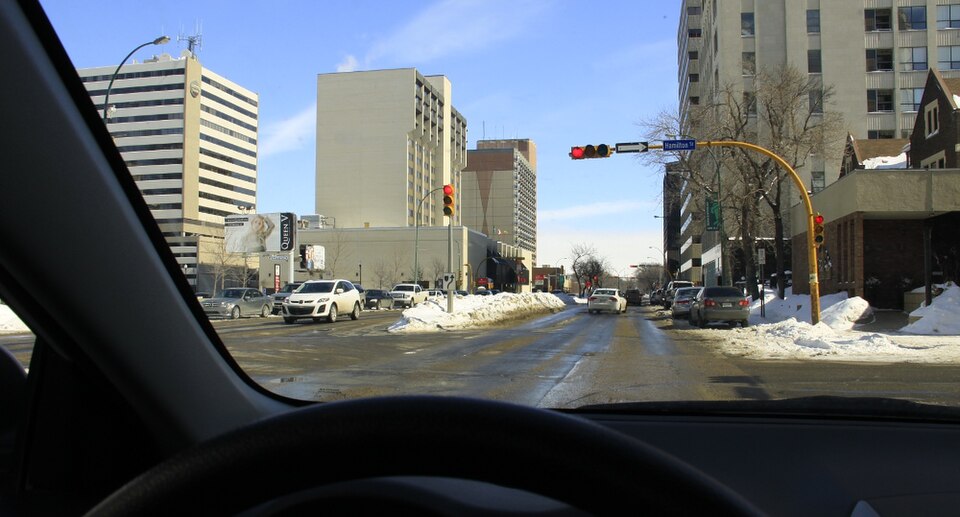
    Photo: waferboard, CC BY 2.0, via Wikimedia Commons

    Can you turn left on a red light in Saskatchewan? Only from a one-way street onto another one-way street, and only after a full stop and yielding to pedestrians and traffic. Right turns on red are allowed at most intersections after the same stop and yield. A sign can ban either turn, and a U-turn at any intersection with traffic lights is not allowed unless a sign permits it.

    Everything below comes from the Traffic signals section of SGI’s Saskatchewan Driver’s Handbook, with penalty points from SGI’s demerit tables. Signal questions show up on the SGI written test, and examiners watch your stops and turns on the SGI road test.

    Saskatchewan traffic lights at a glance

    You see What you do in Saskatchewan
    Steady green Go straight, turn left or turn right, unless a sign bans that movement, once the intersection is clear and it’s safe. Left turns yield to oncoming traffic and pedestrians.
    Steady amber Stop before the crosswalk. If you’re already in the intersection or can’t stop safely, proceed with caution. Yield to pedestrians in the crosswalk or pedestrian corridor.
    Steady red Stop and stay stopped until the light changes. Turns on red are allowed only as described below.
    Red with a solid green arrow Go only in the arrow’s direction, after yielding to other vehicles and pedestrians.
    Flashing green left arrow (with a red or green light) You may turn in the direction of the arrow.
    Amber arrow after a left arrow The arrow phase is ending: the green is about to come on for traffic in both directions.
    Flashing amber Proceed with caution.
    Flashing red Stop, then go when it’s safe.
    Alternating flashing amber lights A warning that the traffic lights ahead are red or about to turn red.

    Turning right on a red light in Saskatchewan

    A right turn on red is legal where no sign prohibits it. The order matters:

    1. Come to a complete stop at the correct stopping position.
    2. Yield to pedestrians crossing in front of you.
    3. Yield to every vehicle travelling through the intersection on the green.
    4. Turn only when there is a safe gap. If your view is blocked, wait for the green.

    A driver honking behind you does not change any of this. Turning on red is permitted, never required.

    Double right-turn lanes

    Where two lanes turn right, the driver in the outside (left) lane of the pair may also turn right on red after stopping and yielding to pedestrians and vehicles. SGI calls this an uncommon manoeuvre and asks for extra caution. Stay in your own lane through the turn and don’t follow the car beside you without checking the crosswalk yourself.

    Can you turn left on red in Saskatchewan?

    Yes, but only at the intersection of two one-way streets: you must be turning left from a one-way street onto another one-way street. The same rule applies as for a right turn on red: stop, yield to pedestrians and vehicles, then turn when safe.

    Turn on red Allowed in Saskatchewan?
    Right turn, single right lane Yes, after a full stop and yield, unless a sign prohibits it
    Right turn from the outside (left) lane of a double right-turn lane Yes, after a full stop and yield, with extra caution
    Left turn, one-way street onto one-way street Yes, after a full stop and yield, unless a sign prohibits it
    Left turn involving a two-way street Not covered by the exception: stay stopped until the light changes
    U-turn at any intersection with traffic lights No, unless a sign permits U-turns

    Look for a “no turn on red” sign every time. Some intersections have one, and it overrides the general rule.

    What to do at an amber light

    A steady amber means stop before you enter the crosswalk. The two exceptions are when you have already entered the intersection, or when you can’t stop safely; in either case, carry on with caution.

    You can usually see amber coming. SGI suggests noting how long the light has already been green and watching the pedestrian “don’t walk” signal, especially when it is flashing. A light that has been green for a while is a cue to ease off and be ready to stop, so you are not left choosing between braking hard and speeding up.

    Scenario: you’re already waiting to turn left

    You enter the intersection on a green to turn left, but oncoming traffic never leaves a gap. The light turns amber, then red. The handbook recognises that heavy traffic may force you to finish your left turn on amber or red. Before you go, check that oncoming cars are actually stopping and that no pedestrian is still in the crosswalk you are turning across. This only covers a driver who entered on the green; it is not permission to enter late.

    Green arrows and flashing green arrows

    • Solid green arrow with a red light: move only in the arrow’s direction, and only after yielding to other vehicles and pedestrians. If you want to go straight, the arrow does not apply to you; wait for a green light.
    • Flashing green left arrow: it can appear with a red or a green light, and it means you may turn left in that direction. Still check the crosswalk before you turn.
    • Amber arrow: after the left arrow, an amber arrow may show. It means the green light is about to appear for traffic in both directions, so the left-turn phase is ending. On the plain green that follows, a left turn has to yield to oncoming traffic and pedestrians again.

    Flashing amber, flashing red and advance warning flashers

    Flashing amber: proceed with caution. Slow enough to react to cross traffic and pedestrians.

    Flashing red: stop completely, then go only when it’s safe.

    Alternating flashing amber lights: these warn that the traffic lights ahead are red or about to turn red. They are a warning, not a signal at the intersection itself. Ease off early and look ahead to the actual light.

    Pedestrian signals and countdowns

    Under SGI’s rules, pedestrians may not start crossing when they face a red light, an amber light, or a “don’t walk” light or symbol. A flashing “don’t walk” means people who have already started should finish crossing. Some signals show a countdown of the seconds left before it is unsafe to cross.

    For drivers, that means:

    • A flashing “don’t walk” or low countdown is a strong hint that your green is about to end.
    • People may still be finishing their crossing when your light changes. Let them clear before you move or turn.
    • A countdown is not a timer to race.

    More on crosswalks, cyclists and other road users is in Sharing Saskatchewan Roads.

    Where to stop at a red light in Saskatchewan

    The road markings decide your stopping position:

    • At a clearly marked stop line, stop at the line.
    • At a crosswalk, marked or unmarked, stop at the nearest crosswalk.
    • Where a clearly marked X is painted, stop behind the X.
    • With no stop line, sidewalk or crosswalk: within 3 metres of the intersection in a town, city, village or hamlet, and within 10 metres in a rural area.

    The full table, with lanes, signalling distances and parking, is in the Saskatchewan rules of the road study guide.

    Demerit points for traffic light offences in Saskatchewan

    SGI’s demerit table assigns these points under the Driver Improvement Program and the Safe Driver Recognition program (section numbers refer to The Traffic Safety Act):

    Offence Points
    Failing to stop at a red light at an intersection 4
    Failing to stop at an intersection of two one-way streets 4
    Failing to obey a flashing red light (including stopping in the wrong place) 4
    Failing to stop at a crosswalk against an amber light 3
    Failing to yield to a pedestrian at a marked crosswalk showing only an amber light 3
    Right or left turn on red where a sign prohibits it 3
    Going in a direction not shown by a green arrow, or failing to yield on a red with a green arrow 3
    Failing to proceed cautiously at a flashing amber light 3
    U-turn at an intersection with a traffic light 1 under the Driver Improvement Program (the Safe Driver Recognition column is blank)

    The points above match SGI’s published demerit table; most rows carry the same points under both programs. The table shows no effective date and SGI can change it, so check SGI’s current schedule before relying on a figure. A blank column does not mean zero points.

    Check the current fine with SGI or the ticket itself. Points matter more for new drivers: see how they affect you in SGI’s GDL Improvement program and Safe Driver Recognition and Saskatchewan speeding, stunting and distracted driving penalties.

    Common questions

    Is turning right on red the same in Saskatchewan as in Quebec?

    No. Each province sets its own rule, and Montreal has its own exception. See right turn on red in Quebec. In Saskatchewan, follow the SGI rules above.

    Do roundabouts follow the same rules?

    Roundabouts and newer interchange designs have their own yield rules. See Saskatchewan roundabouts, diverging diamonds and RCUT interchanges.

    Starting out? The full licensing path is in Learning to drive in Saskatchewan.

    Sources

    • SGI, “Traffic signals”, Saskatchewan Driver’s Handbook (sgi.sk.ca)
    • SGI, “Stopping positions”, Saskatchewan Driver’s Handbook (sgi.sk.ca)
    • SGI, “Driver Improvement Program (Driver Licensing and Suspension Regulations)” demerit points table (sgi.sk.ca)
    • SGI, “All Traffic Offences with Demerit Points” (sgi.sk.ca)
  • Sharing Saskatchewan Roads: Pedestrians, Cyclists, Motorcycles

    Sharing Saskatchewan Roads: Pedestrians, Cyclists, Motorcycles

    Photo: waferboard, CC BY 2.0, via Wikimedia Commons

    In Saskatchewan you must yield to any pedestrian, wheelchair or medical scooter user crossing at an intersection, pass cyclists the way you would pass a car with plenty of room, never move into a lane beside a motorcycle, and expect e-scooters only in communities whose bylaws allow them. This guide sets out SGI’s rules for sharing the road with the most vulnerable road users, from the 2026-27 Saskatchewan Driver’s Handbook.

    Pedestrians: who has the right of way?

    • At an intersection, you must yield the right of way to any pedestrian crossing the street.
    • Stop before the crosswalk. It is either painted on the road or an imaginary extension of the sidewalk.
    • If the light changes while a pedestrian is still in the crosswalk, the pedestrian has the right of way.
    • Stop when a school crossing guard directs you to.
    • You may not pass a vehicle that has stopped at an intersection to let pedestrians cross.
    • Pedestrians must give drivers a chance to stop before stepping out, and when walking along a road they should use the left shoulder, facing traffic. Expect people on the shoulder on rural roads.

    Jaywalkers

    Jaywalking is crossing outside a marked or unmarked crosswalk. Always be ready to stop for someone about to step out in front of you, but do not stop and wave a jaywalker across. The driver behind may not expect you to stop, and drivers in other lanes may not see the pedestrian walking out in front of your car.

    Crossing urban streets

    You may drive across a street only at an intersection, lane or alley. Some cities ban crossing at a lane or alley by bylaw, so check local rules.

    Wheelchairs and medical scooters

    SGI counts people using a wheelchair, motorized wheelchair or medical scooter as pedestrians. The same rules apply:

    • Yield to anyone crossing in a wheelchair or medical scooter at an intersection, and stop before the crosswalk.
    • On a wide street, this does not apply if the person is a safe distance from your side of the street.
    • Do not pass a vehicle stopped to let them cross.
    • Where there is no sidewalk, they should travel on the left shoulder facing traffic, and they may use the first driveway to get onto the sidewalk if there is no accessible curb. They should also have a brightly coloured flag to make them easier to see. Watch for it, especially near driveways.

    How much room should you give a cyclist in Saskatchewan?

    SGI’s rule is to pass a cyclist as you would any other vehicle: give them room and do not pass too closely. Check your city’s bylaws for any set distance. When overtaking a bicycle or motorcycle in your lane, you must pass in the same manner as you would pass a car, which can mean changing lanes.

    The rest of SGI’s cyclist checklist:

    • Turning left: stop and wait for oncoming bicycles to pass.
    • Turning right: watch for cyclists pulling up beside you, check your blind spot, and never pull alongside a cyclist and then turn across them.
    • Intersections: scan for cyclists waiting to turn left. They are allowed to turn left the same way drivers do and need extra room on multi-lane roads.
    • Following: keep a safe following distance. Bicycles have no brake lights.
    • Speed: cyclists can travel faster than you think, up to 50 km/h going downhill.
    • Swerving: expect them to move out around drainage grates, potholes, gravel, sand, wet surfaces, ruts and even dogs.
    • Pulling out and opening doors: check for cyclists every time you leave the curb and before you open your door.
    • Horn: do not use it unnecessarily when passing. It can startle a cyclist into your path.
    • Hand signals: a cyclist may signal a right turn by holding out the right arm. Make eye contact where you can.

    E-bikes (power-assisted bicycles), including models that look like scooters with pedals, are treated the same as any other cyclist.

    Bike lanes and sharrows

    Bike lanes are reserved for cyclists. You may enter or cross one only to turn right, reach a parking space or enter a lane or driveway, and only after checking it is safe. A sharrow (bicycle symbol with chevrons) means the lane is shared; it does not mean you can pass a cyclist within the lane. The full lane rules are in the Saskatchewan rules of the road study guide.

    Motorcycles: check twice

    When a motorcycle and a car collide, the rider is at high risk of death or serious injury. Motorcycles are agile, so their moves are harder to predict, and their size makes them hard to see. SGI’s rules for drivers:

    Situation What SGI says
    Lane change or turn in riding season Check twice: once for cars and trucks, once for motorcycles and bikes
    Turning left Failing to see an oncoming motorcycle when turning left is a significant factor in motorcycle collisions. Look for it before you go
    Following Give the same three-second following distance as for any vehicle, and more on wet or slippery roads
    Passing Pass as you would a car, and leave plenty of room ahead of the motorcycle before pulling back in
    Sharing a lane Never move into a lane beside a motorcycle, even if the lane is wide and the rider is to one side. It is illegal and extremely hazardous
    Lane position A skilled rider keeps changing position within the lane to see, be seen and avoid objects. This is normal, not a sign they are about to turn
    Headlights Most motorcycles have headlights on at all times. Be alert for ones that do not

    New riders in Saskatchewan display a Motorcycle Graduated Driver Licensing placard on their licence plate: a red “L” for learners and a green “N” for novices. Give them extra space when passing or following. Riders and passengers must wear an approved motorcycle helmet, and eye protection if the bike has no windshield deflecting the air from their face. Two motorcycles may ride in the same lane, but a motorcycle may not ride beside any other type of vehicle in the same lane.

    Are e-scooters legal in Saskatchewan?

    Only in communities that have passed e-scooter bylaws. SGI classes e-scooters (electric kick scooters) as limited speed motor vehicles. Where they are allowed:

    • they do not need to be registered, and riders do not need a driver’s licence;
    • riders must be at least 16 and wear an approved helmet;
    • riders must follow municipal bylaws and provincial law.

    Rules vary between communities, so check with the municipality you are driving in. For example, the City of Regina allows shared and personal e-scooters on park and multi-use pathways, bike lanes and roads with a speed limit of 50 km/h or less, but not on sidewalks, with a top speed of 24 km/h on roadways and 15 km/h on pathways. Saskatoon also runs a shared e-scooter program; check saskatoon.ca for its current season and rules.

    As a driver, treat an e-scooter much like a cyclist: expect it in bike lanes and on the right of the road, give it room when passing, and check for it before turning right.

    Large trucks and buses

    • A truck can carry 50 or more times the weight of a car and takes longer to stop. Avoid forcing a driver to slow down, and don’t cut in front right after passing.
    • Trucks slow going uphill and pick up speed going down. Plan your pass around that.
    • Avoid the “no-zone”, the large blind spots on both sides, in front and deep behind. If you can’t see the truck’s mirrors, the driver can’t see you. Keep your headlights on.
    • Before pulling back in front of a truck, make sure you can see the entire cab in your rear-view mirror.
    • A large truck or bus has trouble with sharp corners, especially right turns. Give it room: oncoming drivers should expect it to enter their half of the road, and drivers on its right should stay well back so they aren’t caught against the curb.
    • Wind from a passing truck can push your car around. Look where you want to go and steer there.

    Emergency vehicles

    • Lights flashing or siren on: drive as close as you can to the right edge and don’t enter the next intersection until it has passed. On a one-way street, go to the nearest curb. A peace officer’s directions override this.
    • At an intersection, stop and let it through.
    • Give the same room to one with lights flashing and no siren.
    • Passing one stopped on the highway with lights on: 60 km/h maximum. This covers oncoming traffic on an undivided highway, but not the opposite side of a divided highway.
    • Never follow an emergency vehicle going to or coming from an emergency.

    Other road users in the same handbook section

    Common questions

    Do I have to stop for a pedestrian waiting at a crosswalk in Saskatchewan?

    You must yield to pedestrians who are crossing at an intersection and stop before the crosswalk. Pedestrians in turn must not step out until drivers have had a chance to stop.

    Is it legal to pass a cyclist on a solid line?

    SGI’s handbook says not to cross solid or double solid yellow lines to pass, and makes no exception for cyclists. Wait behind until it is legal and safe to pass with room.

    Will sharing the road be on the SGI written test?

    It is part of the handbook’s rules of the road chapter. See SGI written test.

    Back to learning to drive in Saskatchewan.

    Sources

    • SGI, “Saskatchewan Driver’s Handbook: A guide to safe driving 2026-27”, chapter 3, sections 3.4 Sharing the road, 3.15 Turning, 3.21 Pedestrians, 3.22 Crossing urban streets, 3.23 Wheelchairs and medical scooters and 3.24 Motorcycles (sgi.sk.ca)
    • City of Regina, “E-Scooters” (beheard.regina.ca)
  • SGI Driver’s Handbook Study Guide: Lanes, Signals and Parking

    SGI Driver’s Handbook Study Guide: Lanes, Signals and Parking

    Photo: waferboard, CC BY 2.0, via Wikimedia Commons

    This study guide covers the “rules of the road” chapter of SGI’s Saskatchewan Driver’s Handbook (2026-27 edition) that learners most often skim: the six basic driving conditions, dividing lines, lane position and selection, signalling distances, changing lanes, passing, bus and bike lanes, turning, medians, stopping and parking, curves, mountains, highways and freeways, seatbelts and the rules related to vehicles. The two numbers to learn first: SGI recommends signalling at least 30 m before a turn under 60 km/h and at least 150 m at higher speeds, and on a rural road you stop at least 30 m from any vehicle stopped on the other side. Whatever the distance, you must signal in advance of every turn or lane change.

    The six basic driving conditions

    SGI asks you to adjust your driving to six conditions. Driver condition comes first because a driver in good shape can adjust to all the others.

    Condition What SGI means
    Driver Your physical, mental and emotional fitness to drive. The most important of the six
    Vehicle Whether the car lets you control it, see and be seen, and communicate. Only you can spot defects and get them fixed
    Light Too little or too much light. SGI says the night-time fatal collision rate is more than double the daytime rate
    Weather Rain, snow and ice reduce traction; fog, spray and steamed-up glass reduce vision; high winds push the car sideways
    Road The type and surface of the road, which can change many times on one trip
    Traffic How many vehicles and pedestrians share the road, which changes with the time of day, day of the week and nearby places like schools or arenas

    Dividing lines: yellow, white and solid

    • Yellow lines separate traffic going in opposite directions.
    • White lines separate traffic going the same direction.
    • Double wide lines mark a lane that is ending, on freeways and some city streets. Be ready to exit, turn at the next intersection or merge.
    • Solid lines: you may not cross a solid line between lanes. The exceptions are a double centre line where the line nearest you is broken, and centre turning lanes.
    • Do not cross solid or double solid yellow lines to pass.

    Lane position and lane selection

    Where to sit in your lane

    • On roads with marked lanes, drive entirely within one lane. With no markings, drive as if there were.
    • On highways and rural roads, keep to the right of your lane. In urban areas you will usually drive in the middle.
    • To turn left, move to the left side of the lane. To turn right, move to the right side, leaving room to pass parked vehicles.
    • Where signs or signals allow two or more lanes to turn, finish the turn in the same relative lane you started in.

    Which lane to pick

    Choose the lane with the best view that keeps the most “gates” (escape spaces around your car) open. SGI also says:

    • on slippery roads, use the part of the lane with the most traction;
    • on a divided highway, use the left lane to approach a left turn off the highway;
    • on a multi-lane divided highway, the left lane is for passing slower vehicles and for emergency vehicles;
    • the shoulder, to the right of the solid white line, is not a driving lane. It is for stopped vehicles, emergency manoeuvres, two-point turns and preparing to turn right off a highway. Rumble strips warn you when you drift.

    How far before a turn should you signal in Saskatchewan?

    Your speed SGI recommends signalling at least
    Under 60 km/h 30 m before the turn
    Higher speeds 150 m before the corner

    The rule is that you must signal in advance of your turn or lane change. SGI calls 30 m a good rule at lower speeds.

    The order SGI teaches for any turn or lane change:

    1. Know which gates are open and be in position, then signal.
    2. Check your mirror.
    3. Shoulder check the blind spot for the gate you are moving into.
    4. Start the turn or lane change.
    5. Cancel the signal.

    Do not change lanes in an intersection. Either finish the lane change and cancel the signal before you enter, or wait until you are through. If your signal or brake lights fail, you must use hand signals for left turn, right turn and stopping or slowing.

    Changing lanes step by step

    1. Decide well in advance, and know the condition of your gates.
    2. Signal.
    3. Check your mirrors to make sure the gate is open and no one else is moving into it.
    4. Shoulder check your blind spot.
    5. Look where you want to go and steer there, accelerating gently.
    6. When you are almost in the new lane, look ahead to where you intend to drive.
    7. Cancel the signal, check your new gates and adjust your speed.

    Crossing more than one lane? Do it as one continuous move with one signal, but shoulder check for every lane.

    Blind spots

    A blind spot is the area beside your car that no mirror shows. A quick look over your shoulder toward the gate you are driving into shows it. If something is there, don’t move into that space.

    • Motorcycles and bicycles are easy to miss, especially at dusk, at dawn and in bad weather.
    • Don’t sit in another driver’s blind spot. Move forward or drop back as soon as you notice.
    • Well-adjusted mirrors shrink your blind spot significantly.

    Passing on Saskatchewan roads

    • Pass only when it is legal, safe and necessary. No passing on a hill crest, before a curve, at intersections or wherever your sight distance is limited.
    • Keep at least three seconds behind before you pull out, then accelerate throughout the pass. It is still illegal to speed while passing.
    • Return only when you can see the passed vehicle in your inside mirror, after signalling, mirror and shoulder checks.
    • Pass on the left, except where there are two or more lanes your way, or when the vehicle ahead is turning left and you can pass on the right without using the shoulder.
    • Never pass a vehicle stopped at an intersection to let pedestrians cross.
    • Being passed: stay right in your lane and keep your speed. Do not speed up.
    • Passing lanes: slower traffic moves right and keeps its speed; the left lane is only for passing. Signs warn you one is coming, so wait for it rather than using the oncoming lane.
    • If the driver passing you has misjudged, slow down and let them back in.
    • Judging a pass: on a clear stretch, time how long a pass takes you, usually 10 to 40 seconds, and add at least five seconds as a safety margin. That total is your safe passing time and the shortest sight distance you need, even with nothing coming. An oncoming car closes the gap about twice as fast as a fixed object. Practise by saying “safe” or “unsafe” and counting, without actually passing, and leave extra room when passing a motorcycle.

    Bus lanes and bike lanes

    Major centres have reserved lanes. The rules SGI sets out:

    • Bus lanes are marked by a sign with a diamond and a bus symbol showing the days and times. Some have diamond markings on the pavement. While the hours are in effect, only buses and emergency vehicles may drive in the curb lane, except to make a right turn onto or off the block.
    • Only buses, emergency vehicles, or accessible taxis loading or unloading passengers who cannot walk may stop in a bus lane.
    • Bicycle-only lanes: other vehicles may enter only to turn right, reach a parking space or enter a lane or driveway. Check for cyclists before you enter.
    • Sharrows (a bicycle symbol with chevrons) mean cyclists and drivers share the lane. A sharrow is not a bike lane and does not mean you can squeeze past within the lane. You may need to change lanes to pass a cyclist safely.

    Pavement markings vary between communities, so watch the signs in Regina, Saskatoon and other centres.

    Turning

    Right turns

    1. Plan well ahead. Signal, check your rear gate and blind spot, and when safe move as close to the right as you can.
    2. Sweep left, straight ahead, right and left again for traffic and pedestrians.
    3. Slow down, and in a manual shift to a lower gear. Check again.
    4. Turn into the first available driving lane.

    If a vehicle is parked in the curb lane near the intersection, move into that lane at the first opportunity before turning. You may not turn from the main driving lane.

    Left turns

    1. Decide early, signal, check your rear gate and blind spot, and move to the left side of the left lane.
    2. Sweep for traffic and pedestrians, slow down and check again. Watch for oncoming motorcycles.
    3. Yield to oncoming vehicles that your turn would interfere with.
    4. If you must wait in the intersection, keep the car parallel to the lane with your front wheels straight, so a hit from behind won’t push you into oncoming traffic.
    5. Turn into the first available driving lane.
    Left turn from Start Finish
    One-way street to a two-way street As close as possible to the left edge The lane immediately right of the centre line
    One-way street to a one-way street The left edge of the road The left-most driving lane
    Two-way street to a one-way street The lane next to the centre line The left-most driving lane

    On a one-way street, if a vehicle is parked in the left curb lane near the intersection, move into that lane at the first opportunity, after making sure that driver isn’t pulling over to park. For two-way left-turn lanes, see two-way left-turn lanes.

    Medians and crossing urban streets

    • Where a median, boulevard or ditch divides a road, do not drive on the left side of it.
    • Cross a median, boulevard or ditch only at an intersection or a marked cross-over.
    • On divided highways, drive in the right lane and use the left only for passing, turning left or emergencies.
    • On freeways and controlled access highways, enter and leave only at the ramps provided.

    Stopping and parking rules

    Stopping on the road

    • Move as far right as possible when you stop on a road.
    • On a rural road or highway, stop at least 30 m (98 ft.) from any vehicle stopped on the opposite side.
    • A vehicle stopped on a rural road or highway at night must be marked with flares, hazard lights or reflectors.
    • In heavy traffic, stop behind the crosswalk and before the intersection or railway crossing so you do not block anyone.
    • Come to a complete stop at all stop signs and at railway crossings where signals or gates are activated. Stop when a police officer or flagperson signals you to.
    • Do not tamper with devices marking a stopped vehicle.

    Where to stop at a stop sign or light

    Markings Stop
    Stop line At the stop line
    Crosswalk, marked or not At the nearest crosswalk
    Marked X Behind the X
    No line, sidewalk or crosswalk, in a town, city, village or hamlet Within 3 m of the intersection
    No line, sidewalk or crosswalk, in a rural area Within 10 m of the intersection

    Parking

    • Obey painted curbs and no-parking signs. For distances from hydrants or crosswalks, check your city’s parking bylaw.
    • Parallel parking: look for a space at least 2 m longer than your vehicle.
    • Right-angle stalls: SGI recommends backing in, unless it is prohibited, for a better view when you leave.
    • Hills: turn your front wheels so the car would roll into the curb, or off the road if there is no curb, and set the parking brake.
    • Parking lots: speed, signs, following distance, turns, signalling and backing rules still apply. Where aisles meet without signs, yield to the vehicle on your right. Parking aisles yield to thoroughfares.

    The two-point turn is covered with the road test manoeuvres in SGI road test.

    Curves and corners

    1. Slow down before the curve, braking in a straight line if needed.
    2. In a manual, shift to a lower gear before the curve.
    3. Look through the curve to where you want to go.
    4. Use the accelerator gently to the mid-point. More power pushes the car to the outside; easing off lets it tuck in.
    5. From the mid-point, unwind the steering and accelerate out.

    Make every speed or steering change in a curve gradual.

    Driving in mountains

    This advice matters most on trips into the Rockies, but it also applies to long hills. Sight distances are shorter, so look up, reference down and keep your speed low enough to see at least 12 seconds ahead. Going down, shift to a lower gear and brake lightly and continuously, which is least likely to overheat the brakes.

    Highways and freeways

    • When meeting other vehicles, keep right of the centre line. On two-way roads, go left of centre only when it is safe and no traffic is approaching. Never travel the wrong way on a one-way highway.
    • Stopping takes longer from higher speeds, and at speed you steer less and sooner, with no sudden moves. Drivers on the road for hours can develop “highway hypnosis”, so make your moves obvious.
    • It is safest to match other traffic if it is at a sensible speed and within the limit.
    • Cruise control suits long trips, but not urban areas, wet or slippery roads, traffic of varying speed or restricted vision.
    • Entering a freeway: choose your merge spot from the ramp, build speed in the acceleration lane, signal, shoulder check and match freeway speed. Regina’s Ring Road and Saskatoon’s Circle Drive are examples.
    • On the freeway: the right lane is for normal travel and the left for passing, though you may move over temporarily so others can merge. Keep three seconds and two open gates.
    • Leaving: signal, move into the deceleration lane and slow down there, not on the freeway. You will likely underestimate your speed.
    • Missed your exit? Don’t stop or back up. Go on to the next interchange.
    • Trouble: at the first sign, check mirrors, signal, shoulder check and pull onto the shoulder as far right as you can, with hazard lights on. Never stop on the travelled part. Stay with the car if you can, raise the hood or use four-way flashers to ask for help, and if needed get out on the side away from traffic.

    Seatbelts, car seats and airbags

    • Everyone in the vehicle must wear a seatbelt where one is provided, properly adjusted and securely fastened. Wearing one can cut your chance of being killed or seriously injured by as much as 50%.
    • Keep the lap belt low over your pelvis and snug. The shoulder belt goes over your chest, never behind your back or under your arm.
    • Drivers are legally responsible for passengers under 16. Passengers 16 and over are responsible for themselves.
    • Children under seven must be in an approved, correctly installed car seat or booster, in the back seat. See child car seat and booster rules.
    • Airbags work with seatbelts, not instead of them. Never put a child in the front seat of a car with a passenger airbag: the force can critically injure or kill an infant or small child.

    Rules related to vehicles

    SGI lists these as offences or prohibited acts:

    • Tampering with, climbing on or throwing objects at a vehicle without the owner’s permission.
    • Watching a TV, video or computer screen while driving, unless it only helps you operate the vehicle.
    • Carrying a load that is not secured or tied down. You may have to pay for any damage from these first few infractions.
    • Holding on to a moving vehicle you are not riding in, riding in a trailer, or riding on the outside of a vehicle where there is no passenger space (construction, maintenance, firefighting, police and parade vehicles excepted).
    • A passenger sitting between the driver and the driver’s door, or crowding the driver.
    • Aftermarket tint on the windshield or front side windows. You must have a clear view to the front, sides and rear.
    • Any stunt or activity likely to distract, startle or interfere with other road users.
    • Dropping burning material, or anything that could damage tires, onto the road.
    • A rear licence plate that is missing, loose, altered or covered so it cannot be read or photographed. Every vehicle must also be registered for its purpose and show the right plate.
    • Using a hand-held cellphone while driving.

    Penalties for phones, speeding and stunting are covered in Saskatchewan speeding, stunting and distracted driving.

    After a collision in Saskatchewan

    • Stop, protect the scene, check for injuries and call 9-1-1 if anyone is hurt. Move an injured person only if they are in danger, for example from fire or water.
    • Protecting the scene: turn off ignitions and put out cigarettes if gasoline has spilled, warn traffic with flares or people at each end, and turn on hazard lights. Take extra care if a truck shows a dangerous goods placard.
    • Give first aid in order of priority if you can. Do not move someone pinned in a car, but keep the head and spine supported, and stay with the injured person until help comes.
    • Report to police immediately if anyone is injured or killed, it is a hit and run, a driver seems impaired, an out-of-province vehicle is involved or a vehicle has to be towed from the scene.
    • Whatever the damage, give every other person involved your name, address, driver’s licence number and plate number. If a non-Saskatchewan vehicle is involved, or the crash is outside Saskatchewan, also give your insurer’s details.
    • Note witnesses and take photos. Don’t admit fault or offer to pay before speaking to your adjuster. If asked, you must give police a statement as a driver, passenger or witness.
    • If your vehicle touches a power line, stay inside and call SaskPower at 306-310-2220, or 9-1-1 in an emergency. Leave only if the vehicle is on fire: jump clear with feet together without touching the vehicle, then hop at least 10 metres away.
    • Seen a crash involving a power pole, fallen line or transformer? Park at least 10 metres away, touch nothing, call 9-1-1 and keep others back.
    • Report the claim to SGI online, at a claims centre or at 1-844-855-2744.

    Every province’s reporting rules: collision reporting rules by province.

    Why collisions happen, and what else impairs you

    Two-thirds of the time, the cause relates to driver condition or improper action. Common factors are inattention, failing to yield, speed for the conditions, alcohol or drugs, ignoring traffic controls, inexperience, following too closely, unsafe backing and improper lane changes or passing. Collisions peak in late afternoon and early evening, and in November and December. About 90% of collisions in rural Saskatchewan involve a single vehicle.

    • Stress and illness: worry, grief, anger, even a toothache can distract you from the thinking part of driving. If you know you are under stress, get someone else to drive.
    • Aggressive driving: don’t take traffic personally, avoid eye contact with an aggressive driver, don’t make gestures or tailgate, use your horn sparingly, and don’t block the passing or right turn lane. If someone is driving aggressively, pull over and let them pass.
    • Smoking: it is illegal to smoke with children in the vehicle. Smoke also leaves a film on the inside of your windows.
    • Tiredness: see drowsy driving in Canada. Fog and rain: see driving in rain, fog and floods.

    Common questions

    Is this chapter on the SGI written test?

    Yes. SGI’s handbook is the study book for the written test, and lane, signalling and stopping rules are core material. See SGI written test.

    Where are the roundabout rules?

    In the same chapter, under interchanges. See Saskatchewan roundabouts, diverging diamonds and RCUT interchanges.

    What are “gates”?

    SGI’s name for the four spaces in front, behind and on each side of your car. Try to keep at least two open at all times. The hazard-spotting side of this is in IPDE and eye lead time.

    Back to learning to drive in Saskatchewan. Related: sharing Saskatchewan roads.

    Sources

    • SGI, “Saskatchewan Driver’s Handbook: A guide to safe driving 2026-27”, chapter 3 Basic information and rules of the road, section 5.5 and chapter 6 Advanced driving skills, including sections 6.3, 6.4, 6.11, 6.12 and 6.13 What to do if you’re in a collision (sgi.sk.ca)
    • SGI, “Saskatchewan Driver’s Handbook” online edition, Introduction, Rev: 2026 (sgi.sk.ca)
    • SGI, “Saskatchewan Driver’s Handbook” online edition, Signalling (sgi.sk.ca)

  • Fuel-Efficient Driving Tips in Canada: Idling and Tire Pressure

    Fuel-Efficient Driving Tips in Canada: Idling and Tire Pressure

    Photo: Wiki.cullin, CC0, via Wikimedia Commons

    Fuel-efficient driving in Canada comes down to a few habits from the provincial handbooks: drive at a steady speed, accelerate gently, stay at or below the speed limit, keep your tires properly inflated and switch the engine off instead of idling. Saskatchewan’s SGI handbook says cutting your highway cruising speed from 120 km/h to 100 km/h alone can reduce fuel use by up to 20%.

    Eco-driving habits the handbooks recommend

    Habit What the handbook says
    Steady speed, smooth acceleration Aggressive driving with rapid acceleration and hard braking can raise fuel use by about 40% (SGI) or up to 25% (MPI), both citing European tests.
    Keep to the speed limit 120 km/h to 100 km/h: up to 20% less fuel (SGI, MPI). NWT: every 10 km/h above 90 km/h burns 10% more fuel.
    Be a smooth operator BC: avoid “jackrabbit” starting and stopping and drive at a steady speed.
    Plan trips Combine errands. Trips under 5 km never let the engine reach its best operating temperature (SGI, MPI). BC suggests driving to the furthest stop first.
    Cruise control on the highway Saves fuel on flat highways (Ontario, SGI). On hills, let speed drop slightly going up (SGI, MPI). Never on slippery or winter roads.
    Air conditioning Can raise fuel use by more than 20% in city driving (SGI, MPI). In town, use windows; at highway speeds, use vents, because open windows add drag.
    Manual transmission Shift at the engine speeds your owner’s manual recommends; a tachometer helps (SGI, MPI).

    BC’s ICBC handbook sums it up: good safe-driving habits can reduce fuel use by as much as 30%.

    Is idling bad for your car and your wallet?

    Every handbook says avoid it. The details differ:

    • Ontario: turn off your vehicle if parked for more than 10 seconds. Even in cold weather, engines warm up within 30 seconds.
    • Saskatchewan and Manitoba: idling for more than 10 seconds, except in traffic, wastes more fuel than stopping and restarting.
    • NWT: ten seconds of idling can use more fuel than restarting. Most engines need no more than 30 seconds of idling to circulate oil; the best way to warm up the rest of the car is to drive it.
    • British Columbia: turn the motor off if stopped for more than 60 seconds, for example at the side of the road.

    Remote starters and block heaters

    • Do not start the car too early with a remote starter; long idling wastes fuel (SGI, MPI).
    • A block heater on a timer helps in winter and can improve overall fuel economy by up to 10%. SGI says switch it on two hours before you drive; MPI says four hours. Do not leave it on overnight.

    Municipal anti-idling bylaws

    Many Canadian cities have their own idling limits, enforced with fines. One example: the City of Toronto’s Idling Control By-law limits idling to no more than one minute in a 60-minute period (as of November 2026). Rules, exemptions and fines differ by city, so check your own municipality’s website.

    Maintenance that saves fuel

    • Tire pressure: check at least monthly when the tires are cold, using the figure on the door, glove box or owner’s manual. SGI: tires under-inflated by a total of 10 psi raise fuel use by 5%. MPI: one tire under-inflated by 56 kPa (8 psi) can raise fuel use by 4% and cut 15,000 km off the tire’s life.
    • Air filter: replace it on the schedule in your owner’s manual. The SGI, MPI and NWT handbooks say a clogged filter can raise fuel use by up to 10%, but the US Department of Energy says a fuel saving only applies to older carbureted engines, and puts it at a few percent. On modern fuel-injected and diesel engines, a new filter can help acceleration but does not improve fuel economy (fueleconomy.gov).
    • Tune-ups: NWT says a poorly tuned engine can increase fuel use by up to 50%. Ontario lists worn spark plugs, dragging brakes and transmission problems.
    • Alignment: check regularly to cut tire wear and fuel use (Ontario).
    • Weight and drag: remove heavy items, wet snow, winter sand or salt, and take off roof racks and boxes when not in use (Ontario).
    • Fuelling: do not “top off” the tank; spilled fuel releases harmful vapours (Ontario).

    For a full pre-drive and periodic check, see our car controls guide.

    Driving less

    Ontario and BC both suggest the simplest saving: walk, cycle, carpool or take transit for some trips, and avoid rush hour where you can. Ontario adds: pay attention to smog alerts.

    Buying a car with fuel economy in mind

    The NWT manual says to consider fuel-efficient models first; generally, a smaller engine uses less fuel. Look for the vehicle’s EnerGuide label, which shows its fuel consumption and estimated annual fuel cost. Manitoba’s handbook also says to check fuel efficiency before buying or leasing. For inspection and registration steps, see buying your first car in Canada.

    Province by province

    • Ontario: MTO handbook, “Driving efficiently”.
    • British Columbia: Learn to Drive Smart, chapter 2, “Driving and the environment”.
    • Manitoba: MPI handbook, “Fuel Efficient Driving Techniques”.
    • Saskatchewan: SGI handbook, “Fuel-efficient driving techniques”.
    • NWT: Driver’s Manual, “Ways to improve fuel efficiency”.
    • Others: check your provincial handbook.

    Winter brings extra fuel and safety considerations: see winter driving in Canada. For the full licensing path, start at learning to drive in Canada.

    Sources

    • Government of Ontario, “The Official MTO Driver’s Handbook: Driving efficiently” (ontario.ca)
    • ICBC, “Learn to Drive Smart” (icbc.com)
    • Manitoba Public Insurance, “Manitoba Driver’s Handbook: Fuel Efficient Driving Techniques, Environmental Consequences of Driving” (apps.mpi.mb.ca)
    • SGI, “Saskatchewan Driver’s Handbook” (sgi.sk.ca)
    • Government of the Northwest Territories, “NWT Driver’s Manual: Basic” (idmv.inf.gov.nt.ca)
    • City of Toronto, “Idling and Air Quality” (toronto.ca)
    • US Department of Energy and EPA, “Keeping Your Vehicle in Shape” (fueleconomy.gov)
  • Two-Way Left-Turn Lane Rules in Canada, Plus Dual Turn Lanes

    Two-Way Left-Turn Lane Rules in Canada, Plus Dual Turn Lanes

    Photo: Chicken4War, CC BY-SA 4.0, via Wikimedia Commons

    A two-way left-turn lane is the centre lane shared by left-turning traffic from both directions. In Canada, you signal, move into it shortly before your turn, slow down, wait opposite the street or driveway you want, and turn when it is clear. It is not a passing lane or a driving lane. Saskatchewan’s handbook adds that where one is provided, you may not turn left from any other lane.

    How to use a two-way left-turn lane, step by step

    1. Check mirrors and signal left.
    2. Enter the centre lane close to your turn. Ontario says “shortly before your turn”. Saskatchewan says enter only at the point next to the property you want to reach.
    3. Slow down and move up to a spot opposite the road or driveway (Ontario).
    4. Watch for drivers coming the other way who are using the same lane to turn left. When they wait in front of you, they can block your view of oncoming traffic (Ontario, BC).
    5. Turn only when the way is clear.

    Turning left out of a driveway

    Saskatchewan’s SGI handbook says that when leaving a driveway or parking lot, you pick a gap, then drive through the centre turning lane and into the first available driving lane as quickly as possible. You do not sit in the centre lane and then merge later.

    What you must not do in a centre turn lane

    • Use it to pass (Ontario, Saskatchewan).
    • Use it as a driving lane (Saskatchewan).
    • Enter it far from where you will turn. Alberta’s Driver’s Guide says to enter only close to where you will be turning.
    • Turn left from another lane where a centre turning lane is provided (Saskatchewan).

    How far can you drive in a two-way left-turn lane?

    Provincial handbooks (Ontario, BC, Alberta, Saskatchewan, NWT) describe the position rather than a distance in metres: enter shortly before, or next to, the place you are turning. If you see a figure quoted online, check it against your provincial handbook or traffic act before relying on it. Always follow the signs and markings on the road.

    How to recognize a two-way left-turn lane

    • A centre lane marked by a solid line and a broken line on each side. ICBC notes the markings may be reversed: solid lines inside the broken lines.
    • A sign showing opposing left-turn arrows (Saskatchewan shows this sign in its handbook).
    • Alberta’s guide notes you may cross the solid yellow line to enter the lane.

    Study the pavement markings chapter of your provincial handbook so you can spot these lanes on the knowledge test.

    Dual (multiple) turning lanes

    At large intersections there may be two lanes turning left or two turning right. The usual rule is the same: stay in your lane through the turn and finish in the matching lane.

    Handbook What it says
    BC (ICBC) Read the pavement markings, lane-use signs and signals. Turning from the far-left lane, finish in the far-left lane; from the lane next to it, finish in the lane next to the far-left lane.
    Northwest Territories Approach in one of the marked lanes and turn into the corresponding lane. Dual turns are allowed only where indicated. Never swing wide or change lanes, because another vehicle could be turning beside you.
    Alberta The Driver’s Guide describes dual left and dual right turn lanes the same way: approach in the marked lane, turn into the matching lane, no swinging wide or changing lanes in the intersection.
    Ontario Where left-turn lanes are marked, turn from the marked lane and keep that lane position as you turn onto the other road.

    Scenario

    You are in the inside (left) of two left-turn lanes. Halfway through the turn you realize you need the right lane on the new road. Finish the turn in the left lane, then signal, check your mirror and blind spot and change lanes once you are on the new road. Cutting across during the turn is exactly what the NWT manual warns against.

    Regular left-turn lanes

    A single marked left-turn lane at an intersection lets you wait for a gap without holding up through traffic. ICBC says use the lane with the arrows only if you are turning left. For how to judge gaps and who yields, see the intersection guides for your province:

    Other provinces: check your provincial handbook. For the full licensing path, start at learning to drive in Canada.

    Sources

    • Government of Ontario, “The Official MTO Driver’s Handbook: Changing directions” (ontario.ca)
    • ICBC, “Learn to Drive Smart” (icbc.com)
    • SGI, “Saskatchewan Driver’s Handbook” (sgi.sk.ca)
    • Government of the Northwest Territories, “NWT Driver’s Manual: Basic” (idmv.inf.gov.nt.ca)
    • Government of Alberta, “Driver’s Guide to Operation, Safety and Licensing” (open.alberta.ca)