Category: Great Britain

  • Highway Code Rules for Cyclists: What GB Drivers Must Know

    Highway Code Rules for Cyclists: What GB Drivers Must Know

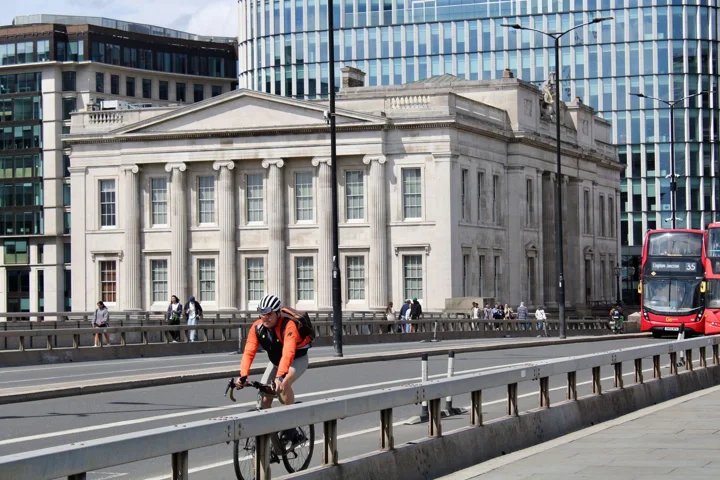
    Photo: Gawon Lee / Pexels. Illustrative photograph.

    The Highway Code rules for cyclists in Great Britain (Rules 59 to 82) tell people on bikes where to ride, how to signal and what equipment the law requires. Drivers need to know them too, because they explain why a cyclist rides in the middle of the lane, rides two abreast or signals right on a roundabout they are not leaving. This guide is for learner and new drivers in England, Scotland and Wales. It explains the cyclist rules from the driver’s seat and sets out what the Code asks of you in return.

    Key facts

    • Cyclists may ride in the centre of their lane on quiet roads, in slow traffic and when approaching junctions or road narrowings (Rule 72).
    • On busy roads, cyclists are advised to keep at least 0.5 metres from the kerb when letting faster traffic pass (Rule 72).
    • Cyclists can ride two abreast, which the Code says can be safer, especially in larger groups (Rule 66).
    • Cyclists are not obliged to use cycle lanes or cycle tracks (Rule 61).
    • At night a bicycle MUST have a white front light, a red rear light and a red rear reflector (Rule 60).
    • Drivers should leave at least 1.5 metres when overtaking a cyclist at speeds up to 30 mph, and more at higher speeds (Rule 163).

    Where should cyclists ride? Rule 72 road positions

    Rule 72 describes two basic positions. Knowing them helps you understand what a cyclist is about to do.

    Position When the Code suggests it What it means for you
    Centre of the lane On quiet roads or streets (moving left to let faster vehicles pass when safe); in slower-moving traffic; at the approach to junctions or road narrowings where it would be unsafe to overtake The cyclist is telling you it is not safe to pass yet. Wait behind.
    At least 0.5 metres from the kerb (further if safer) On busy roads with vehicles moving faster, letting traffic overtake when it is safe You may overtake when safe, with at least 1.5 metres of space.

    Rule 67 also advises cyclists to leave at least a door’s width or 1 metre when passing parked cars. So a cyclist moving out past a row of parked cars is following the Code, not wobbling.

    Riding two abreast (Rule 66)

    Rule 66 says cyclists can ride two abreast and that it can be safer to do so, particularly in larger groups or when accompanying children or less experienced riders. It also says cyclists should be aware of drivers behind them and allow them to overtake, for example by moving into single file or stopping, when it is safe to do so.

    For drivers, a pair of cyclists side by side is shorter to overtake than a long single-file line. You still need to give 1.5 metres from the outer rider.

    Cycle lanes, tracks and bus lanes

    • Cycle lanes are marked by a white line, which may be broken. Use of cycle lanes and tracks is not compulsory, and cyclists can choose the road if that is safer for them (Rule 61).
    • Drivers MUST NOT drive or park in a cycle lane marked by a solid white line during its times of operation (Rule 140).
    • Most bus lanes can be used by cyclists, as shown on the signs (Rule 65).
    • Cyclists MUST NOT cycle on the pavement (Rule 64).

    See bus lanes and cycle lanes for signs and operating times.

    What cyclists must do by law

    Rules that say MUST are legal requirements. For cyclists in Great Britain these include:

    • At night: a white front light and red rear light lit, a red rear reflector, and amber pedal reflectors on cycles made after 1 October 1985 (Rule 60).
    • Efficient brakes (Annex 1).
    • Obeying all traffic signs and traffic light signals (Rule 69).
    • Not crossing the stop line when lights are red. At an advanced stop line, cyclists may cross the first line on red but MUST NOT cross the final stop line (Rule 71).
    • Not carrying a passenger unless the cycle is built or adapted for one, not holding on to a moving vehicle, and not riding dangerously, carelessly or inconsiderately, or under the influence of drink or drugs (Rule 68).

    What is advice, not law

    Rule 59 says cyclists should wear a correctly fitted cycle helmet and bright or reflective clothing. These are recommendations. There is no law in these rules requiring adult cyclists to wear a helmet or hi-vis, so do not assume a cyclist without one is breaking the law. Annex 1 also recommends a bell and points to Bikeability, the national cycle training scheme.

    Cyclists at junctions: what drivers must watch for

    Cyclists going straight ahead have priority

    Rule 76 says a cyclist going straight ahead at a junction generally has priority over traffic waiting to turn into or out of the side road, unless signs or markings say otherwise. Rule H3 tells drivers not to cut across cyclists going ahead when turning, and not to turn if it would make them stop or swerve. See Rules H1 to H3 explained.

    The left turn trap

    Rule 182 tells drivers to use mirrors and signal well before turning left, not to overtake just before turning left, and to check for cyclists or motorcyclists coming up on the left. Rule 183 says give way to cyclists using a cycle lane or track from either direction, including when they pass a queue of traffic. Rule 167 says do not overtake a cyclist as you approach a junction where you plan to turn left: stay behind.

    Crossing a cycle track

    A cycle track is a route physically separated from motor traffic, often between the road and the pavement. Rule 140 says give way to cyclists approaching or using the track when you turn into or out of a junction, and be prepared to stop and wait for a safe gap. Tracks may carry cyclists in both directions, so look both ways along the track, not just in the direction cars come from. If a cyclist appears while you wait, stay put: do not speed up to get across first because the driver behind is impatient.

    Advanced stop lines

    Rule 178 says drivers MUST stop at the first white line of an advanced stop line when the lights are amber or red, and should avoid blocking the cyclist area. When the lights go green, give cyclists in front of you time and space to move off.

    Turning right in two stages

    Some junctions mark a two-stage right turn for cyclists (Rule 75). The cyclist goes straight ahead to a marked area, waits, then completes the turn when the lights on the far side go green. A cyclist waiting in that box is not lost.

    Cyclists on roundabouts (Rules 78 to 80 and 186)

    • Rule 79 says cyclists may ride in either the left or right lane when turning right, moving left before their exit and signalling. Cyclists who stay in the left lane signal right to show they are not leaving at the next exit.
    • Rule 186 tells drivers to give cyclists priority on the roundabout, leave them plenty of room, not overtake them within their lane, and allow them to move across your path as they travel round.
    • Rule 80 asks cyclists to give long vehicles plenty of room on roundabouts.

    More on roundabouts in Rules 184 to 190 step by step and mini, double and spiral roundabouts.

    Crossings

    Cyclists should dismount at zebra, pelican and puffin crossings, and must not ride across equestrian crossings (Rule 81). At toucan crossings, cyclists may ride across with pedestrians on the green signal (Rule 82). As a driver, expect cyclists to appear at toucan crossings at more than walking pace.

    Overtaking and opening doors

    Rule 163 asks drivers to leave at least 1.5 metres when overtaking cyclists at speeds up to 30 mph, and more space at higher speeds. If you cannot, wait behind. The full detail is in overtaking cyclists: the 1.5 metre rule.

    When you park, Rule 239 says you should, where you can, open the door with the hand on the opposite side (for example, your left hand for a door on your right). This makes you turn your head and look over your shoulder for cyclists, motorcyclists and pedestrians before the door swings out. The technique is often called the “Dutch Reach”. Rule 67 is why cyclists keep a door’s width from parked cars.

    Scenario: a cyclist in the middle of the lane before a pinch point

    You are behind a cyclist on a 30 mph road. Ahead there is a traffic island. The cyclist moves from near the kerb to the centre of the lane.

    • Under Rule 72, this is the cyclist taking the centre of the lane at a narrowing where overtaking would be unsafe.
    • Stay behind. There is not room for 1.5 metres beside the island.
    • Once past the island, the cyclist may move back left. Overtake only when you can give 1.5 metres and see the road is clear.

    Common questions

    Do cyclists have to use cycle lanes?

    No. Rule 61 says use of cycle lanes and tracks is not compulsory, and will depend on the cyclist’s experience and the conditions.

    Is it legal for cyclists to ride two abreast?

    Yes. Rule 66 says cyclists can ride two abreast and that it can be safer, but they should let drivers behind overtake when it is safe, for example by moving into single file.

    Why do cyclists ride in the middle of the road?

    Rule 72 advises the centre of the lane on quiet roads, in slow traffic and approaching junctions or narrowings where it would be unsafe for drivers to overtake.

    Do cyclists have to wear a helmet in the UK?

    The Highway Code says cyclists should wear one, but it is advice, not a legal requirement for cyclists in these rules.

    Do cyclists have priority at junctions?

    A cyclist going straight ahead generally has priority over traffic turning into or out of a side road, unless signs or markings say otherwise (Rule 76). Drivers should not turn across them (Rule H3).

    Can cyclists go through red lights?

    No. Rule 71 says cyclists MUST NOT cross the stop line on red. At an advanced stop line, they may cross the first line but not the final one.

    Back to the main guide: Learning to Drive in Great Britain. For the theory test, revise the vulnerable road users topic.

    Sources

    • Department for Transport, “The Highway Code: Rules for cyclists (59 to 82)” (gov.uk)
    • Department for Transport, “The Highway Code: Annex 1. You and your bicycle” (gov.uk)
    • Department for Transport, “The Highway Code: Using the road (159 to 203)” (gov.uk)
    • Department for Transport, “The Highway Code: General rules, techniques and advice for all drivers and riders (103 to 158)” (gov.uk)
    • Department for Transport, “The Highway Code: Introduction” (gov.uk)
    • Department for Transport, “The Highway Code: Waiting and parking (238 to 252)” (gov.uk)
    • Department for Transport, “The Highway Code: Updates” (gov.uk)
  • Passing Horses Safely: GB Highway Code Rules for Drivers

    Passing Horses Safely: GB Highway Code Rules for Drivers

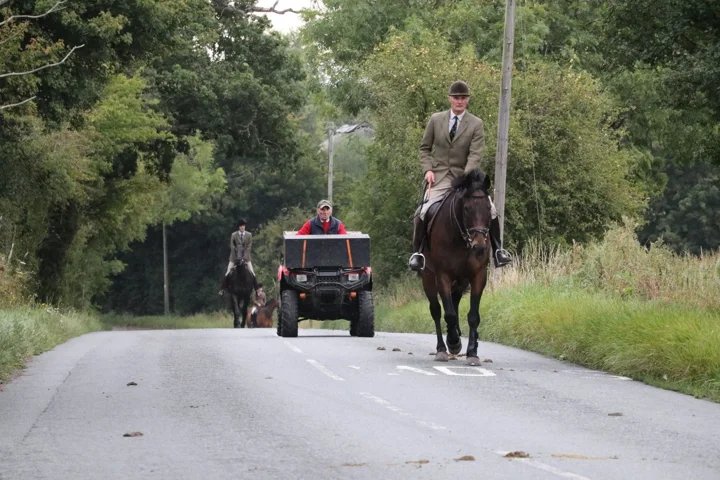
    Photo: VINTTRO Ltd / Pexels. Illustrative photograph.

    When you meet a horse on the road in Great Britain, the Highway Code tells you to slow to no more than 10 mph, pass wide and slowly, and leave at least 2 metres of space. This guide is for learner and new drivers in England, Scotland and Wales who want to know exactly what Rules 163 and 215 ask, why horses need different treatment from cars and bikes, and what the rules for riders themselves (Rules 47 to 58) mean for you behind the wheel.

    Key facts: horses and the Highway Code

    • Slow down to a maximum of 10 mph when you see a horse on the road (Rule 215).
    • Pass wide and slowly, leaving at least 2 metres where possible (Rules 163 and 215).
    • Do not sound your horn or rev your engine near horses.
    • Horse riders may ride two abreast, but never more, and in single file on narrow or busy roads and around bends (Rule 53).
    • Children under 14 MUST wear a helmet that complies with the regulations when riding on the road (Rule 49).
    • Horse riders are in the group the Highway Code says is most at risk, under the hierarchy of road users.

    How do you pass a horse safely? The five steps

    Rule 215 sets out how to deal with horse riders and horse-drawn vehicles. Put into a sequence you can practise:

    1. Spot it early. Rule 154 tells drivers on country roads to expect horse riders, pedestrians, cyclists and slow farm vehicles. Scan well ahead, especially on bends and near bridleways.
    2. Slow to 10 mph or less. Ease off smoothly. Harsh braking or a sudden engine note can startle a horse.
    3. Watch the rider. If they signal you to slow down or stop, do so. Riders often know when their horse is uneasy.
    4. Pass wide and slowly when it is safe, giving at least 2 metres. If oncoming traffic means you cannot give that space, wait behind.
    5. Pull away gently. Do not accelerate hard as soon as you are past. Keep your speed down until you are well clear.

    What not to do

    • Do not sound your horn or rev your engine.
    • Do not pass close, even slowly.
    • Do not overtake a horse rider as you approach a junction or roundabout where you are turning left. Rule 167 says stay behind.
    • Do not cut across a horse rider going straight ahead when you turn (Rule H3).

    What Rule 163 says about distance and speed

    Rule 163, the main overtaking rule, gives minimum clearances for people who are more exposed than car drivers. For horses it says to pass at speeds under 10 mph and allow at least 2 metres of space.

    Road user Rule 163 guidance
    Horse riders and horse-drawn vehicles Under 10 mph, at least 2 metres
    Cyclists At least 1.5 metres at speeds up to 30 mph, more at higher speeds
    Pedestrians walking in the road At least 2 metres, at low speed
    Motorcyclists As much room as for a car

    Rule 163 adds that you should give more space in bad weather, including high winds, and at night. If you cannot meet these clearances, you should wait behind and not overtake. Our overtaking cyclists explainer covers the cyclist figures, and overtaking rules covers when you must not overtake at all.

    Can you cross double white lines to pass a horse?

    Rule 129 says you MUST NOT cross or straddle double white lines where the line nearest you is solid, with some exceptions. One of them: you may cross if necessary, provided the road is clear, to overtake a pedal cycle, horse or road maintenance vehicle travelling at 10 mph or less. You still need to be able to give the full 2 metres and see that the road is clear.

    Why horses need different treatment

    A horse is a large animal that can react to sudden noise or movement, and the rider is sitting high with no protection apart from a helmet. Rule 214, on animals generally, tells drivers to pass slowly, give plenty of room, be ready to stop, and not use the horn, rev the engine or accelerate quickly near them. The Highway Code places horse riders in the group most at risk in a collision.

    Rule 215 adds several points worth remembering. Treat every horse as a potential hazard: horses are flight animals and can move very quickly if startled, however good the rider. Many riders are children, so take extra care. Two riders side by side may be escorting a young or inexperienced horse or rider. Feral or semi-feral ponies, such as those in the New Forest, on Exmoor and on Dartmoor, need the same slow, wide approach as a ridden horse.

    Rules for riders that drivers should know (Rules 47 to 58)

    Knowing what riders are told to do helps you predict what they will do next.

    Position on the road

    • Riders keep to the left and keep both hands on the reins unless signalling (Rule 53).
    • A led horse is kept on the rider’s left.
    • Riders should never ride more than two abreast, and should ride single file on narrow or busy roads and when riding round bends (Rule 53).
    • Rule 213 says horse riders may ride in the centre of the lane on narrow roads. Expect this where the road is too narrow for you to overtake safely.
    • Riders MUST NOT take a horse onto a footpath or pavement (Rule 54), so they will be in the road where there is no bridleway.

    Signals and roundabouts

    Riders look behind and give a clear arm signal before moving off or turning (Rule 53). Rule 55 advises riders to avoid roundabouts where possible. If they do use one, they keep to the left and signal right when passing exits they are not taking, then signal left just before they leave. So a horse in the left lane signalling right is usually going round, not leaving. Do not cut across them (Rule 186).

    Clothing, helmets and night riding

    • Children under 14 MUST wear a helmet that complies with the regulations, securely fastened. A Sikh child wearing a turban is exempt (Rule 49).
    • Riders should wear light-coloured or fluorescent clothing in daylight and reflective clothing at night or in poor visibility (Rule 50).
    • Riding at night is discouraged. Riders who do ride at night should use reflective bands on the horse and a light showing white to the front and red to the rear on their right arm or leg (Rule 51).

    Horse-drawn vehicles

    Rule 48 says horse-drawn vehicles should have two red rear reflectors, and if used at night they MUST have a white light at the front and a red light at the rear. On an unlit lane, these may be the only warning you get, so drive at a speed that lets you stop within the distance you can see is clear.

    Equestrian crossings

    Some roads have equestrian crossings with a separate signal for horse riders. See the pedestrian crossings guide for how they work.

    Scenario: a pair of riders on a narrow lane

    You round a bend on a 60 mph rural road and see two riders side by side about 100 metres ahead. One of them signals to you to slow down.

    • Rule 215 says follow a rider’s signal to slow down or stop. Ease off to 10 mph or less.
    • The riders may move into single file to let you pass. Wait until they have done so and you can see well ahead.
    • If the lane is too narrow for 2 metres, stay behind until there is a wider stretch or a safe place.
    • Pass slowly and wide, then pull away gently.

    Our guide to learning to drive on rural roads covers bends, single-track lanes and tractors too, and herded animals and livestock on the road covers sheep, cattle and dogs.

    Horses on the theory and driving tests

    Horse riders fall under the vulnerable road users theory topic, and questions on passing horses often test the 10 mph and 2 metre figures. On the practical test, passing a horse too fast or too close is the kind of action an examiner can record as a serious or dangerous fault. See driving test faults explained.

    Common questions

    How fast should you pass a horse in the UK?

    The Highway Code for Great Britain says no more than 10 mph, passing wide and slowly with at least 2 metres of space.

    Is the 2 metre rule a legal requirement?

    Rules 163 and 215 use “should”, so they are advice rather than stand-alone legal duties. But the Highway Code can be used as evidence in court, for example in a careless driving case.

    Can horse riders ride two abreast?

    Yes, but never more than two, and they should go into single file on narrow or busy roads and around bends.

    Why do riders ride in the middle of the lane?

    Rule 213 says horse riders may use the centre of the lane on narrow roads. On a road that narrow, you could not give them 2 metres anyway, so wait behind.

    Should I beep to let a rider know I am there?

    No. The Code says not to sound your horn or rev your engine near horses. Slow down early so the rider has time to hear and see you.

    Do riders have to wear hi-vis?

    The Code advises it but does not make it law. The only legal requirement in these rules is a helmet for riders under 14, plus lights on horse-drawn vehicles at night.

    Back to the main guide: Learning to Drive in Great Britain.

    Sources

    • Department for Transport, “The Highway Code: Rules about animals (47 to 58)” (gov.uk)
    • Department for Transport, “The Highway Code: Road users requiring extra care (204 to 225)” (gov.uk)
    • Department for Transport, “The Highway Code: Using the road (159 to 203)” (gov.uk)
    • Department for Transport, “The Highway Code: General rules, techniques and advice for all drivers and riders (103 to 158)” (gov.uk)
    • Department for Transport, “The Highway Code: Introduction” (gov.uk)
  • Hierarchy of Road Users in GB: Highway Code Rules H1 to H3

    Hierarchy of Road Users in GB: Highway Code Rules H1 to H3

    Photo: Eric Luskin / Pexels. Illustrative photograph.

    The hierarchy of road users is the principle at the start of the Highway Code for England, Scotland and Wales. It says the people most at risk in a collision come first, and the people driving vehicles that can cause the most harm carry the most responsibility. It is set out in three rules, H1, H2 and H3, which came into force on 29 January 2022. This explainer is for learner and new drivers in Great Britain who want to know exactly what each rule asks of them, and how it affects the driving test.

    Key facts

    • The hierarchy and Rules H1 to H3 were added to the Highway Code in the update of 29 January 2022.
    • The Highway Code containing these rules applies to England, Scotland and Wales. Northern Ireland has its own Highway Code.
    • Most at risk: pedestrians, cyclists, horse riders and motorcyclists, with children, older adults and disabled people at greater risk still.
    • H2 tells drivers they should give way to pedestrians crossing or waiting to cross at a junction, and they MUST give way to pedestrians on a zebra crossing.
    • H3 tells drivers not to cut across cyclists, horse riders or horse-drawn vehicles going straight ahead when turning.

    What is the hierarchy of road users?

    The Highway Code introduction describes a hierarchy that places those road users most at risk in a collision at the top. Responsibility runs the other way: the drivers of vehicles that can do the most harm have the greatest duty to take care and reduce the danger they pose to others.

    Group Who it includes What the Code expects
    Most at risk Pedestrians, cyclists, horse riders, motorcyclists Their safety must be considered by everyone else
    Greater risk within those groups Children, older adults, disabled people Extra care, because they may move unpredictably or slowly
    Greatest responsibility Drivers of large goods and passenger vehicles, vans and minibuses, cars and taxis, motorcycles Reduce the danger they pose

    The Code is clear that the hierarchy does not remove anyone’s duty to behave responsibly. Pedestrians and cyclists must still take care. A learner driver in a car, though, sits near the top of the responsibility list.

    Rule H1: everyone is responsible for others’ safety

    H1 asks all road users to know the Highway Code, to be considerate to others and to understand their responsibility for other people’s safety. It also says that cyclists, horse riders and drivers of horse-drawn vehicles have a responsibility to reduce danger to pedestrians.

    H1 reminds drivers that some people have impaired sight, hearing or mobility that is not obvious. A pedestrian who does not react to your engine may simply not be able to hear it.

    Rule H2: giving way to pedestrians at junctions and crossings

    H2 is the rule that changed everyday driving most. It applies to drivers, motorcyclists, horse riders, cyclists and horse-drawn vehicles.

    • At a junction, you should give way to pedestrians crossing or waiting to cross the road you are turning into or out of.
    • On a zebra crossing, you MUST give way to pedestrians who are on it. This is the law. You should also give way to pedestrians waiting to cross.
    • On a parallel crossing (a zebra with a cycle crossing beside it), you MUST give way to pedestrians and cyclists on the crossing, and you should give way to those waiting to cross.
    • At light-controlled crossings, pedestrians have priority when they have a green signal.

    Rule 8 for pedestrians adds that if a pedestrian has already started to cross a road you are turning into, they have priority. H2 also reminds everyone that only pedestrians, including wheelchair and mobility scooter users, may use the pavement, and that pedestrians may use any part of the road and cycle tracks unless signs prohibit them. Our Highway Code rules for pedestrians and pedestrian crossings guide explain the related rules.

    Scenario: turning left into a side road

    You signal left to turn into a side street. A pedestrian is standing at the kerb on the corner, facing across the side street. Under H2 you should give way. Slow early, check your mirrors for cyclists on your left, and let them cross before you turn. If they have already stepped off the kerb, Rule 8 says they have priority.

    Rule H3: not cutting across cyclists and horse riders

    H3 is aimed at drivers and motorcyclists. When you turn into or out of a junction, or change direction or lane, you should not cut across cyclists, horse riders or horse-drawn vehicles going straight ahead. That applies whether they are in a cycle lane, on a cycle track or riding on the road.

    The rule says you should not turn if doing so would make the cyclist, horse rider or horse-drawn vehicle stop or swerve. Stop and wait for a safe gap if you need to. H3 also covers riders who are:

    • approaching, passing or moving off from a junction
    • moving past or waiting alongside stationary or slow traffic
    • travelling around a roundabout

    Rule 167 backs this up: if you are following a cyclist, horse rider or horse-drawn vehicle towards a junction or roundabout where you plan to turn left, stay behind them rather than overtaking and cutting in. For more, see Highway Code rules for cyclists, overtaking cyclists and passing horses safely.

    Do H1 to H3 affect the driving test?

    Yes. When the rules came in, the DVSA explained on its official blog that most of the changes reinforced good driving that examiners already looked for, but the junction rule did change assessment. Its guidance said:

    • Failing to give way to a pedestrian who is clearly waiting to cross, safely on the pavement, would normally be marked as a driving fault.
    • If your actions put someone already in the road at risk, a serious fault would normally be recorded.
    • Examiners take account of following traffic, your approach speed, how visible the pedestrian was and whether they appeared to intend to cross.

    See driving test faults explained for how faults add up.

    Do the hierarchy rules apply in Northern Ireland?

    The GB Highway Code says it applies to England, Scotland and Wales. Northern Ireland publishes its own Highway Code on nidirect, and the edition there is dated 2020, before the GB changes of January 2022. Drivers in NI should follow the NI Highway Code and check nidirect for any update. Our NI vs GB Highway Code guide covers the differences.

    Common questions

    Is it now the law to give way to pedestrians at junctions?

    Rule H2 uses “should” for junctions, so it is advice rather than a stand-alone legal duty. But the Highway Code can be used as evidence in court, and failing to give way can be marked as a fault on your test. Giving way on a zebra crossing is a legal requirement.

    When did the hierarchy of road users start?

    29 January 2022, when the Highway Code was updated with the new introduction and Rules H1, H2 and H3.

    Does the hierarchy mean cyclists can ignore the rules?

    No. The Code says the hierarchy does not remove everyone’s responsibility to behave responsibly. Cyclists must, for example, obey traffic lights and must not cycle on pavements.

    Who is at the top of the hierarchy?

    Pedestrians, cyclists, horse riders and motorcyclists are most at risk, with children, older adults and disabled people at greater risk still. Drivers of large vehicles, vans, cars and motorcycles carry the most responsibility.

    What should I do if a pedestrian is waiting at a side road as I turn?

    Slow down early and give way, as long as it is safe to do so with the traffic around you. If they have already stepped into the road, they have priority.

    Back to the main guide: Learning to Drive in Great Britain.

    Sources

    • Department for Transport, “The Highway Code: Introduction” (gov.uk)
    • Department for Transport, “The Highway Code: Updates” (gov.uk)
    • Department for Transport, “The Highway Code: Rules for pedestrians (1 to 35)” (gov.uk)
    • Department for Transport, “The Highway Code: Using the road (159 to 203)” (gov.uk)
    • Driver and Vehicle Standards Agency, “Changes to The Highway Code: how they affect driving tests” (despatch.blog.gov.uk)
    • nidirect, “The Highway Code” (nidirect.gov.uk)
  • Learning to Drive in Great Britain: Step by Step Guide

    Learning to Drive in Great Britain: Step by Step Guide

    Photo: Luke Seago / Pexels. Illustrative photograph.

    Learning to drive in Great Britain (England, Scotland and Wales) follows five stages: get a provisional licence, practise with a qualified supervisor, pass the theory test, pass the practical driving test, then survive the risky first two years as a new driver. This guide is for learners aged 17 and over and the parents helping them. It sets out each step in order, with the current fees, the rules you must follow and links to a deeper guide for every topic.

    Northern Ireland has its own licensing system run by the DVA, with a mandatory six month learning period from 1 October 2026. If you live there, read Learning to Drive in Northern Ireland instead.

    Key facts for learners in Great Britain

    • You can apply for a provisional licence from 15 years and 9 months. Most people can start driving a car at 17.
    • A first provisional licence costs £34 online or £43 by post (as of November 2026).
    • The car theory test costs £23. The practical test costs £62 on weekdays or £75 for evenings, weekends and bank holidays (as of November 2026).
    • Your supervisor must be at least 21 and have held a full licence for that type of car for three years.
    • The theory test pass marks are 43 out of 50 (multiple choice) and 44 out of 75 (hazard perception). Your pass lasts two years.
    • You pass the practical test with 15 or fewer driving faults and no serious or dangerous faults.
    • Get 6 or more penalty points within 2 years of passing and your licence is cancelled.

    The five stages at a glance

    Stage What you do Cost (as of November 2026)
    1. Provisional licence Apply to the DVLA from 15 years 9 months £34 online, £43 by post
    2. Learning Lessons with an approved driving instructor (ADI) and practice with a supervisor Varies (set by instructors and insurers)
    3. Theory test Multiple choice questions plus hazard perception £23
    4. Practical test About 35 minutes of driving with a DVSA examiner £62 weekday, £75 evening, weekend or bank holiday
    5. After passing Full licence, your own insurance, two-year new driver period Insurance cost varies

    Stage 1: Getting your provisional licence in Great Britain

    Who can apply

    According to GOV.UK, you can apply for your first provisional licence when you are at least 15 years and 9 months old. You must be able to read a number plate from 20 metres away, and you must have been given permission to live in Great Britain for at least 185 days. You need a provisional licence before you can take lessons, practise on the road or book a theory test.

    How to apply and what it costs

    1. Online through GOV.UK: £34, paid by debit or credit card. You sign in and may need to prove your identity, usually with photo ID such as a passport. Licences applied for online should arrive within one week, though extra DVLA checks can take longer.
    2. By post using form D1, available from most Post Offices: £43, paid by cheque or postal order.

    The page on provisional licence rules, supervising and L plates covers the application in more detail.

    Check what your licence covers and whether you are fit to drive

    A car licence is category B. Our guide to UK driving licence categories explains what a category B licence lets you drive and tow. Two health rules matter from day one:

    If you have a disability, reading difficulty or other need, read about extra support for the theory and driving tests.

    Stage 2: Learning to drive legally (Annex 3 of the Highway Code)

    Annex 3 of the Highway Code sets out the legal requirements for learners in Great Britain. These are law, not advice.

    The learner driver checklist

    • You hold a valid provisional licence.
    • You are supervised by someone who is at least 21 and has held a full licence for that type of car (manual or automatic) for three years.
    • The car shows red L plates that are visible from the front and rear. In Wales you can use red D plates, L plates or both.
    • The car is insured for you to drive. Insurance must at least cover injury or damage to third parties.
    • The car is taxed and, if it is more than three years old, has a valid MOT.

    L plates should be taken off or covered when a qualified driver is using the car, unless it is a driving school car. Parents and friends who want to help should read supervising a learner driver. For tax, MOT, insurance and the V5C logbook, see car documents explained.

    When and where learners can drive

    GOV.UK confirms that learners in Great Britain can drive at any time, day or night, and the speed limits are the same as for full licence holders. Learners can drive on motorways only in England, Scotland or Wales, with an approved driving instructor, in a car with dual controls. The details are in learners and motorways.

    Is there a minimum number of lessons?

    Not at the moment. The Department for Transport ran a consultation on introducing a minimum learning period for car learners from 7 January to 11 May 2026. It asked about a minimum time between passing the theory test and taking the practical test, plus supervised hours and a set syllabus. As of November 2026 the outcome has not been published and no minimum is in force. Follow it in minimum learning period for learner drivers.

    Manual or automatic?

    If you pass in an automatic, your licence only covers automatics. Read automatic licence restrictions and how to upgrade to manual before you choose.

    Stage 3: The theory test

    You must pass the theory test before you can book the practical test. It costs £23 (as of November 2026), and you need your provisional licence number to book. GOV.UK says you must have lived in England, Wales or Scotland for at least 185 days in the 12 months before the test.

    How the theory test works

    Part Format Pass mark
    Multiple choice 50 questions in 57 minutes, including a short video case study with 3 questions 43 out of 50
    Hazard perception 14 video clips with at least one developing hazard each (one clip has two), up to 5 points per hazard 44 out of 75

    You must pass both parts at the same sitting. If you fail, you must wait at least 3 working days before taking it again. Your pass certificate number lasts 2 years, so you need to pass the practical test within that time or take the theory test again.

    Theory test guides on this site

    The 14 DVSA theory test topics

    The multiple choice questions are drawn from 14 topic areas. Each has its own revision page:

    GOV.UK lists three official books for revision: The Highway Code, Know Your Traffic Signs and Driving: the essential skills. The theory test itself is only available in English, Welsh or British Sign Language.

    Rules of the road: the Highway Code topics to learn

    The Highway Code applies to England, Scotland and Wales. Rules that use MUST or MUST NOT are legal requirements. Other rules are advice, but they can be used in court as evidence. The guides below follow the order of the Code.

    Who has priority: the hierarchy and vulnerable road users

    You, your car and the law

    Speed, space and control

    Junctions, roundabouts and crossings

    Parking, lanes and road works

    Signs, signals and markings

    Conditions, motorways and emergencies

    Stage 4: The practical driving test

    Booking the test under the 2026 rules

    Once you have passed your theory test, you can book the practical test on GOV.UK with your licence number and a card. The DVSA changed the booking rules in three stages in 2026:

    1. From 31 March 2026: you can make only 2 changes to a booked test. Changing the date and centre together counts as one change. A swap with another learner also counts as one.
    2. From 12 May 2026: only the learner can book, change, swap or cancel their own test. Instructors and other people cannot do it for you, and using unofficial services that scan the booking system for cancellations is not allowed.
    3. From 9 June 2026: you can move a test only to one of the 3 centres nearest to where it is currently booked, or back to the centre you first booked on that booking.

    If the DVSA changes your test, for example because of bad weather, your changes reset to 2. More detail is in driving test booking rules 2026, and when a driving test is cancelled or goes wrong covers refunds and complaints.

    What happens on the test

    The test includes around 35 minutes of driving. It is made up of five parts:

    1. Eyesight check: read a number plate from 20 metres (new-style plates) or 20.5 metres (old-style plates). If you fail, the test ends.
    2. Show me, tell me: one “tell me” question before you drive and one “show me” question while you drive. See all current show me, tell me questions.
    3. General driving: different road and traffic conditions, but not motorways. You may be asked to pull over, pull out from behind a parked car, do a hill start or make an emergency stop.
    4. One reversing manoeuvre: parallel park, park in a bay, or pull up on the right, reverse about 2 car lengths and rejoin traffic. See driving test manoeuvres explained.
    5. Independent driving: 20 to 35 minutes following a sat nav the examiner sets up, traffic signs, or both. A wrong turn is not a fault in itself. Read independent driving on the test.

    How the test is marked

    Fault Meaning Effect
    Driving fault (minor) Not potentially dangerous, but repeating it could make it serious Up to 15 allowed
    Serious fault Potentially dangerous Fail
    Dangerous fault Actual danger to you, the examiner, the public or property Fail

    If you fail, the next test date must be at least 10 working days away, and you pay again. Our practical test guides go deeper:

    Stage 5: After you pass

    Getting your full licence

    If you pass, the examiner gives you a pass certificate and can send your full licence automatically if you hand over your provisional licence. You can drive straight away without waiting for it to arrive. If you choose not to use automatic issue, you must apply for your full licence within 2 years of passing. Before you drive alone, make sure your insurance lets you drive without supervision.

    The New Drivers Act

    For 2 years after passing your first test, reaching 6 or more penalty points means your licence is cancelled. Unexpired points from your provisional licence count. To get your licence back you must apply for a new provisional licence and pass both the theory and practical tests again. Read the New Drivers Act explained.

    The safety code for new drivers (Annex 8)

    Annex 8 of the Highway Code is written for the first 12 months after passing, and notes that as many as one new driver in five has some kind of collision in their first year. Its advice, in short:

    • Avoid driving between midnight and 6 am unless it is really necessary.
    • Do not let passengers distract you or encourage you to take risks.
    • Do not show off or compete with other drivers.
    • Never drive after drinking alcohol or taking drugs, and check medicine labels.
    • Make sure everyone wears a seat belt for the whole journey.
    • Keep your speed down, especially on bends.
    • Build experience before driving a high-powered car.
    • Consider further training such as Pass Plus.

    New driver guides

    Worked example: a realistic timeline from 15 years 9 months

    This example shows how the legal rules line up. It is not a target, because how many lessons you need depends on you.

    • Age 15 years 9 months: apply for a provisional licence online (£34). Start reading the Highway Code.
    • 17th birthday: first lessons with an ADI. Private practice once a supervisor aged 21 or over with 3 years’ experience is insured for you.
    • A few months in: book and pass the theory test (£23). The 2-year clock on your certificate starts.
    • When your instructor says you are ready: book the practical test yourself (£62 weekday). You now have 2 changes available on that booking.
    • Test day: pass with 15 or fewer driving faults. Your 2-year new driver period starts.

    Common questions

    How old do you have to be to learn to drive in the UK?

    In Great Britain you can apply for a provisional licence at 15 years and 9 months, and most people can start driving a car at 17. Northern Ireland has different rules, set out in our NI guide.

    How much does it cost to get a driving licence in Great Britain?

    The official fees as of November 2026 are £34 for a provisional licence online (£43 by post), £23 for the theory test and £62 for a weekday practical test (£75 for evenings from 4:30pm, weekends and bank holidays). Lessons and insurance are extra and vary.

    Can my parent supervise me?

    Yes, if they are at least 21, have held a full licence for that type of car for 3 years, and the car is insured for you to drive. They must not use a hand-held phone while supervising.

    Can my driving instructor book my test for me?

    No. Since 12 May 2026 only the learner can book, change, swap or cancel their test. You can add your instructor’s reference number to the booking.

    How long is the theory test certificate valid?

    Two years from the date you pass. If you have not passed the practical test by then, you take the theory test again.

    Can I drive on a motorway as a learner?

    Only in England, Scotland or Wales, with an approved driving instructor, in a car with dual controls. A parent cannot take you on a motorway.

    Can I drive straight after passing?

    Yes. You do not need to wait for your full licence to arrive, but your insurance must cover you to drive unsupervised.

    Sources

    • GOV.UK, “Apply for your first provisional driving licence” (gov.uk)
    • GOV.UK, “Driving lessons and learning to drive” (gov.uk)
    • GOV.UK, “Driving test: cost” (gov.uk)
    • GOV.UK, “Theory test: revision and practice”, “Multiple-choice questions”, “Hazard perception test” and “Pass mark and test result” (gov.uk)
    • GOV.UK, “Book your theory test” (gov.uk)
    • GOV.UK, “Driving test: what happens during the test” and “Driving test faults and your result” (gov.uk)
    • Driver and Vehicle Standards Agency, “Changes to driving test booking rules in 2026” (gov.uk)
    • GOV.UK, “Driving eyesight rules” (gov.uk)
    • GOV.UK, “Penalty points (endorsements): new drivers” (gov.uk)
    • Department for Transport, “Introducing a minimum learning period for learner drivers” (gov.uk)
    • Department for Transport, “The Highway Code: Introduction” (gov.uk)
    • Department for Transport, “The Highway Code: Annex 3. Motor vehicle documentation and learner driver requirements” (gov.uk)
    • Department for Transport, “The Highway Code: Annex 8. Safety code for new drivers” (gov.uk)
  • Deaf Learner Drivers in GB: BSL, the Driving Test and DVLA Rules

    Deaf Learner Drivers in GB: BSL, the Driving Test and DVLA Rules

    Photo: Alessandro Avilés / Pexels. Illustrative photograph.

    Deaf people can learn to drive and get a car licence in Great Britain on the same terms as anyone else. There is no hearing standard for a car licence, and GOV.UK says you do not need to tell the DVLA if you are deaf. On the practical test, the examiner uses written notes and hand signals, and you can bring a British Sign Language (BSL) interpreter.

    Key facts (as of November 2026)

    • Car licence: no need to tell the DVLA that you are deaf.
    • Bus, coach or lorry licence: you must tell the DVLA.
    • Practical test: written notes, lip reading and hand-signal directions are available.
    • BSL interpreter: allowed, aged 16 or over; you arrange and pay, then claim the cost back.

    How the practical test works for deaf candidates

    When you book

    Say that you are deaf or hard of hearing when you book. GOV.UK asks candidates to mention a disability or health condition at booking so the examiner can prepare.

    At the start

    The examiner uses written notes to explain what will happen on the test. If you lip read, they will face you when they speak.

    On the drive

    Directions are usually given by hand signals. The examiner explains the signals before you set off, so agree what each one means and ask about anything unclear.

    With an interpreter

    • The interpreter must be at least 16.
    • Your driving instructor can be your interpreter.
    • You arrange the interpreter and pay any fee, then claim the cost back after the test.

    Check the current claim process with DVSA when you book.

    Practising for hand-signal directions

    • Ask your instructor to use the same style of hand signals in lessons that examiners use, so test day feels familiar.
    • Practise a short pre-agreed signal for “pull up on the left” and for the manoeuvres.
    • For independent driving, ask your instructor how you will follow sat nav or traffic signs with visual prompts.
    • Rely on your mirrors and observation for emergency vehicles. Watch for flashing blue lights and how traffic around you reacts.

    Finding an instructor

    Paid lessons must come from an approved driving instructor (ADI) or trainee instructor. When you contact instructors, ask whether they sign BSL, have taught deaf learners before, or are happy to work with an interpreter. An instructor who signs can also act as your interpreter on test day.

    The theory test

    You can take the theory test with BSL. The support available, and how to ask for it, is in theory test languages and support in GB and extra support for the theory and driving tests.

    Licence code 02

    Code 02 on a licence means “hearing/communication aid”. If it appears on yours, you must meet that condition when you drive. Deafness itself does not have to be reported for a car licence. See UK licence codes.

    Common questions

    Do I need a hearing test for a provisional licence?

    No. There is no hearing standard for a car licence in GB.

    Is the pass standard different?

    No. The way the test is delivered changes; the standard you drive to does not.

    I live in Northern Ireland.

    Tell the DVA about your needs when you book. See theory and driving test support in Northern Ireland.

    Back to the GB medical conditions and disability guide. Related: learning to drive with a disability, the practical driving test.

    Sources

    • GOV.UK, “Deafness and driving” (gov.uk)
    • DVLA, “Miscellaneous conditions: assessing fitness to drive”, updated 7 November 2025 (gov.uk)
    • GOV.UK, “Driving test: if you have a disability, health condition or learning difficulty” (gov.uk)
    • GOV.UK, “Driving licence codes” (gov.uk)
  • Sleep Apnoea, Narcolepsy and Tiredness in GB: When to Tell DVLA

    Sleep Apnoea, Narcolepsy and Tiredness in GB: When to Tell DVLA

    Photo: Irina Iriser / Pexels. Illustrative photograph.

    In Great Britain you must not drive if a sleep condition makes you excessively sleepy, until your symptoms are under control. You must tell the DVLA if you have confirmed moderate or severe obstructive sleep apnoea (OSA) with excessive sleepiness, or narcolepsy. For milder or suspected OSA, you tell the DVLA if your sleepiness cannot be controlled within 3 months.

    Sleep conditions and a car licence

    The DVLA rules for Group 1 (car) licences, as of November 2026:

    Condition Driving Tell the DVLA?
    Excessive sleepiness from any cause, including mild OSA or a medicine Do not drive until symptoms are satisfactorily controlled Yes, if control is not achieved within 3 months
    Suspected OSA, waiting for tests Do not drive if you have excessive sleepiness, until it is controlled Yes, if control is not achieved within 3 months
    Confirmed moderate or severe OSA with excessive sleepiness Do not drive Yes. A licence needs confirmation that the condition is controlled, sleepiness has improved and you keep to treatment, with a review at least every 3 years.
    Narcolepsy or cataplexy Do not drive Yes. A licence can be issued once symptoms have been satisfactorily controlled for at least 3 months.

    The DVLA grades OSA by the apnoea-hypopnoea index (AHI) from a sleep study: 15 to 29 is moderate and 30 or more is severe. Your sleep clinic will tell you which group you are in.

    How to report

    • Applying for your first provisional licence: declare the condition on the application.
    • Already hold a licence: report online through GOV.UK, or send form SL1 for sleep conditions. The address is on the form.
    • Penalty for not reporting a condition that affects your driving: a fine of up to £1,000, and possible prosecution if you have an accident.

    If you are unsure whether your sleepiness affects your driving, GOV.UK says to ask your doctor.

    Ordinary tiredness is different

    Feeling tired after a late night is not a notifiable condition, but it still matters on the road. Highway Code Rule 91 advises against starting a journey tired and recommends a break of at least 15 minutes every two hours. Those rules are covered in fitness to drive and tiredness. The DVLA rules above are about sleepiness from a medical condition or medicine that is likely to affect driving.

    Scenario: a learner waiting for a sleep study

    You are 18, your GP suspects sleep apnoea, and you often feel very drowsy in the afternoon. Under the DVLA rules you should not drive, lessons included, while you have excessive sleepiness. If treatment controls it, you can drive again. If it is not controlled within 3 months, you must tell the DVLA. If you do not feel excessively sleepy, ask your GP how the rules apply to you while you wait.

    Common questions

    Does using CPAP mean I can drive?

    For moderate or severe OSA, the DVLA needs medical confirmation that your condition is controlled, your sleepiness has improved and you are keeping to treatment. Ask your sleep clinic for the evidence the DVLA needs.

    Can medicines cause this?

    Yes. The DVLA rule on excessive sleepiness covers medicines as well as conditions. See prescription medicines and driving.

    Back to the GB medical conditions and disability guide. Related: heart conditions, fainting and stroke, mental health and driving, driving at night.

    Sources

    • DVLA, “Miscellaneous conditions: assessing fitness to drive” (excessive sleepiness), updated 7 November 2025 (gov.uk)
    • DVLA, “Neurological disorders: assessing fitness to drive” (narcolepsy), updated 7 November 2025 (gov.uk)
    • GOV.UK, “Sleep apnoea and driving” (gov.uk)
    • Department for Transport, “The Highway Code: Rules for drivers and motorcyclists (89 to 102)” (gov.uk)
  • Learning to Drive With Sight in One Eye or a Field Problem in GB

    Learning to Drive With Sight in One Eye or a Field Problem in GB

    Photo: Antoni Shkraba / Pexels. Illustrative photograph.

    You can learn to drive in Great Britain with sight in only one eye. You must meet the same standards as everyone else: the 20-metre number plate check, 6/12 acuity in your seeing eye, and the minimum visual field. Your doctor or optometrist must confirm you have adapted to the change before you drive, and you only need to tell the DVLA if you do not meet those standards.

    The standards you must meet (car licence)

    Standard What GOV.UK requires, as of November 2026
    Number plate Read a modern number plate in good daylight from 20 metres, with glasses or lenses if you need them.
    Acuity At least Snellen 6/12 (decimal 0.5) with both eyes open, or in the only eye if you have one.
    Visual field At least 120 degrees across, extending at least 50 degrees to each side, with no significant defect within 20 degrees above or below the centre.

    The DVLA usually checks the field with a binocular Esterman test. For the result to count as reliable, false-positive answers must be no more than 20%.

    Sight in one eye: step by step

    1. Do not drive straight after losing sight in one eye. The DVLA guidance says you may drive only once clinical advice confirms you have adapted.
    2. Ask your optometrist or eye doctor whether you meet the acuity and field standards with your seeing eye.
    3. If you meet them, you do not need to tell the DVLA about having one eye.
    4. If you do not, you must not drive and must tell the DVLA.

    Having some light perception in an eye does not count as being monocular for these rules. Your eye specialist can tell you which category you are in.

    Visual field problems and the exceptional-case route

    If you do not meet the field standard, you must not drive and must tell the DVLA. Some people whose licence was removed for a field defect can be considered as exceptional cases. The DVLA guidance says the defect must:

    • have been present for at least 12 months
    • come from a single event or a condition that is not progressive

    You also need sight in both eyes, no uncontrolled double vision, no problems with glare, contrast or low light, clinical confirmation that you have fully adapted, and a practical driving assessment. People with sight in one eye cannot use this route, and nor can people with progressive conditions such as glaucoma or retinitis pigmentosa.

    Other eye conditions learners ask about

    Condition Car licence rule
    Colour blindness May drive; no need to tell the DVLA.
    Night blindness Must not drive and must tell the DVLA. A licence may follow individual assessment if you meet the acuity and field standards.
    Nystagmus No need to tell the DVLA if you meet the standards. Any condition linked to it must meet its own rules.
    Double vision Must not drive and must tell the DVLA. Driving can resume once it is controlled, for example with glasses or a patch you wear while driving.
    Keratoconus or albinism No separate entry in the DVLA guidance. The acuity and field standards decide it. Ask your optometrist.

    If the DVLA needs an eye test

    The DVLA may send you for a test with its contracted optician, free of charge. You can use another optician if the test includes an Esterman field test, but you pay for it and the DVLA does not guarantee to accept it.

    Before you book lessons

    • Have an eye examination and ask directly: “Do I meet the DVLA standard for a car licence?”
    • Practise reading number plates from 20 metres with your glasses or lenses. The examiner checks this at the start of the practical test.
    • Ask your instructor to help you build head-check and mirror habits that suit your field of view.

    Want to practise the eyesight check? Our sister site Driving Eyesight Test has a free 20-metre number plate practice on drivingeyesighttest.com. It is a practice screen, not an eye test.

    Back to the GB medical conditions and disability guide. Related: driving eyesight rules and the 20-metre test, bioptic telescopes in the UK and Ireland, licence code 01, stroke and driving.

    Sources

    • DVLA, “Visual disorders: assessing fitness to drive”, updated 26 September 2025 (gov.uk)
    • GOV.UK, “Driving eyesight rules” (gov.uk)
  • UK Driving Licence Codes for Medical Conditions and Adapted Cars

    UK Driving Licence Codes for Medical Conditions and Adapted Cars

    Photo: Ivan S / Pexels. Illustrative photograph.

    Codes on a UK photocard licence show conditions on your driving. The ones most learners and new drivers meet are 01 for glasses or contact lenses, 02 for a hearing or communication aid, 10 to 43 for adapted car controls, and 78 for automatic only. If a code is on your licence, you must meet it every time you drive.

    Codes for eyesight, hearing and automatic cars

    Code Meaning on GOV.UK What it means in practice
    01 Eyesight correction, for example glasses or contact lenses Wear your glasses or lenses whenever you drive.
    02 Hearing/communication aid Use the aid shown when driving.
    78 Restricted to vehicles with automatic transmission You passed in an automatic and cannot drive a manual car.

    For more on code 78 and upgrading, see automatic licence restrictions.

    Codes for adapted cars (10 to 43)

    Code Meaning
    10 Modified transmission
    15 Modified clutch
    20 Modified braking systems
    25 Modified accelerator systems
    30 Combined braking and accelerator systems (licences issued before 28 November 2016)
    31 Pedal adaptations and pedal safeguards
    32 Combined service brake and accelerator systems
    33 Combined service brake, accelerator and steering systems
    35 Modified control layouts
    40 Modified steering
    42 Modified rear-view mirror(s)
    43 Modified driving seats

    Code 44, with sub-codes 44 (1) to 44 (12), covers modifications to motorbikes, such as an adapted hand grip or foot rest.

    Other codes you might see

    Code Meaning
    70 Exchange of licence
    71 Duplicate of licence
    79 Restricted to vehicles matching the specifications in brackets on your licence
    101 Not for hire or reward
    110 Limited to transporting persons with restricted mobility
    114 With any special controls required for safe driving
    115 Organ donor
    118 Start date is for earliest entitlement
    121 Restricted to conditions specified in the Secretary of State’s notice

    The full list, including bus, lorry, trailer and moped codes, is on GOV.UK (“Driving licence codes”), as of November 2026.

    How adapted-control codes end up on a licence

    One of the decisions the DVLA can make after you tell it about a medical condition or disability is that you need to adapt your car by fitting special controls. When that happens, your licence is limited to cars with those controls, and the codes show which ones. A driving assessment before you start lessons helps you learn in the set-up you will actually use: see learning to drive with a disability and limb differences, short stature and wheelchair users.

    Changing or removing a code

    • 01: if you no longer need glasses or lenses to meet the eyesight standard, contact the DVLA about your licence.
    • 78: pass a test in a manual car.
    • Adapted controls: if your needs change, tell the DVLA; it decides what your licence should show.

    Common questions

    Does code 01 apply to my provisional licence?

    Whatever the licence shows, you must meet the eyesight standard every time you drive, using glasses or lenses if you need them. See driving eyesight rules.

    Where do I find my codes?

    On the back of the photocard, next to each vehicle category, and on the GOV.UK “View or share your driving licence information” service.

    Back to the GB medical conditions and disability guide. Related: deaf learner drivers, Blue Badge for new drivers.

    Sources

    • GOV.UK, “Driving licence codes” (gov.uk)
    • GOV.UK, “Medical conditions, disabilities and driving: what DVLA will decide” (gov.uk)
    • GOV.UK, “Driving eyesight rules” (gov.uk)
  • Blue Badge for New Drivers in GB: Can Learners Use One?

    Blue Badge for New Drivers in GB: Can Learners Use One?

    Photo: Jan van der Wolf / Pexels. Illustrative photograph.

    A Blue Badge belongs to the disabled person, not to a car, so in Great Britain you can display your own badge whenever you are travelling in the vehicle, whether you are a passenger or the driver, including as a learner on a lesson. A badge costs up to £10 in England and £20 in Scotland, and is free in Wales (as of November 2026). It usually lasts up to 3 years.

    Who automatically qualifies in England

    You qualify automatically if you are aged 3 or over and at least one of these applies:

    • you get the higher rate of the mobility component of Disability Living Allowance (DLA)
    • you get Personal Independence Payment (PIP) with 8 points or more in the “moving around” activity
    • you get PIP with 10 points for descriptor E of “planning and following journeys”, because of overwhelming psychological distress
    • you are registered blind (severely sight impaired)
    • you get War Pensioners’ Mobility Supplement
    • you got an Armed Forces Compensation Scheme lump sum in tariff levels 1 to 8 and have a permanent and substantial disability

    A score of 12 in “planning and following journeys” does not qualify automatically on its own. Scotland and Wales publish their own eligibility guidance, so check the rules for where you live.

    Qualifying after an assessment, including non-visible conditions

    If you do not qualify automatically, your council can assess you. People with non-visible (hidden) conditions can apply. GOV.UK says you will be asked how your condition affects the journey between your vehicle and where you are going, for example:

    • struggling to plan or follow a journey
    • often becoming extremely anxious or fearful in public or open spaces

    How to apply

    1. Apply on GOV.UK (“Apply for or renew a Blue Badge”). Your local council deals with the application.
    2. Have ready: a recent digital photo of your head and shoulders, a photo or scan of proof of identity and address, proof of any benefits, and your National Insurance number if you have one.
    3. Pay the fee your council charges (England up to £10, Scotland £20, Wales free).
    4. Reapply before it runs out. If you are refused, your council should explain why.

    In Northern Ireland the scheme is run separately through nidirect: see the Northern Ireland guide.

    Using a Blue Badge as a learner or new driver

    Situation Can the badge be displayed?
    You hold the badge and are driving (on a lesson or after passing) Yes
    You hold the badge and a parent drives you Yes, while you are travelling in the car or being dropped off or collected
    A parent uses your badge to shop for you while you stay home No
    A family member holds a badge and you drive them Yes, while they are travelling with you
    You borrow a relative’s badge to park for free No: this is misuse

    Misuse is a criminal offence and could lead to a £1,000 fine and the badge being taken away. If an enforcement officer asks to see your badge, you must show it.

    Parking rules to know in England

    • Yellow lines: badge holders can park on single or double yellow lines for up to 3 hours, unless there is a ban on loading or unloading.
    • Parking clock: set it to the quarter hour you arrived, and display it with the badge.
    • Central London: the scheme does not fully apply in the City of Westminster, the City of London, the Royal Borough of Kensington and Chelsea, and part of Camden. These areas run their own concessions.
    • Private car parks: supermarkets, hospitals and shopping centres set their own rules.

    The parking rules in the Highway Code still apply: see where you must never park.

    Back to the GB medical conditions and disability guide. Related: learning to drive with a disability, limb differences and wheelchair users, licence codes for adapted cars.

    Sources

    • GOV.UK, “Apply for or renew a Blue Badge” (gov.uk)
    • Department for Transport, “Can I get a Blue Badge?” (gov.uk)
    • Department for Transport, “The Blue Badge scheme: rights and responsibilities in England”, updated 9 July 2020 (gov.uk)
  • Prescription Medicines and Medical Cannabis: GB Driving Rules

    Prescription Medicines and Medical Cannabis: GB Driving Rules

    Photo: Chokniti Khongchum / Pexels. Illustrative photograph.

    You can drive on prescribed medicine in Great Britain, even one on the drug-driving list, as long as it was prescribed for you, you take it as advised, and it does not make you unfit to drive. That is the statutory “medical defence”. It does not cover driving while impaired: if a medicine affects your driving, it is an offence whether or not it was prescribed.

    The two drug-driving offences

    Over a specified limit Unfit through drugs (impairment)
    What it means A listed drug in your blood above its legal limit, even if your driving seems fine Any drug, legal or illegal, making you unfit to drive
    Medical defence? Yes, for a drug taken as prescribed or advised No
    Where it applies England, Scotland and Wales England, Scotland and Wales

    GOV.UK says this law does not cover Northern Ireland, but you can still be arrested there if you are unfit to drive. Check the DVA and PSNI guidance if you are learning in Northern Ireland.

    Which prescription medicines are on the list?

    GOV.UK lists these medicines as covered by drug-driving law:

    • amphetamines, such as dexamfetamine (used for ADHD) and selegiline
    • clonazepam, diazepam, flunitrazepam, lorazepam, oxazepam and temazepam
    • methadone
    • morphine and other opiate or opioid drugs, such as codeine, tramadol and fentanyl

    Illegal drugs on the list, including cannabis (THC) and cocaine, have very low limits. The limit for THC is 2 micrograms per litre of blood and for amphetamine 250 micrograms per litre, in England and Wales as of November 2026. Police can use a roadside kit to screen for cannabis and cocaine.

    How the medical defence works

    The Department for Transport’s guidance says the defence generally applies if the drug was:

    1. lawfully prescribed, supplied or bought over the counter for a medical or dental purpose, and
    2. taken in line with the advice of the prescriber or supplier and the leaflet, as far as the leaflet matches that advice.

    Your prescriber’s advice for you can differ from the leaflet and still count. The guidance suggests carrying evidence that you were prescribed the medicine or bought it, and took it as instructed. You can choose what you show, so you do not have to reveal more than you want to.

    Prescribed medical cannabis

    GOV.UK’s drug-driving pages do not treat prescribed cannabis separately. The medical defence covers a drug that was lawfully prescribed and taken as advised, and the impairment offence still applies in every case. Ask your prescriber how the defence applies to your medicine and whether it can affect your driving. Cannabis that has not been prescribed for you has no defence at all.

    Over-the-counter medicines

    Codeine is on the list, and many other medicines that are not, such as some antihistamines and sleep aids, can still make you drowsy. A medicine does not need to be on the list for the impairment offence to apply.

    • Read the leaflet for warnings about drowsiness or driving.
    • Ask your pharmacist before driving on a new medicine.
    • Do not drive to a lesson or test if a medicine leaves you drowsy.

    Penalties for drug driving

    • a minimum 1-year driving ban
    • an unlimited fine
    • up to 6 months in prison
    • a criminal record
    • the conviction shows on your licence for 11 years

    A ban means you cannot drive at all for that period, including as a learner. Full limits and drink-drive rules are in drink and drug driving limits.

    Back to the GB medical conditions and disability guide. Related: ADHD, autism and dyslexia, anxiety, depression and mental health, fitness to drive and telling the DVLA.

    Sources

    • GOV.UK, “Drugs and driving: the law” (gov.uk)
    • Department for Transport, “Drug driving guidance for healthcare professionals” (gov.uk)
    • The Drug Driving (Specified Limits) (England and Wales) Regulations 2014, as amended 2015 (legislation.gov.uk)
    • DVLA, “Appendices: assessing fitness to drive”, updated 7 November 2025 (gov.uk)